Kathmandu is not only a city of temples, it is a city of stories.
Walk through Durbar Square, glance up at tiered pagoda roofs, or pause beneath intricately carved wooden windows, and you are standing inside centuries of belief. Historians can give you dates and dynasties. Architects can explain proportions and wood joinery. But what truly endures in the Valley are the legends because stories are magnetic. People remember myths long after they forget timelines.
Here are three of Kathmandu’s oldest and most powerful stories, the legends that still breathe through its ancient temples.
Taleju Temple: The Goddess Who Walked Among Kings
Taleju Temple rises above Hanuman Dhoka Durbar Square, majestic and guarded. Built in 1564 by King Mahendra Malla, it remains closed to the public for most of the year, opening only during Dashain.
Yet the temple’s true power lies not in its origin story.
According to legend, the goddess Taleju Bhawani once appeared nightly before King Trailokya Malla. She would visit him in secret and play dice in the palace. The king was warned never to reveal her presence. Divine favor depended on discretion.
But curiosity intervened. The queen followed the king one night and saw the goddess. Feeling betrayed, Taleju vanished. Before leaving, she declared she would return not as a vision, but in the form of a living goddess.
This legend transformed Taleju from a royal deity into a presence woven into Kathmandu’s spiritual life. Historically, the temple strengthened the divine authority of the Malla kings. Culturally, it anchored the city’s identity. Myth gave it intimacy, a story of trust, secrecy, and divine withdrawal.
When people look at Taleju Temple today, they do not only see architecture. They remember a goddess who once walked the palace halls.
Kasthamandap: The Pavilion of a Single Tree
The name “Kathmandu” itself is believed to come from Kasthamandap derived from the Sanskrit words Kastha (wood) and mandap (pavilion).
The original structure, said to have been built in the 12th century, carried a remarkable legend: it was constructed from the timber of a single tree. Whether literally true or symbolically told, the idea captures the imagination of an entire temple rising from one living trunk.
Kasthamandap stood in Basantapur as a civic and spiritual center for centuries. It represented unity, craftsmanship, and continuity. Some oral traditions claimed the wood carried protective energy over the city. Others believed the structure was spiritually blessed.
When the 2015 earthquake destroyed it, the loss felt heavier than the collapse of timber. For many, it symbolized a rupture in the city’s rhythm as if something ancient and protective had been shaken loose.
Reconstruction efforts have since sought to restore it using traditional techniques and materials. Yet the emotional impact of its fall revealed something deeper: Kasthamandap was never just a building. It was the origin. It was the city's name.
And that is why its story endures.
The Kumari: The Living Goddess of the Valley
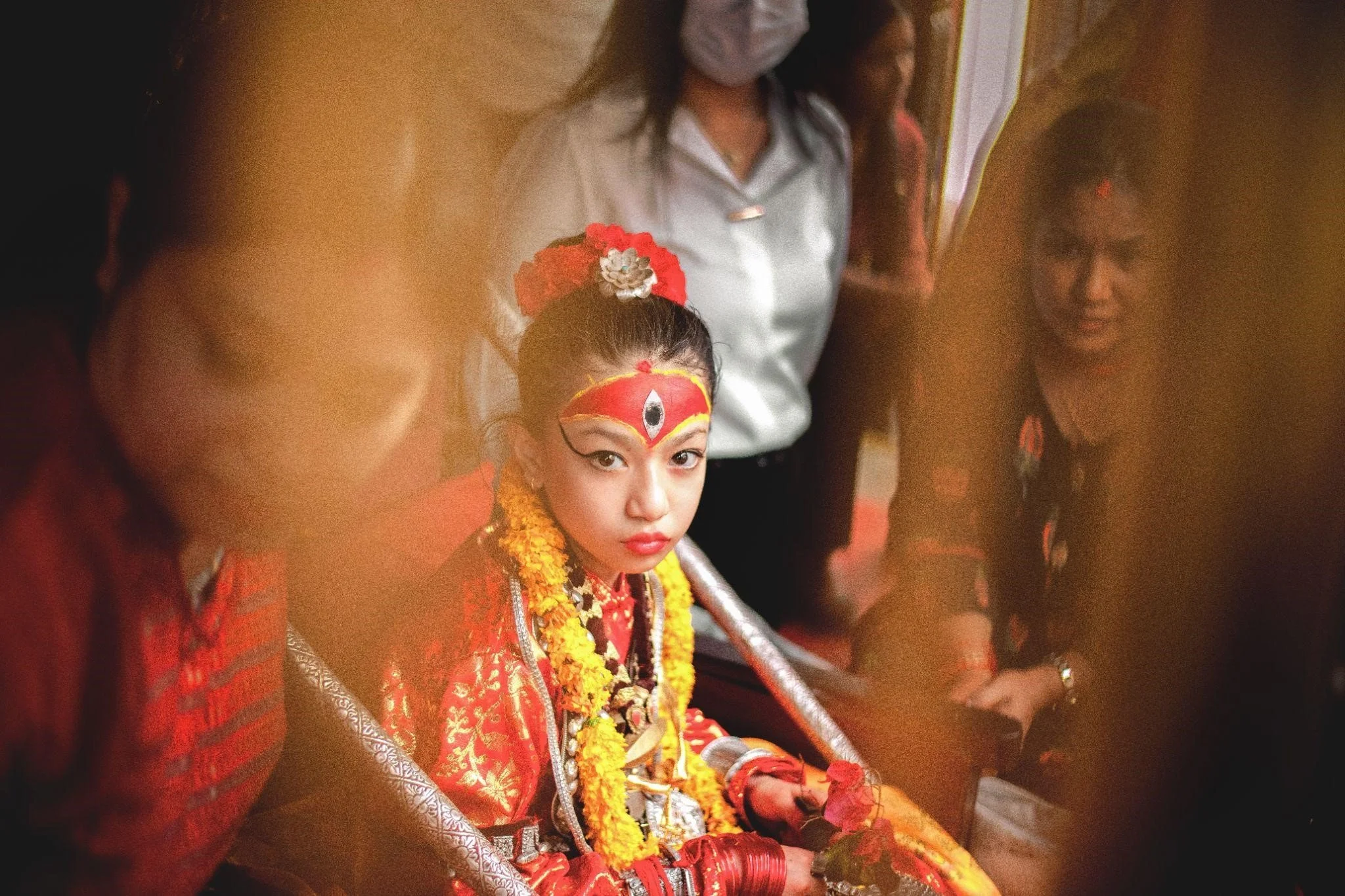
The promise of Taleju’s return, according to tradition, lives on through the Kumari the Living Goddess of Kathmandu.
Chosen from the Shakya clan of the Newar community, a young prepubescent girl is selected to embody the goddess. The selection process follows strict traditional criteria, rooted in ritual, symbolism, and cultural continuity. Once chosen, she resides in the Kumari Ghar in Durbar Square, appearing at festivals and special ceremonies.
Historically, Nepal’s kings sought her blessing before important state decisions. Even today, her presence carries immense cultural and spiritual significance.
Myths surrounding the Kumari add layers of mystique. Stories speak of tests of fearlessness and divine signs. Whether embellished over time or faithfully preserved, these narratives elevate her from a child to a symbol of sacred embodiment.
Perhaps the most poignant aspect of the tradition is its impermanence. When the Kumari reaches puberty, the goddess is believed to leave her body, and she returns to ordinary life.
Few traditions capture the intersection of divinity and humanity so vividly. The Kumari reminds the Valley that the sacred is not distant; it can reside, briefly and mysteriously, among the living.
Why Myths Matter More Than Dates
Kathmandu’s temples are architectural masterpieces. Their tiered roofs, brickwork, and wood carvings speak of extraordinary craftsmanship. But what gives them emotional permanence are the stories.
Dates tell us when something was built. Myths tell us why it matters.
A goddess playing dice with a king. A temple carved from a single tree. A child worshipped as divine. These narratives transform physical spaces into living memory.
In a valley shaped by earthquakes, dynasties, and rapid modern change, stories become anchors. They preserve meaning when structures fall and regimes shift. They allow each generation to inherit not just monuments, but imagination.
Kathmandu’s oldest temples are not silent. They carry whispers of devotion, mystery, reverence, and resilience.
And as long as those stories are told, the Valley’s ancient spirit will remain very much alive.
POPULAR ITINERARIES


SIMILAR POSTS