
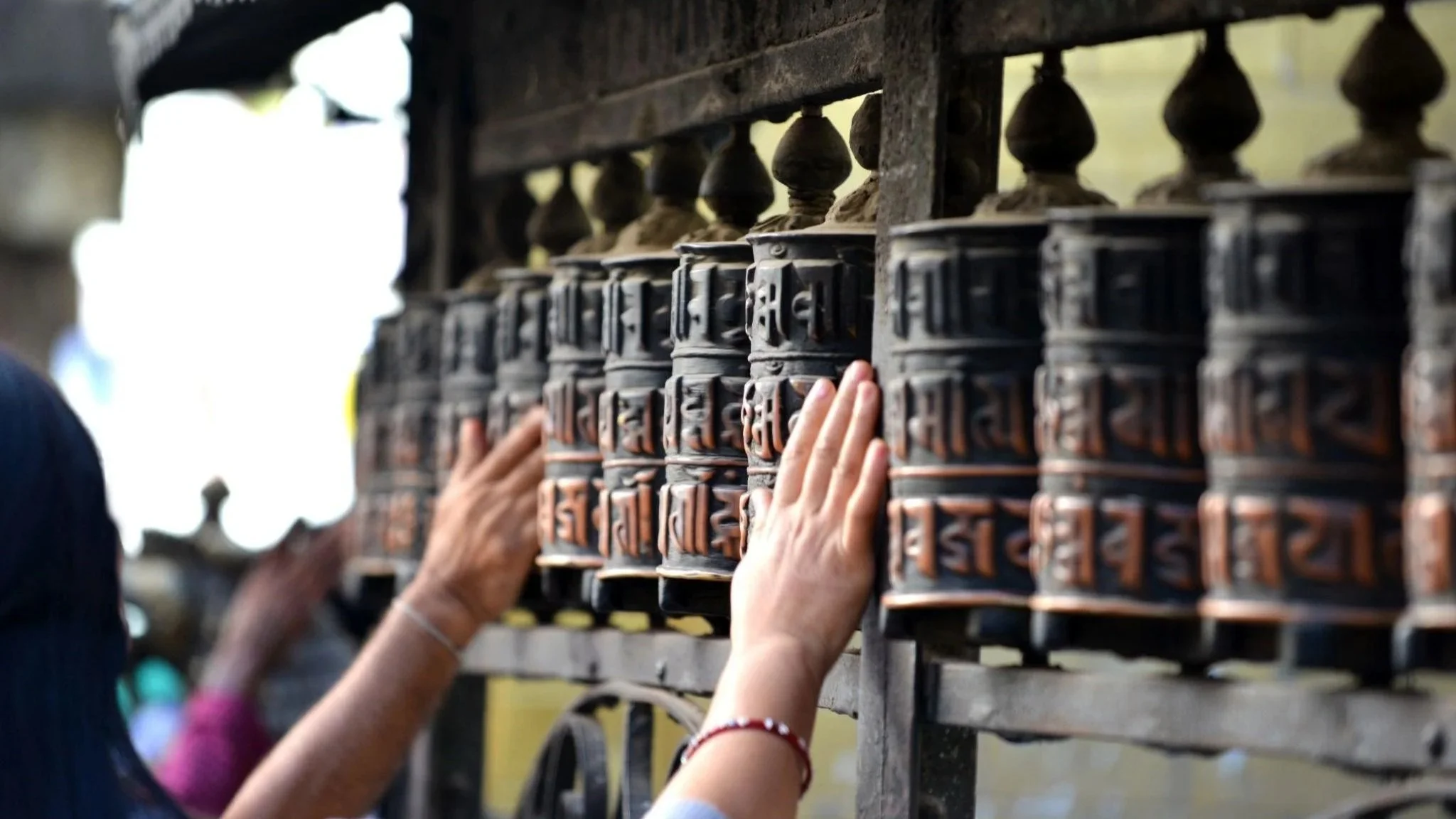
Prayer wheels and prayer flags are among the most recognizable symbols of Nepal's spiritual heritage. Found along mountain trails, beside monasteries, around ancient stupas, and in peaceful hilltop villages, they reflect centuries of Buddhist tradition and devotion. More than decorative elements, these sacred objects represent prayers, compassion, and the enduring pursuit of peace and wisdom.
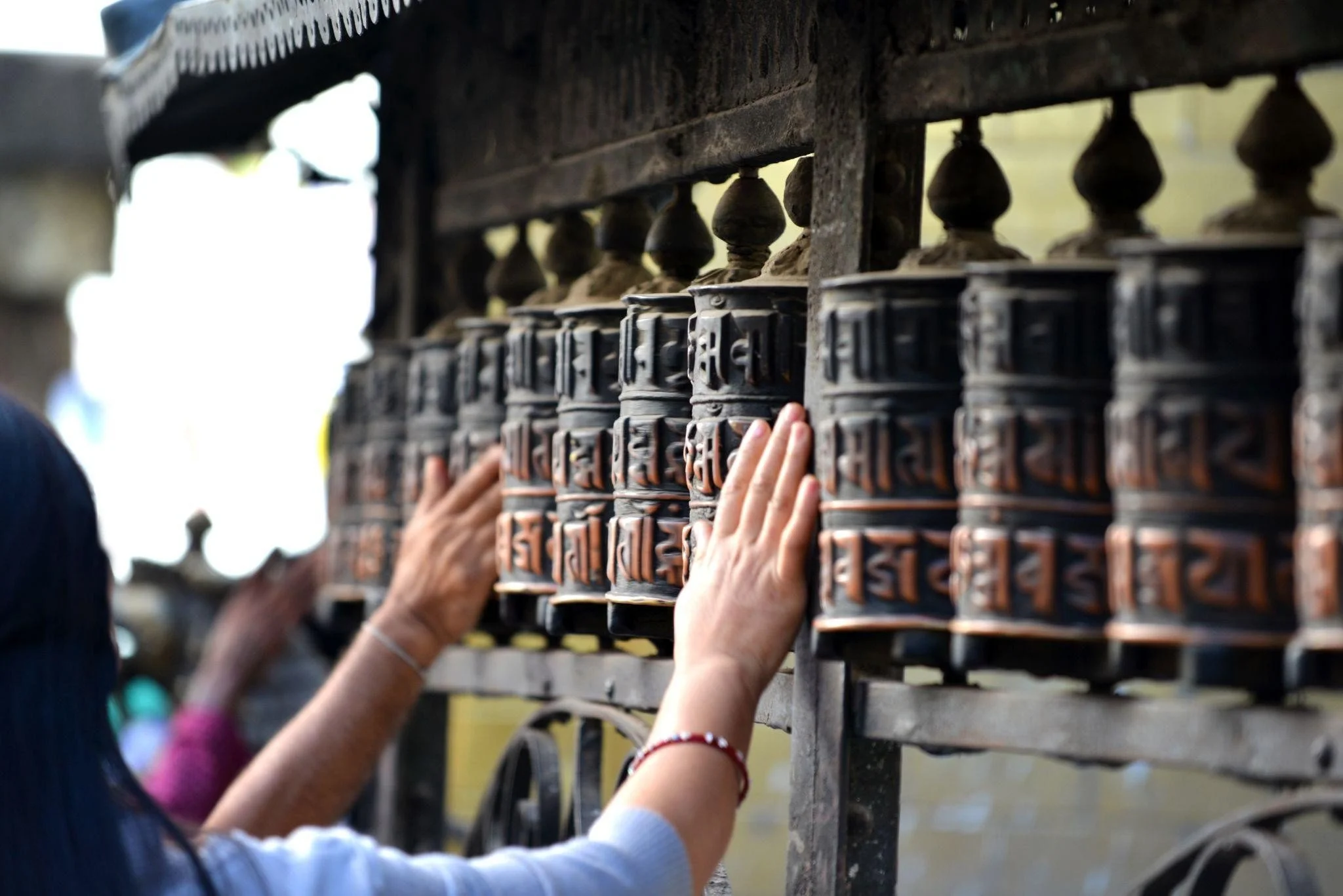
Prayer wheels, known as Mani wheels, have been an important part of Buddhist practice for centuries. Cylindrical in shape and often made of metal or wood, they are inscribed with sacred mantras, most commonly Om Mani Padme Hum. According to Buddhist belief, gently spinning a prayer wheel is considered spiritually equivalent to reciting the mantra, allowing practitioners to cultivate compassion, accumulate merit, and offer blessings for the well-being of all living beings.
Equally meaningful are Nepal's colorful prayer flags, which can be seen fluttering across mountain passes, temple courtyards, and monastery rooftops. Traditionally printed with prayers, mantras, and auspicious symbols, the flags are believed to carry blessings through the wind. As they flutter, they symbolize the spreading of peace, wisdom, compassion, and goodwill throughout the world, reminding both locals and visitors of the interconnectedness of all life.
The five colors of traditional prayer flags each hold symbolic meaning, representing the natural elements that sustain life. Blue symbolizes the sky, white represents air, red signifies fire, green stands for water, and yellow represents earth. Together, these colors express harmony and balance between humanity, nature, and the spiritual world, reflecting core principles of Buddhist philosophy.
Today, prayer wheels and prayer flags remain an integral part of Nepal's cultural and religious landscape. Whether encountered while exploring ancient heritage sites, visiting Himalayan monasteries, or trekking through mountain villages, they offer visitors a meaningful glimpse into the country's living spiritual traditions. Their quiet presence serves as a reminder of Nepal's rich history, enduring faith, and deep respect for peace, compassion, and harmony.
Whether admired for their spiritual symbolism, historical significance, or vibrant beauty, Nepal's prayer wheels and prayer flags continue to inspire people from around the world. They stand as timeless expressions of devotion, carrying centuries of tradition while inviting moments of reflection, gratitude, and connection in the heart of the Himalayas.
POPULAR ITINERARIES
SIMILAR POSTS
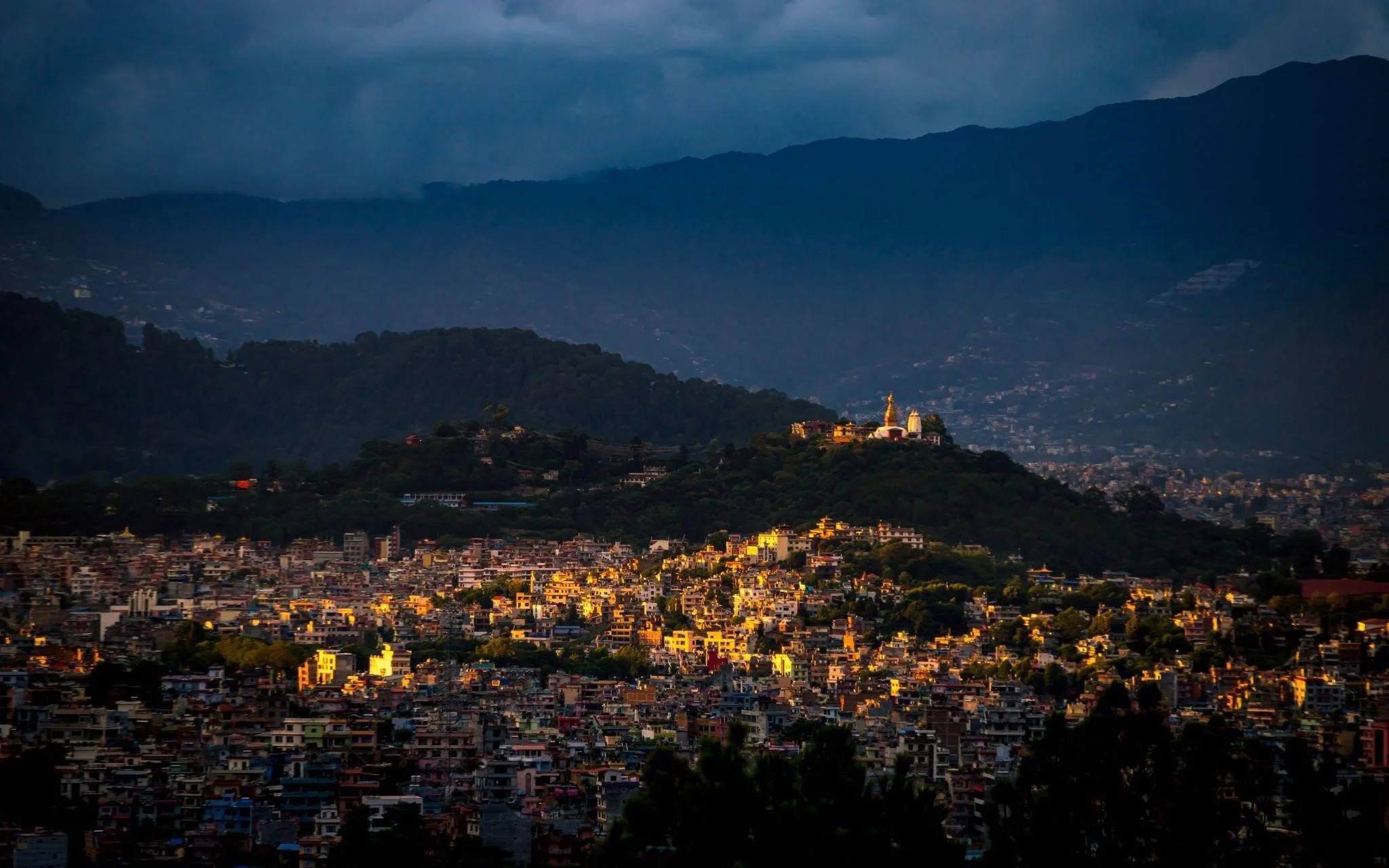
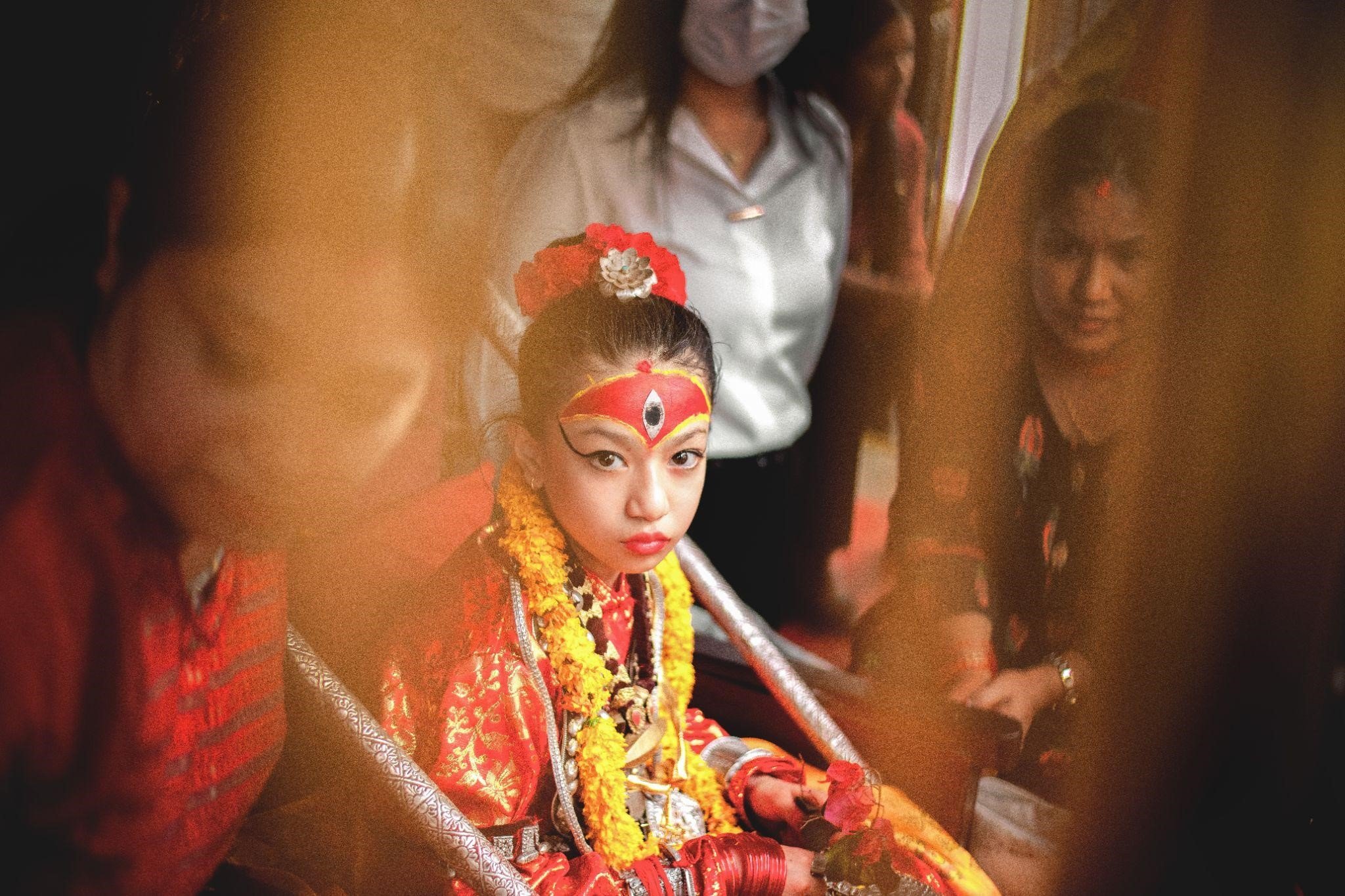
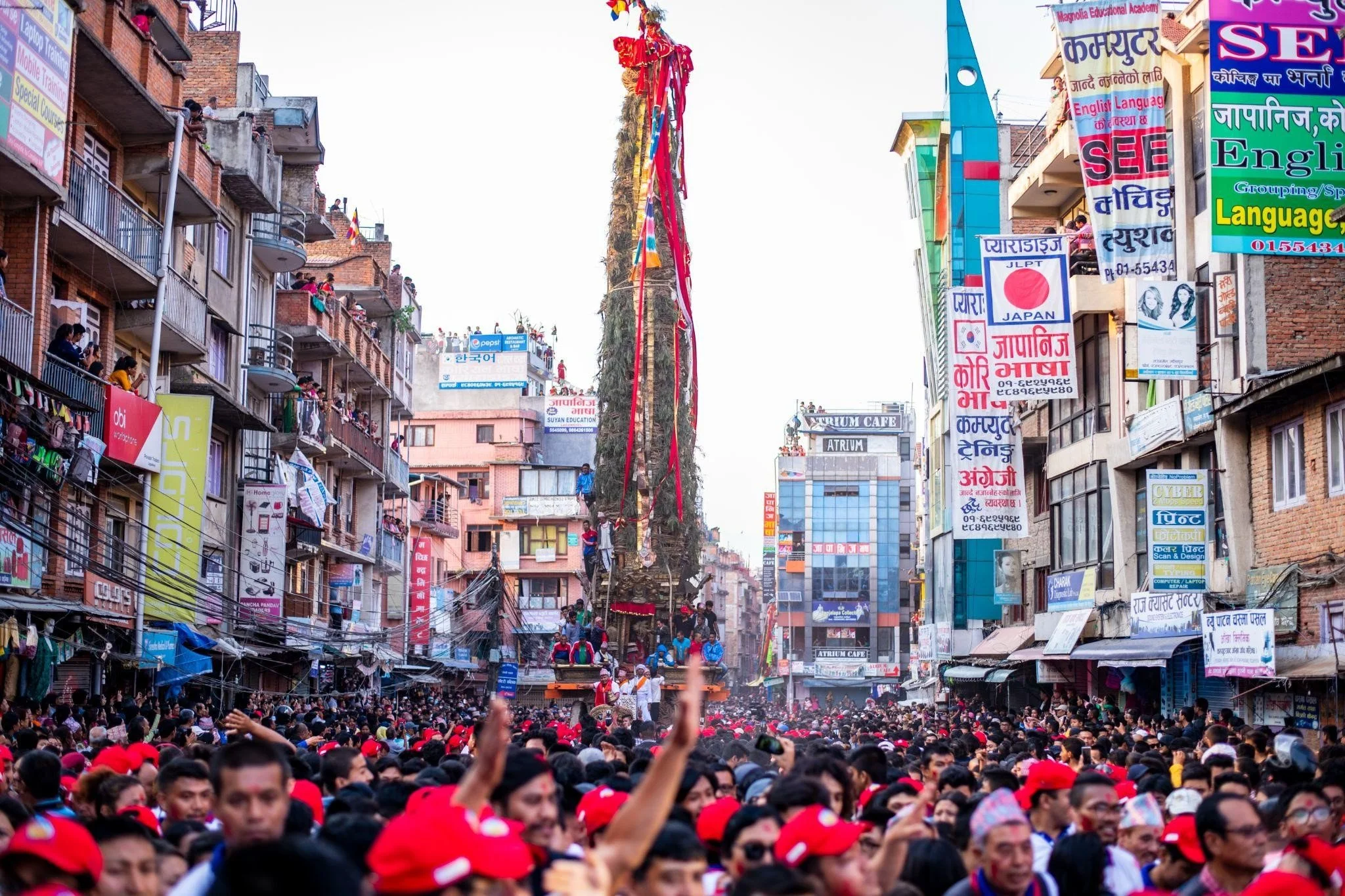
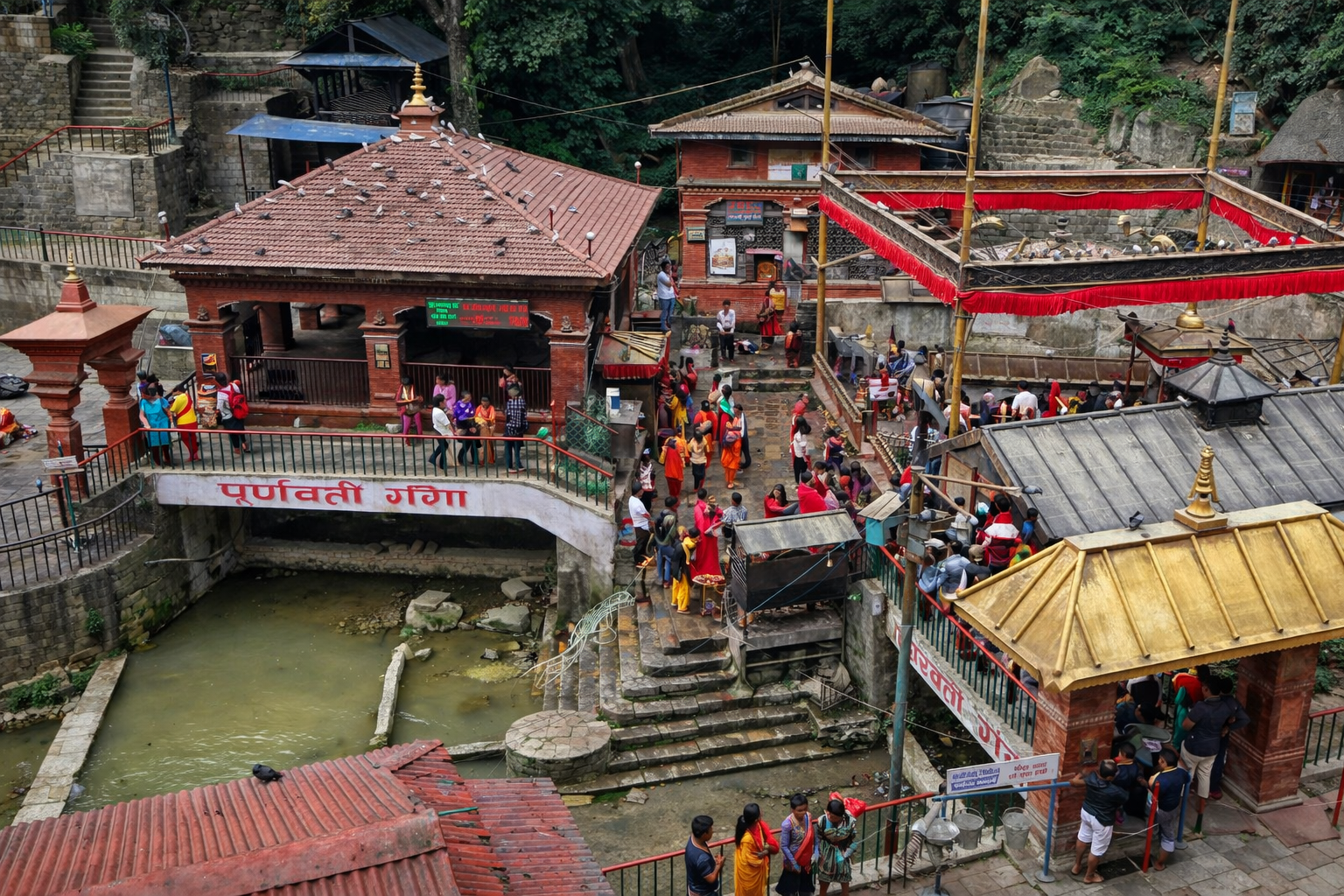
Krishna Janmashtami is a time of devotion, prayer, and celebration. People gather to honor the birth of Lord Krishna and embrace the values of faith, love, and compassion that continue to inspire generations.