
The Tales of Sikali Festival
As the entire nation prepares for the grand celebration of Dashain, the village of Khokana located south of Lalitpur gears up for the festival of Rudrayani. Popularly known as “Sikali Jatra”, the celebration trumps even the great festival of Dashain. The citizens of this once great kingdom celebrate the Sikali Jatra instead of Dashain.
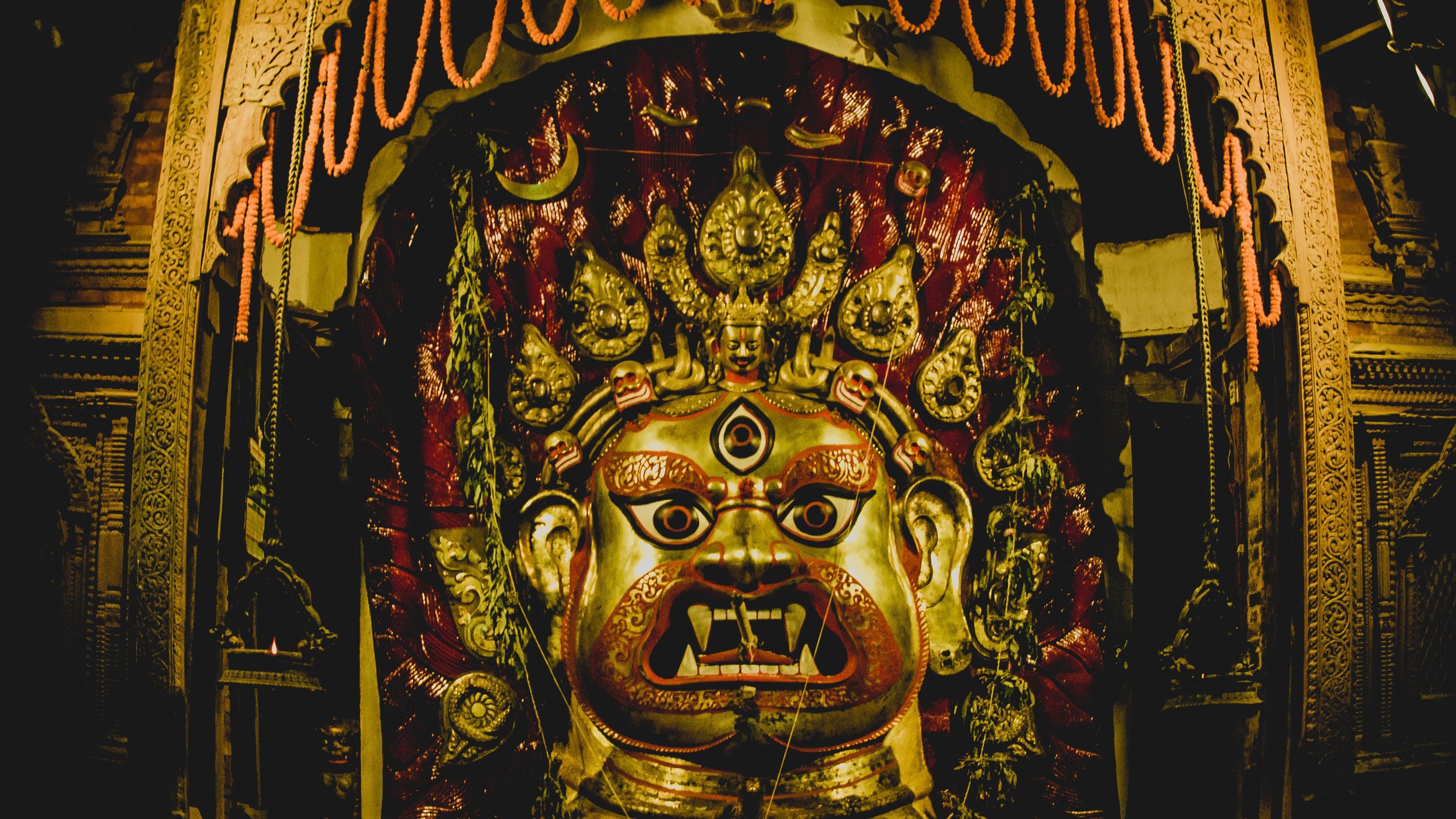
A celebration of a total of five days, which begins from Ghatasthapana and concludes on the day of Fulpati. The celebration is centered around the patron deity of the town of Khokhana, the goddess Rudrayani commonly known as Maheshvari. She is believed to be the Shakti of Lord Mahes(Shiva) also known as Maheswar. She is also a form of goddess Parvati is known by many names such as Rudrayani, Shankari, Shivani and Mahesi which are derived from the names of Lord Shiva Rudra, Shiv, Shankar and Mahesh.
The festival and the cultural dance depicted during the day of Fulpati is believed to be linked with the origin of the city of Khokhana. The city is believed to have been founded by King Amar Malla during the 15th century of the Medieval Malla Era. The Malla during their reign established various temples which were dedicated to the Matrika’s (Mother Goddesses), to protect there individual cities for various epidemics, illnesses and to protect their kingdom. The temples of the Asta Matrika’s were placed in eight cardinal directions on the border of each kingdom.
The goddess Rudrayani in the Newar pantheon is worshipped as one of the Matrika’s. It is believed that the town of Khokana came into existence after the establishment of the temple. King Amar Malla had migrated the Maharjan’s and Dangol’s who resided in Pachali Bhairav to the Khokhana for catering and maintaining the temple. During the foundation of the Kingdom, the city was known to be as Jitapur.
The current name of Khokana is derived from the Newari words, “Kho:” which means to weep and “Kana” means to tell. Legend has it that once, a Maharjan priest of Pachali Bhairav of Kathmandu fainted due to high cold fever. After which the Vaidya feeling his cold body pronounced him dead and thus he was taken to the bank of Bagmati to be cremated. His body was accompanied by his wife who was to place in the pyre as “Sati”.
When the pyre was just alighted, a heavy storm broke which caused huge rains to occur which caused the people who had gathered during the cremation and arrangements to run to shelter leaving the pyre. As the pyre burned, the priest became conscious. The people of the community didn’t allow him and his wife to enter the city as they feared a bad omen. The couple then ran weeping all the way and settled in Kudesh; (Ku meaning Bad and Desh meaning country) which is believed to have been the north-west of present Khokana. It is said that the Goddess Sikali Devi blessed them and a new settlement was established. After a while, the people from the opposite bank of the river began harassing them and for their safety, they shifted towards high ground east of Kudesh. This settlement started by the weeping couple is believed to be the origin of Khokana. Today the place known as Kudesh is a ruin and due to the lack of archaeological expedition, this place has been lost to time.
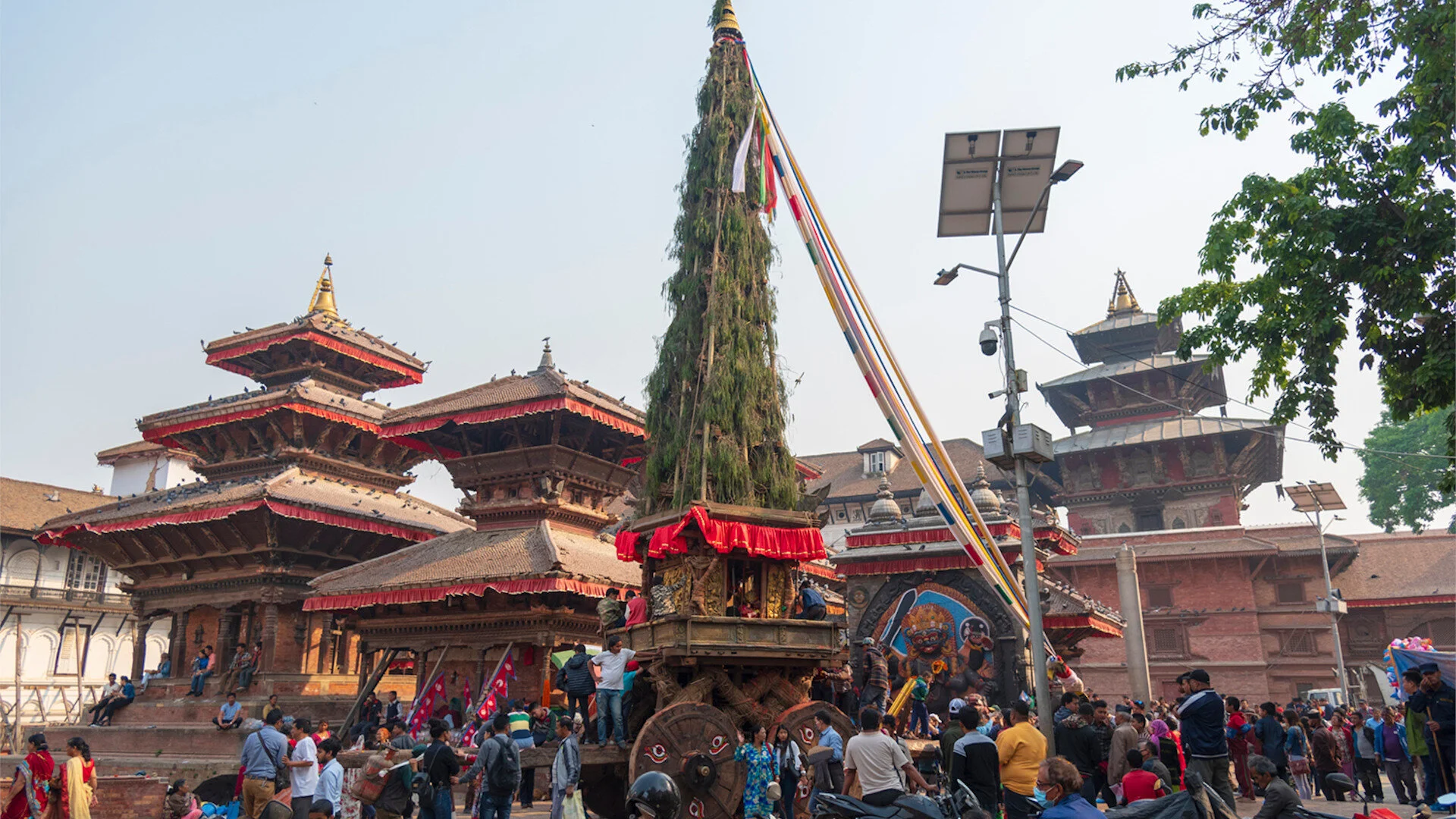
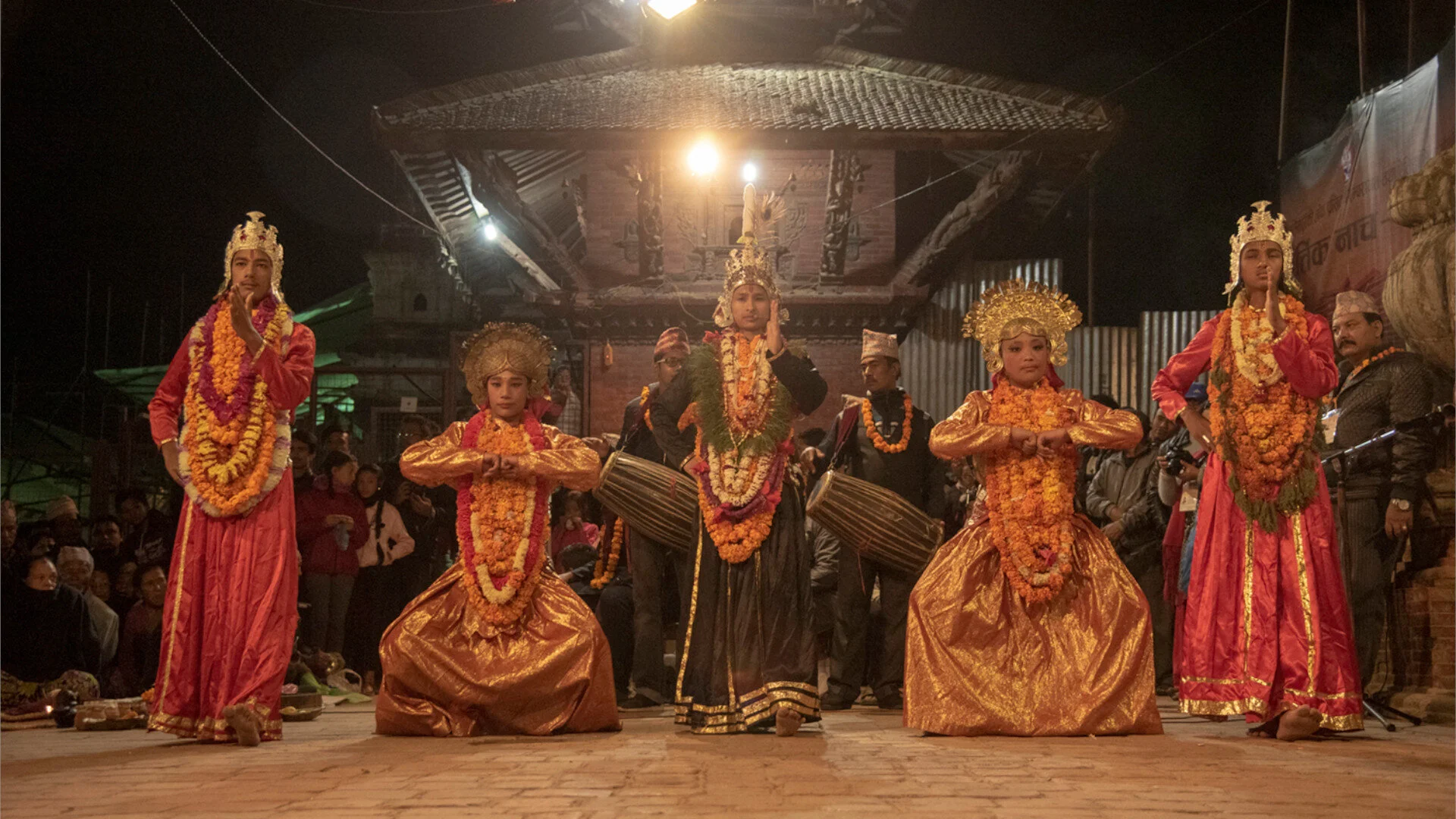
During the festival of Sikali, on the final day which aligns with Fulpati, a special skit is performed by the elders of the community. The skit is presented in a form of archaic storytelling with traditional music and individuals dressed in godly attire adorned with the masks of the deities and demons. The day before which, the deities are taken to the temple of Sikali in avid fanfare, which gathers a huge crowd to witness the spectacle and take blessings of the deities.
Due to the strict norms and regulations of the community, and a lack of research the festival is prone to lose much of its heritage with the passing generation. With all the knowledge of the rites and process in the minds of the Thakali (Eldest) and the norms forbidding the young to directly participate. The great festival of Rudrayani, which holds huge cultural values is slowly facing the same faith as many masked dances in the valley.
Currently the Sikali Jatra is celebrated twice in the lunar cycle, first during Gai Jatra after which in the five days of Dashain which begins from Gathasthapana and ends on Fulpati.
SIMILAR POSTS
Amongst the great celebrations of this valley, nothing beats the pomp and flair of Yenya Punhi. Commonly known as Indra Jatra- a name derived from the lore of Indra- the heaven king's visit to Nepal. This festival is larger than life, with symbolism and meaning going back thousands of years- neatly preserved by the Newars.
Newari communities in Nepal celebrate numerous festivals every year. All these festivals are tied to its culture and heritage, events for ancient mythology, agricultural calendar, family, and communities.
Newari culture is very rich and ritual throughout the year and the Newari communities celebrate numerous festivals every year. All these festivals are tied to its culture and heritage, events for ancient mythology, agricultural calendar, family, and communities.
Svanti festival is known by several names: Tihar, Dipawali, Pancaka, and Yamanpanchaka. And most popularly known by its other name Tihar, is one of the national festivals of Nepal celebrated throughout the kingdom by Hindu and Buddhist populations.
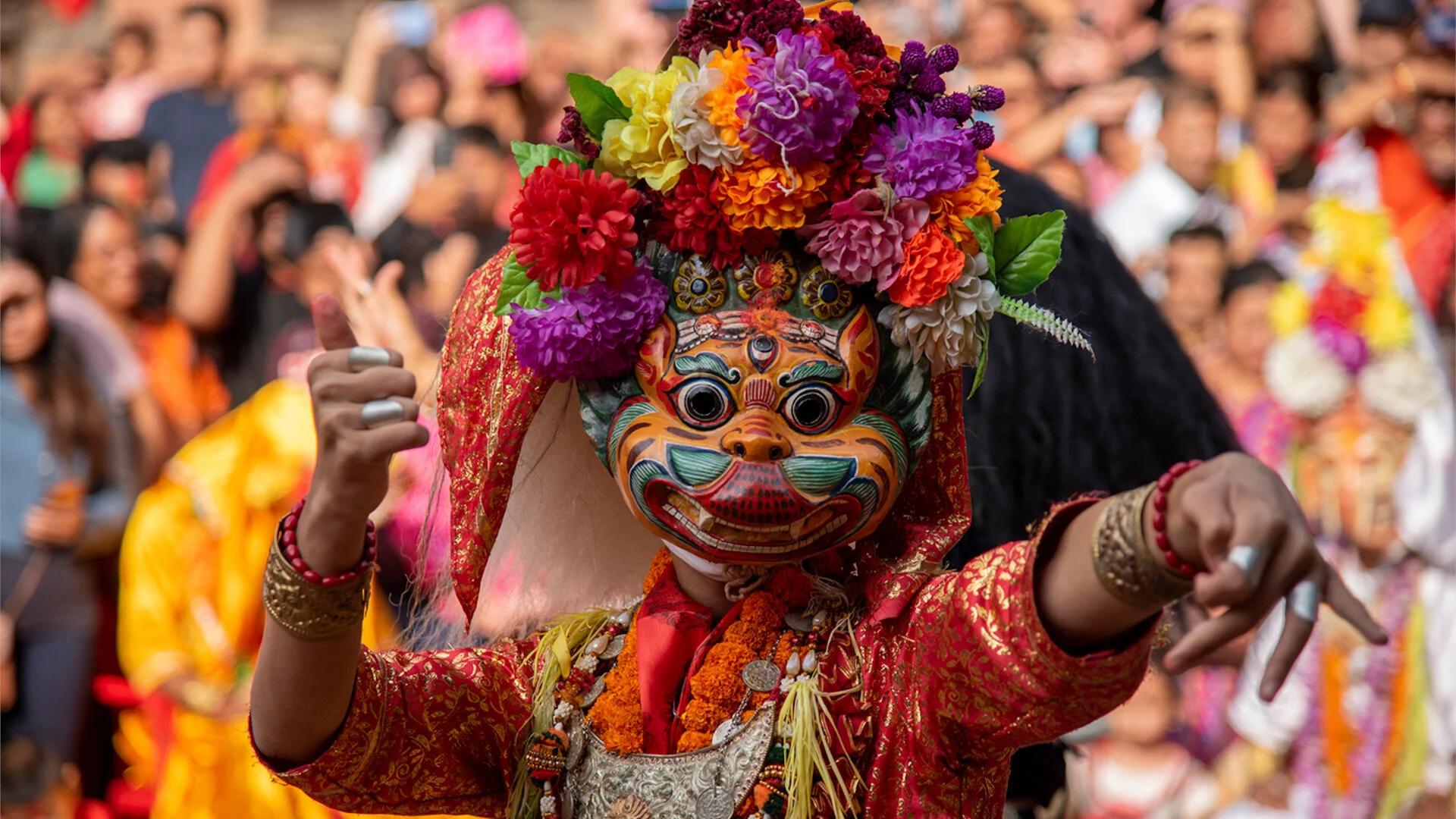
The events of Mohani can be divided into two: Family & Communal and bears similarities with the celebration of Dashain. And, the general perception of individuals views the two festivities as the same, but Mohani is specific to the Newari communities. Mohani is centered around the family’s tutelary deity, whereas Dashain is the celebration of the victory of gods over evil.
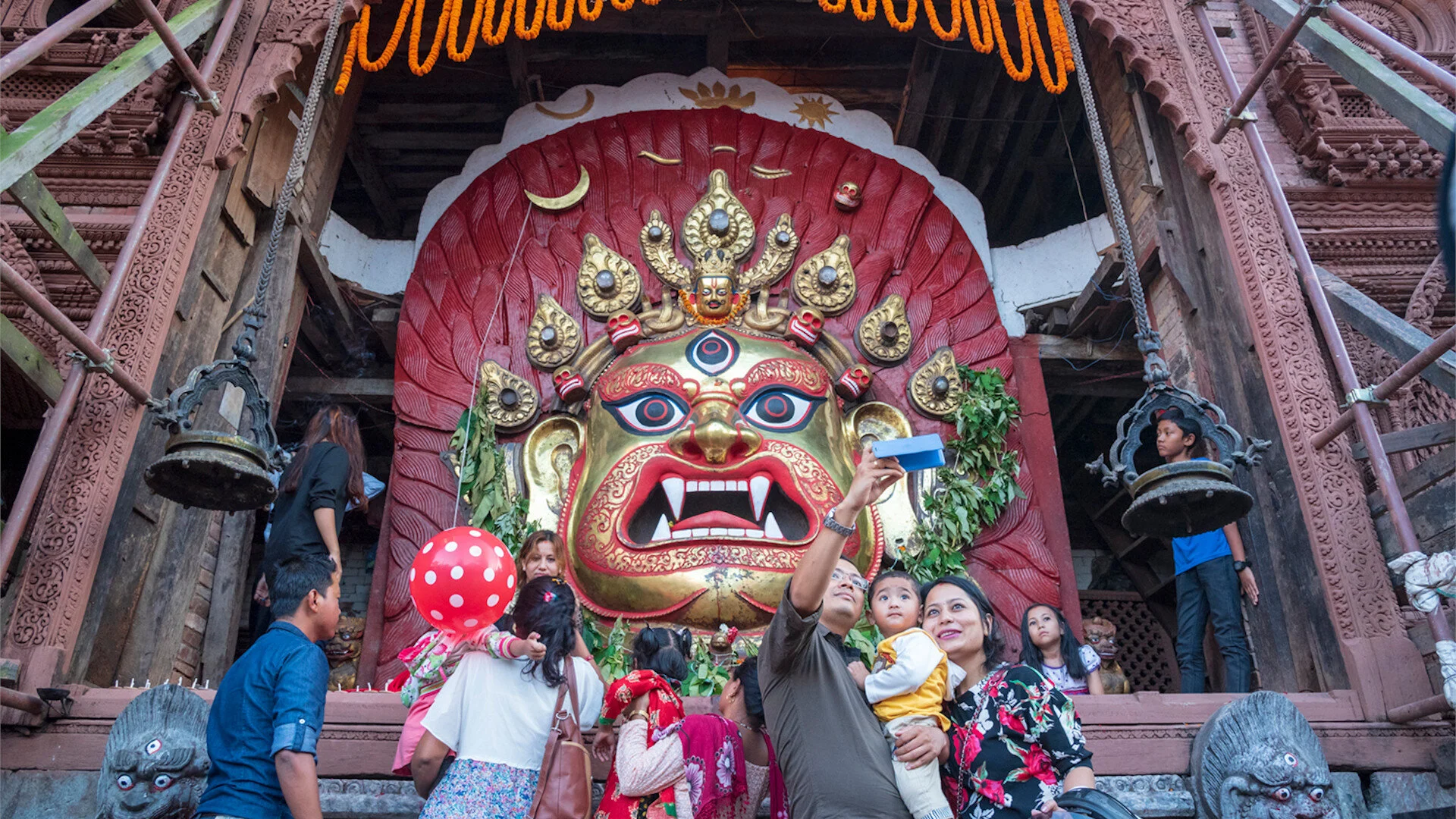
Newari communities in Nepal celebrate numerous festivals every year. And it seems Newars always have a reason to celebrate. Several reasons: rich culture and heritage, honoring deities, marking the agricultural calendar, celebrate events from ancient mythology, and to emphasis family and community.
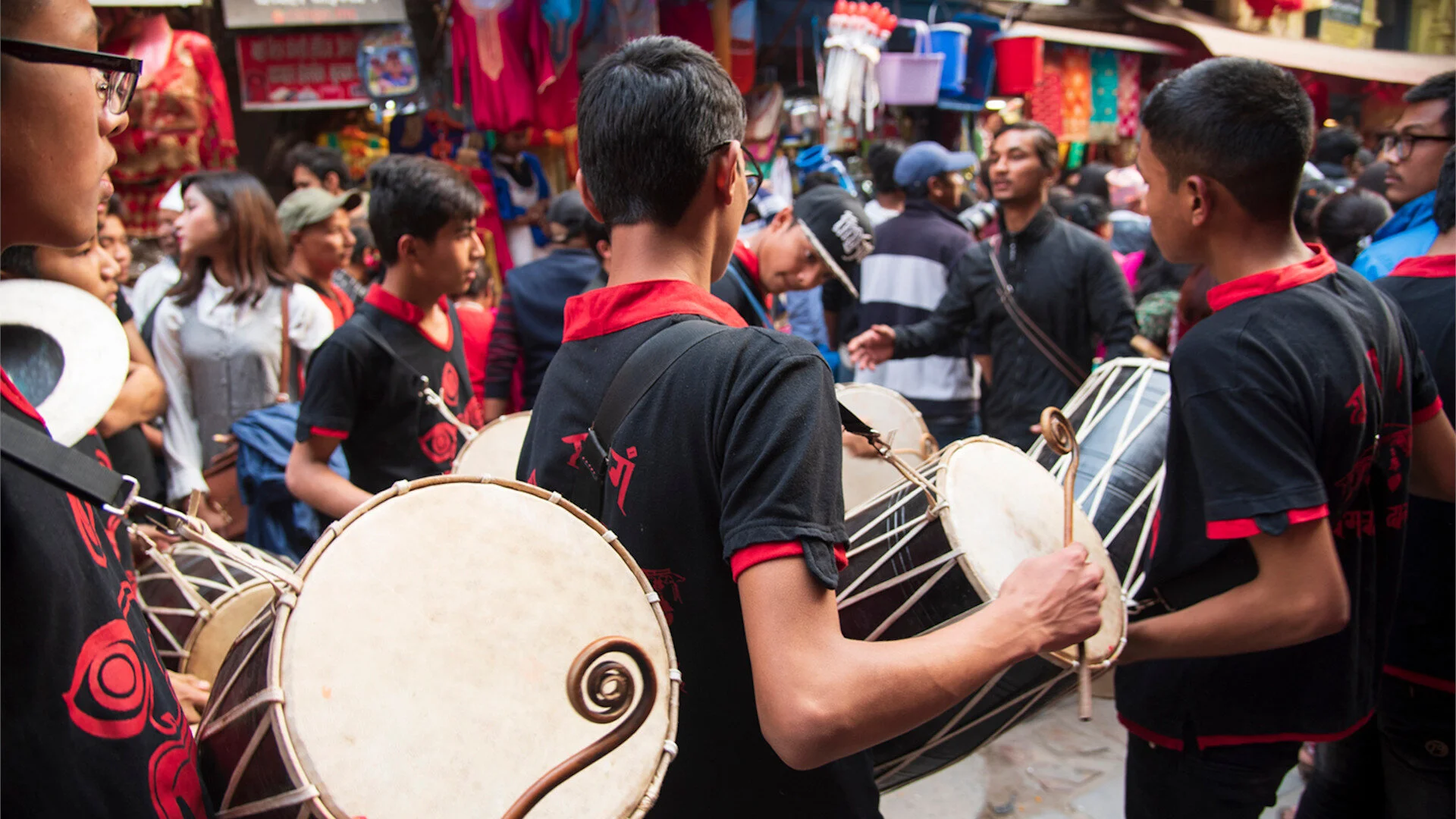
Newari communities in Nepal celebrate numerous festivals every year. And it seems Newars always have a reason to celebrate. Several reasons: rich culture and heritage, honoring deities, marking the agricultural calendar, celebrate events from ancient mythology, and to emphasis family and community.
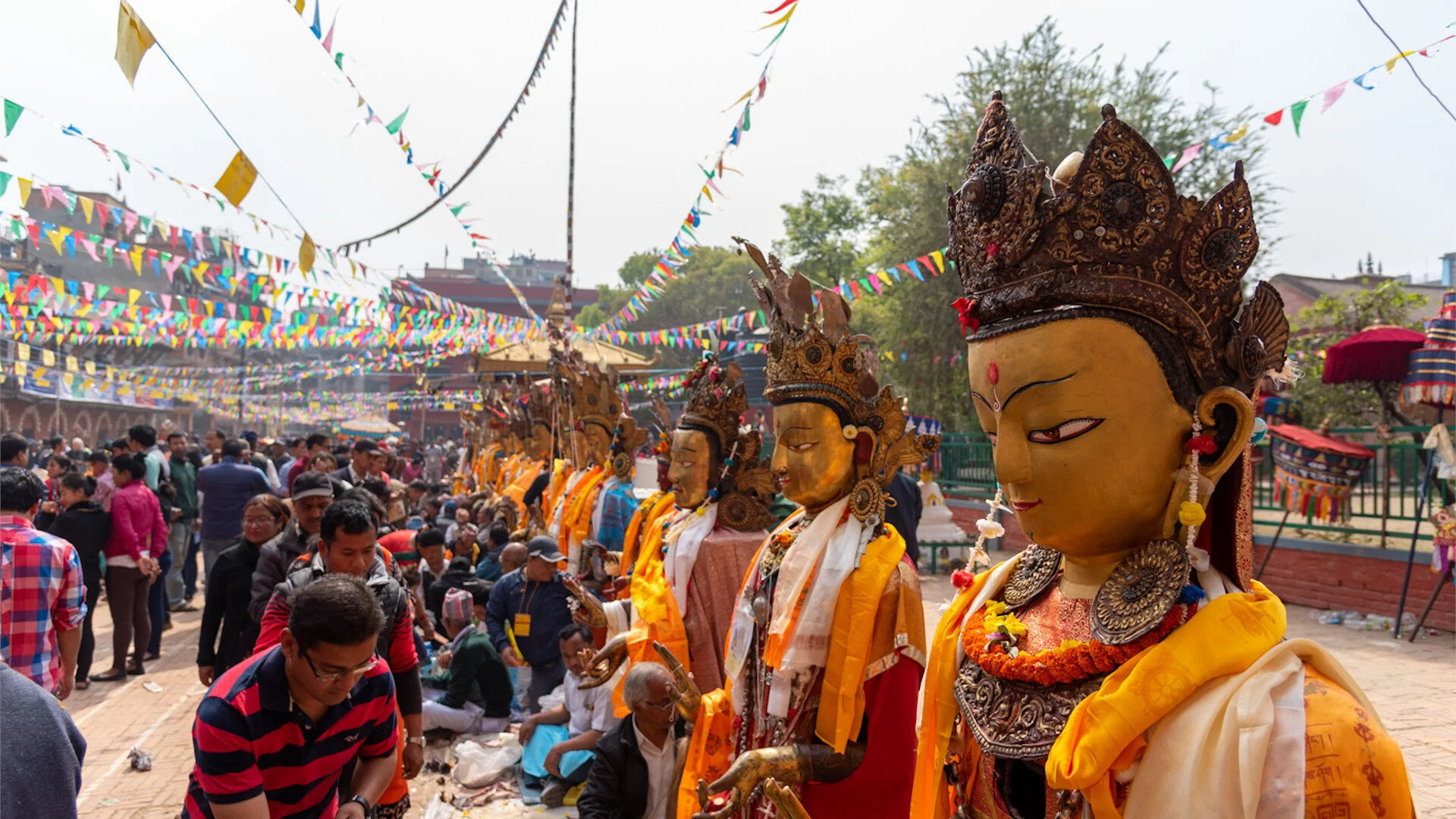
Samyak Mahadan is a Buddhist alms-giving festival, also known as the festival of Dipankara Budhha is celebrated once every five years in Patan, Lalitpur. The festival has been important for Buddhist Newars, as it has become a way of practising daan dharma(alms-giving).
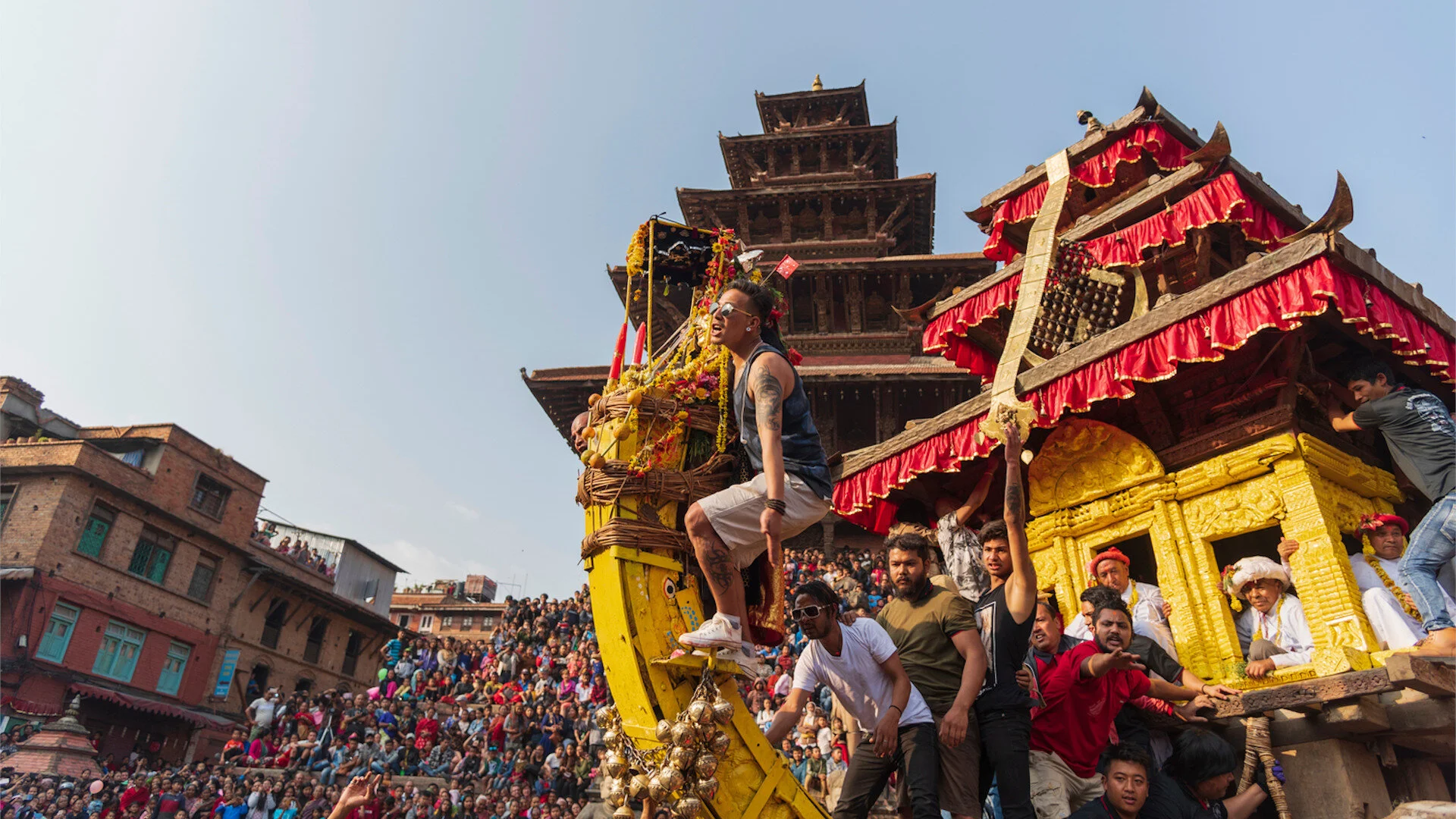
Bisket Jatra, also known as Biskah Jatra(festival) is a weeklong yearly occasion of Newari community in Bhaktapur. Among many other popular festivals in Kathmandu Valley, Biskah Jatra is celebrated with special rites and rituals in the historical and cultural city Bhaktapur.
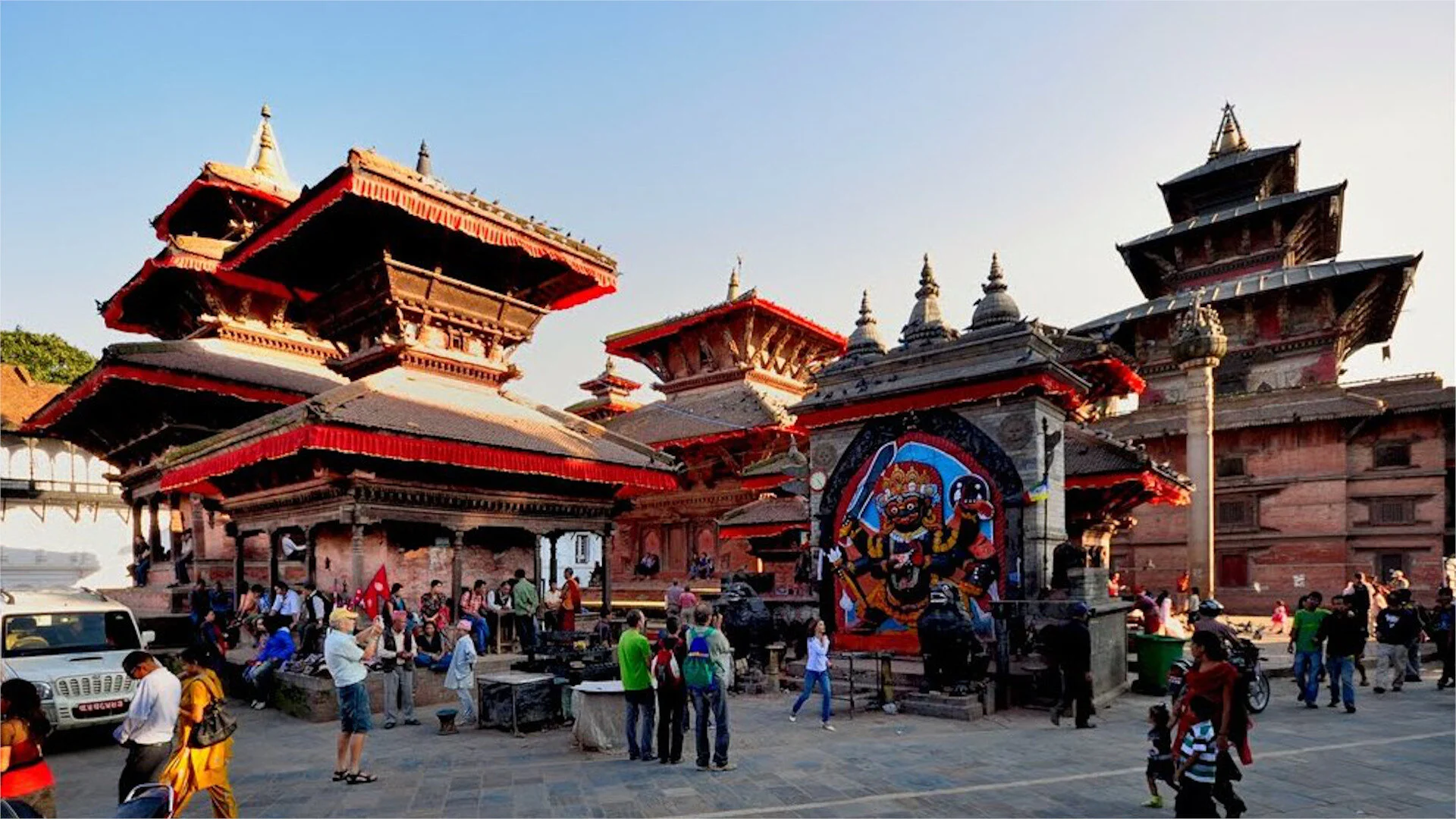
Pahan meaning guests and Charhe meaning on the fourteenth day of the lunar fortnight, the avid tunes of the festival can be heard for three consecutive days in the old towns of the city of Kathmandu. This three-day festival brings together the community in a unique manner and has helped build communal strength and friendship.
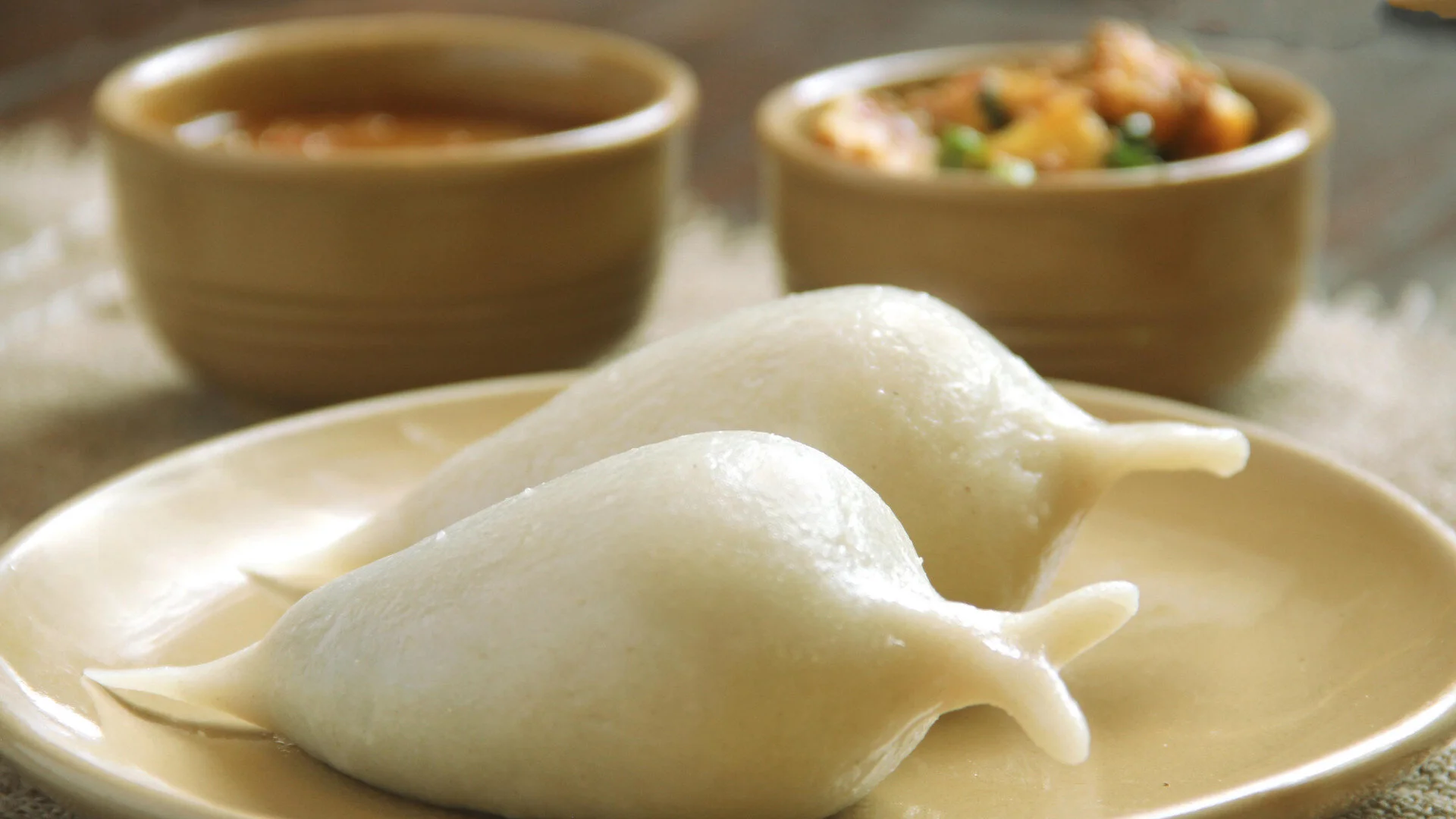
Yomari Punhi, a Newari festival in Nepal is celebrated every year by Newari Communities marking the end of the rice harvest during the full moon day of November/December. It is said that eating Yomari or Yamari, a steamed dumpling made with rice flour with sweet such as Chaku inside takes away the cold.
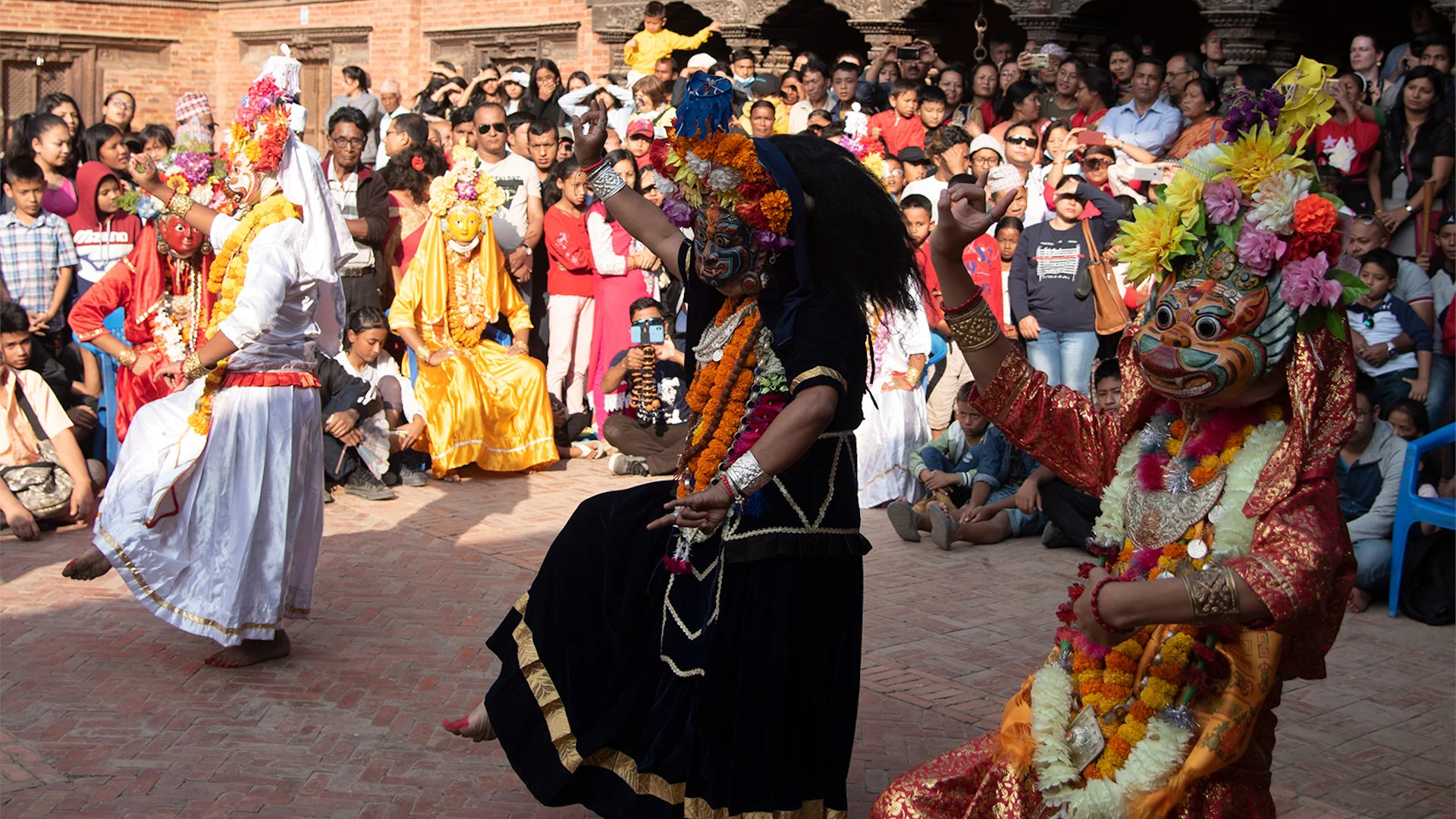
Ga: Pyakhan in Patan(Asta Matrika Dance) is popular among the locals of Patan. The dance of Eight Mother Goddesses, deities of Hindus, is performed by male Buddhist dance during the Nepalese biggest Dashain festival. The dance is staged in the royal court of Mulchowk, inside the Patan Durbar Square of Lalitpur. It is believed that the dance is performed as a worship of the deities to bring the prosperity and fortune to the people.
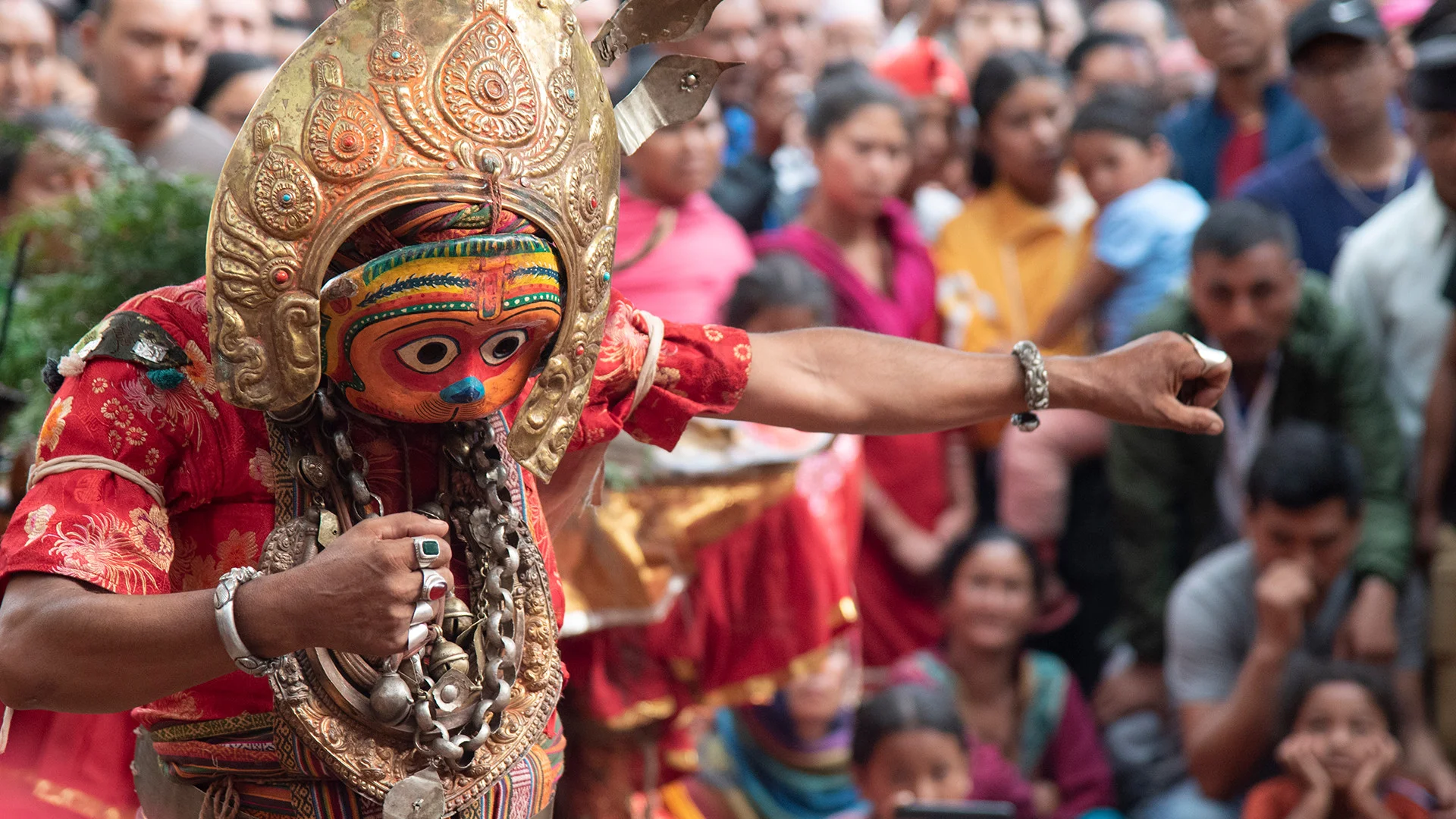
While the entire nation prepares for the celebration of the biggest festival Dashain, local of Khokana village located to the south of Lalitpur gears up for the festival of Rudrayani known as Sikali Jatra. Festival is celebrated by a section of the ethnic Newari community with a skit presentation in a form of archaic storytelling with traditional music and individuals dressed in a godly attire adorned with the masks of deities and demons.
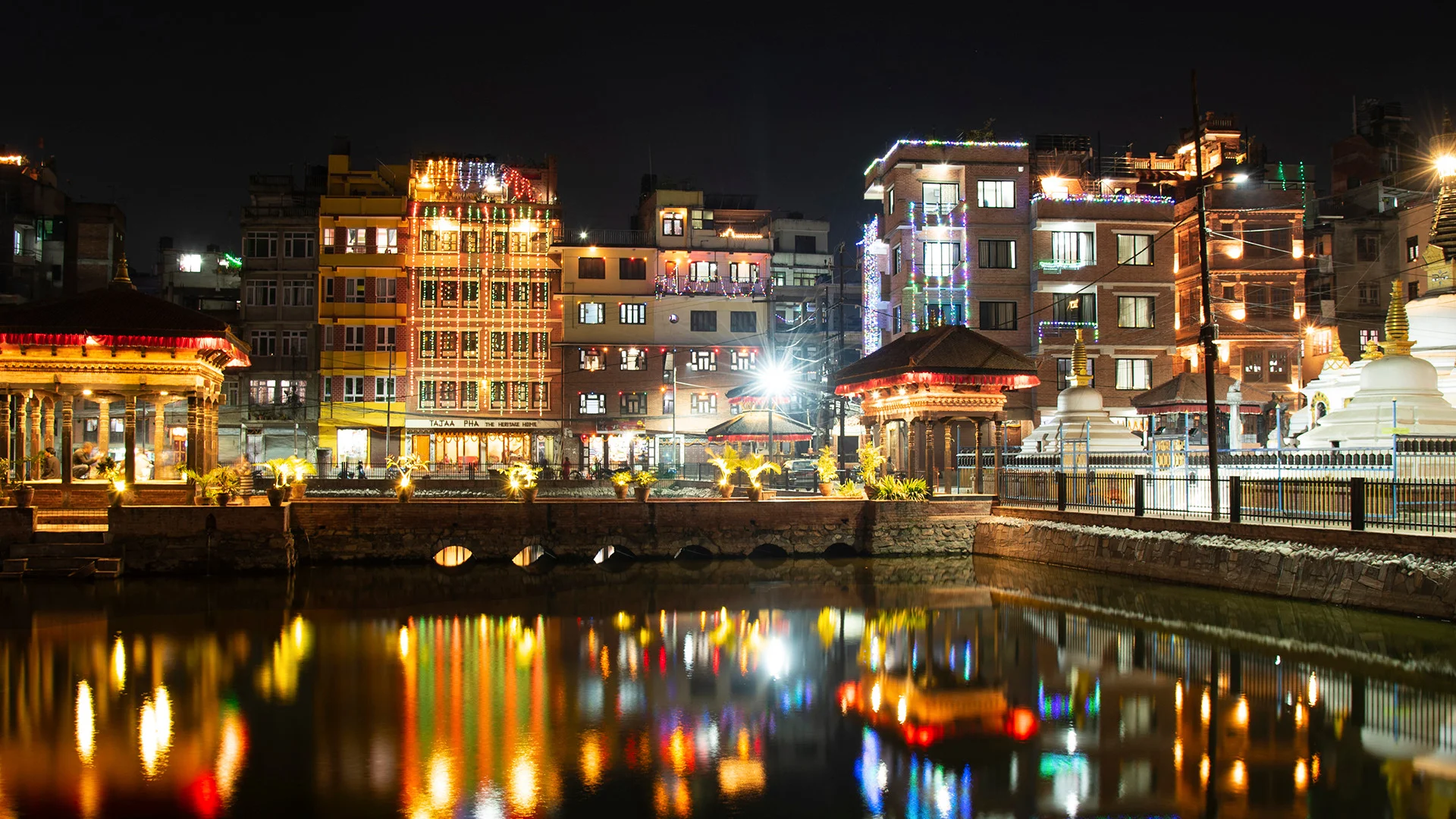
Tihar festival or the festival of Lights is Nepals' second-biggest festival after the Dashain festival. Tihar is considered to be one of the most fun-filled and celebrated festivals in Nepal. And, the festival falls under the best tourist season with the fantastic weather. One can take a tour of the Kathmandu valley and witness the majesty of the city during Tihar.
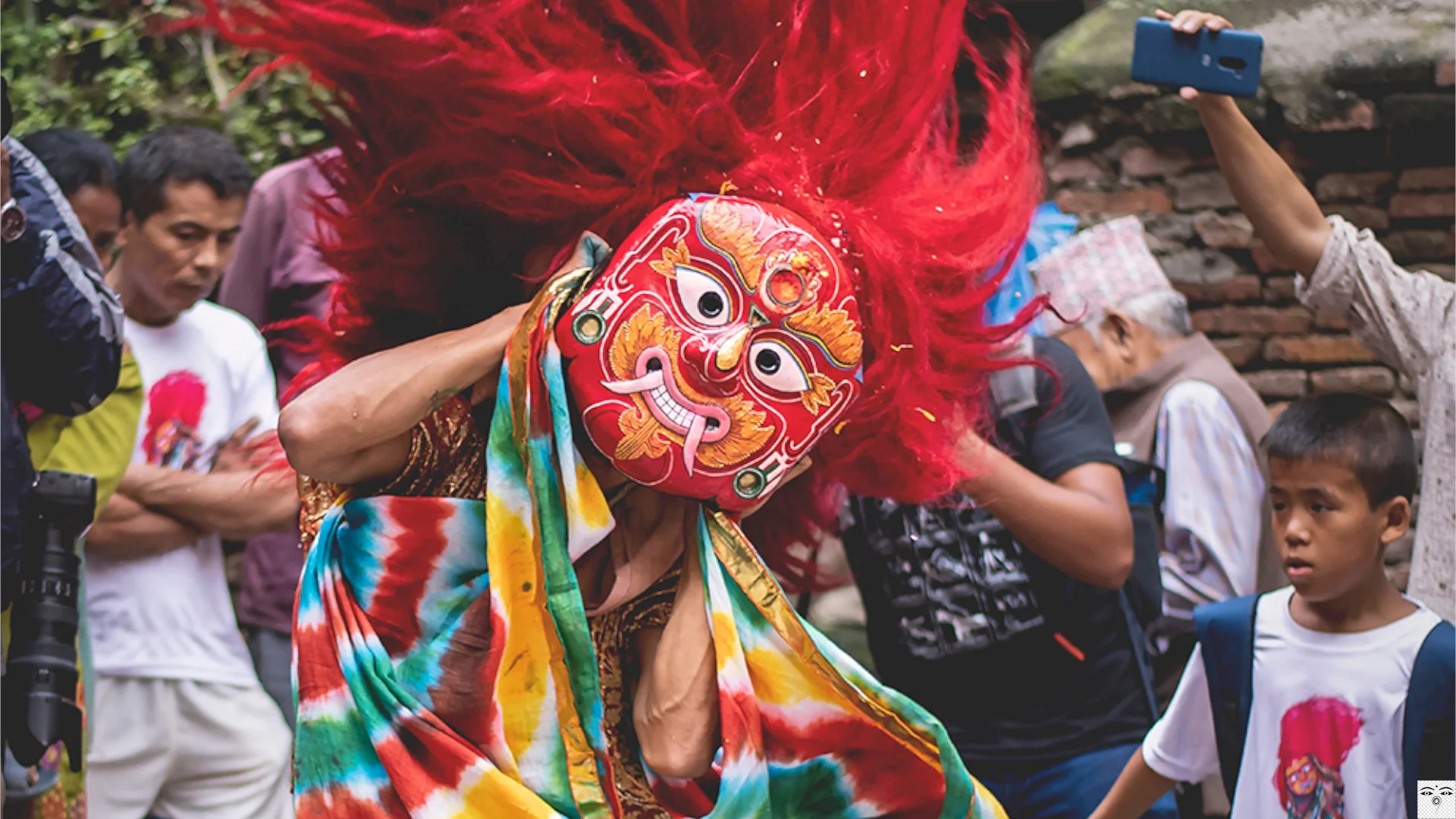
Majipa Lakhey in Newar mythology is the protective deity of all children in the Valley. During the annual festival of Indra Jatra, the dance of Majipa Lakhey is performed by the clan of Ranjitkars of Kathmandu with a traditional drum (Dhime) and a pair of Bhusya (pair of cymbals) with straps to fasten around the wrists. Devotees during the dance performance try to manage a touch the Lakhey’s rich display to take the blessings.
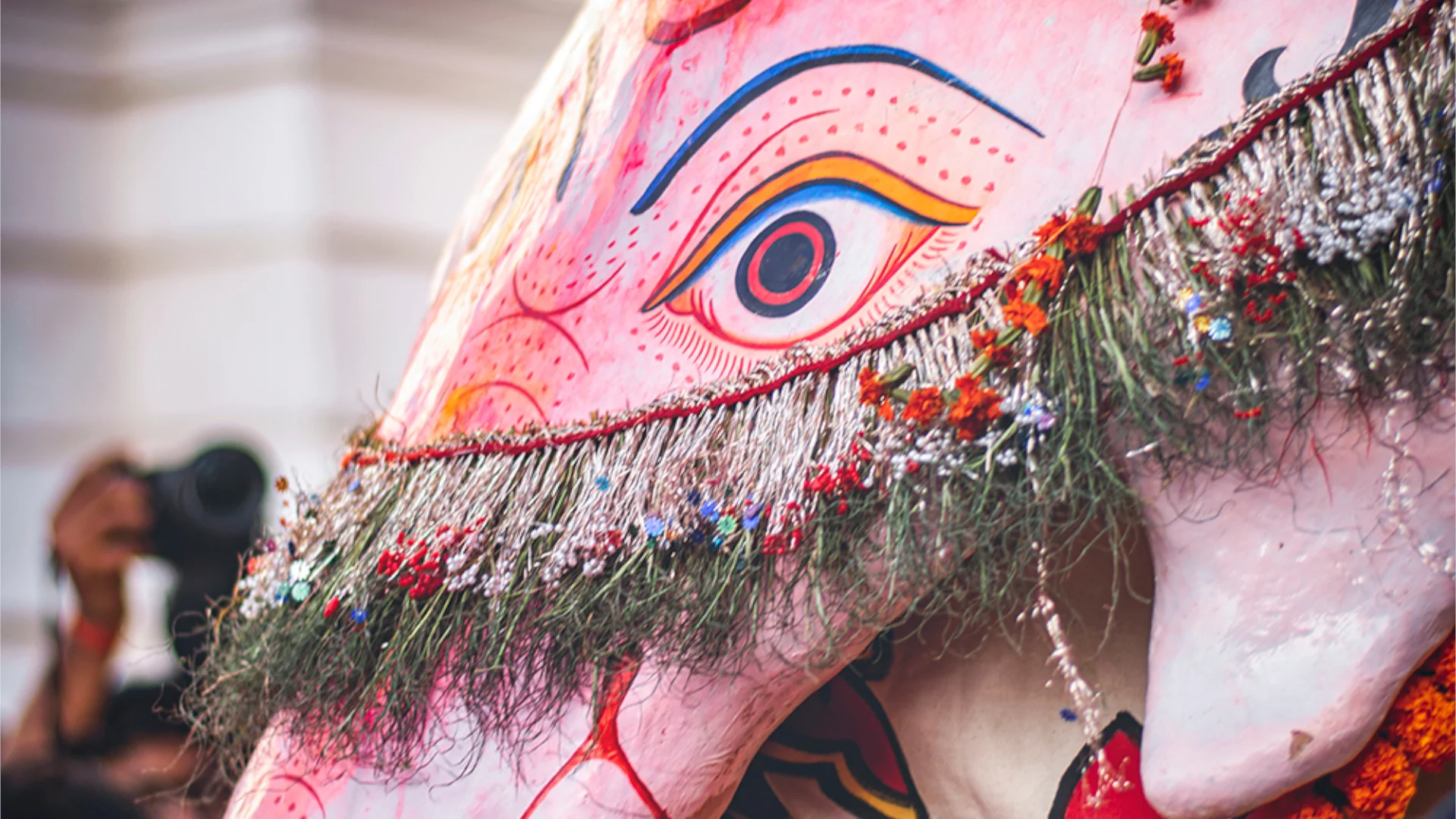
Indra Jatra, one of the highly celebrated street festival in Nepal marks beginning of the festival season and the beginning of a tourist season in Nepal. The festival is celebrated in the oldest town Basantapur Durbar Square or Hanuman Dhoka in Kathmandu by the local community with huge arrangements. The chariot of Kumari, the Living Goddess, is taken out in procession through the streets. People wear masks of various goddess and exhibit by dancing in the streets on music played with traditional musical instruments.
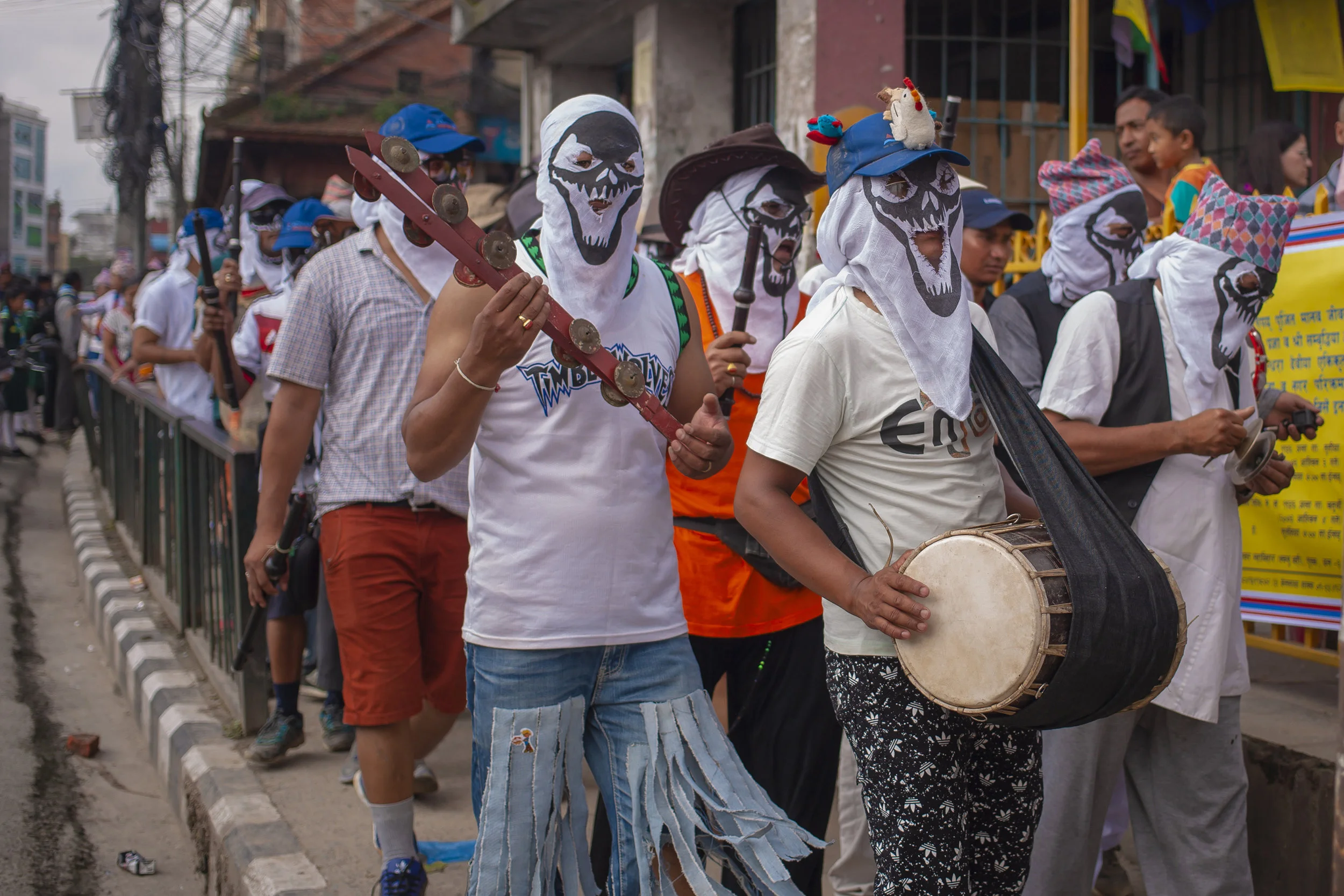
The festival of Mataya is one of the most important festivals in the Newar community in Patan. A unique Buddhist festival, during when men and women in a comical attire carrying candles and torches, traditional musicians playing merry rhythms walk to almost all the temples, stupas and monasteries in and around the old city of Lalitpur.
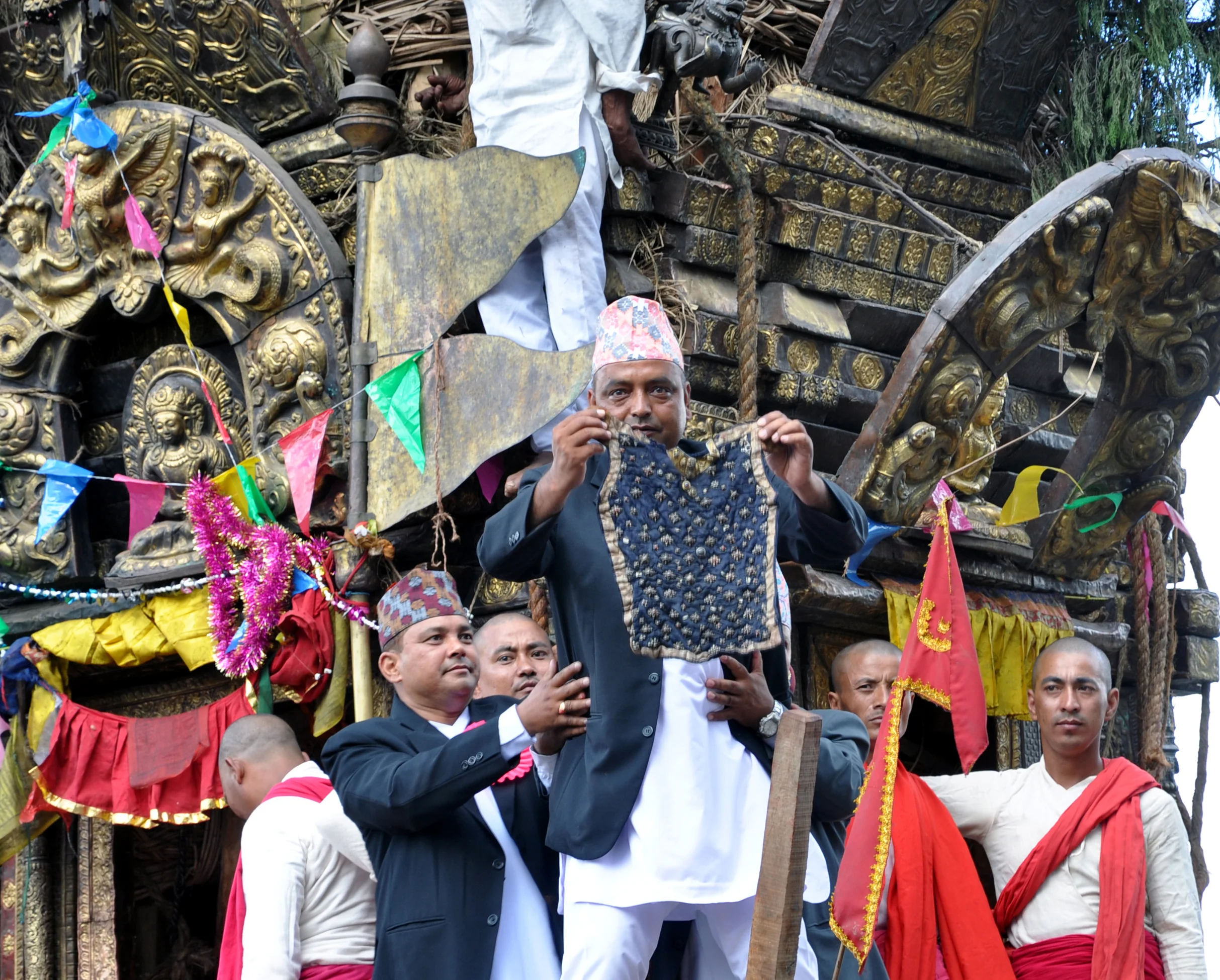
The legend of a jewel-studded vest (Bhoto) that came into possession of a priest when no one came to claim with evidence to whom it belongs. Today, the same Bhoto is displayed ending the month-long celebration of Rato Matsyendranath Festival in Lalitpur. And it is said, Bhoto is shown every year to the public as of an announcement to claim for it.
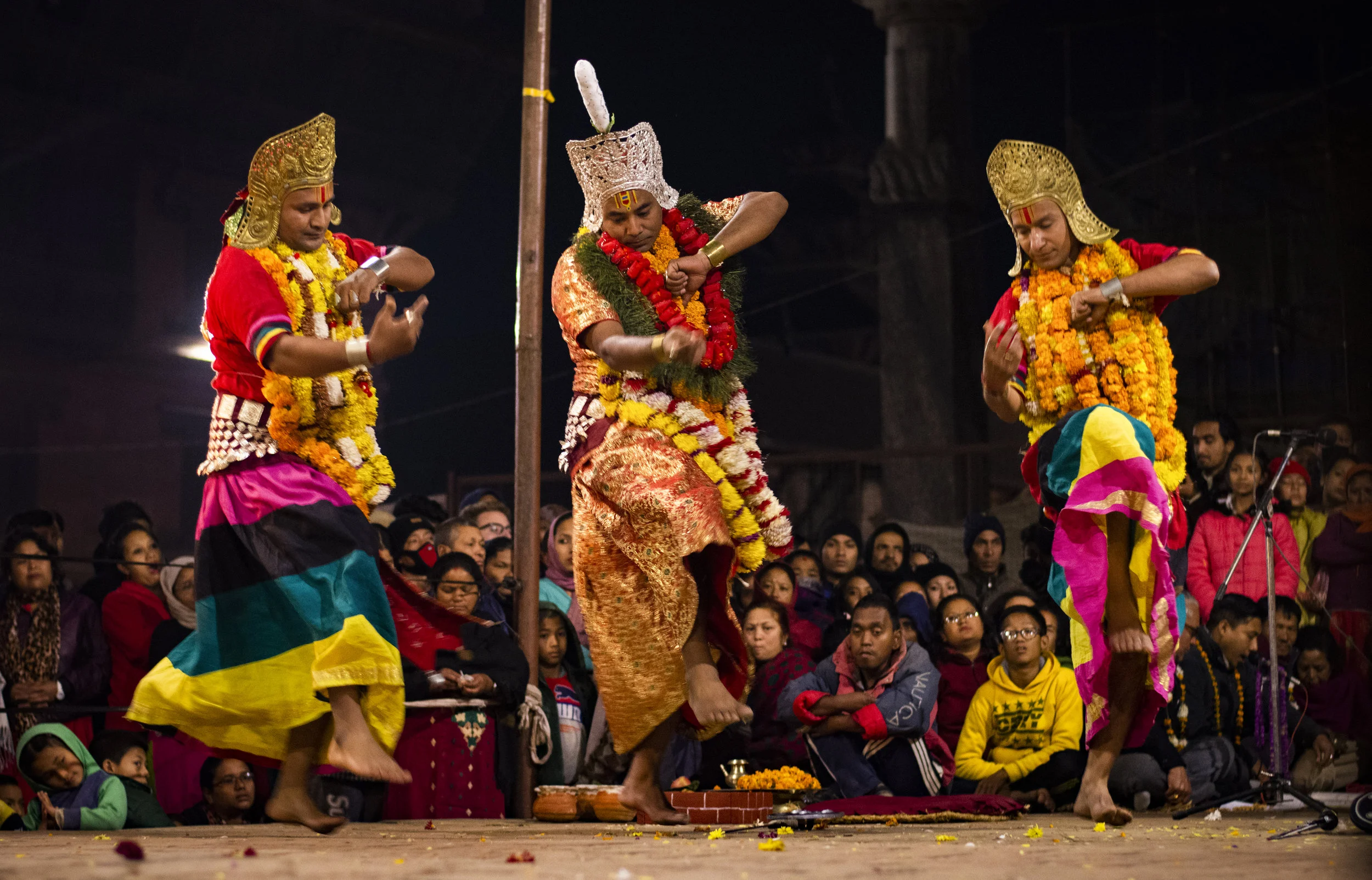
This particular act carries a message that anyone who tries to do ill and harm others, s/he is punished and no one escapes justice. A story of a powerful demon king had a son. The son refused to acknowledge his father as supreme lord of the universe and claimed that Lord Vishnu was all omnipresent
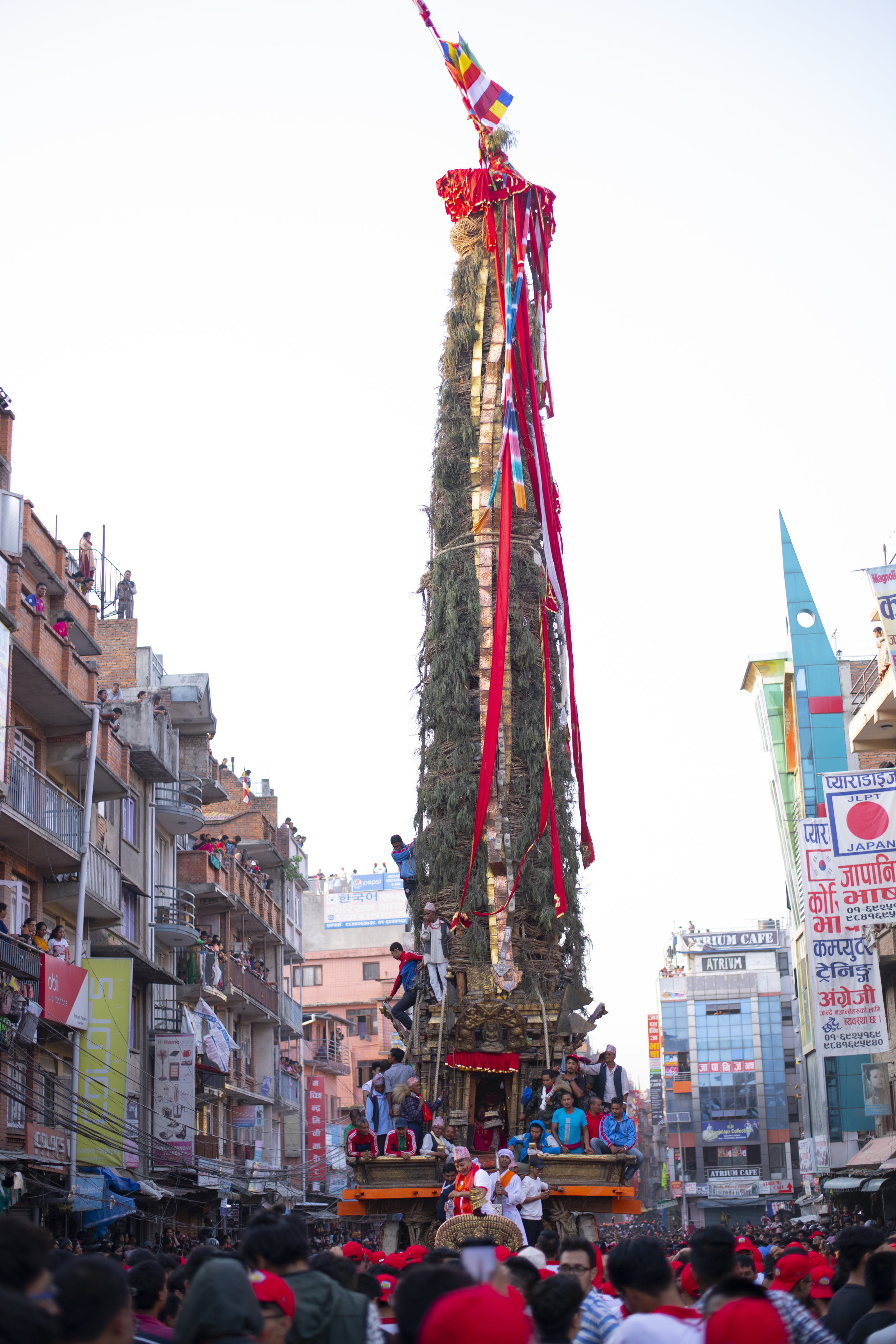
The legend of a giant chariot festival began with the Kingdom that drought for years causing misfortune and chaos as a result of disrespect to Gorakhnath. And, how Matsyendranath through devout and prayer, guru of Gorakhnath protected the valley with rain for the harvest, pulling the chariot and celebrating the coming of Lord Karunamaya.
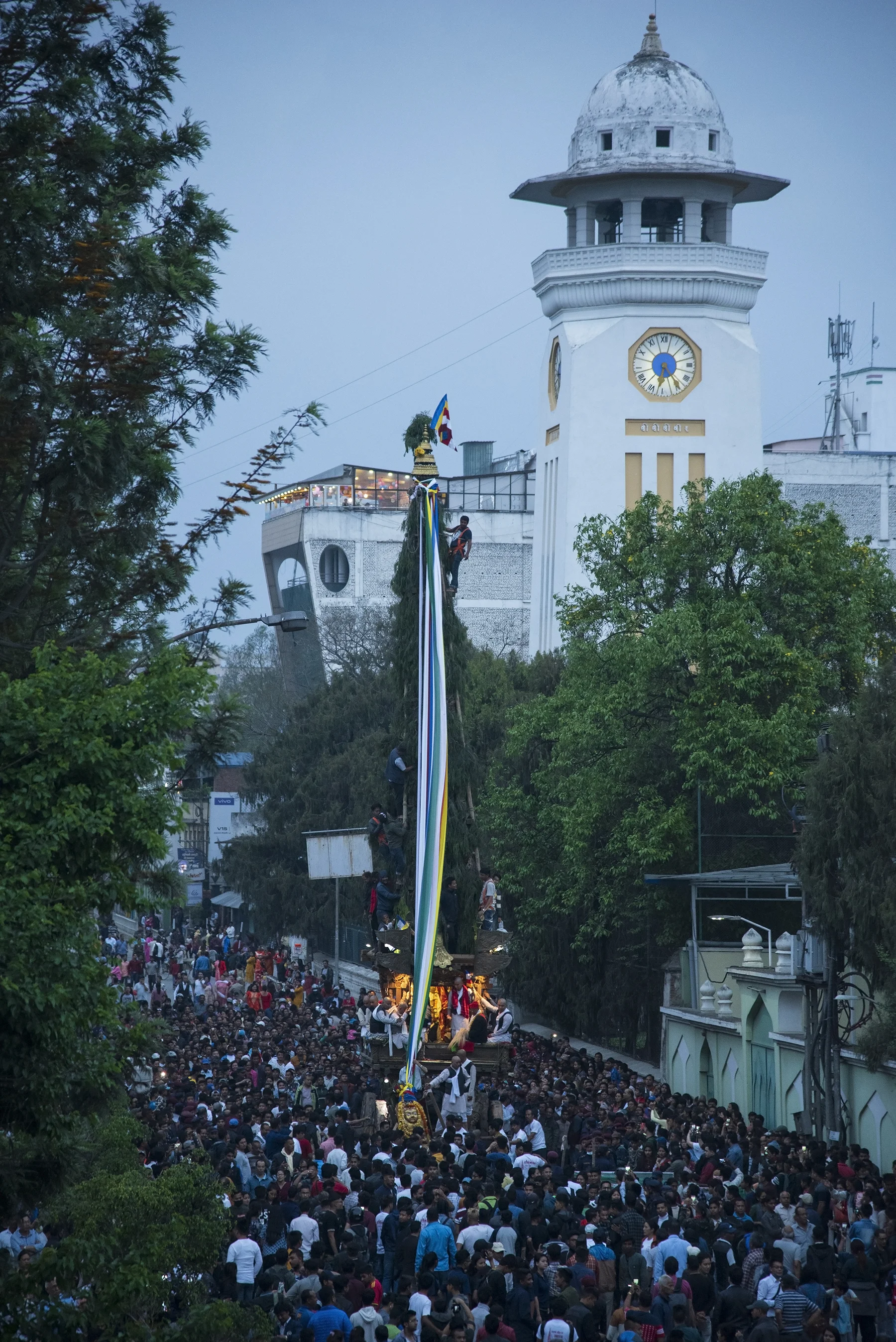
When one thinks of a chariot festival in sure you're thinking of the, Indra Jatra, Bisket Jatra or Rato Matysendranth. These festivals are the biggest in each Kingdom of the then Nepal Valley, but one chariot festival when is as historic as the three is not so known of : The Chariot Festival of Aryavalokiteswara Jana Baha Dyo.
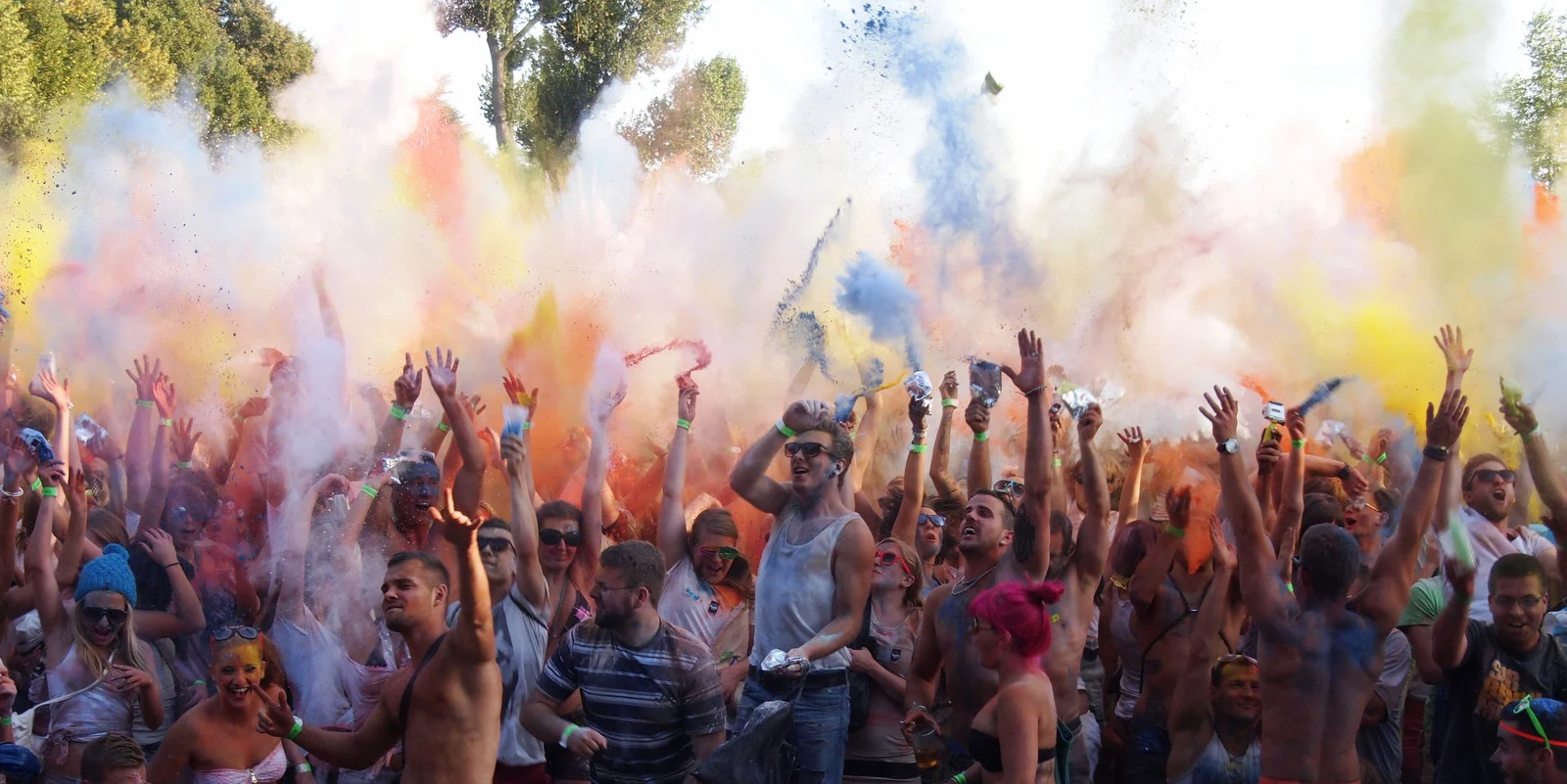
Fagun Purnima also known as Holi is a festival marking the end of winter and coming of spring and summer. Back in the days when phones and the internet didn’t exist, a ling bamboo lingo decorated with clothes of various colors (Chir) is erected a few days before the day of the festival. This tradition is still continued in Basantapur Durbar Square.
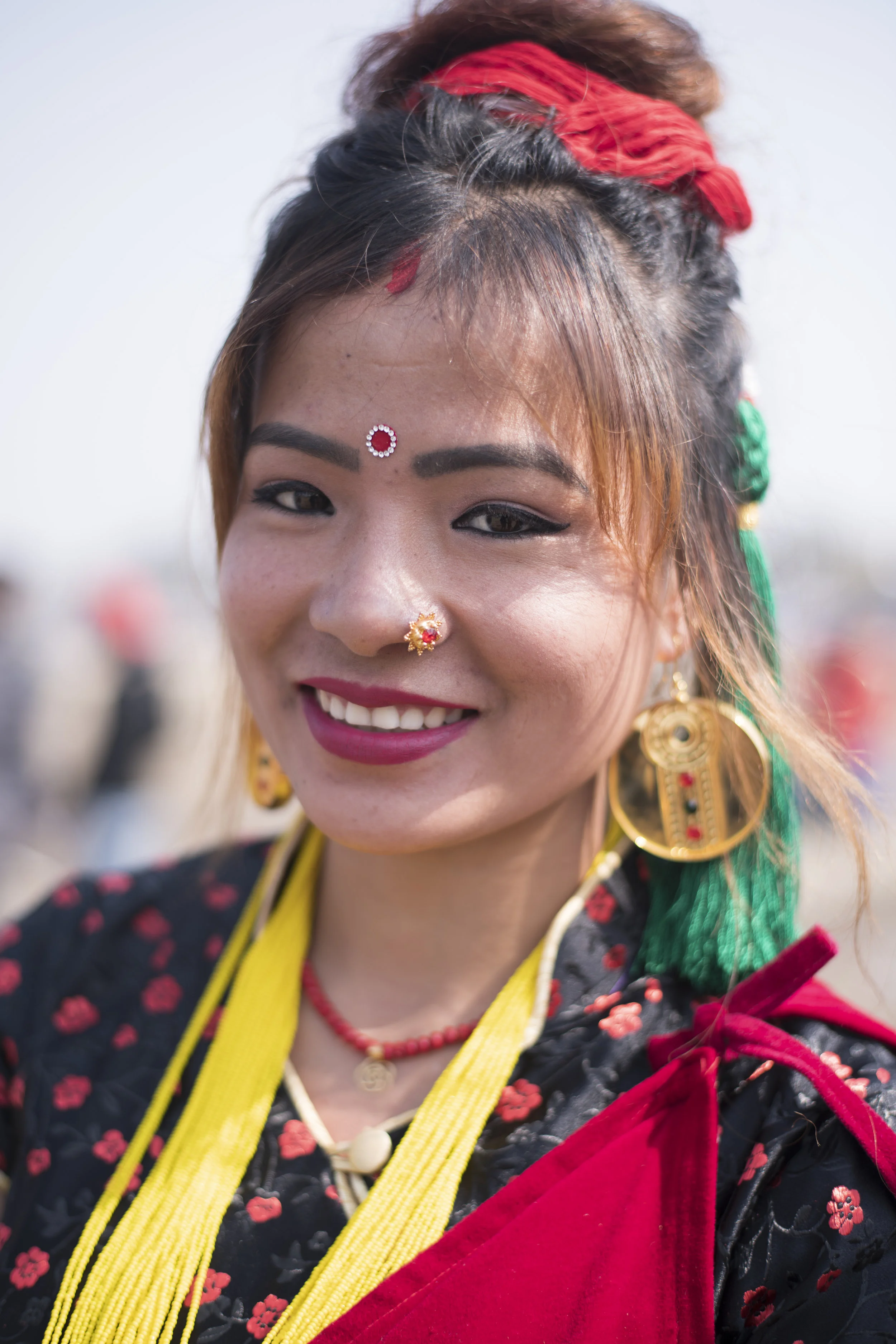
Losar is one of the main festivals celebrated by the ethnic communities of Tamang, Sherpa, Gurung and Thakali. Losar means new year according to the unisolar calendar followed by the communities, it is also known as the Tibetan Calendar which follows the cycle of 12 years called Lohokor.
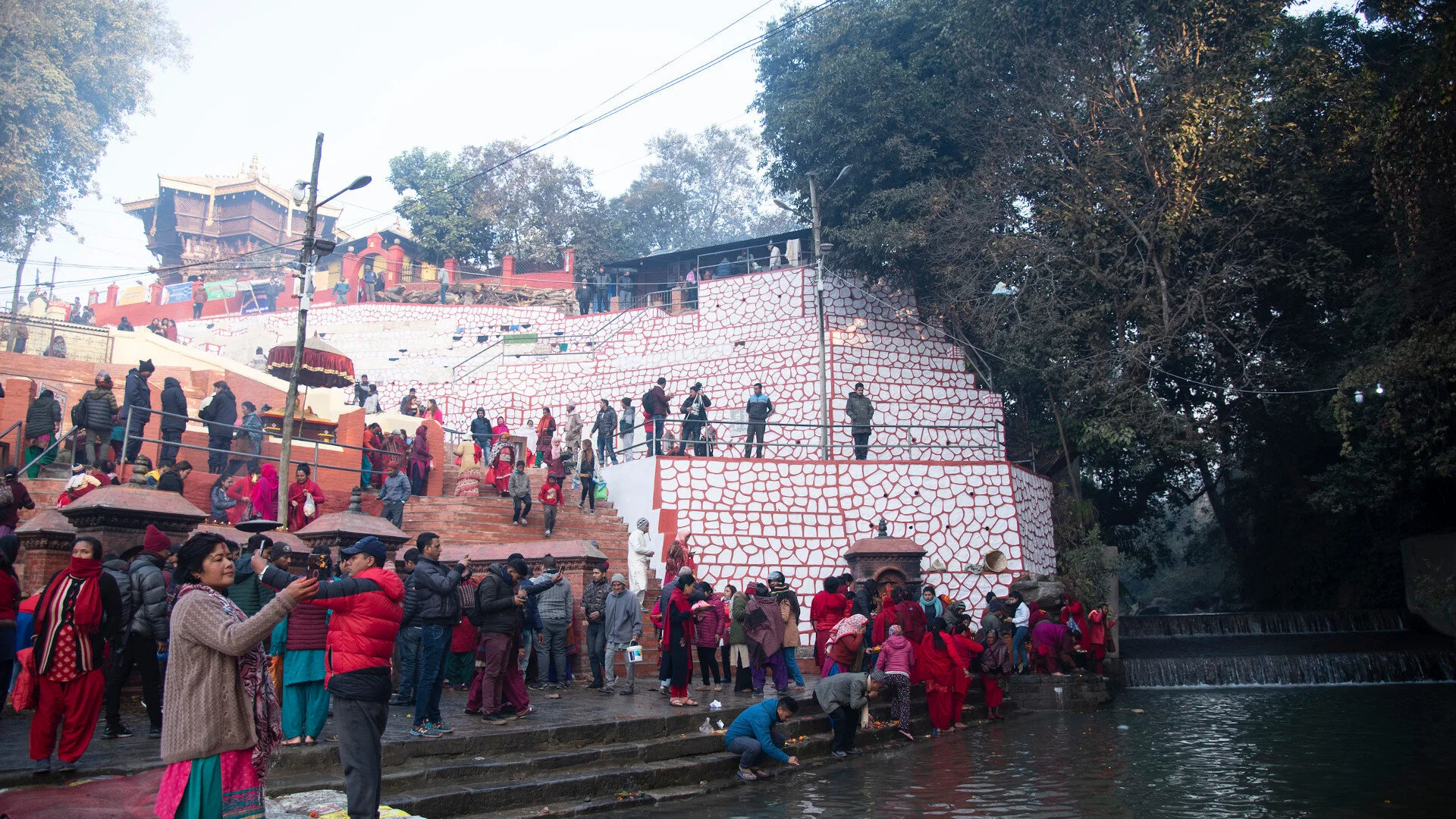
Every year during the full moon of Poush Shukla, devotees flock to the holy river of Shali Nadi in Sankhu to offer their prayers to Goddess Swasthani and God Madhav Narayan. Devotees fast for their family’s prosperity till the next full moon. During the month family members read the book of Swasthani.
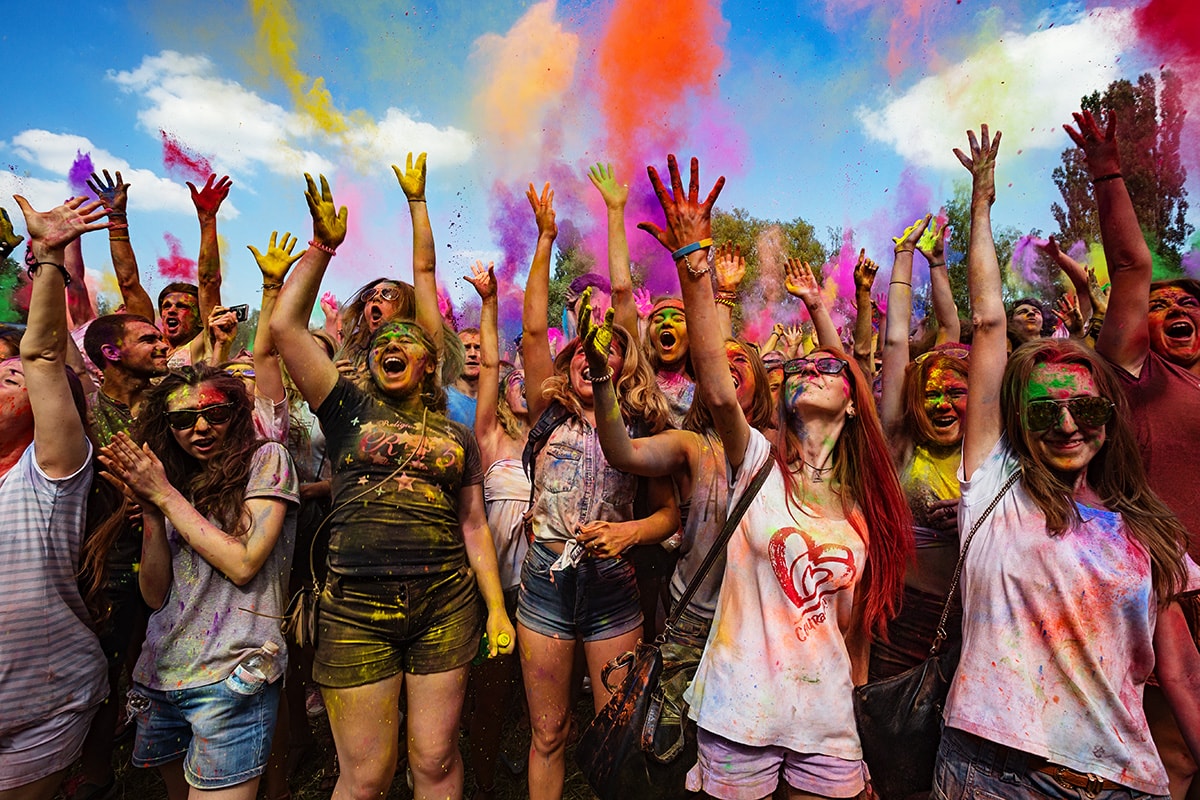
Holi, the festival of colors, is celebrated with great enthusiasm all over the country, and it is a time when one forgets and forgives.
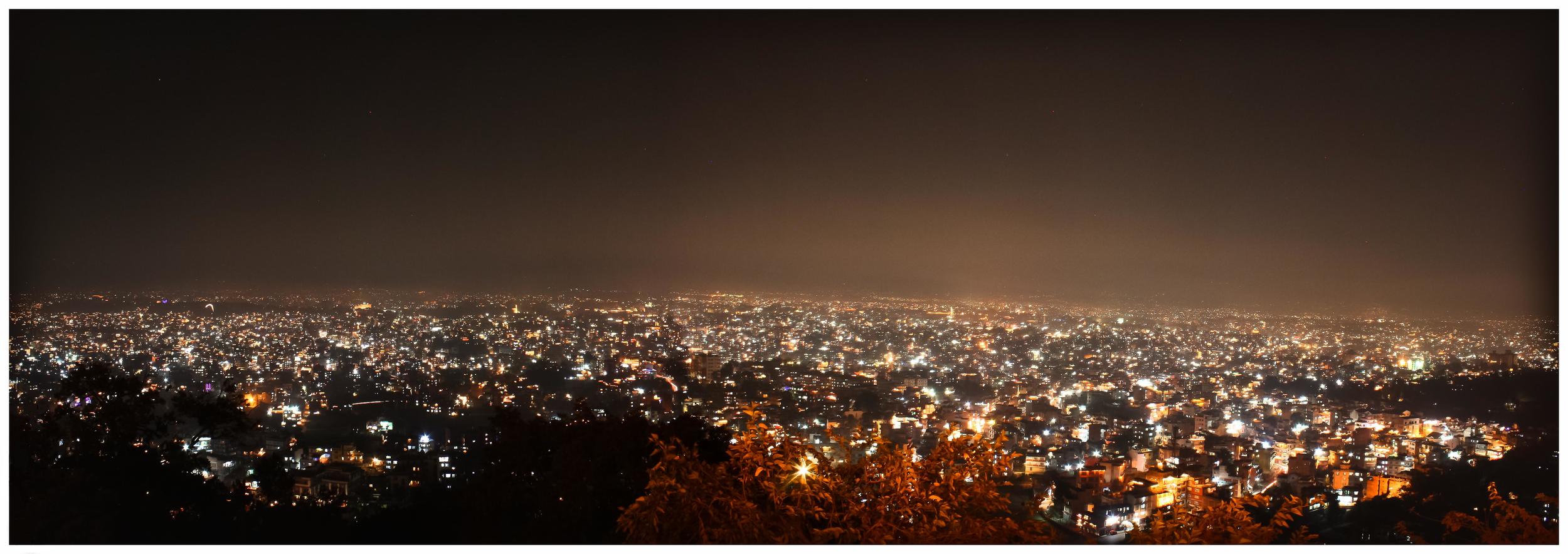
Tihar is the most popular festival for many Nepalis, and this is because of the many fun activities that take place during all of its five days.
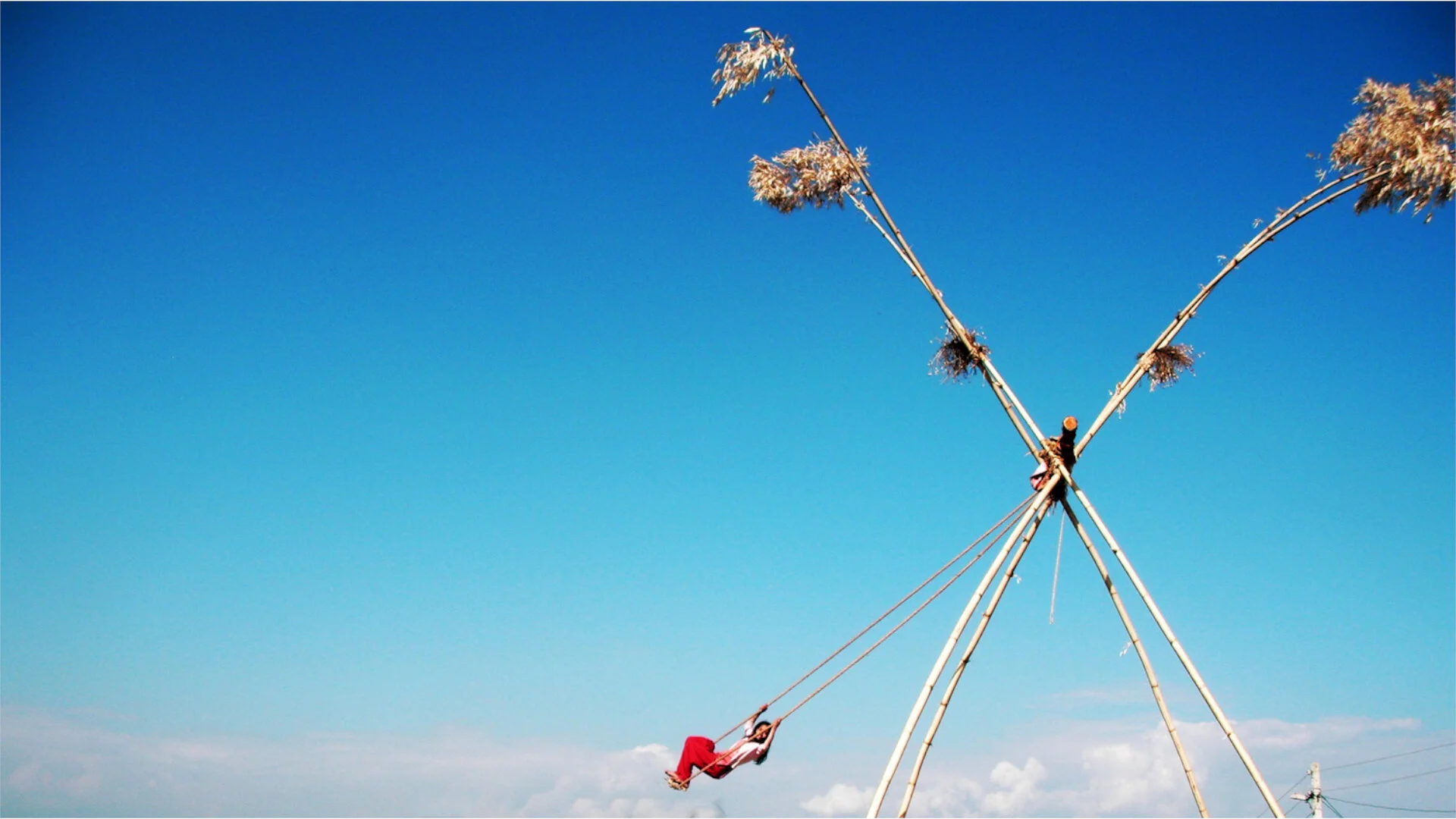
The weather is changing, and along with it, there’s a definite festive air around the country; yes, some of the country’s biggest festivals are here.
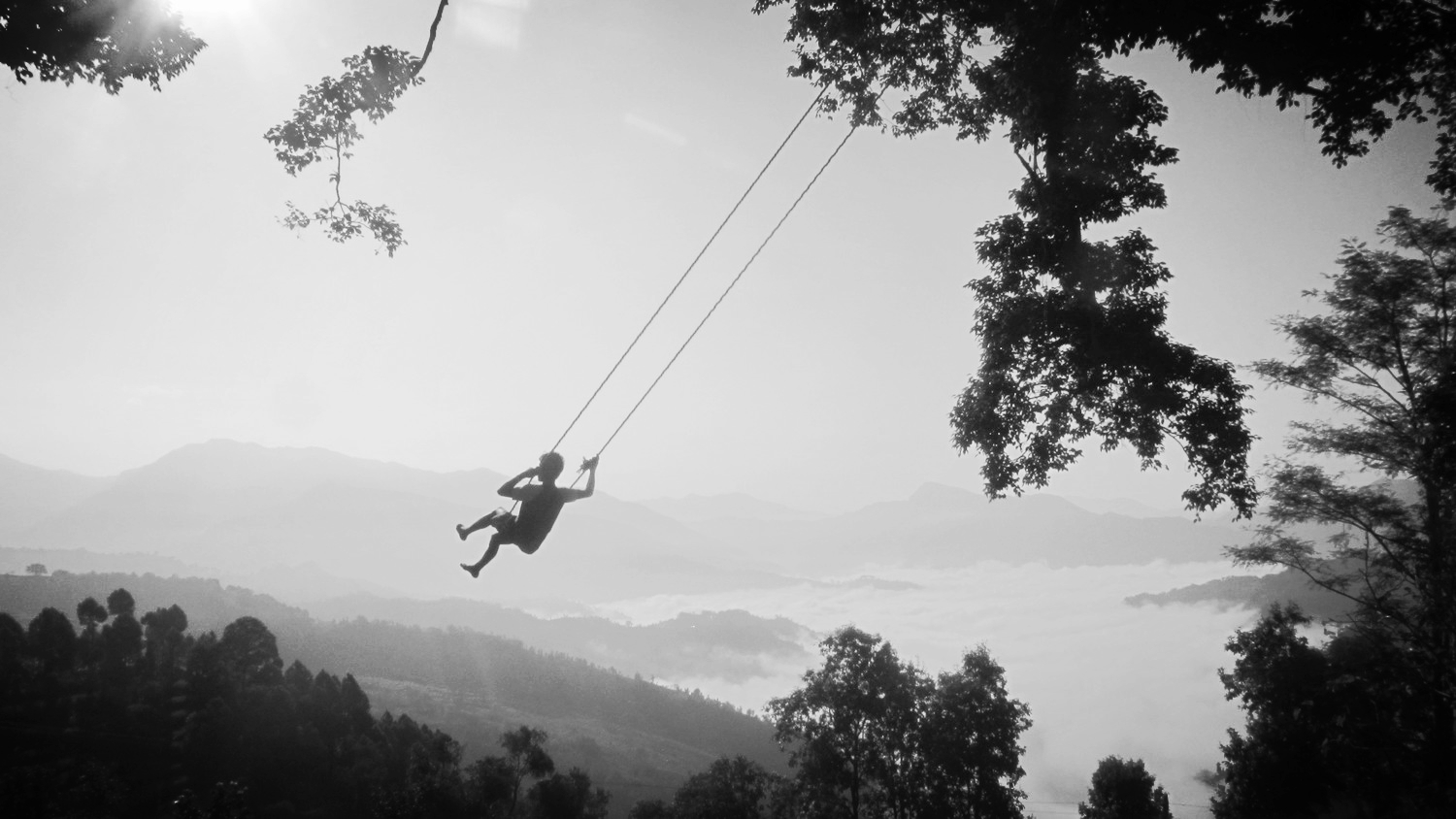
The biggest Nepali festival, Dashain, is known as a 10-day festival, but it actually ends on the 15th day, the day of Kojagrata Purnima.
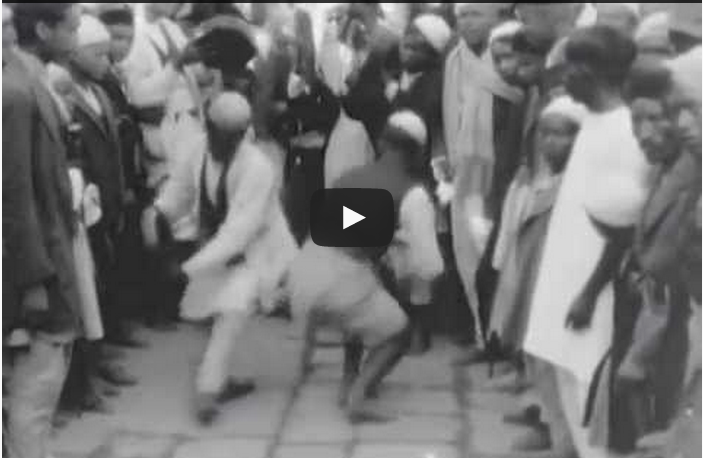
Very rare video footage of Nepalis celebrating Indra Jatra festival, biggest street festival of Nepal, with much rejoice, singing, dancing and chariot procession in Kathmandu.
According to legends, it is believed that the mother of Lord Intra required a Parijat( a white flower) to perform a ritual. For which Lord Indra descended to earth in search of the flower. He disguised himself as a commoner and while trying to take the flower out of the lawn of a Jyapu. He caught Lord Indra and held him captive blaming him of trying to steal. Lord Indra was imprisoned and not allowed to go back to heaven.