

The Moving Temples of Kathmandu Valley - Part II
Since time immemorial, humans have created temples. It is a place of worship where individuals offer their prayers and gratitude to their deities. These infrastructures are static, making it difficult for all to reach them at times. Whereas in Nepal, temples move from one place to another in select few days. A process in which, god comes to our squares and doorsteps.
In Nepal Mandala (Ancient Nepal), the natives took notes from various neighbouring cultures and devised a unique system. They noticed how their temples were static, and with age, its citizens were not able to make long commutes to offer prayers and gratitude to their deities. Thus, they envisioned a magnificent secondary temple. These were to be mobile, allowing those incapable of reaching the main temple to bask in the gods' aura.
These temples were to be crafted seasonally and display symbolic markers of the deity. For mobility, they envisioned a temple with wheels. They would be created in a manner to mimic the primary temple and display its hallmarks. This ambitious dream of the past developed the rich cultural reality of modern Nepal.
The biggest festival of the Newars revolves around these very mechanized temples.
It helped strengthen faith and communal unity among the diaspora. It also became a catalyst in the development of Newar culture and heritage.
Renowned for trade endeavours, Newars amassed wealth and built themselves a robust network. They invested in magnificent temples and dedicated their success to them. Today these have become the hallmark of Newar culture and tradition.
There are numerous chariot festivals dedicated to various deities of Kathmandu valley. Amongst them, some chariots are a feat of human ingenuity that feature unique craft and symbolism. In this article, we shall explore in brief these elements along with handy information which shall add value to your journey of discovering the true beauty of Nepal.
The chariot festival of Rato Matysendranath
A jewel of the citizens of Lalitpur, it is dubbed the longest in the world. Worship and revelling of Rato Matsyendranath, natively known as Karunamaya (Lord of Compassion) and Bunga Dyo (God of Bungamati), last for almost 3-4 months.
Centred around the samaritan act of Matsyendra, who helped the kingship and people of Nepal Mandala during the Lichhavi era, this chariot festival is an earnest dedication to his compassion. As per the Matysendra vamshavali (chronicle), Nepal mandala faced a crisis in a bygone era. A series of unfortunate events caused crops to wither: a famine that lasted for 12 years.
Over time various interpretations developed of the cause. The most popular is of Lord Goraknath, a discipline of Matysendranath meditating upon the great nagas (snakes) leading to a drought. But a scientific analysis using holistic overview, observation and comparative analysis shows how it was a mysterious disease that ravaged the farms of Nepal Mandala.
Society was agricultural. Farming was the backbone of our economy. The citizens practised a subsistence form of living and were highly dependent on their farming yields. Thus, such an infection proved deadly.
The monarch of Nepal Mandala, King Baradeva, consulted with his chief astrologer Bandhudatta Acharya. He advised making a journey to Kamakhya in Assam. He must have learned about the geographical similarities and their agricultural prowess through historical insight and networks. King Narendra Deva (father of King Bara Deva, who had left worldly affairs to live in a monastery in Bhadgeon), priest Bandhudatta and Rathacakra Jyapu left for Kamakhya.
They acquainted Matsyendra, a leprous agricultural master of Kamakhya who provided the needed to the trio. As per the vamshavali, they returned with a holy vessel (Kalash) containing the essence of Matsyendra. Interpreting this scientifically, he (Matsyendra) must have provided various seeds that would suit Nepal Mandala's topography. He must have also imparted the needed knowledge to make agriculture sustainable and reliable.
Matsyendra being leprous is through my research observations. Devotees are not allowed to touch his idol. You shall become leprous is communicated to them by the caretakers. The statue moulded for the chariot festival is a replica of him. The weak stature and disfigured hand is a telltale sign that helps add weight to my findings.
POPULAR ITINERARIES
SIMILAR POSTS


The Moving Temples of Kathmandu Valley - Part I
Even though an imitation, over the years, the festival of Seto Matsyendranath has created its own identity. It has developed various symbols and is a timeless heritage of Kathmandu. Today it is known as Jana Baha Dyo (God of Jana Bahal of Ket twah). The idol is viewed as Aryavalokiteswara (God of compassion) by devotees.
The moving temple of Seto Matsyendranath
When King Gunakamadeva created a new city north of Lalitpur, it was a sight to behold. He named it 'Suvarna- pranali- Kantipur' (Wright, 1990, p.154). The monarch, however, was not satisfied. He greatly missed Matsyendra of Lalitpur, his glorious temple in Bunga and the chariot festival. He wished for his new city to have something similar.
"Then, in imitation of the Lokeswara jatra of Patan, he made an image of Khasarppa Lokeswara, and caused his jatra to be celebrated every year." (Wright, 1990, p.155)
A shikhara style temple within the Hambal monastery housed Khasarppa Lokeswara. During the last years of the Lichhavi era of Nepal Mandala (Ancient Nepal), Mukunda Sena, King of Palpa, attacked this valley. "The victorious soldiers broke and disfigured the images of the gods, sent the Bhairava placed in front of Machchindranatha to their own country, Palpa and Butawal." (Wright, 1990, p.171)
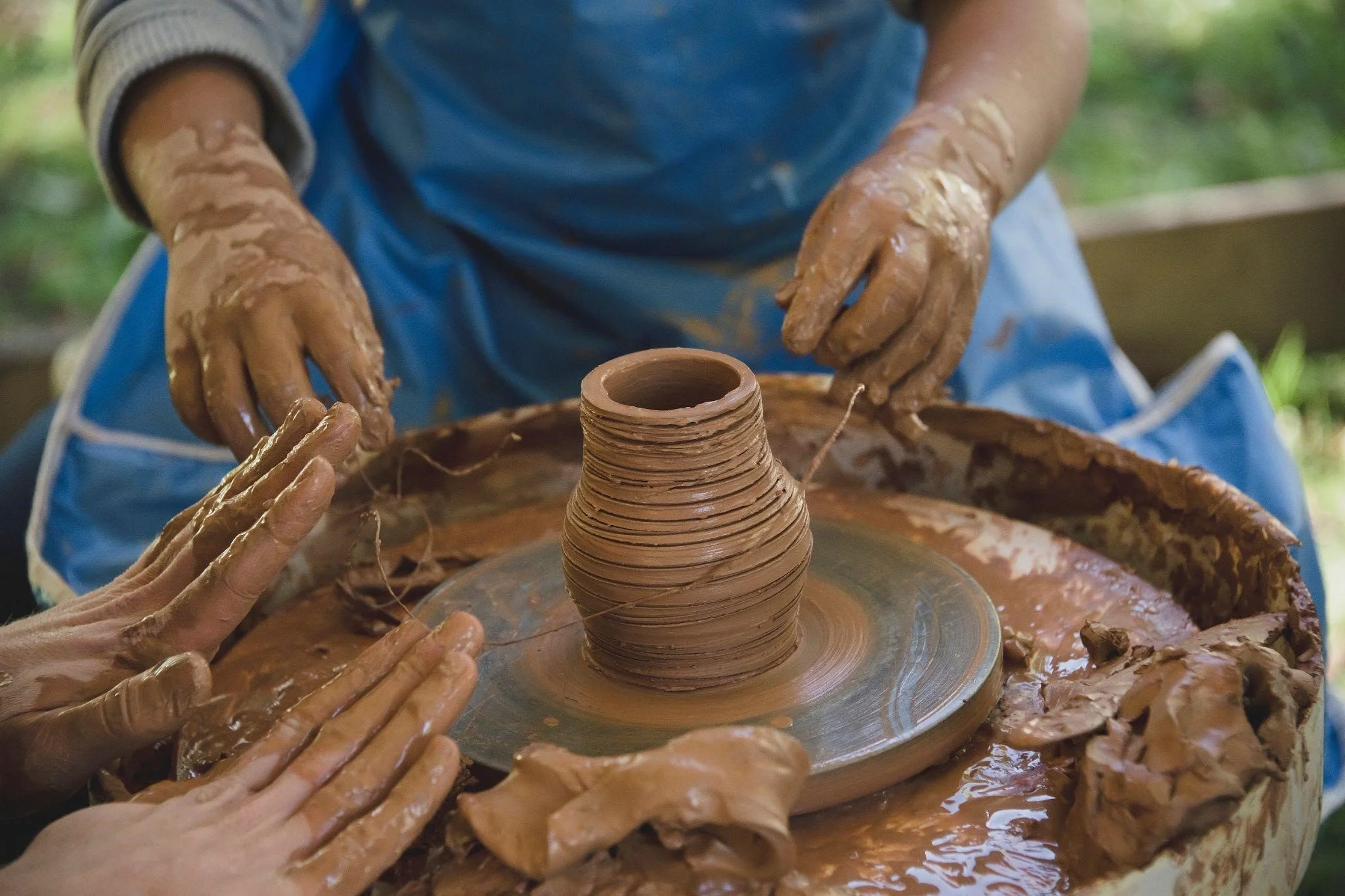
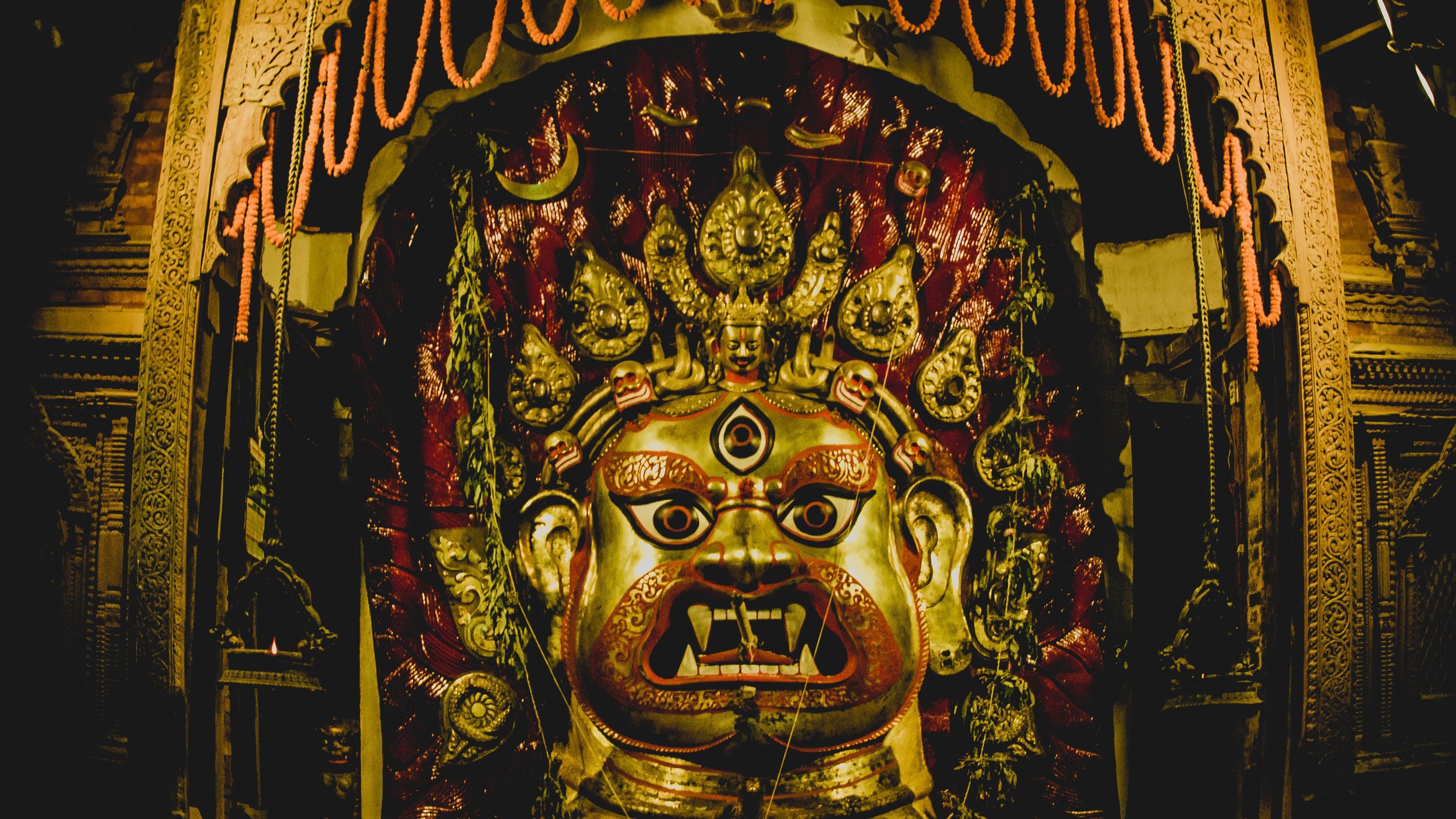
The Bhairab stolen from the Hambal monastery today is known as Tansen Bhairab. The shikhara temple and monastery were in ruins. In the aftermath, people found that the statue was lost. Hundreds of years later, during the reign of Yaksha Malla, it was discovered by potters looking for clay. King Yaksha recognised the ancient idol when it was brought to the palace by them.
From here on, it became Yamaleswara.
The site of its rediscovery was renamed Yamal (today is known as Jamal) by the monarch. "The king, having seen the image, performed the rituals of renovation; took the image inside the city and established it by building a large temple." (Bajracharya et al., 2016, p. 90)
He built a mammoth temple in the cortex of Jana Baha in Ket Twah. During the reign of his son Pratapa the grounds of Hambal monastery was converted into a pond. The temple was rebuilt but housed a different deity. "Pratapa Malla, then rebuilt the chariot of Lokesvara, the white Matsyendra, according to tradition. He had Lokesvara placed on the chariot and initiated an annual procession that moved the chariot around the city." (Bajracharya et al., 2016, p. 106)
From then on, the image was called white (seto) Matsyendra.
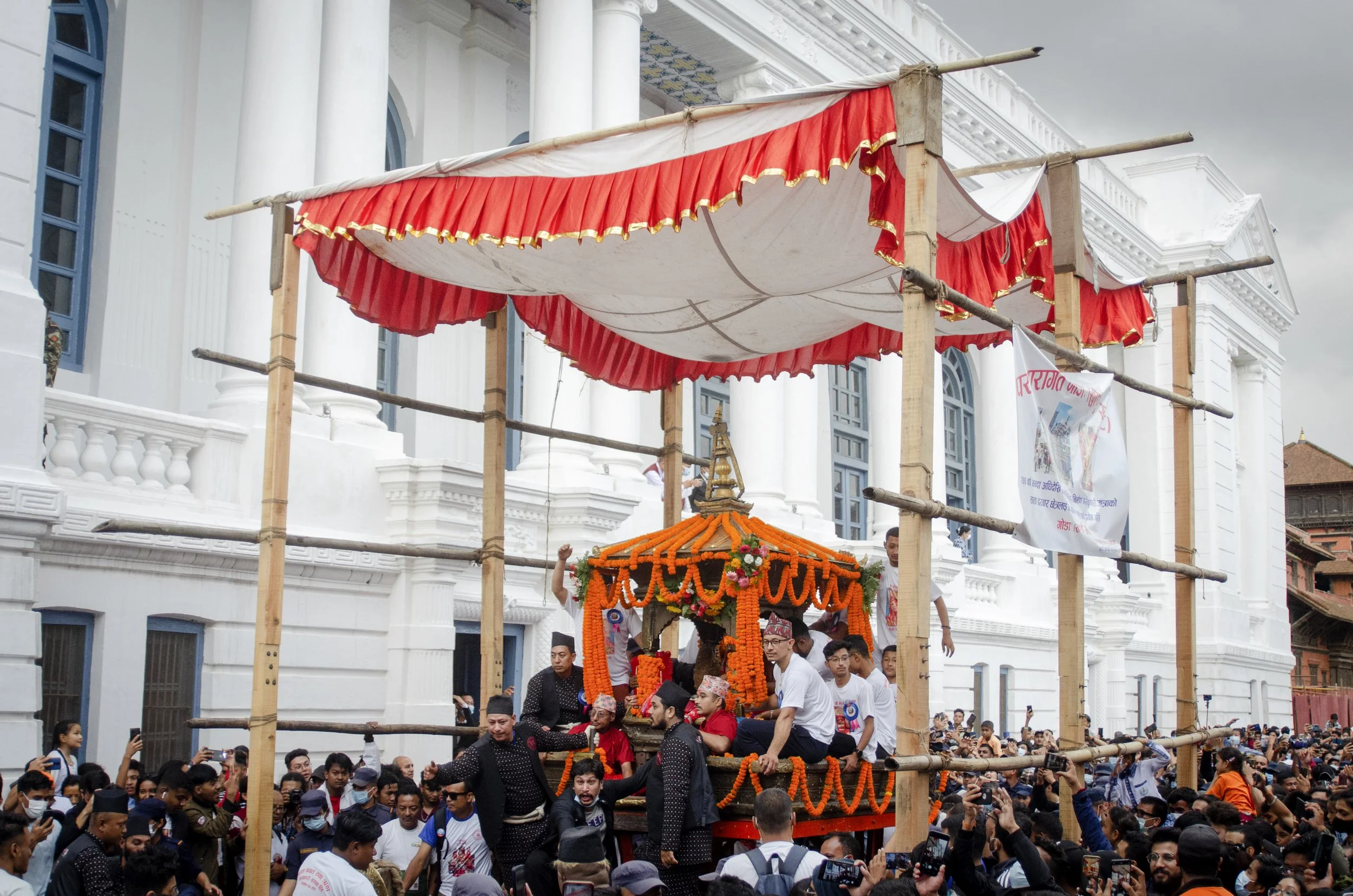
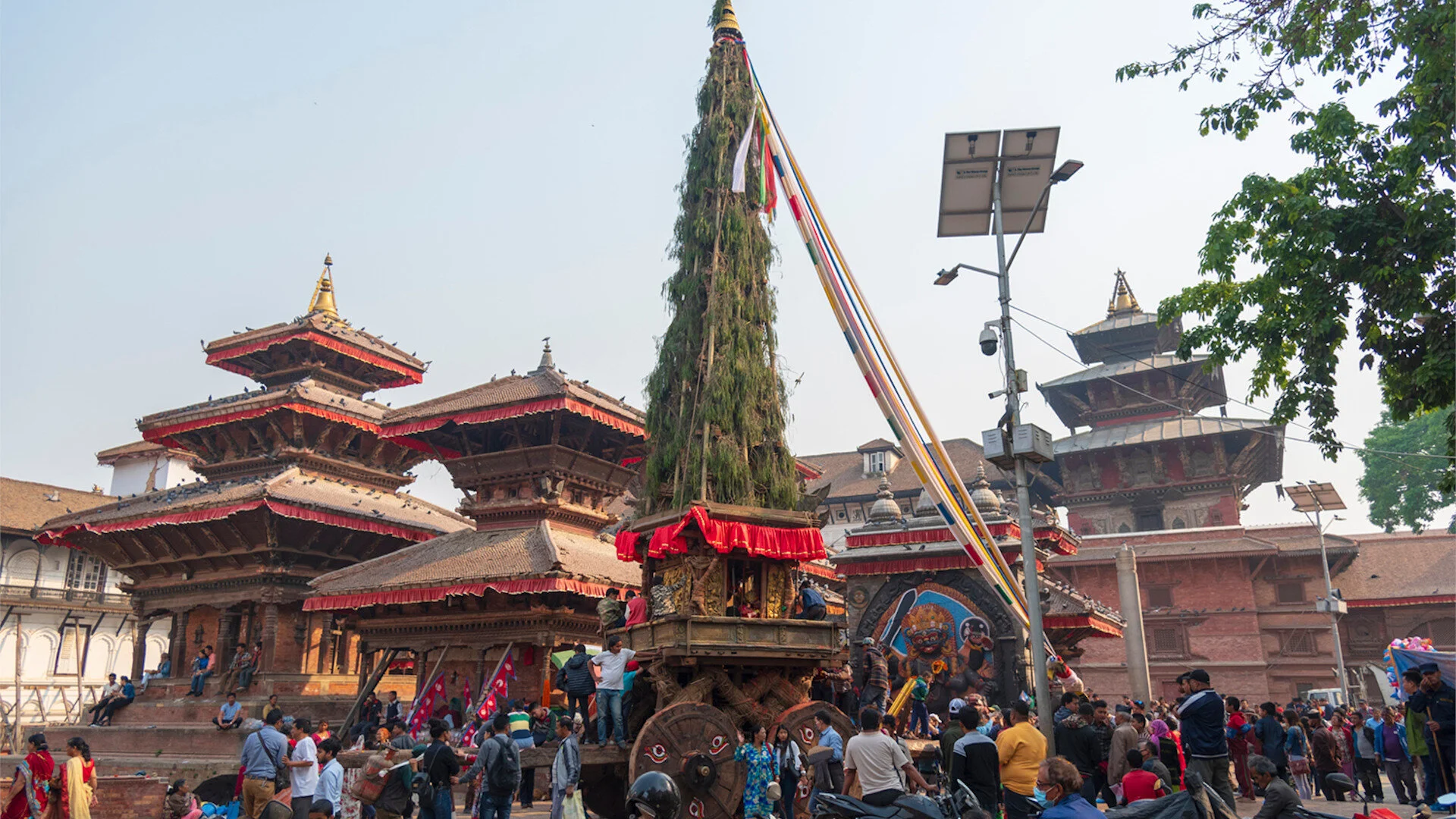
Members of various communities tasked with creating the chariot finish the building process by Chaitya Dashain. On this day, the idol is placed on a palanquin and brought to Durbarmarg. A traditional musical ensemble leads the march. A loud cheer erupts once the parade reaches the area.
The statue is placed within the chariot by the caretakers. A military regiment dressed in traditional Gurkha uniform offers salutations. Three muskets perform an aerial salute once the wheels make their first spin.
The revellers pull it to Asan Chowk. In the next two days, the chariot circumvents the traditional route and reaches Lagan. It circles the mother tree thrice. After which, the festival comes to an end.
The festival falls on the following days in 2021 AD.
Day 1 of chariot festival - Durbarmarg- Bhota Hiti- Asan - 20th April 2021
Day 2 of chariot festival - Asan - Indra Chowk- Basantapur - 21st April 2021
Day 3 of chariot festival - Basantapur- Maru- Jasi Dewal- Lagan - 22nd April 2021
References
Wright, D. (1990). History of the kingdom of Nepal. Asian Educational Services. (Original work published 1877)
Bajracharya, M., Gutschow, N., & Michaels, A. (2016). Nepālikabhūpavaṃśāvalī (History of Kings of Nepal): Vols. 1 (Introduction and Translation) (First edition). Himal Books.
POPULAR ITINERARIES
SIMILAR POSTS
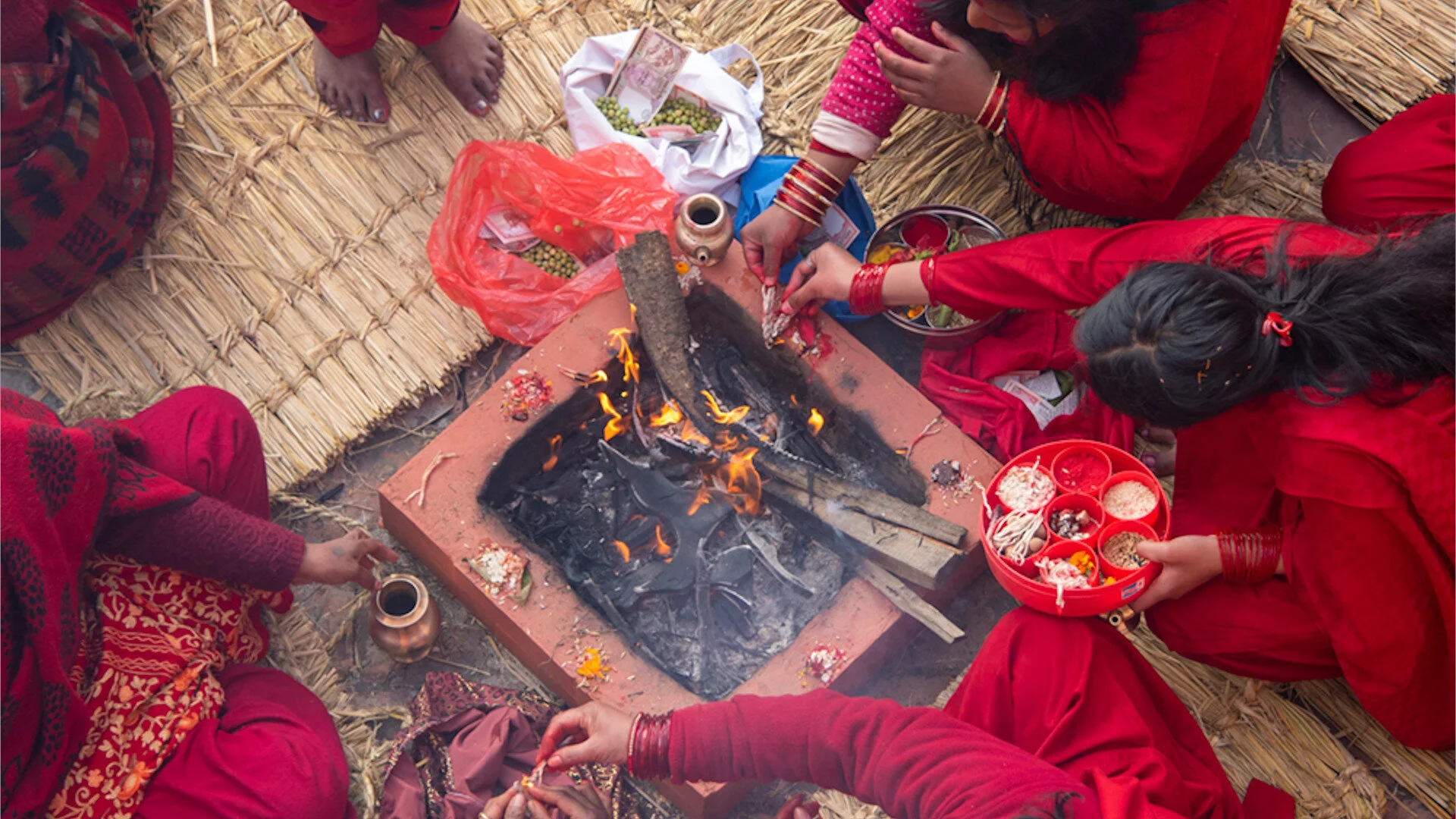
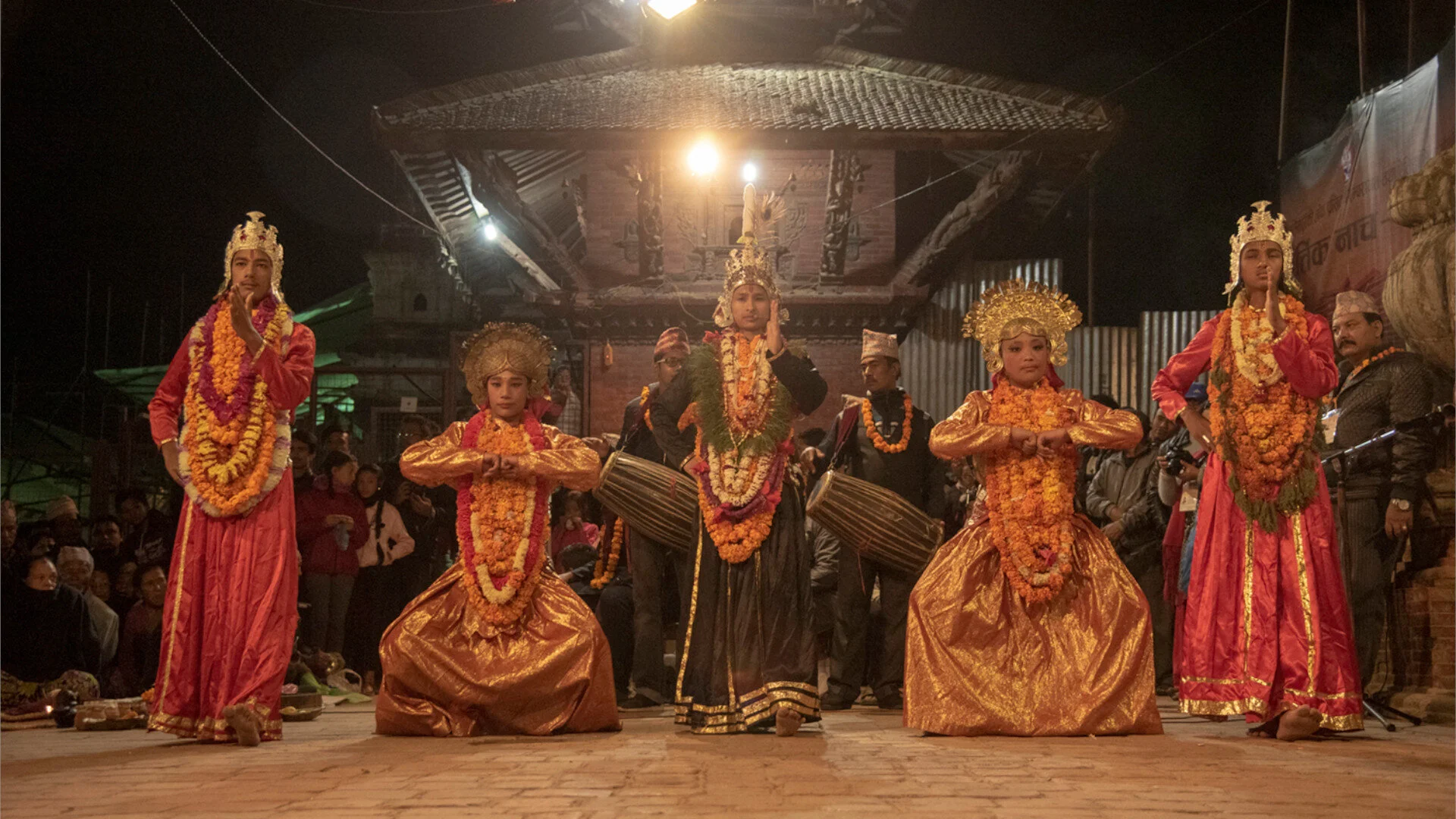
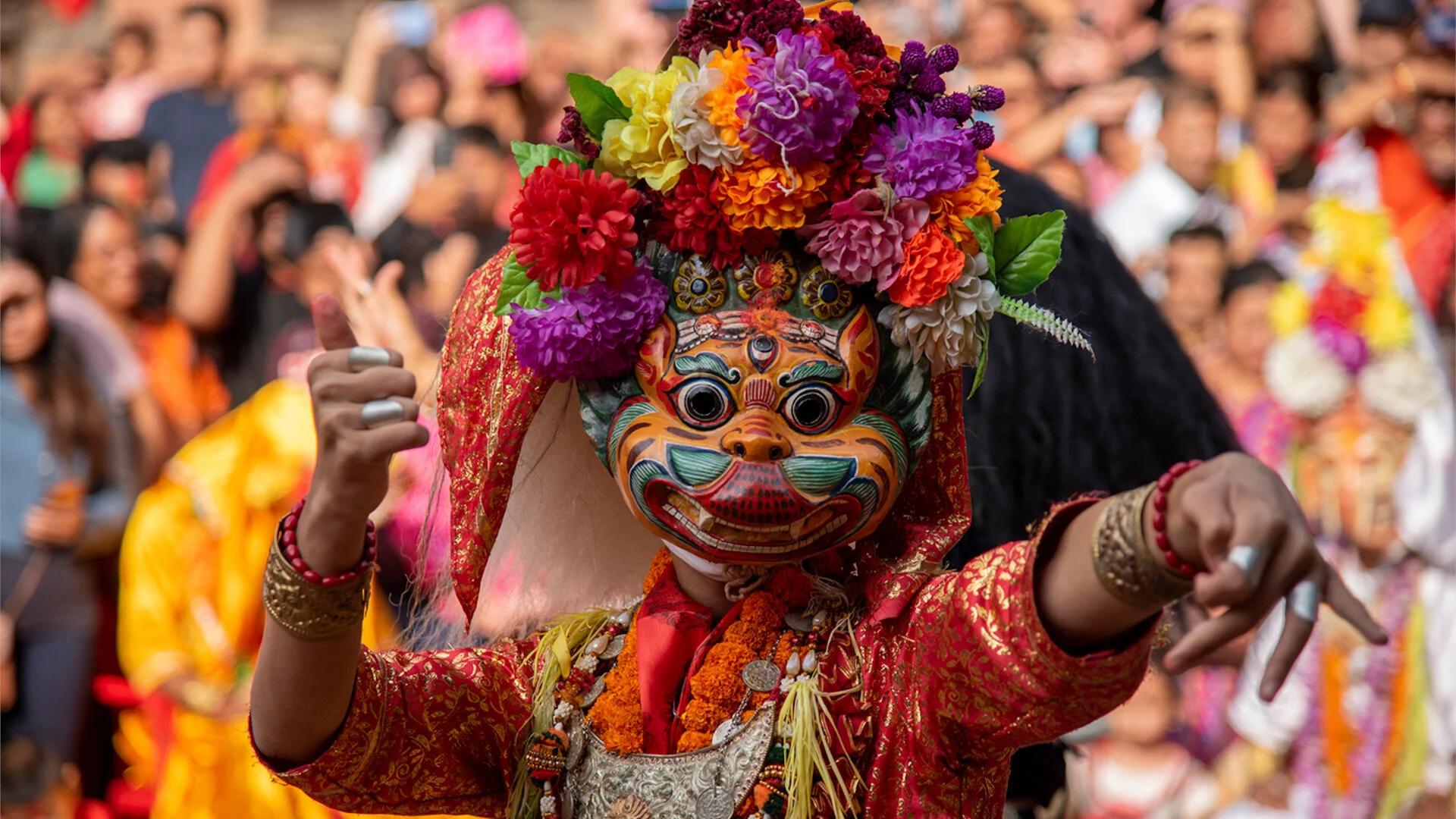
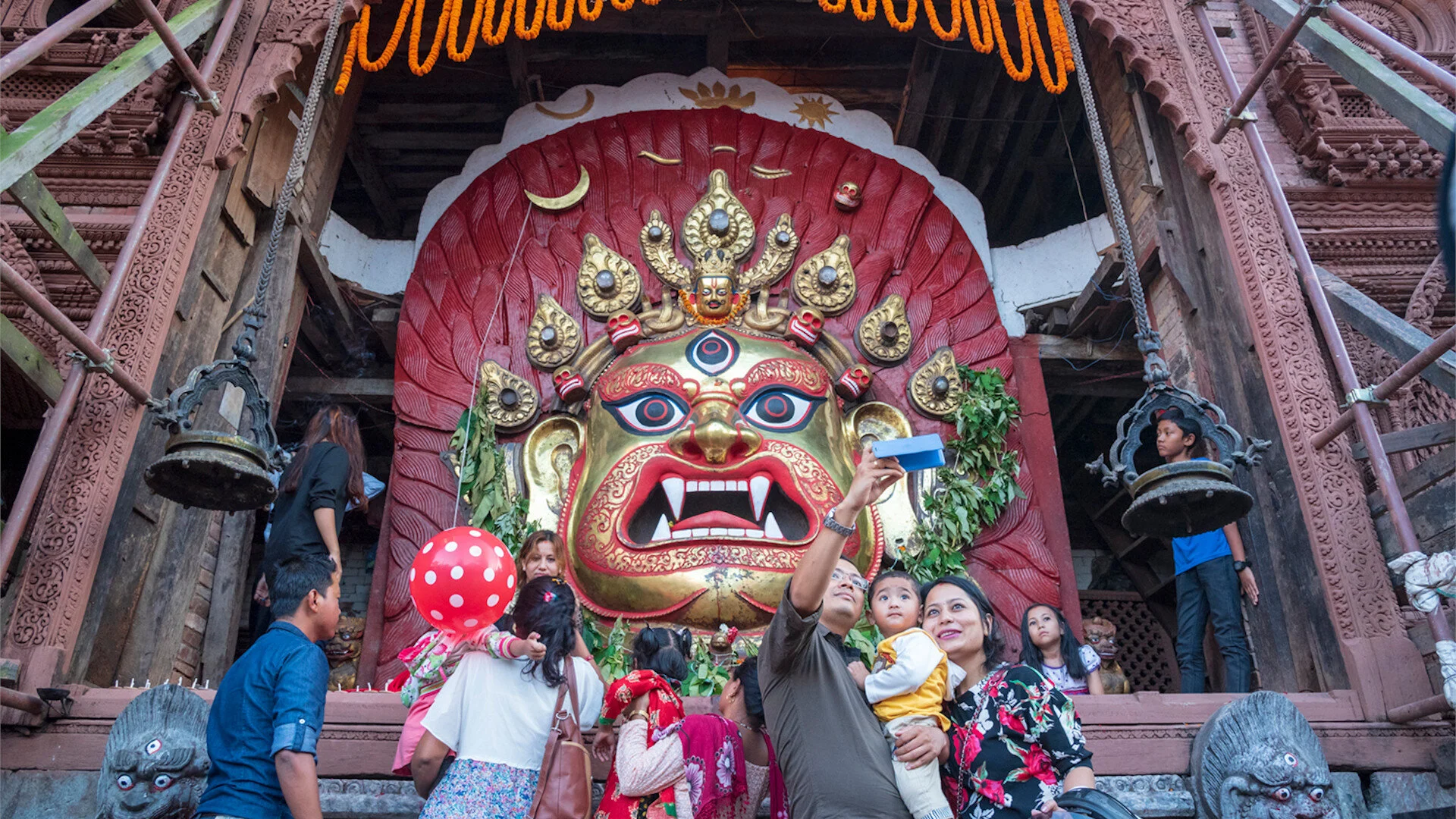
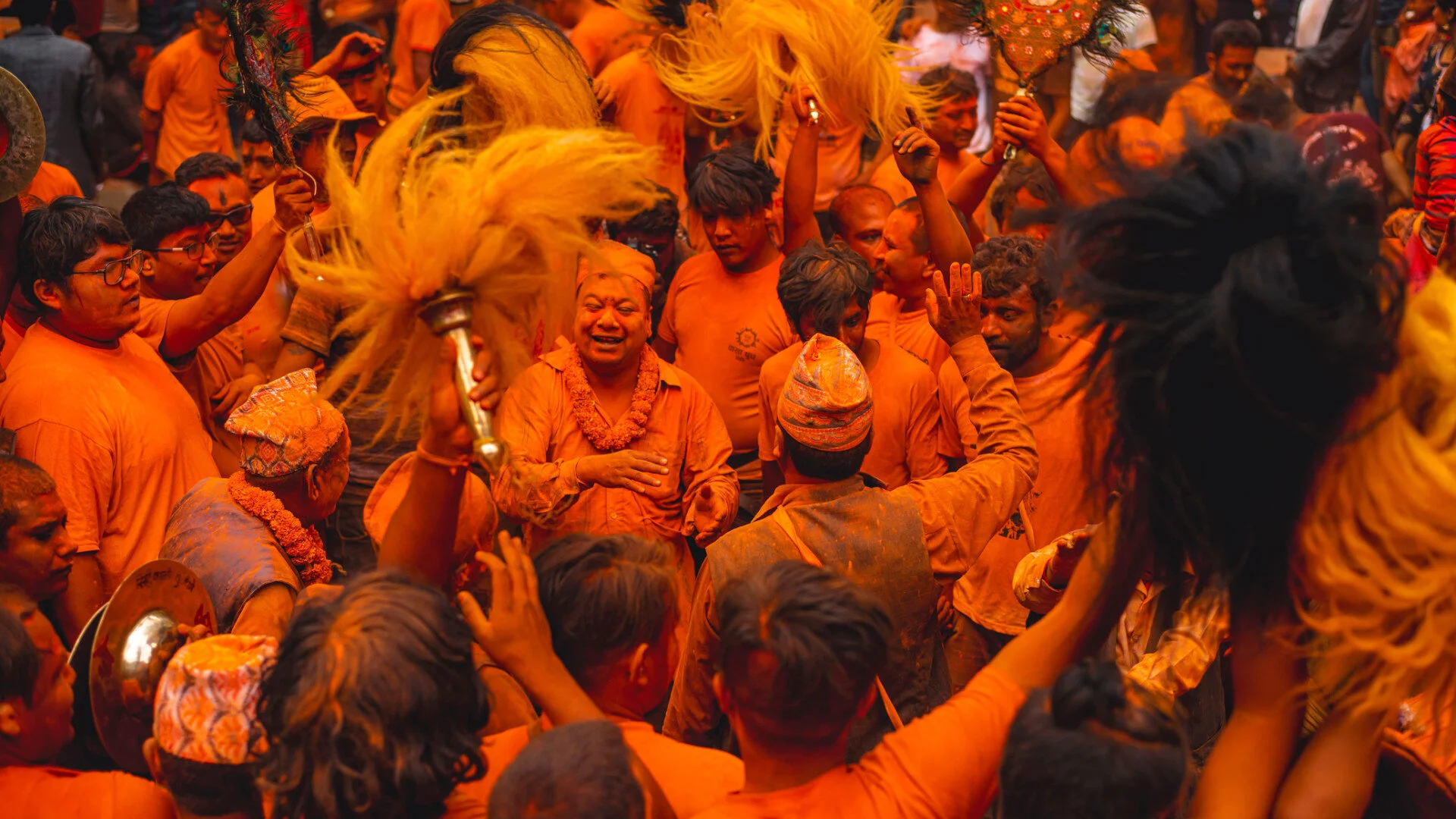
The Vermilion Festival: Sindoor Jatra
Commonly referred to as Sindoor Jatra, it is also known as Biska Jatra of Thimi. It is one of the most vibrant festivals celebrated in Kathmandu Valley. The highlight is the ceremonial use of vermilion powder which adds a new layer of pomp and flair. The locals rejoice for four days during the new year period, devotees offer prayers and worship various gods and goddesses.
Even though celebrated in a Newar township, the Sindoor Jatra is the jubilation of the Nepali new year (Vikram Sambat). Newars generally do not celebrate the solar new year, rather mark Nhu Daya bhintuna in October. The festivities occur in the locales of Thimi and Bode. The festival begins a day before the new year day. The locals perform Gunsin Chhoyekegu, which means firing of forest wood.
A traditional wooden pole known as yoshin is erected outside the temple premises of Balkumari by locals. It, however, has sadly been discontinued due to various reasons. A chariot festival takes place in Vishnuvir during the day. Deities are taken on khats (chariots) to Kwachhen (Dakshin Barahi) from Layakhu during the night. Once the revellers reach Kwachhen they revolve the chariot multiple times.
On new years day, devotees present offerings and pray to Balkumari. They flock in masses to her temple in old Thimi. Through time immemorial, she is the consort of Bhairab. They both are the guardian deities of Kathmandu Valley.
During the evening, devotees perform righteous acts such as lighting oil lamps. Some even place them on their legs, chest, forehead, arms and lie static for hours.
The next day (2nd Baisakh) is the highlight of this festival. Several khats (chariots) are carried to the Balkumari temple in the morning by revellers. Thirty-two khats are spaced around the temple which later circumvent it. To liven up the atmosphere, musicians play Dhimay Baja (traditional drums and cymbals). These tunes help encourage the revellers. Devotees and locals colour each other in vermilion powder, a symbol of prosperity. The entire area is filled with vibrancy and joy as devotees make merry while revolving their community chariots.
Thousands await for an idol of Ganesha, which is brought from Nagadesh by locals. Commonly referred to as Khat Ganesh, once his chariot arrives, a loud cheer erupts. Once Ganeshas’ chariot completes circumventing the temple premises, it tries to make a break for home. Revellers hoist up their chariots, and a game of catch ensues. Other chariots try to block its path. By hook or crook, Khat Ganesh is brought back to Nagadesh by revellers. The festival does not end until Khat Ganesh reaches Nagadesh.
After which, the procession of chariots makes way for the Taleju temple. A sizeable number of animal sacrifices are made here by the priests. Once the ceremonies are over, members carry the chariots back to their community, bringing an end to the festivities.
Simultaneously in the village of Bode, seven chariots are circumvented through a prescribed route. At Bhangu Tole of Bode, the iconic tongue piercing festival occurs. A member of the Shrestha clan of Bode volunteers to have his tongue (jibro) pierced. The locals believe spirits enter his body, and he experiences a spiritual trance. With an iron spike pierced in his jibro, he carries around a bamboo rack on his shoulder. Multiple flaming torches are placed on the frame by righteous men. He then walks around town in a designated route.
Locals believe that a successful tongue piercing ceremony brings good fortune to the villagers and the volunteer. The act though painful is righteous and holy. The volunteer becomes the town hero until next year.
The next day (3rd Baisakh) is the Biska Jatra of Chapacho and Bode. Communal chariots are taken around the area by locals who rejoice and make merry.
The end of this act draws Biska Jatra to a close. It is a unique festival native to the principalities of Bhaktapur. Marked with great fanfare: it is also known as the festival of human emotion. Over the years, it has become a non-tangible landmark of Bhaktapur, which draws thousands of onlookers and devotees. It, along with multiple similar festivals, help create Nepal’s image as a lifetime experience.
POPULAR ITINERARIES
SIMILAR POSTS

Sighting The Living Goddesses of Kathmandu Valley - Part III
Amongst the various living goddesses of Kathmandu valley, the divinity of Kathmandu is unique. She is raised in one of the most ornate ways by her caretakers, which has not lost its traditional charm. Her valour, beauty and excellence are unparallel, and the respect shown to her is profound. She even has her very own chariot festival known as Kumari Jatra.
In the final edition of this series, we shall look into sighting the living goddess of Kathmandu. This city has numerous living manifestations such as in Basantapur, Kilagal, Tokha and Makhan. But we shall focus this article specifically on the divinity of Basantapur.
Along with the previous, Kathmandu is home to numerous others.
The tradition in Makhan Tole revived again in 2018 AD. Formerly Mubahal, Maitidevi, Mikhu Bahal also hosted their living goddess. Close historical analysis shows how this tradition was cherished by numerous Bahal’s (households of Shakya and Bajracharya). Over the years, various constraints led to the discontinuation of the practice.
Click Here: To Read Our Article On The History of The Living Goddess In Nepal.
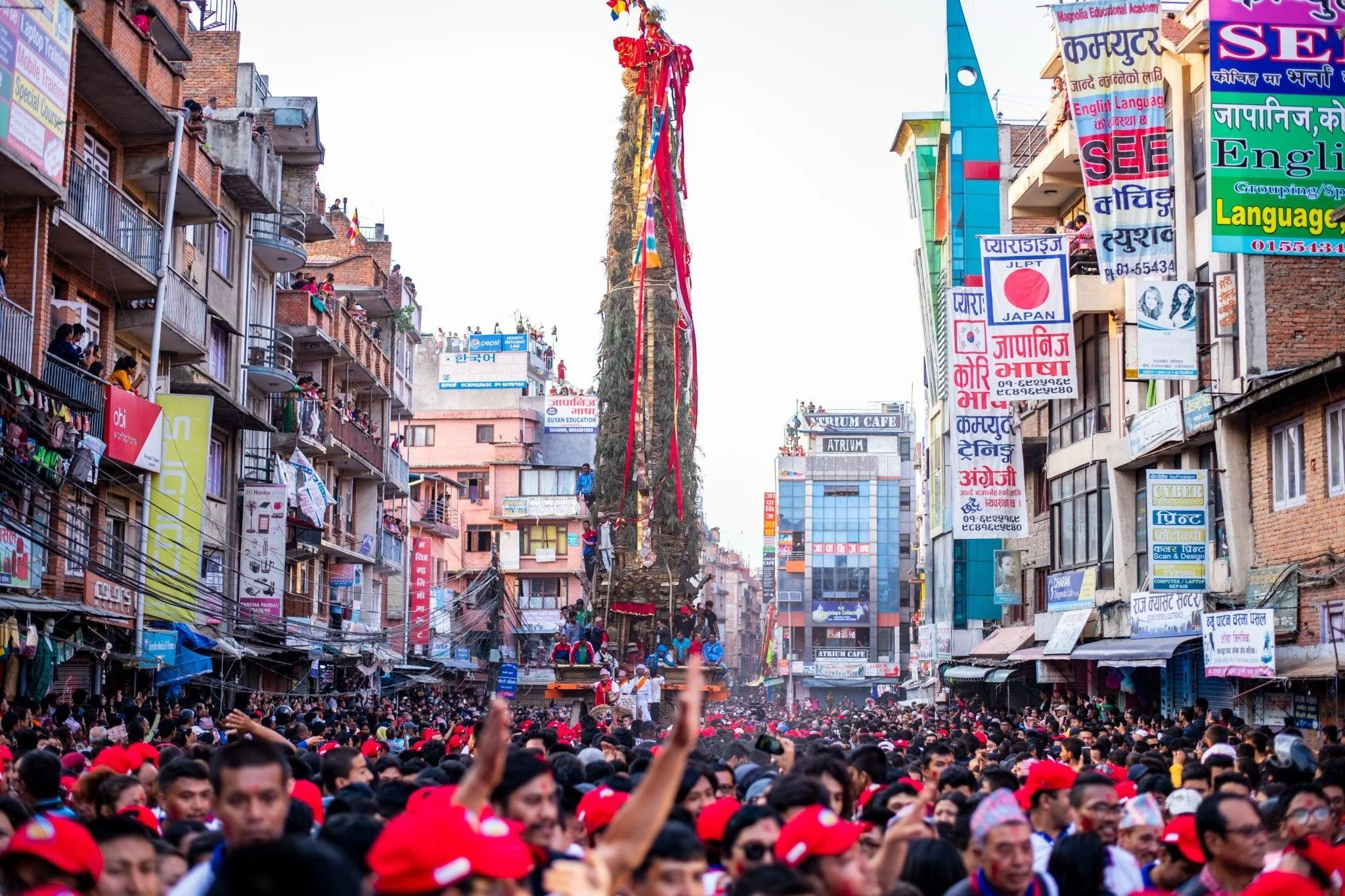
The divinity of Kathmandu is the most celebrated amongst her sisters. She has her festival known as Kumari Jatra, which occurs during Indra Jatra (An archaic celebration surrounded upon Lord Indra’s visit to Kathmandu). During the festival (Kumari Jatra), which lasts for three days, the living goddess is placed on a pagoda chariot by her caretakers. It then circumvents the dwellings of Kathmandu.
The first day of revelling is known as Kwaneya (Downtown), the second Thaneya (Uptown) and the final day Nanichaya (Mid-town). Revellers and volunteers pull the chariots of Kumari, Lord Ganesh and Lord Bhairav into these areas so that devotees may get to see their goddess.
The three chariots feature three living deities. Lord Ganesh and Lord Bhairav are the two living gods of Kathmandu valley. Alike their brethren, these living gods clad in red and awaken their third eye. Apart from these three days, it is hard to sight them.
Just like in Lalitpur, the living goddess makes an appearance during the chariot festival of Seto Matsyendranath. Also known as Yalameshwor ( Yala meaning Kathamandu and eshwor, god) during the Lichhavi period, today it is commonly referred to as Jana Baha Dyo (the god of Jana Baha).
She overlooks the ceremonial bath of Yalameshwor at Jana Baha and, on the final day of revelling, she views the festival at Lagan Tole of Kathmandu. This celebration of Yalameshwor commences during Chaitra Dashain (March-April). The chariot is pulled from Durbarmarg of Kathmandu and rests at Asan on day one, then at Basantapur and on the final day is advanced to Lagan Tole.
Special worship is conducted outside the temple of Tulaju Devi (Taleju) during the Changu Kalash Yatra by the high priests of Tulaju temple. On this day, a kalash is brought from Changu Narayan of Bhaktapur to Kathmandu on foot by priests. The living goddess is brought to a worshipping ground right outside the Tulaju temple by her caretakers. After the rites are over, she is taken back to the Kumari Chhen by them.
On the eve of victory day, she, like her sisters, partake in a special ceremony. She is taken to the Tulaju temple by her caretakers and high priests, where she performs various rituals to make way for victory day. This tradition is common in all three principal cities (Kathmandu, Lalitpur and Bhaktapur). The communal Kumaris, however, do not partake in this ritual.
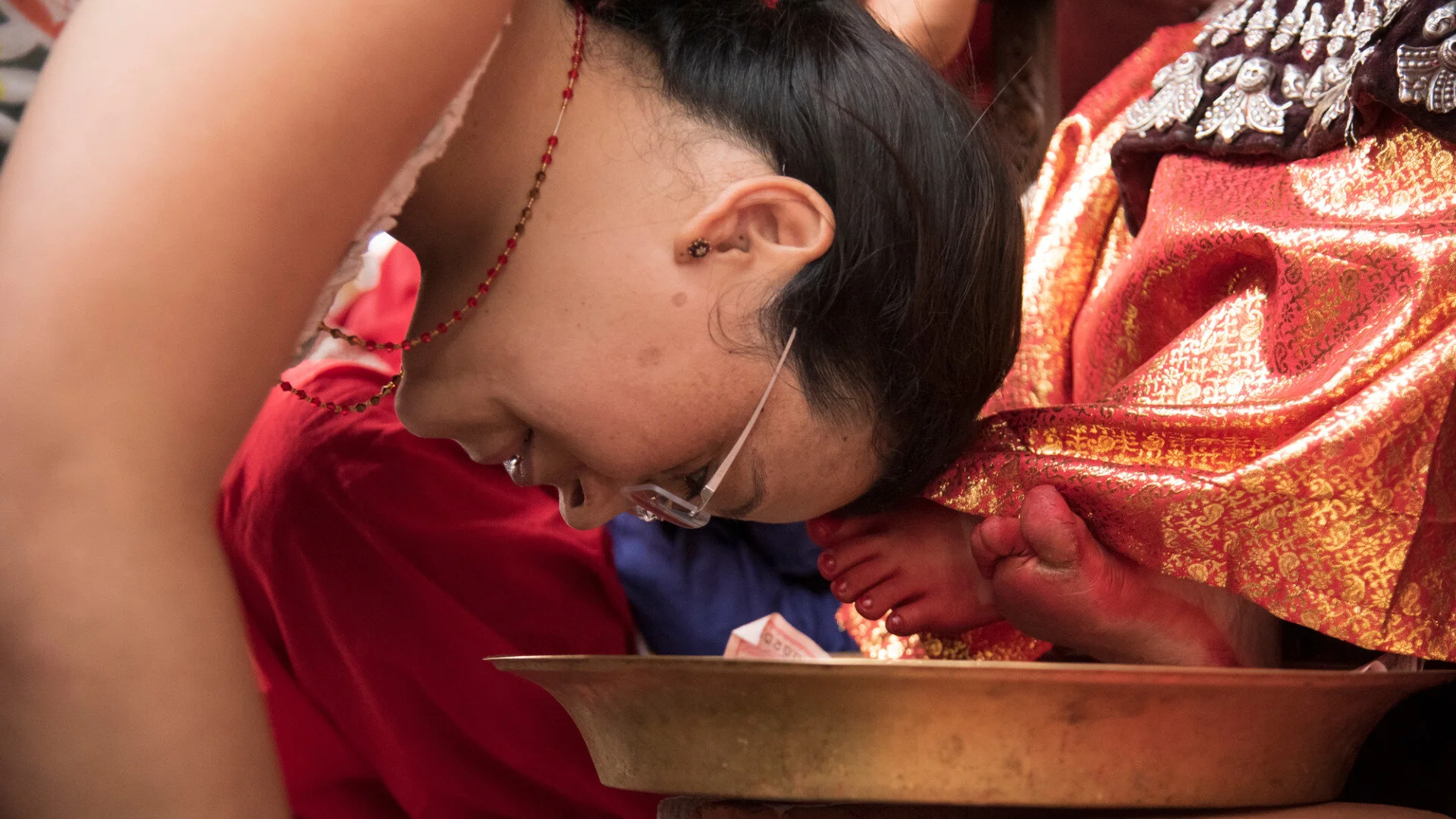
The living goddess losses her divinity when she becomes reaches puberty. She bids farewell not just to her godliness but also to the Kumari Chhen. She is placed on a palanquin and is bid a ceremonial goodbye by her second family (caretakers of Kumari Chhen). She is then no different from any mortal girl. But, her service to this country and her greatness always stays in our heart. Passing by her on the streets of Kathmandu, our heads automatically lower, and a beautiful smile comes to our face.
The cycle then goes on. A new girl takes the throne of the living goddess.
POPULAR ITINERARIES
SIMILAR POSTS
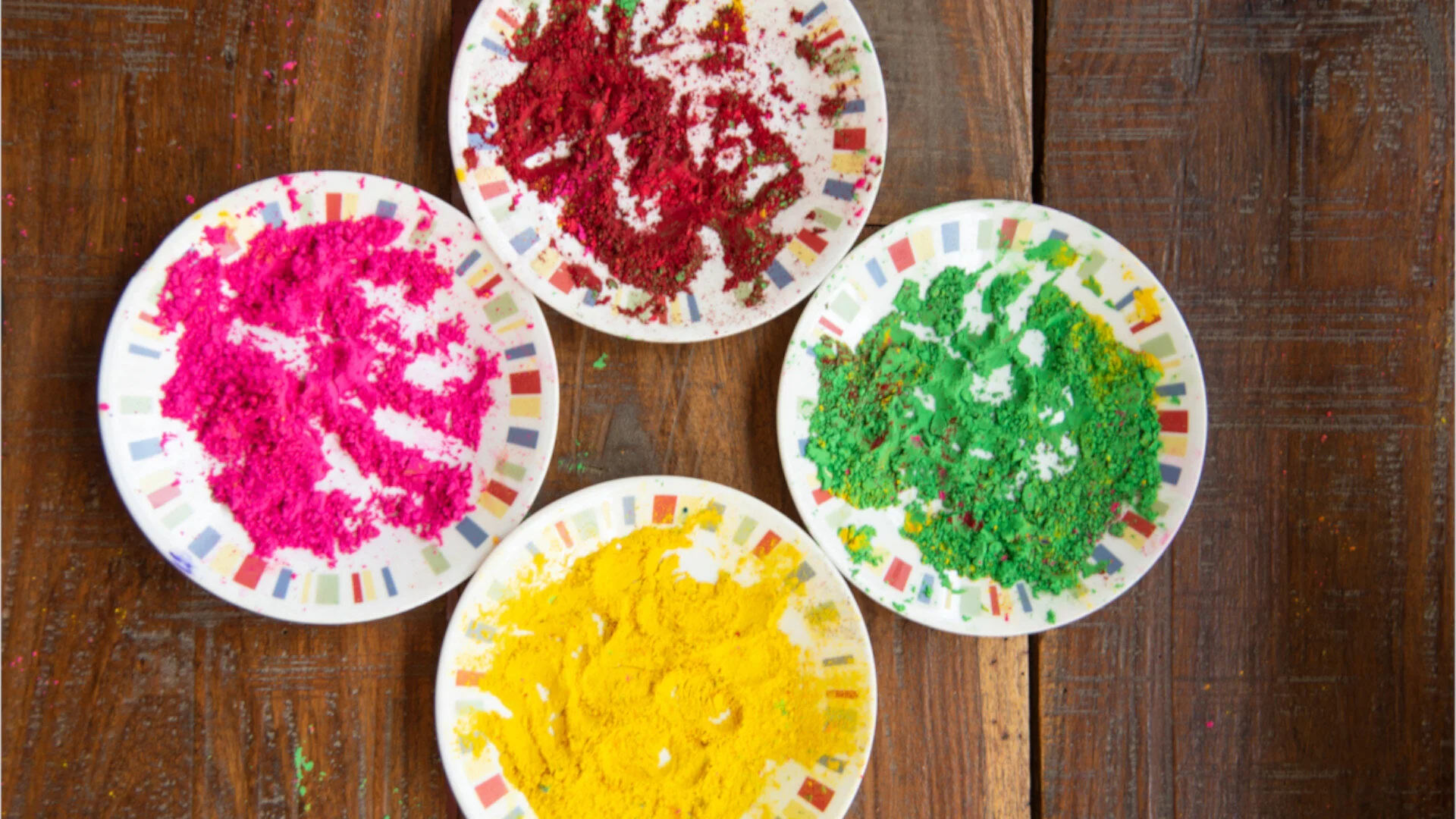
Festival of Colours in Nepal
The use of colours as a symbolic tool to mark joy and fanfare is a common tradition. It is used in various festivals throughout many cultures to symbolise festivity, joy and victory. In Nepal, two distinct festivals: Sindoor Jatra, and Holi have one thing in common; colours.
On the full moon day of Falgun, citizens of the Indian subcontinent rejoice in a unique festival known as Holi. The celebrations revolve around the age-old tradition of welcoming spring. It, along with Bisakh Jatra and Sindoor Jatra, are marked by the people of Kathmandu valley. They symbolise the end of winter and the beginning of the harvest season.
Over the years, Fagu Purnima has taken on many facets. Myths and folk tales help add mysticism and vibrancy to this day. In Kathmandu valley, a ceremonial pole known as Chir is erected in the lyakhu (palace) premises a few days before the full moon. It is decorated with vibrant coloured clothes by the people. Priests perform special rites, and devotees flock to receive blessings.
The process of erecting a wooden pole is not unique and exclusive to Kathmandu valley. The Maypole hoisted on May Day celebrations in Europe is an age-old tradition of festivity.
An interpretation of this day (Holi) revolves around a demon-king named Tarakasur. He ran rampant troubling the gods and causing problems. Tired and helpless, they concluded to consult Lord Shiva. But he was engaged in deep meditation after losing his wife, Sati Devi. The many gods of heaven planned on marrying Lord Shiva with Parvati, the daughter of the Himalayas. But they dared not to awaken the mighty Shiva. Thus they sought the help of Kamadeva, the god of love.
Kamadeva went to Kailash and shot a powerful arrow. It awakened Lord Shiva. To the surprise of all, he opened his third eye and shot a beam of light that burnt Kamadeva to ashes. As intended, the gods put forth the marriage proposal, which Lord Shiva accepted.
The ancients divided the year into two halves:
1. January to June (Longer days and shorter nights)
2. July to December (Longer nights and shorter days)
The second half belong to demons. During this part of the year, they are powerful and cause many troubles. As nights are longer, they terrify and conduct mischiefs. After the winter solstice, the sun begins its northern journey (Uttarayana), bringing an end to the demonic hold. Tarkasurs death came through the hands of Kartikeya, ending his tyranny. Coloured powder symbolises the victory of good over evil.
The second lore is of another demon king known as Hiranyakashyapu. His son Prahlada was a great devotee of Lord Vishnu. Numerous attempts to realign Praladha failed. Amongst these attempts was when Dhunda, the kings' sister, grabbed Praladha and jumped into a fire, she was blessed not to be harmed by fire. The intention was to burn Praladha alive, but Lord Vishnu saved him and burned Dhunda instead. She is also known by the name Holika, and connecting lore states the day got its name from this event.
King Hiranyakashyapus' end came through the hands of Narashingha, the lion avatar of Lord Vishnu. This act is the highlight of Kati Pyakhan (Kartik Naach), presented in Patan Durbar Square in the month of Kartik (October- November).
Click Here: To Read Our Article On Kartik Naach
Yet another tale goes as follows, Putana, a she-demon planned to kill Krishna. She hatched a plan and disguised herself as a mortal. She poisoned her milk and went to him. She allowed him to suckle her but failed to realise that he was not an ordinary child. He sucked Putana until she died.
All three stories revolve around attempts of evil and how the good is always victorious. We have developed various ways to commemorate this act. We play with colours (Holi), illuminate our homes (Dipawali) and share greetings and blessings (Dashain). We celebrate with our loved ones, visit temples, rejoice in various delicacies and share our affections with all.
Holi is celebrated for two consecutive days by Nepalese. The first day is a national celebration. Whereas, the second is Terai Holi which features robust fanfare in the Terai region of Nepal.
POPULAR ITINERARIES
SIMILAR POSTS

Sighting The Living Goddesses of Kathmandu Valley - Part II
When one traces the pages of history. The practice of worshiping a living goddess dates back to the Lichhavi era. From then till now, various changes have occurred in this tradition. But the respect bestowed upon her shall be the same for time immemorial.
In the previous article, we learned about the unique practice of Ekanta Kumari of Bhaktapur. Moving further, we shall learn more about the living goddesses of Lalitpur and Kathmandu.
Click Here: To Read Our Article On The History of The Living Goddess In Nepal.
Lalitpur
The first living goddess of ancient Nepal (the valley kingdom of Nepal) was in Lalitpur. In the Bihar of Lakshi-barman near the durbar (palace), King Lakshmikama-deva established an image of Kumari. He began worshipping the daughter of a bandya (Shakya and Bajaracharya are called bandya in ancient Newari language). Before this, much evidence is not available of the practice.
Back to the future, she now calls Ratnakar Mahabihar home. In its quaint ambience, she lives her divine mortality up till she becomes pubescent. After which, she bids farewell to divinity, and a new child takes the throne.
During her reign, she offers blessings daily to devotees. The hours are not regular, but she welcomes the woes and praises of her people. Apart from this, she adorns her helm, clads in red and embellished in ornaments during festivals.
It is not every day nor every festival, however. But, a select few occasions require the oversight of the living goddess.
Let us start, shall we?
The first sighting is one of many during the Rato Matsyendranath chariot festival. It is the most important tradition that dates back thousands of years. She is seated on her throne, placed at her pati (a resting house) at Lagankhel during the ceremonial bath of Rato Matsyendranath. She overlooks the ritual and offers blessings to her devotees.
During the first leg of the chariot festival, it is pulled from Puchwo (commonly known as Pulchowk) to Ga: Baha (also called Ga: Bahal) by revellers. Her throne is placed on the porch outside Ratnakar Mahabihar by her caretakers. Her attendants(family member and caretakers) attend to her needs.
The next day it is pulled by revellers to Mangah (commonly known as Mangal Bazar). She indulges in the celebrations from her porch seated on her throne. Before the chariot pulling commences, she is open to devotees and bestows her blessings.
She makes an appearance during the final day of revelling at Kumari Pati (A rest house made for the Kumari). This area of Lalitpur got its name from this rest house. As the chariot makes its way to its final stop at Jawalakhel (originally Jah Whalu Khel: An open field where rice is offered to Matsyendranath in a throwing gesture by devotees), she views the merrymaking from her seat.
The last day of the festival is Bhoto Jatra. On this day, a ceremonial bhoto (Jacket) is shown to the public by an official.
Click Here: To Read Our Article On The Legend Of The Bhoto
The living goddess rests in a pati at Jawalakhel. She views the chief of the Guthi Sansthan display the bhoto. To make sure everyone gets a look, he shows it from four directions. Once the ceremony is over, her caretaker carries her home.
The next sighting is during Dashain (Moh: ni in Newari language).
The living goddess is viewed as the manifestation of Tulaju Devi (Taleju) by her following. She (Tulaju Devi) was the tutelary deity of the Malla kings who ruled medieval Nepal.
Dashain is the victory of good over evil.
This festival revolves around goddess Durga and her killing Mahisasur (A demon). Tulaju Devi is an avatar of goddess Durga. Thus the living goddess is taken to the Tulaju temple during mid-night of Navami by her caretakers.
She partakes in an essential cultural ritual that makes way for Dashami ( The tenth day, also known as victory day).
The final sighting is during the handover of the helm. Our beloved Dyah Meiju (Noble Goddess) bids farewell and is carried home by her family. The new Dyah Meiju can be sighted during this day as well but at different hours.
In the next article we shall look into sighting the Kumari of Kathmandu.
POPULAR ITINERARIES
SIMILAR POSTS
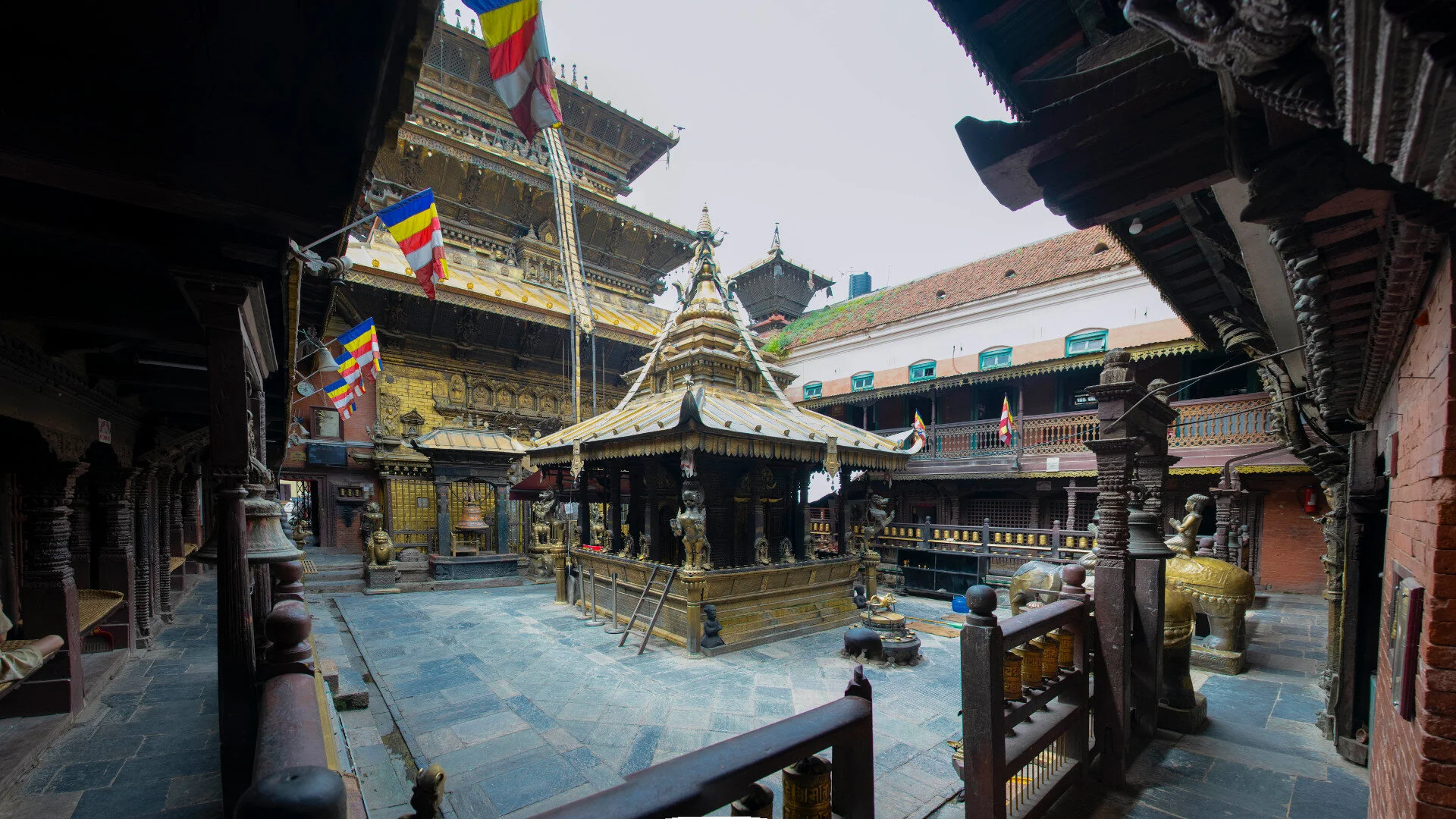
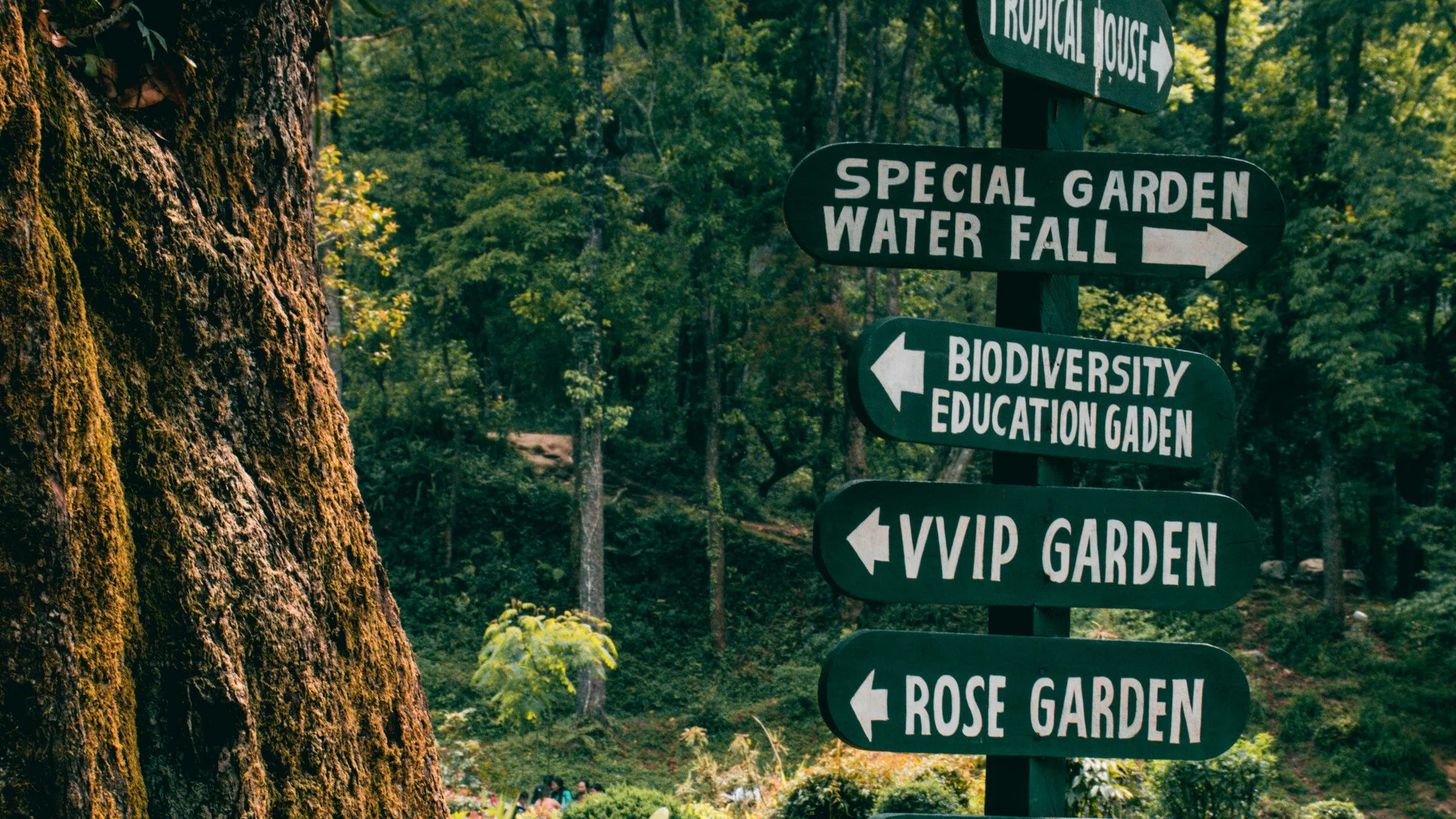
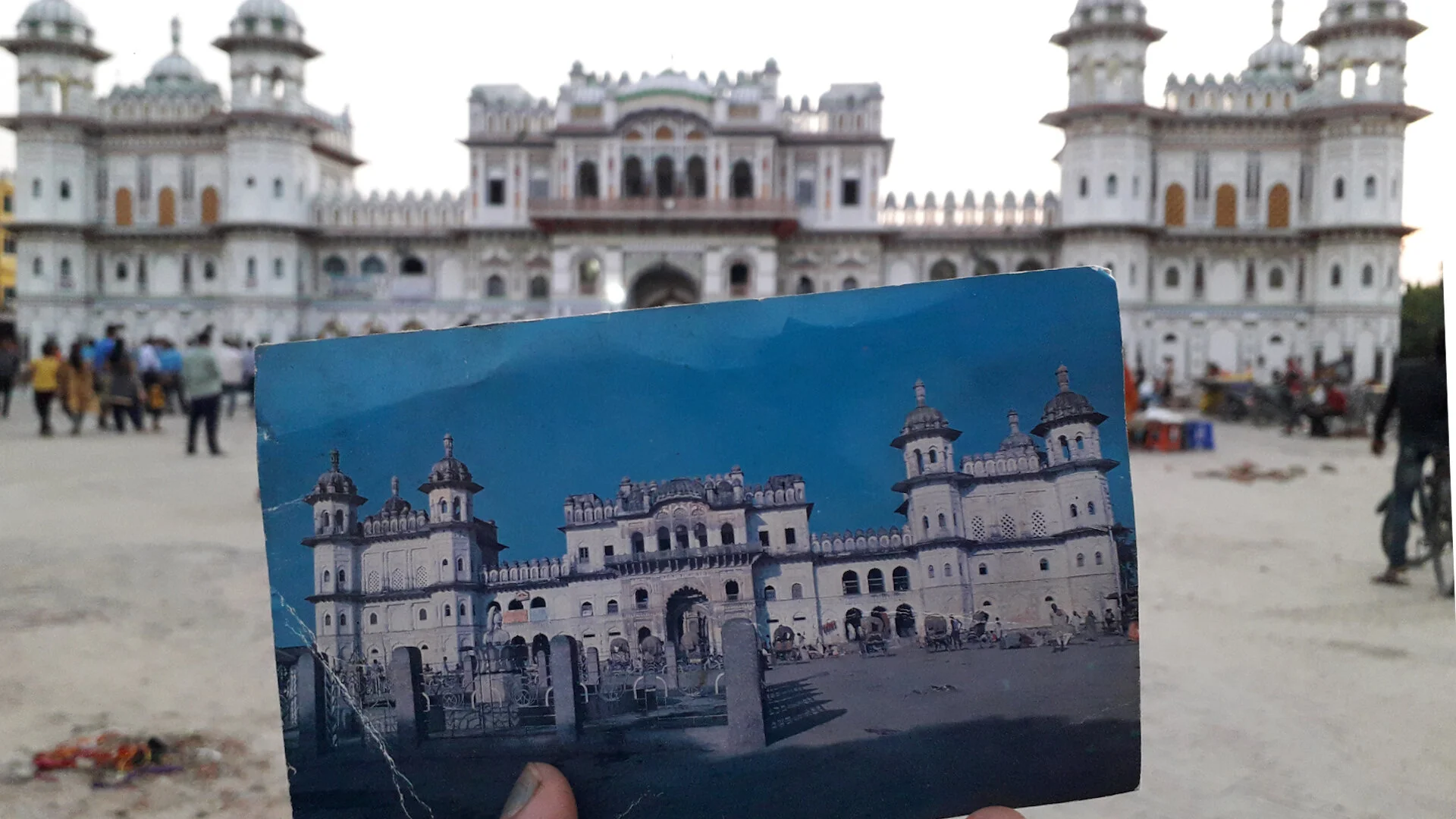
Sighting The Living Goddesses of Kathmandu Valley
Sighting the living goddess in Kathmandu valley is equal to spotting a tiger in Chitwan National Park. Being able to witness her beauty and seek her blessing is an honour that many desire. Well, I may not be able to let you know about the tiger, but I can, however, impart my knowledge of sighting the living goddesses of this valley.
The living divinities of this beautiful valley hold the highest rank in the unique pantheon of the Newars (native inhabitants). She is a living avatar of Goddess Tulaju (commonly known as Taleju Bhawani) and the primordial deity, Kaumari (commonly known as Kumari).
Click Here: To Read Our Article On The History of The Living Goddess In Nepal.
In brief, the Kathmandu valley has three principle dwellings: Kathmandu, Lalitpur and Bhaktapur. The worship of a living manifestation began during the Lichhavi Era but got its high rank during the late Malla period. They were known as Royal Kumari up until the dissolution of the monarchy in the 21st century.
The selection, indoctrination, and retirement process of these living deities are different in the three cities. But the honour and respect bestowed upon her are the same.
After Nepal went global with the open-door policy, the world got introduced to this ornate concept of a living deity. They were in awe of her beauty and honour, mesmerized by the symbolism and humbled by her divinity. But the management was subjected to global criticism. Child and human rights activists labelled this practice as child abuse. Some went further to call it child labour. This critique was due to the massive restrictions and high secrecy of the living goddess culture. It helped bring much-needed reform to the practice as allowing them to receive education, the establishment of pension funds and others to ensure her well-being.
The life of a living goddess in Bhaktapur is distinct from her sister cities. She is referred to as Ekanta Kumari, Ekanta meaning alone. But in reality, its the contrary; she is never alone. The practice in this city is unique due to the lack of strict restrictions for the living manifestation. Hailing from the houses of Shakya and Bajracharya, her selection process is an exhausting task for previously the high temple (Taleju) of Bhaktapur.
When Nepal became a republic, the Guthi Sansthan, a state-level entity established to manage the endowed land (Guthi) and its managing organizations (Temple Guthi’s, Communal Guthi’s and Festival Guthi’s) was given the responsibility of selection.
A radiant smile, large forehead, no cuts and scars on her body, pleasant face are some of the qualifications required for the living manifestation. She is selected at a tender age, her responsibility is complete when she turns ten, or her Ihi ( A ceremonial marriage of a Newari girl to Suvarna Kumar, a manifestation of Lord Vishnu) is fixed. She then bids farewell to her caretakers at Kumari Chhen (Kumari House) and gives way to a new girl to take her throne.
Sighting her is not a difficult task. She wakes up, packs her bag, and heads to school like every other young girl. She plays with her friends, mingles in the beautiful squares of Bhaktapur and lives an ordinary but divine life.
The principle of this practice is that she is a goddess. How can you restrict a goddess?
But she has to refrain from chicken meat and eggs, a common practice in Shakya and Bajracharya households. She is not to go outside the valley without the permission of Guthi Sansthan. Apart from these and a few other rules, she is an ordinary divinity.
She clads in red, adorns jewels and awakens her third eye when rituals are to be commenced. During Dashain (Moh: ni), she presents blessings to devotees who knock on her ornate gates. For the rest of the year, she is indistinguishable from a normal girl. The occasional whispers and elders bowing to her is a telltale sign, however.
In the next article we shall look into sighting the Kumari of Lalitpur.
POPULAR ITINERARIES
SIMILAR POSTS
Nepal Through A Lens: A Pictorial Adventure - Part III
In the final edition of "Nepal through a lens", we shall explore the aspects of cultural and portrait photography. These contemporary genres are widely popular for storytelling, artistic framing and compositions. Nepal offers a rich multifariousness in these two fields. An expert with a lens with a knack for discovery and exploration shall have a field day in Nepal.
Portrait Photography
During my adventures of collecting publications about Nepal, I stumbled upon a book by Dr Harka Gurung and Jane Salter. It featured a collection of drawings and paintings by Salter of the various groups mentioned in the book.
Published in 1999AD, Nepal was different then to what it is now. An endeavour in this genre in the 21st century would be an exhibition to behold. With over 103 ethnic groups and 93 spoken languages, the task would be monumental, but the fruit: legendary.
Historically, migration to the region of Nepal can be classified as follows:
1. Religious Pilgrimage
2. Trade link between Old India & Old China
3. Escaping war
4. Resource gathering
Boddhisatva Manjushri came to this region on a pilgrimage, alike many other sages and Boddhisattvas. The development of Kathmandu Valley, Palpa, Mustang is due to trade and commerce that featured migration to and from these areas.
The strong influence of Maithali culture in Bhaktapur is due to migrants from Simraungadh. Their kingship was the lineage of the Karnataka Dynasty. They fled to Bhaktapur to escape the Mugal conquest, which decimated their city and region.
Why is this important?
It is to show the influence of migration on the historical development of Nepal. Migration helps create diversity, which is seen profoundly in Nepal. Genetic traces of Dravidian, Khas Aryans, Burmese, Mongoloids and others in such a small footprint is quite remarkable. A journey through the lush escapade of Nepal, discovering beautiful faces, is a glorious venture.
Cultural Photography
The amalgam of geography, ethnicity, climatic conditions, religions, and migration creates paramount cultural richness.
When one looks up Nepal on the internet, cultural discovery is a thing that pops up all the time. We have found ways to portray our beliefs, values and deities in unique presentations. These, at times, look bizarre for a stranger. Throughout all our transitions from pastoral to agricultural, feudal to industrial: we have found ways to preserve our heritage, culture and traditions.
Some old practices have sadly gone extinct but are remnant in photographs taken by travellers who experience them. In no other country would one stumble upon living gods and goddesses, old-world chimes and tunes, masked dances, and practices as widely as in Nepal.
This domain has been my field of practice for over a decade. The process of learning and discovery has been no short of a beautiful experience. Experiencing these cultural practises, festivals and instilling them in a frame has been an honour worth lifetimes.
The cultural celebrations in Nepal can generally be classified into three divisions:
1. Communal Celebrations
These type of celebrations are native to a community. Examples of such can be pa: yah celebrated by Khadgi (Newar Butchers), Punchali Bhujya ( Offering of great grains at Purnachadi of Lalitpur), Majipa Lakhey ( A dance and practise of Majipa Tol in Kathmandu), Asta Matrika Dance of Patan, Nyata Maru Ajima Dance of Nardevi, Chandeswori Jatra of Banepa and various others.
2. Regional Celebrations
Regional celebrations are within geographical lines or state boundaries. Sindoor Jatra of Thimi, Biskah Jatra of Bhaktapur, Rato Matsyendranath of Lalitpur, Indra Jatra of Kathmandu, Bag Bhairab Jatra of Kirtipur, Tiji Festival of Mustang, Yarthung horse festival of Western Nepal are some examples.
These celebrations are marked in a particular area, and their importance and understanding are unknown in others. Migration of individuals of these regions to other parts takes aspects of the celebrations with them. For example, Chhat is celebrated by the people of the Terai region. But due to migration, it is now also practised in Kathmandu valley.
3. National Celebrations
These celebrations hold no regional/ state boundaries and are practiced on a national level by Nepalese. Festivals such as Dashain and Tihar are the best example of such observations. They are marked by a national holiday for all citizens.
POPULAR ITINERARIES
SIMILAR POSTS
Nepal Through A Lens: A Pictorial Adventure - Part II
To photograph is to instill in a frame the beauty and magnitude of elements. The picture helps tell a story of a thousand words and relive the glory of challenges and hardship. Nepal’s calling in this dimension is immense, and the fruit of dedication is the sweetest.
Landscape Photography
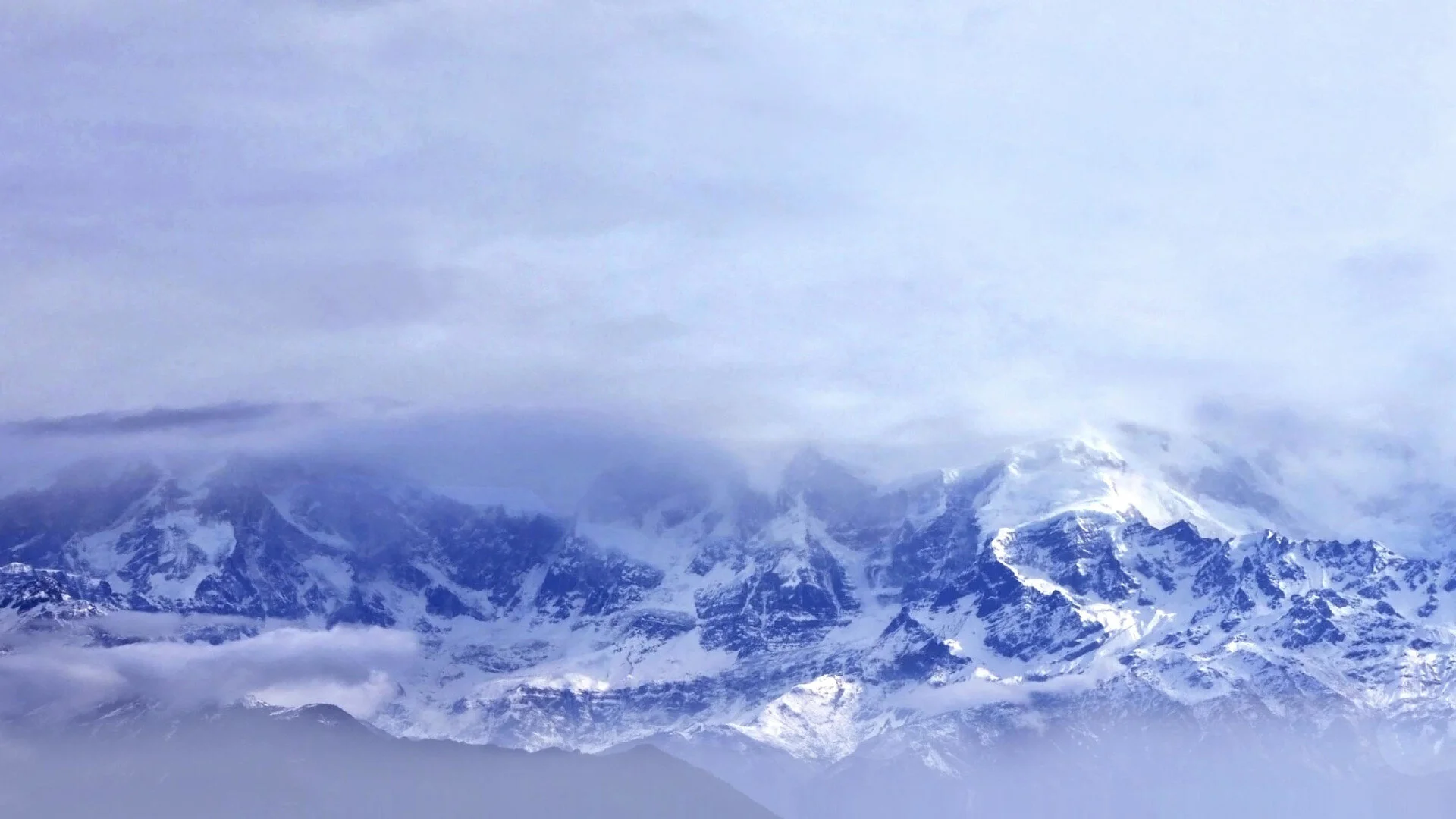
Nepal’s greatest treasure is its diverse geography, which developed variations in climatic condition and multiple regions within a small footprint. From the Himalayan outback in the north to the medley of hills in the centre and seemingly endless flatland of terai, Nepal’s topography is a boon that keeps on giving.
Some of the greatest landscape destination of Nepal are as follows:
1. Everest Region
2. Manaslu Region
3. Upper Mustang
4. Lower and upper Dolpa
5. Far-western Region (Khaptad, Api Himal)
6. Eastern Nepal (Illam, Kanchanjunga)
These are just a few examples which boast beautiful topography and natural beauty. Accessing these areas is difficult, some require carrying tents and provisions but this remoteness has helped preserve the regions setting and yonder.
Architectural Photography
Diving into the realm of architecture, Nepal offers remanences of a bygone era portrayed in its facades. Some of the architectural styles spread around Nepal are as follows:
1. Nomadic tents and stone masonry in the upper himalayan region
2. Newar masonry in central and lower Nepal (Kathmandu Valley, Palpa, Bandipur, Dolakha)
3. Baroque architecture (Popular during the Rana Era of Nepal)
4. Temple architecture
a) Shikhara (Pinnacle)
b) Pagoda (Tier)
c) Stupa (Dome)
5. Mathali mud houses
6. Tharu style
7. Golghar (Pavilion style)
These dwellings and temples snapped with a fluid background is a picture worth framing. The nomadic lifestyle in the upper-Himalayas of the chauri (yak) herders is a sight to behold. A stroll in the stone-clad architecture of the Himalayas takes you to a place beyond time.
Newar masonry is distinct and was spread all over Nepal by Newar merchants during their trade endeavours. Its use of red brick, carved wood and clay tiles creates a great view at all hours. Baroque architecture was introduced in Nepal by the Rana clan, who ruled Nepal for two centuries. Palaces featuring elegant white masonry made in multiple parts of Nepal became a hallmark of the Rana clan.
In terms of temple architecture, three designs (shikhara, pagoda and stupa) have a stronghold in all parts of Nepal. Shikhara was a popular style of temple making in most parts of Old India. Its siblings Verma and Dravidian style, however, hasn’t been used much in Nepal. Pagoda style migrated downwards from the north and has a strong influence in multiple cultures. It was used widely in Newar temple making with additions of wooden struts (tudal) and thorana.
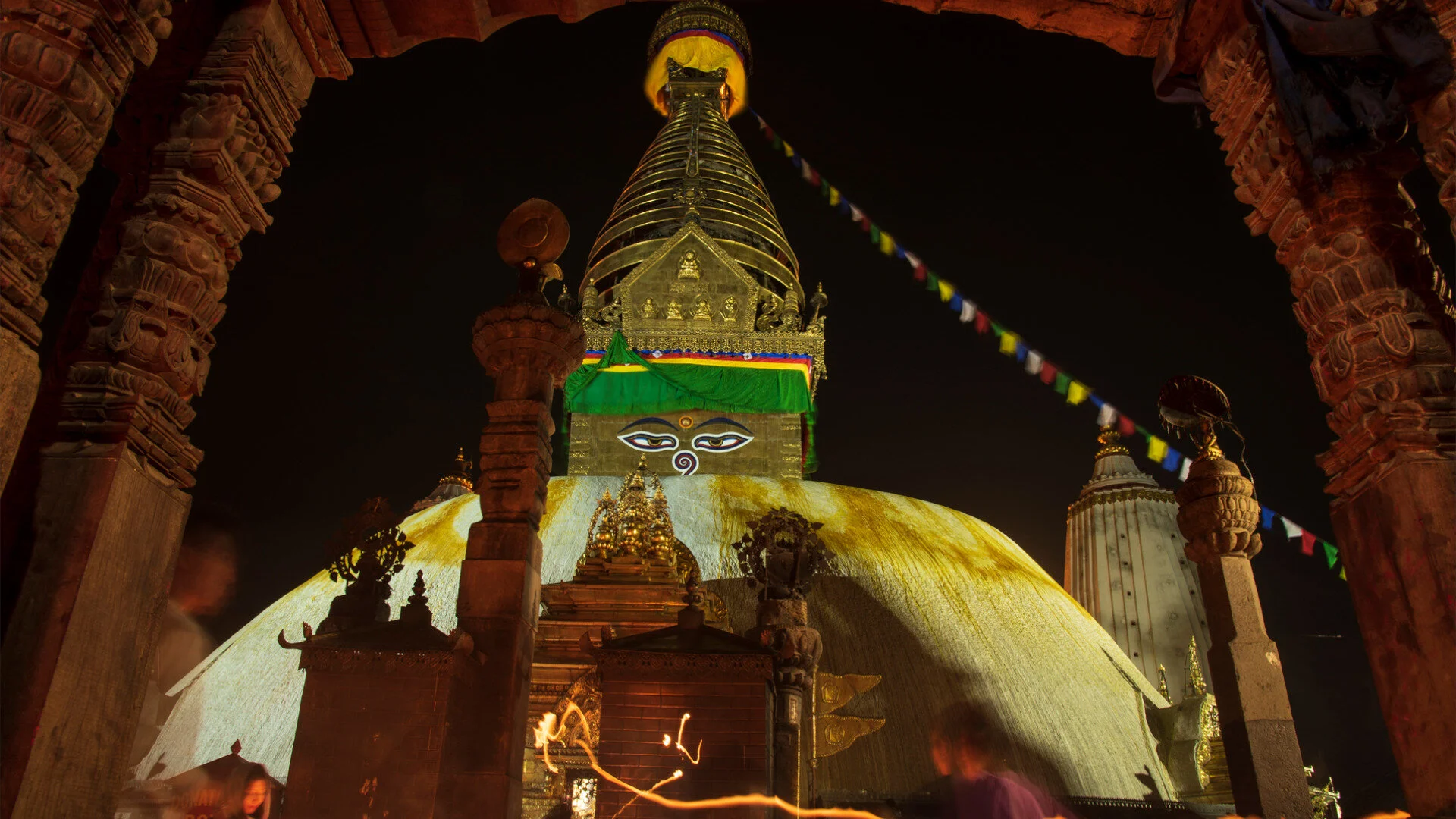
The stupa style has multiple variations, which are found all over Nepal. It is a marquee of Vajrayana Buddhist culture, and it has great significance. It developed in ancient Nepal and spread globally with Buddhist culture. The most iconic examples of this building technique are Swayambhu, Khasti Maha Chaitya (Bouddhanath) and Swetachaitya (White Dagoba pioneered by Ariniko).
Food Photography
Food? Yes, food!
A beautiful platter at the end of the day is a mixture of natural and cultural diversity. Nature provides the freshest ingredients, some endemic (native) to one region, whereas culture develops cuisine.
Just as Nepal has various trekking regions, geographical divisions and cultural distinctions, we also have regional cuisine that deserves the spotlight.
When I was younger, three square meals a day was a luxury. I was born during the transitional phase ( feudalism to capitalism) and grew up during the civil war. With the advent of modernization, I like my age group craved from western delights such as pizza, burger, spaghetti and shunned regional cuisine.
I was lucky to have had great tenants who were from various parts of Nepal. They came to Kathmandu for a better life, and with them came their cuisine. Today, it feels like an honour to have experienced such variety at a young age.
Trans-Himalayan to Newari, Thakali, Limbu and Tharu, these are just the tip of the iceberg when it comes to our assortment in the genre of food. Tasting them in their native region and instilling them in a frame is an adventure beyond reckoning.
POPULAR ITINERARIES
SIMILAR POSTS
Nepal Through A Lens: A Pictorial Adventure - Part I
Nestled in the high Himalayas is the picturesque nation, Nepal. A country like no other with great diversity in ethnicity, climate, wildlife and flora. A photographic journey through these lands is a breath-taking experience. Something that has never been done in a paramount scale.
Over time, photography has developed as a sub-genre in travel. It has grown from just instilling the moment onto film or paper and evolved into a multi-faceted experience. People today travel to photograph and through this process indulge in the beauty and elements of the destinations.
I remember stumbling upon images of Nepal taken before we instituted an open door policy(1950AD). These travellers, some inconspicuously took great photographs to preserve the tranquil beauty of Nepal in film. Revisiting them in the 21st century, much has changed. Taking a time composite shows the gravity of how Nepal has deeply absorbed the facets of modernization. In this urban chaos, still lies the old world preserved in a unique amalgam.
Nepal has much to offer in photography which can lure many to this beautiful country. Photography has also grown in both technological and cultural aspects: it has also evolved into a glorious art form.
If one reviews most of my articles, I never fail to mention how Nepal has good diversity. It offers something for every genre of travellers and all age groups. When it comes to pictorial adventures as well, we have a diverse range for all photographers.
Exploring Nepal, little by little, it always dawns on me how beautiful it truly is. I haven’t travelled much of this nation: but in my adventures, I find peculiarities, beauty and tranquillity. The never-ending savanna of the terai, the layered hills and jagged north is an adventure beyond imagination for a curious mind. The terraces of the eastern region, urban chaos of central and the untainted beauty of the far-west is far too alluring as well.
Venturing these lands with the intent of photography is an experience like no other; chasing the Bengal Tiger in the savanna to stumbling upon the Red Panda in the eastern hills, watching a flock of blue sheep attempt an impossible climb and daring the arctic to photograph the snow leopard.
The cultural discovery is also paramount, landscapes straight out of heaven and architecture of a bygone era. All of this and much more awaits a photographer in Nepal. We explore below in segments the dimensions of possibilities.
Wildlife Photography
Nepal’s geographical vastness needs no introduction. It has over time helped develop the biological diversity of Nepal. The variance in climatic conditions beginning from tropical in the south to reaching arctic in the north has made Nepal, “ Truly Natural”.
Nepal’s biodiversity is comprised into two main regions:
1. Mountainous ecoregion
2. Savanna and Grasslands ecoregion
Nepal is proudly called home by 208 mammal species and different reptiles, some of which are native. As of data collected in 2012 AD, we have more than 900 species of birds with the spiny babbler which is endemic (native) to Nepal. Underwater, we have a great diversity of catfishes spread out all over the country and also the Nepalese snowtrout.
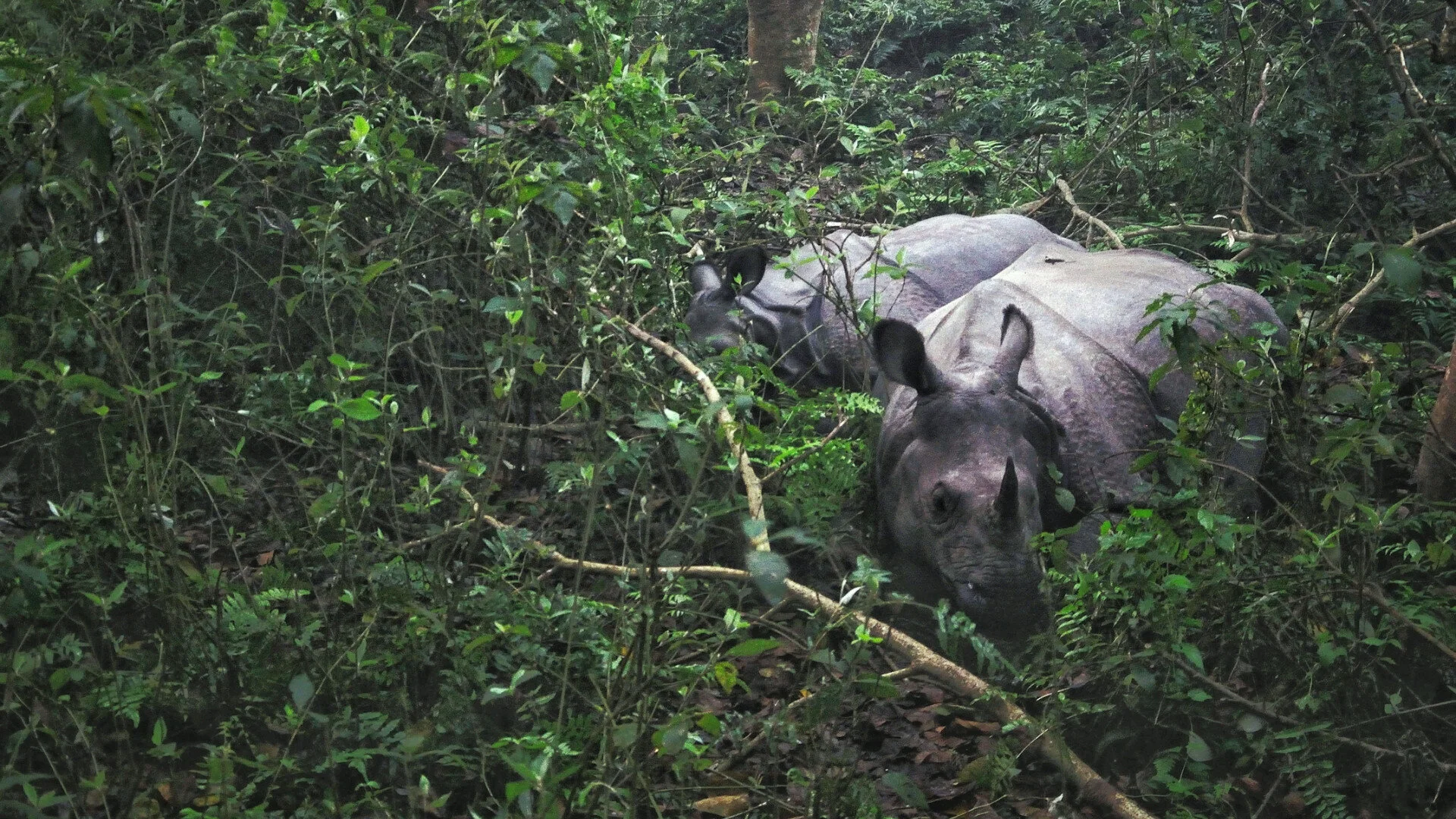
Amongst this diverse selection the elusive snow leopard (Found North), Bengal Tiger (Found South), Red Panda (North Eastern), Blue Sheep (North West), One-horned Rhinoceros (South) are the creatures that have ringed many bells and marked ample expeditions to Nepal. Avifauna photography has also been a call to the wild for many adventures.
These faunas are protected under, National Parks and Wildlife Conservation Act 2029 BS. The 4 “classes” of protection are as follows:
1. National Parks (9)
2. Wildlife Reserves (3)
3. Conservation Areas (3)
4. Hunting Reserve (1)
Along with which we proudly hosts multiples Ramsar sites (Wetlands). The enlistment of Sagarmatha National Park and Chitwan National Park as world heritage was a notable achievement.
Flora Photography
As per the documented data of the 1970s and early 1980s, Nepal is home to 5067 species of flora. Amongst which 5041 were angiosperms and the remaining 26 species were gymnosperms. The ICOMOS checklist (as of 2006) presents 2,532 species of vascular plants under 1034 genera and 199 families in the protected sites.
Out of these species, 400 vascular plants are endemic (native) to Nepal. We have two endemic orchids Pleione coronaria, Oreocrchis porphyranthes and the most popular endemic plant is the rhododendron (arboreum).
A pictorial adventure through the lush foothills and the mountainous eco-system discovering Nepal’s flora, wouldn’t just be an experience but will also contribute to Nepal and the world. It is a segment unexplored in Nepal and lack interest in multiple dimensions (Research, Documentation and Photography) as left a gap in understanding flora and its potential.
POPULAR ITINERARIES
SIMILAR POSTS
A Call To Nepalese: Travel Nepal This Decade
A Crisis is an opportunity for the brave. It is a chance to redefine dynamics, rhetoric and make history. We all faced a terrible crisis. Its impacts still loom like a sword hanging from a thread. In these troubled time, especially for the tourism industry, let us all travel Nepal this decade and breath back life to it.
In tourism statistics, we have always aimed to increase the inflow of tourists from foreign nations. But, what gets lost in the struggle to grow that number is the potential of domestic/ internal tourism. The pandemic has taught us a valuable lesson: globalization isn’t always the road to success. It is high time the tourism industry focuses on creating internal mechanisms, and revitalize Nepalese tourism.
When Visit Nepal Year 2020 was announced, it featured an ambitious goal of bringing in 2 million travelers to Nepal. The pandemic derailed the campaign. It stunned the industry, which for years was a great contributor to GDP and foreign currency reserves. A year went by in the blink of an eye, and much was lost during this storm.
The interconnected tourism industry felt the economic shock waves of the pandemic. It spread like an uncontrollable wildfire, bringing down shutters and closing gates. Businesses did their best to cope with the ricochet effect and survive together.
A peculiarity occurred once the lock down ended. People were restless, battered by a year-long violent storm that physically and mentally drained them. Thus, they began to travel!
They collected the little they had and exercised precautions to escape the brute reality. They indulged in the scenic Himalayan outbacks, the medley of hills and Terai’s vastness. They took in a fresh breath of air; for some, it felt like Moksha.
When it comes to traveling, what is the most important thing? Most always say money, but it is time. The combination of free time and disposable income creates a delightful mixture of travel. For what is the point of money if you don’t have time?
It was something that even the state agencies noticed, and announced a beta plan to provision a month-long travel leave. It also got lost in the storm.
Nepal has a multitude of destinations which are great for all ages. The public and private industry can endeavor into making regions more accessible as well, but without disrupting the natural essence. Sites can be promoted for domestic tourists by the local level utilizing catalysts such as religious, cultural, historical, urban and lifestyle tourism.
Wouldn’t you like to experience what was once Baise and Chaubise Rajya (Kingdoms before the unification of Nepal)? Traverse the trails of Bodhistava Majushree around Kathmandu Valley?
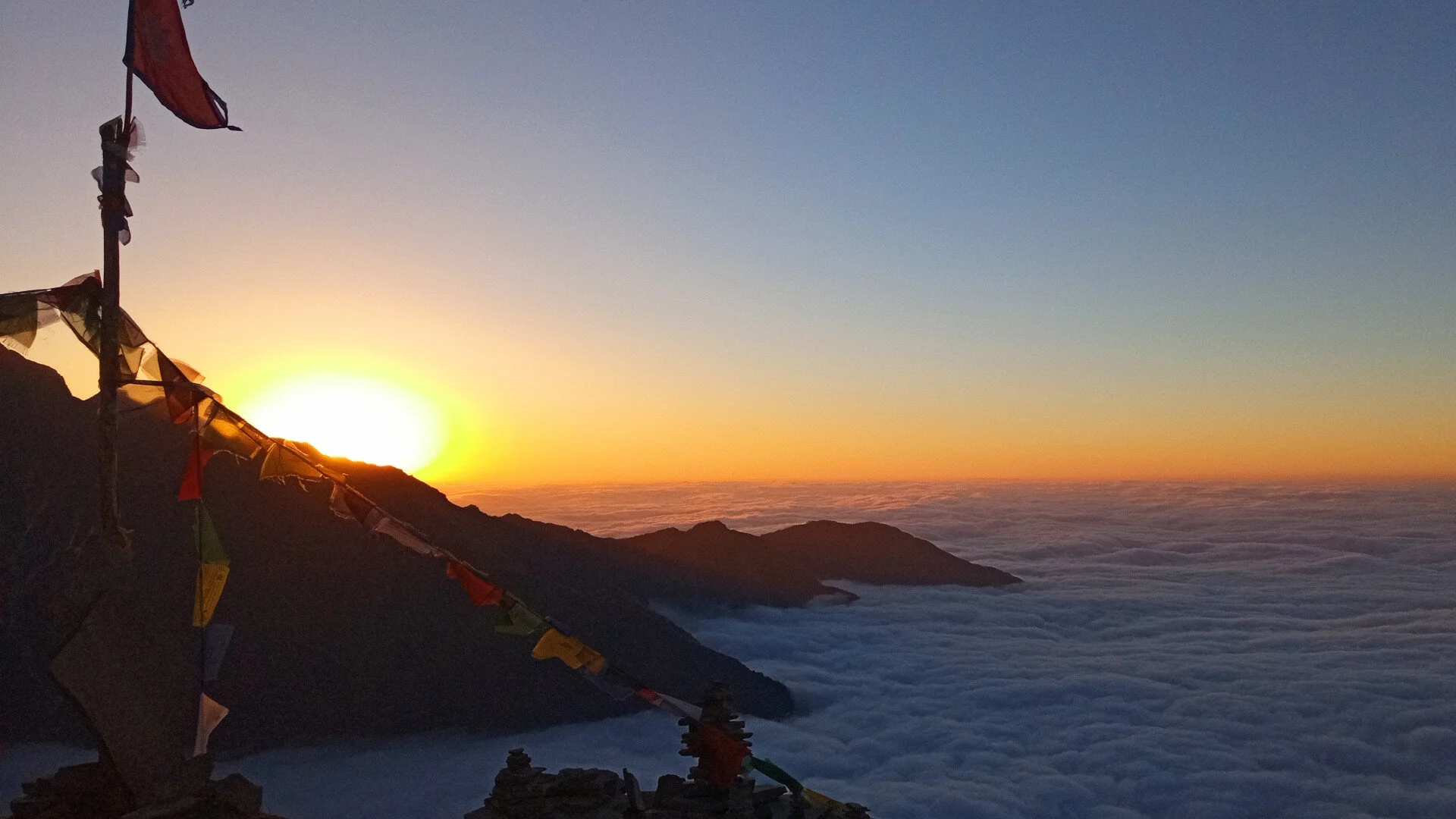
Indulge yourself watching the sunrise from Shree Antu with a sip of warm tea? Be awed by the pure spectacle from Mardi Viewpoint? Experience neo-classical luxury in Kathmandu?
The possibilities are endless, and with a good understanding of the audience; the sky is the limit.
One cannot understand the magnitude of depth Nepal offers without traveling. At times it seems like the concept of travel is reserved only for foreigners and expats in Nepal. This call is for those seekers who wish to unburden themselves from their routine life and harsh realities. Experience Nepal and rejoice in this natural treasure. Instead of celebrating occasions at exotic international destinations, do it in Nepal.
Experience indulgence
Luxury does not always mean Santorini, Bali or the Bahamas. It can be experiencing Kathmandu’s facets and indulging in a luxurious stay. Shanker hotel offers the best in class, wrapped in the beautiful baroque architecture. The neo-classical build infused with elements of fine wooden craft and masonry enables you to experience luxury at the finest.
When asked, “What defines a luxurious trip for you?”. I picture a beautiful rendezvous at Shey Poksundo Lake, via a beautiful helicopter flight. Indulge in the serenity, and head back to Kathmandu and detoxify stress at the spa and indulge in the finest cuisine.
Experience awakening
The segment of spiritual tourism is slowly but steadily gaining pace. Individuals from all walks of life, wish to understand and experience spiritual healing, practices such as yoga, music therapy, and meditation are slowly garnering the interest of all age groups. These can act as a great driver to promote domestic movement. Once can experience traditional Newar spiritual healing in Kathmandu. The mystic art of Shamanism in the Himalayas and unearth mystic secrets with stoic sages.
These are quite frankly just a few means to boost internal movement. The possibilities are endless, and it shall take a collective effort from all sectors to rekindle the industry. Thus, let us all make an effort to travel Nepal this decade.
POPULAR ITINERARIES
SIMILAR POSTS
The Magic of Nepal - Part II
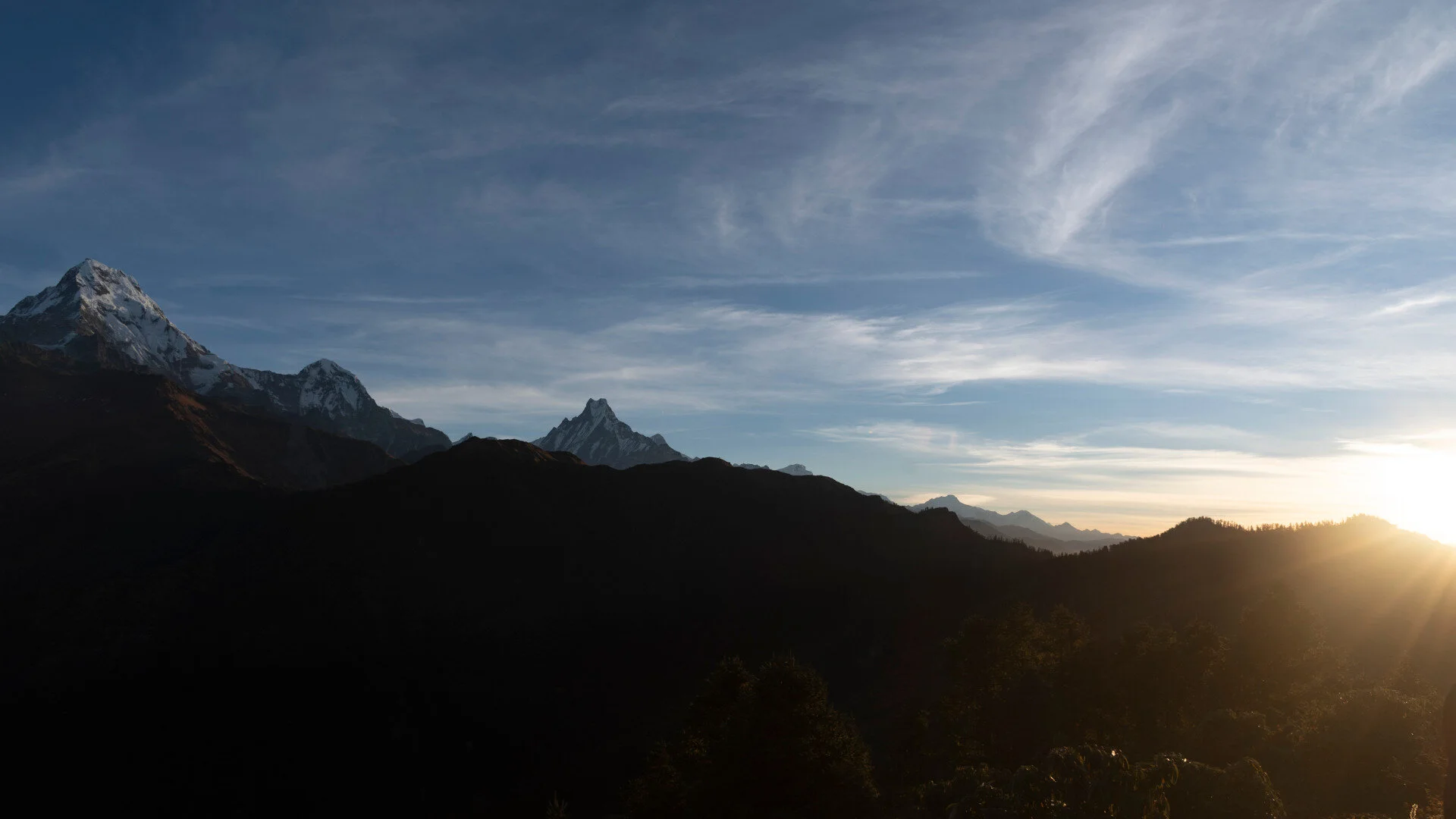
Nepal is the ideal destination for every genre of travelers from all over the world. From the magnificent highlands in the North to the diverse hills and lowlands in the South, historical heritage to rich cultures and ethnic diversity, Nepal has several different environments to explore for every traveler from every corner of the globe.
Exploring this small but humble nation, the gravity of this macrocosm hits all your senses; from the magnificent highlands to the diverse hills and lowland. Nepal has something to offer for every genre of travellers. We explore further the magic of Nepal and what makes it truly a lifetime experience.
Natures Grandeur
The most inviting element of Nepal is its glorious natural diversity. As one climbs up from the lowland s/he gets to experience the environments of the world. It is rare to find a nation which begins close to sea level and reaches for the stars. Over the years some sites have become Nepal’s marquee such as Mt. Everest and Sagarmatha National Park; Chitwan National Park; Shey Phoksundo National Park; Koshi Tappu Wildlife Reserve; The Annapurna Circuit and Kanchenjunga Conservation Area. These are just a highlight of what Nepal has to offer in terms of nature tourism.
Over the years, national and international interests have enabled Nepal to become successful in environmental conservation. It has allowed populations of endangered species to climb up, forests to rekindle and wetlands to expand.
This grandeur makes Nepal enticing for all the right reasons; from bird watching and sightseeing, trekking and ultra running; landscape photography to adventure sports. Nepal still has not been able to tap its full potential in this regard, but its evident possibilities are endless.
The majority of tourists that flock to Nepal every year are mostly trekkers and backpackers. They indulge in the charming mountains and enchanting hills, breathing in clean mountain air and experience awe at every step. Coupled with great hospitality, they leave with not just glorious tales; a calmer mind and gallery full of pictures but also with an unforgettable experience.
Culinary Delights
Time and again debates on Nepal’s potential to become a culinary destination are raised. The ethnic diversity of this nation is indigenous and migratory. Over the years, it has created a diverse culture and also a delightful spread of cuisines.
From the influence of the Trans-Himalaya, multifariousness of Newari cuisine to the delicious flavours of Tharu in the south, Nepal's potential to become a culinary destination is endless. The flavours of Thak Khola (Thakali) has become a much-loved symbol of Nepal's taste. These are quite frankly just a few cuisines which have garnered spotlight, many lie in the shadows. A detailed study spanning the entirety of Nepal led by culinary masters would help bring them to light.
A dish is not just a combination of ingredients but also a symbol of one’s culture. Each region has its native ingredients, methods and utensils; this helps create the unique symphony of flavours. If not recorded in time, they shall fade away like everything else and just be tales.
An Appreciation of Hospitality
The hospitality industry experienced a boom after 1950 AD; especially in the Kathmandu valley, which had a strong foundation. A general typology to understand Nepal is to divide it into Ancient, Medieval and Modern. Ancient and Medieval Nepal did not span more than this valley. Thus it was called the valley kingdom of Nepal. Much of its development occurred during the Lichhavi Era and second Malla Dynasty. The Gurkha conquest led by King Prithvi Narayan Shah created Nepal’s new fold. Modern Nepal expanded even after his death with campaigns led by his successors.
The strong foundation of Kathmandu was its background in mercantilism. It played a valuable role in trade and exchange in the Indian sub-continent. It over the years made Kathmandu valley a melting pot of cultures. We developed an appreciation of hospitality, as traders flocked this vale and at times had to call it home for a long duration.
This appreciation is not native to this valley, but something wired in Nepalese. I have heard many travellers say, “ This love and hospitality feels surreal. I wish I could stay here forever.”
The Always Smiling People
The takeaway of most travellers to Nepal is this beautiful phrase, “ The always smiling people.” No matter the hardship, we never fail to welcome guests with a beautiful smile and cater them with the utmost hospitality.
Exploring Nepal even I have experienced this humble smile that makes me feel at home. A universal symbol showing one's happiness and delight exemplified in the diverse faces of Nepal. So many ethnicities but one commonality, a beautiful smile. The emotions, at times, feel unexplainable, but some things are best unexplained.
I am also a Nepali, and it is my pride to welcome you to this beautiful nation. I might not speak your language, the idioms and phrases, but I know a smile makes you feel right at home. When you smile back, it is a hint that what I have done is right, and I, along with all the Nepalese, will do everything to make sure that smile stays on your beautiful face.
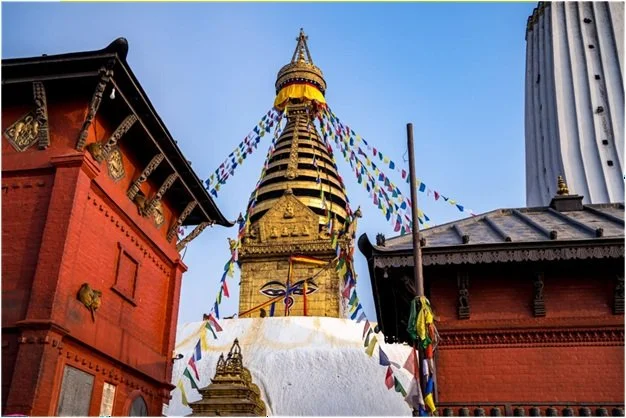
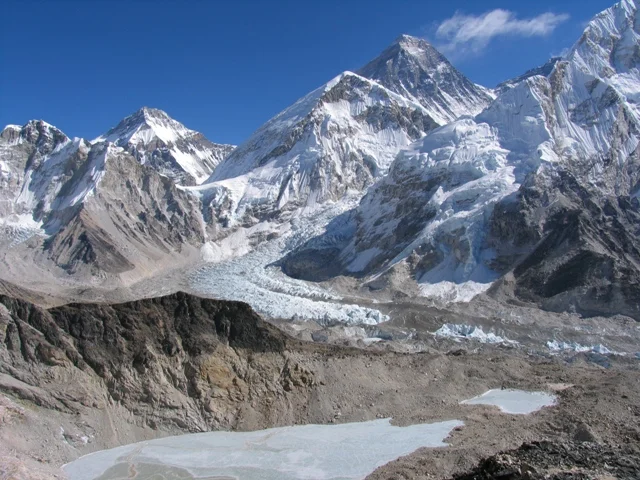
This trek is specially designed to reach the Everest Base Camp including Kala Pattar which is the best view point to view the sunrise over the high Himalayas including the Mt. Everest. This trek requires 13 days.
USD 1515 PER PERSON -- TWIN ROOM SHARING BASIS