

Two Chinese Girls in Kathmandu
Going around Kathmandu and Patan with first-time visitors gives you a fresh perspective, as one gets to look at everything, however familiar, through their enthralled eyes.
The past one month has been an interesting one, a time when I’ve had the chance to show off the various aspects of Kathmandu and Patan to two young Chinese girls, Jin Jin Cheung and Sun Yang (a.k.a. Emily) who are journalism students at Shantung University in Guangzhou province, and here on internship at ECS Media where I work. Both of them speak and write English quite well, and so it was no problem communicating with them.
The first place I took one of them, Jin Jin, was to a center in Gongabu called Entire Power in Social Work (EPSA) that provides skill training, employment, and shelter to some 25 women with various physical disabilities. The next evening, we visited another center in Chabel, Voice of Creative Disabled (Srijanshil Apang Awaaz) that provides refuge and education to about 15 young girls with physical disabilities. Jin Jin and I spent almost four hours, from around 4:00 p.m. to 9:00 p.m. at the second center, so engrossed was she in conversations with the girls and their founder Ms. Tulasa KC. Jin Jin took a lot of photos and plenty of notes. Some days later, she visited EPSA again on her own to have a more detailed talk with the center’s founder, Ms. Sangita Pant. There are many such centers in the valley, a side of Kathmandu that most tourists usually don’t see. I’m sure something good will result out of our visits, at the least, some useful features in some magazine or the other, here and in China.
The next week, I took Sun Yang (Emily) for a stroll around Okubahal in Lalitpur, home to many talented metal sculptors. We went through a narrow alley that opened out onto a spacious courtyard at the center of which is a large white stupa. Rows of houses surround the courtyard, which is known as Ta:Go Chiva, meaning ‘Big Stupa’. At the front is the famous Rudra Varna Mahavihar, one of the best maintained mahavihars in the valley. I expected Sun Yang to be amazed at the location, and I wasn’t disappointed. Her first action was to start snapping away with her camera. Before entering the mahavihar, we visited one of the country’s masters in the art of statue making, Mr. Sanat Kumar Shakya, whose house is the first one at the alley’s entrance to the courtyard.
He and his son, Sabin, took us around the various rooms in his house where different aspects of statue making were in progress. Mr. Shakya is especially famous for his Sahasra-bhuja Sahasra-netra ((Thousand-armed, Thousand-eyed Avalokitesvara) figures, many of which can be seen in various monasteries around the valley. Sun Yang (Emily) was rightly delighted to get the chance to see a number of men and women, including Sabin’s sister Sabina, at work, and the beautiful finished statues on display simply enthralled her.
After this informative tour, Sabin was good enough to accompany us inside Rudra Varna Mahavihar. It is such a clean and beautiful shrine, with so many lovely works of art, many of which are ancient, that we spent quite some time there taking photos from every conceivable angle, and of everything on view. Then, since there was still half-an-hour or so for the evening prayers to begin, we went to the equally renowned Mahaboudha Temple nearby. This shrine has a thousand Buddhas made of terracotta, and at the moment had steel scaffolding around it due to some damage due to the recent devastating earthquake.
We got permission to watch the evening worship and prayer recitals, after which Sabin took us inside the adjacent house, which has been converted into a guest house without changing its traditional features. There were a couple of small single rooms and some double beds. The interesting thing was the ambience—low ceilings, ethnic furnishing, lots of wood and metal craft décor, and of course, the grand Mahaboudha right next to the windows. There’s also a café on the ground floor that looks quite cozy.
Then, we went back to Rudra Varna Mahavihar to witness the daily evening worship, which is conducted by a priest and a group of elders of the Shakya clan. According to Sabin, every Bajracharya male of his particular clan has to do a two-week duty as the mahavihar priest once in his lifetime. The current priest was young, and dressed in the customary black priest’s robes. He went around the mahavihar with a smoking incense holder in his hand, and while he was going to all corners, everyone inside the mahavihar, including us, had to stay completely still. Then the priest, along with four or five elders, sat down in front of the main shrine and started reciting prayers. After watching all this for some time, Sun Yang (Emily) and I took our leave.
Our next stop was Honacha, the very popular eatery in the durbar square. It was pretty crowded, as always, with people sitting down on low stools all over the place, in front of the open kitchen where a matronly lady was busy cooking the eatery’s famous badas (pancake-like lentil dish with either egg on top or minced meat, or both, according to preference) on a large black iron wok. Large containers around her held more of other delicious Newar cuisine. We ordered egg and minced meat badas, choila (a very spicy meat dish), bhuttan (fried intestinal parts of buffalo), and glasses of thwon (sweetish rice wine) that went very well with the meat dishes, especially with the hot choila. Again, needless to say, Sun Yang (Emily) was thrilled, and in fact said that she was sure that this was the best restaurant she had visited yet. We asked for some of the dishes to be packed for her to take home to Jin Jin.
The evening was probably one of the highlights of Sun Yang’s stay in Kathmandu, during which time other friends took her to many of the interesting sites around the valley, as well. Nevertheless, despite being delighted to see so many exotic places, Patan became her favorite place, and till the day she went back some 10 days ago, she made it a point to visit the ‘City of the Arts’ again and again. She went back to China, no doubt, with very happy memories. However, one wish of hers remained unfulfilled. She wanted to spend a night in some house near the durbar square so that she could roam around it late into the night and see what it was like in the morning, Maybe next time, Sun Yang?
What about Jin Jin? Well, she didn’t want to go back as yet, she wanted to see much more and do more stories, so she extended her stay for 10 more days. What has she been doing, then? I’ll tell you, because I have been with her most of the time, meeting master artists and craftspeople, reviewing Chinese cuisine at different hotels and restaurants, and generally hanging around in interesting places. The story will continue in part two of this blog—‘Around Kathmandu with Jin Jin Cheung’.
POPULAR ITINERARIES
SIMILAR POSTS


Many Good Reasons for Visiting Tansen
There are excellent reasons why you should visit Tansen in western Nepal, one of them being to see the biggest karuwa in the world.
Visitors to Nepal become familiar with a water-bearing snout-nosed bronze vessel called a karuwa sooner rather than later. It is a ubiquitous presence in any restaurant claiming to be ethnic (plenty of these in the capital, Kathmandu); on display as decoratives in lobbies and rooms of hotels; on the shelves of tasteful drawing rooms; in showcases in souvenir shops; and in most Nepalis’ homes. The karuwa is not only a utilitarian utensil for pouring water, but a work of art in itself, with lovely curves and beautiful etchings. Yes, you’ll come across a karuwa somewhere or the other during your visit to Nepal. And, if you want to see the biggest karuwa in the country, and no doubt in the world, you’ll have to go to a lovely little town called Tansen in Palpa district of western Nepal.
This town is akin to a hill station, with pleasant weather all year around, and with the typical characteristics of any town located in the hills of Nepal. That is to say, you’ll find lots of winding stone-paved lanes and alleys and stone steps meandering through the town; a central market area where is held a ‘haat bazaar’ where people from adjoining hills villages converge to sell their produce once a week; hardy and smiling men and women living simple hardworking lives; and so on. You get the picture. And, yes, not to forget, beautiful scenery all around.
Well, while many things are similar among all towns and villages of the hills, there are also bound to be some unique characteristics, Tansen has quite a few, one of them being Taksar Tole. This is where the biggest karuwa in the world was born, specifically, in the ‘Palpali Karuwa Udyhog’, one of many such establishments in this site famous for manufacturing a plethora of bronze products used in the everyday life of various communities, and particularly more so of Newari households. While many such products are for common use (mostly in the kitchen), there are as many meant for religious purposes. You might like to know who made the biggest karuwa; well it was the work of Mr. Suresh Man Bajracharya, as skilled a metal-smith as any found in Taksar Tole.
When you go to Tansen, which is actually not far from Lumbini, the birthplace of the Buddha, you’ll of course be visiting this place. You’ll surely enjoy looking at the adept hands of the Newari metal-smiths at work, and of course you’ll buy a couple of bronze souvenirs, even if they may be a bit of a heavy purchase, in the literal sense. Other souvenirs you must also buy are clothing made out of Dhaka fabric, a fabric unique to Nepal that’s made in Tansen. It’s another thing that you have already become very familiar with, having seen it adorning numerous heads in the form of a Dhaka Nepali topi (cap) all over the country, more so in villages and more traditional parts of towns and cities. The immigration officer at the airport probably had one on. The Dhaka Nepali cap is one of the unique identifying features of Nepal and Nepalis; a national symbol, as evident from the fact that the President, the Prime Minister, ministers, etc. will never be seen without one.
So, you see, there are already some very good reasons for visiting Tansen. You should also know that it is pretty historical, and the presence of a royal durbar (est. 1927) in the center of the town validates this claim. It was the capital of the Magar kingdom Tanahun, a powerful regional principality once upon a time (before the country was unified), and at no time was it more powerful than in the 16th century under King Mukunda Sen, when it nearly conquered even Kathmandu. Although so far from the principal Newari settlement of Kathmandu Valley, you’ll find plenty of Newars in Tansen, their forefathers having migrated from the Valley sometime in the 18th century, seeking their fortune. .
In more recent times, Tansen was a prime target for the Maoists during their 10-year insurgency (1996-2006), at the fag end of which, they set fire to the historic royal palace. Conservationists were pretty upset, it must be said, but with funds arranged from here and there, they set about restoring this monument to history. So, when you are in Tansen, you’ll no doubt take a tour of the palace. It’s only a five-minute walk from Taksar Tole to the market square known as Sitalpati where the place is located. The square around the palace is a pretty interesting place to laze around on a sunny afternoon. You’ll come cross villagers selling dried river fish and pure ghee (clarified butter) that are must buys for most domestic tourists.
Some places of interest around Tansen are also worth visiting. There’s a hilltop site called Srinagar Danda nearby from where the best views are to be had, including panoramic ones of Himalaya peaks like Annapurna, Dhaulagiri, Kanjiroba, Mansiri, Macchapuchre, Ganesh Himal, and Langtang. Then there’s Ranighat, a Rana-period palace situated on the bank of the Kaligandaki River, and a sacred site called Rid Bazaar at the confluence of the Kalingandaki and Ridi Rivers that sees hordes of pilgrims around mid January every year when the Maghe Sankranti festival is held. As a matter of interest, about one mile east of the town center is the 160-bed United Mission Hospital that was established way back in 1954, the first project in the country of the United Mission to Nepal (UMN), a missionary organization of the Christian faith.
As said before, there are indeed many good reasons for visiting Tansen.

Restoring Original Glory
The restoration of heritage monuments destroyed or damaged by the April 25 quake is a priority today, and a great challenge.
Nothing can compare to the great loss in lives and property due to the April 25 earthquake and its aftershocks, but the destruction of many priceless heritage monuments has also been a terrible blow to the country. It has been all the more severe in Kathmandu Valley, which is a world heritage site because of its seven world heritage monuments, namely: the three Durbar Squares of Kathmandu, Lalitpur, and Bhaktapur; the two stupas of Swoyambhunath and Boudhanath; and the two temples of Pashupatinath and Changunarayan.
Sad to say, except for Pashupatinath, all the others suffered substantial damages due to the quake. Reportedly, Changunarayan, the oldest temple in the valley, suffered the greatest damage, while a number of ancient temples and other monuments in all the three durbar squares were either reduced to rubble, or were damaged to some extent. Similar was the case in the Swoyambhunath Stupa complex.
At the same time, it is fortunate that the three durbar squares, as well as the stupa and temple complexes, have many heritage monuments and shrines that have remained unscathed. In other words, there’s still much to see at the world heritage monument zones, and that is the reason that immediately after clearing the debris and ensuring safeguard of the salvaged artifacts, they have been declared open for the public, including tourists. It’s worth repeating: there are still a lot of wonderful things to see and be wondrous about at these sites.
At the same time, the destroyed and damaged monuments have to be restored to their original glory, for they are part of the country’ proud heritage besides, of course, being important to world heritage monument zones. Restoration is the watchword today, and thankfully, there are some experienced individuals who have been busy in this field for at least the last couple of decades, or to be more exact, from the early 1970s. That was the time when the concept of restoration was introduced to the country, with UNESCO’s help being sought to get Hanuman Dhoka ready for what would be the first truly international event in Nepal’s history—the coronation of Crown Prince Birendra.
Since then, there have been many restoration projects undertaken in the valley by both local and international experts, the pioneers and those in the limelight being prominent architects such as Eduard F. Sekler, John Sanday, Gotz Hagmuller, Eric G. Theophile, Prof. Sudarshan Tiwari, Dr. Rohit Ranjitkar, Rabindra Puri, etc. Sanday was the first of the consultants appointed by UNESCO to do restoration of some projects, including Hanuman Dhoka and Swoyambhunath Stupa. Hagmuller’s masterpieces are undoubtedly the Patan Museum and the Garden of Dreams, while Theophile and Ranjitkar work under the auspices of Kathmandu Valley Preservation Trust, a New York headquartered organization that is responsible for many restorations in Kathmandu Valley. Prof. Tiwari’s particular area of focus is the locality of Handigaon in Kathmandu that was once an independent kingdom, and his book “The Brick and the Bull” details architectural aspects of the area. Rabindra Puri came into prominence with his restoration of a cow shed into what is now famous as “Namuna Ghar” in Dattareya Square of Bhaktapur, a striking example of what is possible in the field of restoration.
These, and others similarly experienced architects, are the kind of individuals that the valley is looking forward to now to restore the original glory of many of its priceless monuments. It promises to be a long-drawn out effort, since restoration is an extremely time consuming affair. In fact, since most of the attention will be on the world heritage monument zones, one can also expect there to be some debate on the best way to go about the painstaking task. This is because there are differences in opinion even among experts about what is true restoration and what is not.
For purists, the restored site has to be an exact replica of what it was before, but also, the very same materials have to be used, and exactly the same methods. It is understandable for somebody to question whether this is wise since it will mean that the site might be vulnerable in the event of a future disaster. A case in point: the Dharahara tower fell for the second time on April 25; the first time was during the great earthquake of 1934. So, should it be restored in the very same way? Or should it be reinforced with modern material and methods?
Perhaps in the case of many destroyed/damaged monuments, some compromise is possible, but what about UNESCO designated sites? One hears that they have pretty strict rules governing such things. One gets the feeling that some monuments in world heritage monument zones may no longer be eligible to be called a part of world heritage if there is even a hint that material and methods other than prescribed have been used in their restoration.
The now universal agreement that Kathmandu Valley is prone to regular earthquakes complicates the matter, because if the purist way is taken, who can guarantee that the restored monuments will not fall again due to an earthquake of large magnitude? And, wouldn’t it be a great pity to see all that painstaking and time consuming work being reduced to rubble once again? Perhaps the experts will find out a means to an end where the priceless heritage monuments of Kathmandu Valley are restored to their original glory without the danger of them being destroyed again in the future due to another earthquake. Therein lies a great challenge.
Hashtags: #KathmanduValley #UNESCOWorldHeritage #CulturalPreservation #HeritageRestoration #NepalEarthquake2015 #Swayambhunath #RebuildNepal
POPULAR ITINERARIES
SIMILAR POSTS


Sindhupalchok Sojourn
It is the largest of Bagmati Zone’s eight districts, with plenty of tourism potential; but it’s reeling from heavy quake casualties today.
This year, Nepal has been in the world headlines for a pretty bad reason—the destructive 7.8 M earthquake of April 25, 2015, that left thousands dead and hundreds of thousands homeless, besides destroying precious heritage monuments, quite a few of which were situated in world heritage monument zones. More than three months later, the news is that all of the zones have been opened to the public, and that rebuilding is going on in a big way in all the earthquake affected districts.
Some 14 of the country’s 75 districts, all in the central region in the proximity of Kathmandu valley, were the ones to bear the most severe brunt of the catastrophic quake. Among these, too, it is the Sindhupalchok district that has witnessed the most devastation, both in terms of lives and property. The fact that it is a mere 85 km to the north-east of Kathmandu Valley makes the catastrophic situation there all the more real to the capital dwellers, which means, also, the government as well as numerous national and international NGOs based in Kathmandu.
Relief efforts were quick to reach the district, and now reconstruction is being undertaken with a view to at least provide some sort of temporary shelter to the homeless to protect them from the elements, particularly the monsoon rains. No doubt, it will take some time before some semblance of normalcy returns to the area, but let’s hope it does sooner rather than later, because this district has so many possibilities for tourists looking out for adventure and excitement when in Nepal. Sindhupalchok has some great treks on offer, and spectacular scenery and interesting culture.
The 2,542 sq km district is surrounded by Nuwakot, Kathmandu, Kavre, Rasuwa, and Dolakha districts, as well as by China (Tibet), which add to the diversity of the region. While Chautara, its district headquarters, is a bustling municipality, places like Helambu, Tatopani, Bhairav Kunda, Panch Pokhari, Palanchok Bhagwati, etc. are attractive tourist destinations, with most of them having religious significance.
Helambu is home to the Hyolmo (Yolmo) people, who are also sometimes referred to as the Helambu Sherpas, to differentiate them from the Sherpas of Solukhumbu, and is famous for its apples, as well as for its lovely monasteries. The Helambu Trek is quite popular with tourists without the luxury of too much time to spend in Nepal. The starting point is generally Sundarijal, which you can reach by bus from Boudhanath in Kathmandu. Nagarkot, Kakani, and Sankhu could be other starting points as well. The route goes from Sundarijal to Chisopani, Kutumsng, Tharepati, Tarkeghyang, Sermanthang, and Melamchi Pul, and you’ll be generally hiking for some five-six hours every day through beautiful scenery.

Ilam, Emerald of Eastern Nepal
Tea is what defines Ilam in eastern Nepal, for this is the region producing the best and most tea in the country; it is also famous for its alainchi.
A very visible destruction of heritage due to the massive April 25 earthquake was that of the Gaddhi Baithak, the white-plastered neo-colonial structure with Greek columns that is part of the Hanuman Dhoka palace complex, a world heritage monument zone. It was made in 1908 by Maharaja Chandra Shumhser (1863-1929) following in the footsteps of his famous uncle, Prime Minister Jung Bahadur Rana (1816-1877), who started the fad of building such palaces after his trip to England and France. Jung Bahadur was famous for such things. Colonel Gajraj Singh Thapa, his eldest son-in-law, is not famous, hardly anybody has heard of him, but he played an important role in imparting a distinct identity to eastern Nepal, especially Ilam.
In the late 1870s, as Governor General of the eastern region, he went on a visit to Darjeeling, where he was introduced to a refreshing beverage that he had never tasted before. It was tea. So invigorated was he that he immediately set about establishing two 103-acre plantations in eastern Nepal, a region that has similar climatic conditions as its neighbor, Darjeeling. The first saplings planted were gifts to Jung Bahadur from the emperor of China. Ilam Tea Estate (est. 1878) is the first tea estate of Nepal, and it is what has given Ilam its unique identity.
The very mention of tea estate brings to mind acres and acres of short stunted green bushes all over hillsides; a most pleasant sight. And, none of the tea estates is as beautiful as Kanyam Tea Estate that sprawls over some 240 hectares at a height of 1,676 meters above sea level. It is the largest producer of orthodox tea, with some 125 kg produced every year. As a matter of interest, near to it is where a lot of Nepali film dances shot, so the locals call it, “Shooting Hill”! Anyway, this aside, while tea reigns supreme in the eastern hills, Ilam is also famous as the region of the six “A’s”, that is: alu (potato), alan (milk), alainchi (cardamom), aduwa (ginger), amriso (broom grass), and akbare khursani (extremely hot small round chili). Alainchi, especially, is a great success story, with its rich cultivation in the eastern region making Nepal one of the world’s top producers of this aromatic spice.
Ilam municipality also gained a place in the country’s history in 2010 as the first in Nepal to ban the use of plastic, something that was implemented only in 2015 in Kathmandu. Aside from this interesting snippet, there’s a place called Antu Danda (2,328 m) about 35 km southeast of Ilam Bazaar, from where the sunrise and sunset views over Kangchenjunga (8,586 m), the third highest peak in the world, are just breathtaking. You may be even able to see the Darjeeling hills on a clear day. A Lepcha Museum here displays the culture and lifestyle of the Lepcha community, an ethnic group that, along with Magars, Gurungs, Rais, Limbus, and Sherpas, is predominant in the region.
A significant place of interest is Mai Pokhari (2,121 m), about 13 km north of Ilam Bazaar, that’s famous as a pilgrimage site. This lovely nine-cornered lake, with a one-kilometer circumference, is surrounded by forests of pine, juniper, fir, birch, and medicinal plants. If you are lucky, you could come across animals like musk deer, leopard, porcupine, etc. You’ll certainly see quite a few migratory birds. Mai Pokhari is the place to be during Kartik Ekadasi, an annual festival in October-November, when a lot of devotees make their way to pay homage to Goddess Bhagwati. Another big draw is Sandakphu (3,636 m) on the Nepal-India border, because of its awesome panoramic views of Kangchenjunga and Everest, as well as of the entire district and its adjoining regions such as Siliguri and Darjeeling in India.
Similarly, other places of interest are: Sidhi Thumka (1,800 m), a three-hour trek from Ilam Bazaar, that gives you excellent sunrise and sunset views, and Chhintapu (3,353 m) around which you get to see 11 varieties of rhododendrons and rare herbs, besides some endangered animals like musk deer and red panda. Actually, mentioning all this, it must be noted that Ilam district is a favored region for research and study for botanists and anthropologists because of its rich ecology and interesting ethnicities. Some international universities even have an annual wildlife studies program whereby students visit Ilam for a fortnight in April-May to study the flora and fauna, as well as the culture and lifestyle of different ethnic groups.
Indeed, Ilam is the emerald of eastern Nepal in more ways than one.

Eastern Nepal for an Exhilarating Experience
It is one of the most beautiful regions in Nepal, and it has some really exciting treks
I read in a newspaper recently that a committee had been formed to celebrate 2016 as Visit Eastern Nepal Year. That’s a great idea, and one that has been a long time in the coming, for eastern Nepal is full of great natural beauty and extremely hospitable people. Unlike the far-west, there is no far-east in the country, but the further east you go, the better is everything, including the weather. You get good rains here, and so the forests are verdant, the paddy fields are lush green, and the rolling tea estates are very pleasant to look at.
While Ilam, where most of Nepal’s tea estates are, and Taplejung get a fair amount of tourists, there’s a district called Sankhuwasabha that is also pretty fetching, and where the best khukuris are made. Yes, the very same khukuris that the Gurkhas made so famous in the two Great Wars. The prima donna of eastern Nepal, however, is Kangchenjunga, which at 8,586 m, is the third highest peak in the world. It’s not only for its height that it is so well known, it is also one of the best looking mountains in the Himalayan range, equal to Machhapuchchhre of Pokhara in beauty. It borders India, and is the highlight of Darjeeling—a most iconic backdrop to the queen of hill stations. Another famous peak in this region is Jannu (or Kumbakarna), which is 7,710 meters tall, and which used to be once called “Mystery Peak”.
Then, there is also the Makalu-Barun National Park here, established as an extension of Sagarmatha National Park (world’s highest national park) in 1992. It sprawls for some 1,500 km2 across Solukhumbu and Sankhuwasabha districts, and has Makalau (at 8,463 m, world’s 5th highest peak), Chamalangu (7,319 m), Baruntse (7,129 m), and Mera (6,654 m) within its precinct. This park has amazing elevation, with the Arun River valley (344-377 m) in the southeast arising to 8,463 m at the apex of Makalu. The park has many diverse species of fauna, including exotic ones like snow leopard, clouded leopard, red panda, Himalayan tahr, etc., with the Asian golden cat being one of the rarest. Plenty of bird species, too, including the rare rose-ringed parakeet, Blyth’s kingfisher, deep-blue kingfisher, blue-naped pitta, sultan tit, white-naped vuhina, and so on.
Now, you can trek through this area on your way to Makalu base camp. Generally, you start off by taking a 40-minute flight from Kathmandu to Tumlingtar (457 m). From here, you take a one-hour drive to Khandbari (1,036 m), the district headquarter, from where your trekking adventure begins. Here is where you’ll find people making the best khukuris. After a halt for the night in a lodge or homestay, the next morning you begin walking to Chichilla (1,920 m), about a five-hour hike. There’s a place called Chhyankuti Chhyankuti on the way, 10 km to the north of Khandbari that has spectacular views all around, including that of the magnificent Himalayan peaks. At Chichilla, you get comfortable lodgings for the night. Come the dawn, and you are again on the trail, this time to Mude (2,060 m), which will require about 5-6 hours. Along the route, you’ll be treated to some really rugged mountain landscapes.
After a night of rejuvenating sleep, you should be ready next day to take the 3-4 hour walk to Saduwa, which is in fact the last village before entering the Makalu-Barun National Park. Your hike will first take you steeply downhill, before again going steeply uphill. The next day, you trek to Tashigaon, stay in a teahouse, and enjoy the local culture. Your guides will usually allow you a day of rest and recuperation at Tashigaon. And, you will appreciate this, because the next day you walk up, up, and up for 6-8 hours to reach Khongma (3,400 m). Early the following morning, you go to Dobate, or Mombuk, (3,540 m), walking for some 4-5 hours. You got to start early so as to avoid landslides risks further in the day.
The coming days, you’ll be first hiking to Yangle, or Nhe Kharka, (3, 750 m, 4-5 h), then to Langmale, or Shersong (4,600 m, 6 h), before finally reaching the Makalu base camp which is at a height of 4,800 meters. There’s a lovely glacial lake called Dudh Pokhari that will mesmerize you with its serene beauty. The return trip is along the same route, and you’ll be back in Khandbari in 5-6 days time from the base camp. There are some other routes on this trek as well, and it’s up to you which one you choose. However, no matter which route you opt for, it will be one of the most exhilarating times of your entire life, that much can be assured! So, what say, do we now plan a trek in beautiful eastern Nepal?

Nepal Today, Bargain of a Lifetime
Visit Nepal now to take advantage of some really fabulous bargains, and in some really exciting places.
“People have been traumatized, but you can’t cry all the time. People are united to work together to overcome the national crisis…Things are getting better...Schools have opened. People are quite positive, they have started laughing and partying…There is a strong sense of unity to rebuild Nepal.” So says the owner of a travel agency in a feature titled, “Nepal prays for return of tourists after earthquakes” by Natalie Paris (http://goo.gl/lvpzIl).
Indeed he is right. Kathmandu has gained backed much of its vibrancy. There is optimism in the air. The making of a “New Nepal” is the mantra that’s very much in vogue today. Even the official bodies, which have more or less been criticized in the past as being laggardly in their duties, appear to be galvanized. The World Heritage Sites are being opened to the public very soon. Most of the popular trekking routes are in operation, and tourist destinations are offering fantastic discounts on lodging, boarding, and many adventure activities.
For instance, Pokhara hotels are offering a hefty 50% discount on their rooms, and attractive rebates on transport fares and adventure activities. Pokhara Tourism Revival Committee Coordinator Ganesh Bahadur Bhattarai has been reported as saying, “We have offered 50 per cent discount on hotels, zip flight and bungee jump, 20 per cent discount on bus fare, 30 per cent in paragliding and 15 per cent on ultra light flights.” (http://goo.gl/ls8ctC).
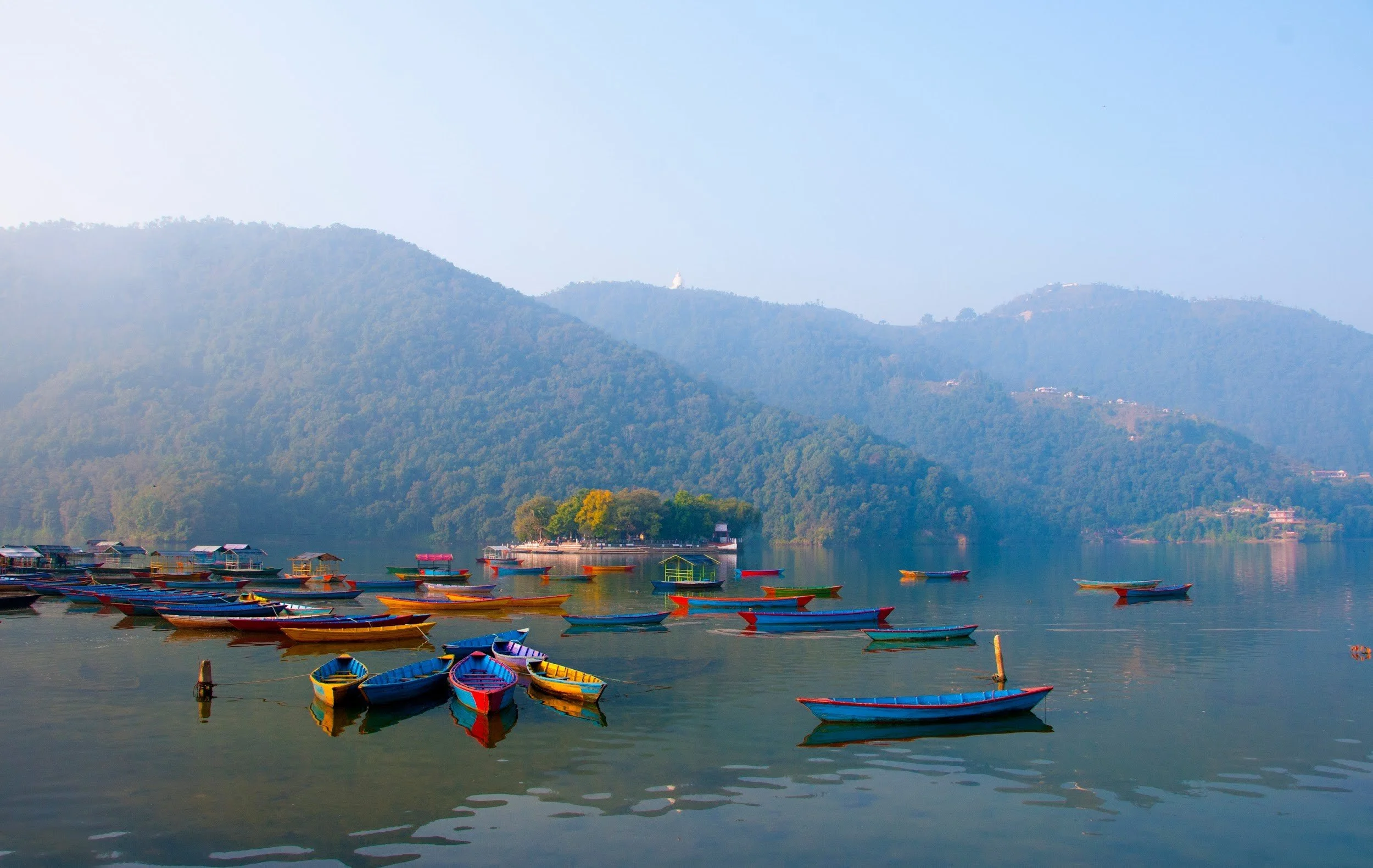
Lying about 200 km west of Kathmandu, by air, it’s a short flight of just 30 minutes. Driving down from Kathmandu can also be a most pleasant trip, taking around 5-6 hours. Also known as the ‘Lake City’, Pokhara has a number of lovely lakes, with Phewa Tal, the second largest lake in Nepal, being the most famous. The richness of its natural beauty has to be seen to be believed, and the reflection of the magnificent Machhapuchchhre Himal (6,993 m), on Phewa’s serene surface is an unforgettable sight.
Pokhara is also one of the best places to go to for some adrenaline rushing activities. It is reportedly one of the top five destinations worldwide for paragliding. You take off from Sarangkot (1,592 m) that is a little over two kilometers from the tourist hub of Pokhara’s Lakeside. Another activity that has become a must-do is flying high on an ultra-light aircraft, which flies up to 5,000 ft for a 15 min-flight over scenic Pokhara. If you wish, 30-min and 60-min flights can also be availed of. The former takes you near to Machhapuchchhre, while the latter takes you up to 12,000 ft for a fantastic bird’s eye view of the entire Annapurna Range. There are other exciting activities, as well, such as white water rafting, ziplining, bungee jumping, and so on.
Similarly, Chitwan hospitality entrepreneurs are offering massive rebates to visitors coming to Sauraha, where the Chitwan National Park, another World Heritage Site, is situated. The Regional Hotel Association, Chitwan, has decided to offer 50 per cent discount to both domestic and international tourists on all accommodation, which include about 100 hotels and some of the finest resorts in the world. Elephant safaris, jungle walks, canoeing, wildlife watching, and bird watching, etc. are extremely popular activities in the world famous park. Of the around 2000 remaining one-horned rhinos in the wild today, Chitwan National Park has about 500 of them. It also has many royal Bengal tigers, another rare animal, as well as the endangered snout-nosed gharial, besides numerous other mammal, bird, reptile, and amphibian species.
Doubtless, visiting Nepal now could be one of the wisest decisions you make—easy on the pocket, and rich in exciting activities.

Now’s a Good Time to Visit Nepal
The devastating April 25 earthquake caused many deaths and much destruction, but Nepal is rapidly rising out of the rubble to create a ‘Naya(New) Nepal’.
June 15 is when all the seven world heritage monument zones that go to make Kathmandu Valley a World Heritage Site are again open to tourists. The April 25 earthquake reduced some of the relics inside these seven zones to dust, or caused partial damage to some others. Restoration plans are well underway, and this will of course be a prolonged affair, since it is quite an intricate process. And, because Kathmandu has some of the best restorers in the world—restorers who are well versed in their highly specialized craft—one can rest assured that something beautiful is sure to come out of their efforts.
No doubt, even with the destruction caused by the Great April 25 Earthquake, Kathmandu Valley still overflows with such sights and experiences as does justice to its claim to be one of the most interesting places to visit in the world. June 2 was when the highest temperature, 34 degrees Centigrade, was recorded in the valley. A pittance, compared to the near-50s sweeping over neighboring India. Most times, the valley enjoys mild temperate climate, and with the onset of the pre monsoon season, weather-wise, the valley will revert back to its lovely climate again. Just as, with the back-to-business sense of urgency that is very much evident now, Kathmandu is once again open for business, and waits with wide open arms to welcome visitors from around the globe.
While the quake caused untold suffering and many tragic deaths, it also resulted in world media attention on Nepal, leading to millions of viewers becoming witness to the never-say-die-spirit of the Nepali people. It is true that, in addition to its rich culture and heritage and its fantastic natural beauty, Nepal is also known equally as a land of the brave, the hardy, and the hospitable. All this have been on world view for the past month or so. The resolute villagers of the quake affected areas have already begun the process of rehabilitating themselves, and the government and international organization are lending the much needed helping hand with vigor.
The quake has brought people together in a very symbolic way that will hopefully transform into something concrete in the future. The mantra is now of rising from the rubble with strengthened resolve to create a ‘New Nepal’. This is not to mean that ancient heritage will be kept in the backseat. Not at all. Heritage will continue to be part and parcel of whatever route the country’s development takes now, because its proud heritage is what gives Nepal its unique identity. An identity that is synonymous with a high degree of artistic and cultural finesse, a sumptuous richness of natural beauty, and a well established reputation as a country with some of the happiest and most hospitable people on planet Earth.
No wonder then that so many visitors are so deeply impressed when they come here. The wealth of art, craft, culture, and heritage everywhere is impressive, the fabulous scenery all around is breathtaking, and the welcoming smiles of the people is heartwarming. Right now, with the country at the crossroads between the old and the new, could well be one of the most interesting times to visit this interesting country.
Similar Posts

Flying High, the Unique Flag of Nepal
The flags of all countries have a similar shape, except for Nepal’s, which is unique and thus stands alone. Not only that, the Nepali flag is also the most mathematically constructed.
As if Nepal’s flag wasn’t unique enough (it being the only national non-quadrilateral flag in the world), 35,000 people gathered in the center of Kathmandu at the Tundikhel ground on August 23, 2014, to create the world’s largest national flag. The previous world record was made six months previously by 28,957 Pakistanis coming together to create their national flag. However, Nepal’s achievement was a short-lived one, because on December 7, 2014, it was overshadowed by 43, 830 Indians uniting in Chennai to make their flag the world’s largest yet.
But, there is no reason for Nepalis to despair, at least not in the matter of its flag having a unique and prominent place in any chart or list of the world’s flags. In fact, one could say that Nepal’s flag will garner the attention of anyone interested in the science of vexillologv (study of the history, symbolism, and usage of flags). One such person is Dr. James Grime. Well, actually he is not a vexillogist, but a mathematician and a faculty member of the Applied Mathematics and Theoretical Physics Department at the University of Cambridge. He has declared Nepal’s flag to be the most mathematical of all the world’s flags. Coming from such an authoritative person, that is really saying something!
You can watch him on http://goo.gl/gZcaQJ as he draws the Nepali flag, following step-by-step instructions as given in Schedule 1, Article 5 of the Nepal Constitution. The given measurements are exact, and include everything from the outline of the two triangles to the sun and moon emblems to the border. On the video, there’s a clock that times his work, and as far as can be seen, it takes him just half-an-hour to complete the drawing. However, if somebody of a lesser breed than a mathematician were to duplicate his effort, then it goes without saying that it will take a whole lot longer, so intricate are the steps.
As a matter of fact, there are 23 steps in all; precise instructions are given in detail in three sections. The first deals with the measurement of different lines, while the second is about the exact placements and measurements of the two emblems—the sun and the half moon—as also about how many triangles are to be drawn to represent the sun’s rays. The third section gives you instructions on how to draw the border. Finally, the sun and the moon have to be in white color, while the border has to be blue. The rest of the flag is to be in crimson color. There are plenty of instructions such as: draw a line ‘CD’ parallel to “AB”, “RS” should be half of “PQ”, and so forth, with almost all the alphabets being used, except for ‘X’, ‘Y’, and ‘Z’. From this, one can decipher how detailed are the instructions that go into the making of Nepal’s flag. Imagine a procedure consisting of 23 steps and using a total of 27 alphabets to make one flag!
It is generally assumed that the Nepali flag is derived from the pennants of two regimes: one, the bonafide regime of the Shah dynasty, and the other, that of the Ranas, who as prime ministers virtually ruled the country for more than one hundred years (1846 to 1951). Some people assume that the moon emblem on the upper triangle represents the royal house of the Shahs, and the sun on the lower triangle represents the Rana dynasty. According to others, the sun and the moon are said to be representative of the country’s two major religions, namely, Hinduism and Buddhism. Still others believe that the sun depicts the bravery of the Nepali people, while the moon depicts their serenity and peace loving nature. As far as the colors are concerned, most people agree that red stands for bravery and victory, while blue stands for peace.
However you look at it, the Nepali flag, which was officially adopted in its present form on December 16, 1962 (before that, the sun and the moon were portrayed as faces), carries a lot of symbolism, and various facets may have different meanings for different individuals. At the same time, the Nepali flag, like other flags, is a symbol of unity. That it has a distinctive identity all its own makes it all the more significant. In a field of mostly colorful rectangles, the two-triangled flag of Nepal stands out prominently. Now, we also know that it is the most mathematically constructed, and this is a record in itself. So what if we couldn’t keep our record for making the world’s largest flag?

Nepali Woman Power on Everest
Nepali women have had quite a number of successes in conquering the highest peak in the world; some have even set new records
I had the opportunity of once meeting Junko Tabei, the Japanese woman who, on May 16, 1975, at the age of 35, inscribed her name in the history books as the first woman to conquer Everest (8,848 m), the highest mountain in the world. From her, I came to know that on June 28, 1992, she also became the first lady to successfully achieve the ‘seven summit’ feat by climbing seven of the highest peaks in all the seven continents. That aside, she also disclosed that she had already climbed the highest peaks of 61 countries, and that her lifelong goal was to climb the tallest mountains of all the countries around the globe!
Around the same time, I also had the opportunity of meeting Churrim Sherpa, a courageous Nepali lady who was awarded the Guinness World Record Certificate on February 25, 2013, for becoming the first woman to summit Everest twice within a single season (May 12 and 19, 2012). Born in Gusan village of Taplejung district in eastern Nepal, her feat gains even more significance when one realizes that, in 2012, 12 climbers perished while attempting to climb the highest point on earth. As for her getting the certificate only a year later, she admits that it was due to her own ignorance in not having the faintest idea about how to go about laying her claim to one. Anyway, this year too, despite the large number of expeditions attempting Everest, she is again in the limelight for being chosen to carry some equipment of recently deceased Australian cricketer Paul Hughes to the summit. It is a high honor, indeed.
Reminiscing on her double feat in May 2012, she revealed that the first summit had been more difficult due to the bad weather; still, she managed to reach the top at 7:00 a.m. after starting out at 9:00 p.m. from camp 4, despite the “traffic jams” on the route (there were some 150 climbers crowding it at one point!). Concerned about the eager-beaver hordes, and the resulting accidents, she advises that they acclimatize themselves really well before attempting Everest, because even though the so-called “death zone” starts at 8,000 m, the effects of high altitude begin to be felt acutely even after 7,000 meters. She readily confessed that her plan had been to do two climbs, as she wanted to do something different. After the first summit, she returned to base camp for some rest before starting off once more on May 17 for the top.
While Churrim is again earning accolades today, a certain Nepali lady named Pemba Doma Sherpa earned her place in the sun in 2000 for becoming the first Nepali woman to climb Everest via its north face. Her historic climb was as the leader of the Millennium Everest Expedition, and later on, having climbed to the top again via the south face, she became only the second woman to summit via both the faces. She went on to achieve her sixth ascent in 2007, which makes her the record-holder for most successful attempts on Everest by a woman anywhere in the world. Sadly, while climbing the world’s fourth highest peak, Lhotse, she fell from a height of 8,000 m and perished in the mountains she so loved.
Fifteen-year-old Ming Kipa Sherpa became the world’s youngest woman to conquer Everest when she made a successful ascent on May 24, 2003. She had to climb from the Tibetan side since the Nepal government didn’t allow those under 16 years of age to attempt Everest! Ming had company during the attempt in the form of her sister Lhakpa Chiri, 31, and brother Mingma Gyalu. Lhakpa had already conquered Everest in 2001, and she later went on to climb Everest once more from the Tibetan side.
On May 30, 2005, Moni Mulepati, 24, laid her claim to fame by becoming the first non-Sherpa Nepali woman to climb Everest. She was part of the Rotary Centennial Everest Expedition. While at the summit, she achieved another feat by exchanging marriage vows with her climbing partner and beau, 23-year-old Pemba Dorje Sherpa! Although Moni holds the distinction of being the first non-Sherpa Nepali woman to summit Everest, she is no more the only one. In 2008, a group of Nepali women from different ethnicities were assembled to make a team for the ‘First Inclusive Women Sagarmatha Expedition 2008 Spring’ (FIWSE). Its members, ranging in age from 17 to 30, were Sushmita Maskey (team leader), Chunu Shrestha, Asha Kumari Singh Chaudhary, Shailee Basnet, Maya Gurung, Usha Bisht, Pemadiki Sherpa, Nawang Phutti Sherpa, and Nimdoma Sherpa. All of them succeeded in reaching the summit in May, 2008.
However, as expected, it is the Sherpa women climbers who are the achievers of remarkable feats of climbing. For example, Maya Sherpa, who has conquered Everest from both the north and south faces, has also climbed Ama Dablam 6,812 m, Pumori 7,112 m, Cho Oyu 8,211 m, and Khan Tengri 7,010 m, all very challenging peaks, and all for the first time by any Nepali woman climber. Having said all this, it’s now time to recall the most historic day of all in the annals of mountaineering and Nepali women climbers.
Yes, the very first summit of Everest by any Nepali woman. Yes, I am referring to the redoubtable Pasang Lhamu Sherpa (born Dec 10, 1961) and her remarkable achievement on April 22, 1993, the date when this brave lady reached the pinnacle of Everest to become the 17th woman in the world, and the very first Nepali woman, to do so. Her story did not have a happy ending. A nasty turn in the weather on the way down resulted in her death on the south summit. It was only 21 days later that her frozen body was found just 72 meters below the summit—a tragic ending, but not one that was for nothing. Her momentous accomplishment provided the groundwork for more Nepali women climbers to attempt Everest, and she will forever remain an inspiration to all.

Esoteric Healing Techniques in Nepal
There’s more to Kathmandu than just world heritage sites and Thamel; there are also centers that teach natural arts of healing both the body and the mind.
Nepal was once a land of mystery and adventure, and mysticism and romance. Times have changed with unfortunate rapidity, but fortunately, some aspects remain that still bring back the lore of a Shangri La in the Himalayas. Yoga and other esoteric meditation and healing techniques based on Eastern philosophies are still going strong around here.
Take pranic healing, for example, which revolves around the idea of energy. It is an ancient technique using energy to heal and treat pain and stress. If you want to experience this unique method of healing and relieving stress, then a visit to the Pranic Healing Center in Kamaladi, Kathmandu, is called for. The concept of this technique is based on the idea of prana (life force), the central unit in a human body that is integral not only for development, but also for the stability of the physical body. Prana is the invisible life force that keeps the body alive, and pranic healing’s goal is to revitalize this force.
The second principle of pranic healing is the concept of self recovery, meaning that the body is capable of healing by itself, and it is through the techniques of pranic healing that the body’s ability to heal itself is speeded up. It is believed that the body’s energy is kept in synchronization by chakras that rotate clockwise and anticlockwise continuously. Disturbance in their movement, or the blocking of their pathways, result in illness, disease, physical unease, and mental stress. The objective of pranic healing is to make things right again, and remove such congestions, thus revitalizing the body’s energy, or life force.
A high degree of faith on the sufferer’s part is required in order for pranic healing to be effective; he/she has to be in a receptive frame of mind and open towards the positive energy emanating from the healer. Pranic Healing Center provides two-day basic courses as well as more advanced ones, including intensive classes that consist of psychotherapy, or Arhatic yoga. One interesting course is the “Twin Hearts” meditation that focuses on two of the more important chakras, the heart chakra and the crown chakra, which are regarded as the epitome of love and enlightenment.
Besides this unique healing center, there are of course numerous yoga centers in Kathmandu. There used to be one called the Healing Hands Center in Maharajgunj; don’t know if it is still there. It specialized in Nuad-Bo-Rarn, a Sanskrit term for ancient Thai massage that is actually based on yoga postures, and is also said to be “yoga for lazy people”. In reality, Nuad-Bo-Rarn is for those who are unable to do yoga by themselves due to old age or infirmity, and need a helping hand to do so. Like pranic healing, it, too, is based on the idea of energy running through the body in a specific manner and taking particular pathways. According to this form of yoga, or ancient Thai massage, there is a second body comprised of many energy lines in addition to the physical body, out of which 10 are believed to be vital pressure points.
At the Arogya Ashram in Tangal, you’ll come across the art of naturopathy, the credo of which is that prevention is better than the cure. Chemical medicines are a big no, no, since they have harmful side effects, and the goal of treatment is to detoxify the body of all toxins that cause disease. Treatment regimes may vary (clay therapy, solar therapy, hydrotherapy, and so on), but the basic parameter of all is based on the philosophical aspect of panchakarma, that is, the five elements of fire, air, earth, water, and akash (vacuum). Regular classes are conducted every day, and the central goal is to change bad habits and harmful lifestyles. Generally, a treatment may last for a month; however, for chronic problems, it can go up to six months or so. It would be good to note that naturopathy is often said to be the ‘mother therapy’, since it is compatible with most other treatment methods.
Some other well known centers of yoga and other esoteric healing arts are Ananda Yoga Centre in Satungal, Pranamaya Yoga Studio in Kantipath (which teaches ‘power yoga’), and Osho Tapoban in Nagarjun, where the path of self realization is explored in depth through meditation and discourse. Jain Mandir in Gyaneswar, Kathmandu, also has regular yoga classes every day, and these are for free to all who come. Different yoga centers teach different styles of yoga. Bishal Ayurveda Ausadhalaya and Yoga Centre in Anamnagar, Kathmandu, teaches Patanjali yoga. A typical routine is as follows: 10 minutes of jogging, all the while focusing on balanced breathing; then, a period of Om dhoni (a continuous humming of the word ‘Om’). This is followed by the asanas, and then, pranayana and dhyan.
Vipasaana is another method that many swear by to get balance and serenity in their lives. It was actually one of the discoveries of Lord Buddha himself that meditation enhances two qualities, namely, samantha (tranquility) which steadies and concentrates the mind, and vipassana (insight), which makes you more observant. Vipassana classes are held regularly in Shivpuri, Kathmandu, which consists of 10 days or so of silent retreat, wherein one abstains from any desire and bad habits before delving into aanam (breath work), which is followed by deep meditation, or vipasaana.
So, you see, there’s more to experience when in Kathmandu than just world heritage sites and Thamel. There are plenty of centers where you can spend some fruitful time learning one of the esoteric arts of natural healing. It would certainly be worth your while, because good health is after all the most precious asset anyone can have.

Praying for an Uneventful Rato Matsyendranath Jatra
Calamitous events have occurred when things have fallen apart during the month long Rato Matsyendranath Jatra.
Preparations are well underway this month for the longest festival of Lalitpur, that is, Rato Matsyendranath Jatra. It begins on the first full moon of Baisakh (April/May). History has recorded several calamitous events associated with this important festival. But, before going into that, here are some interesting facts about the festival
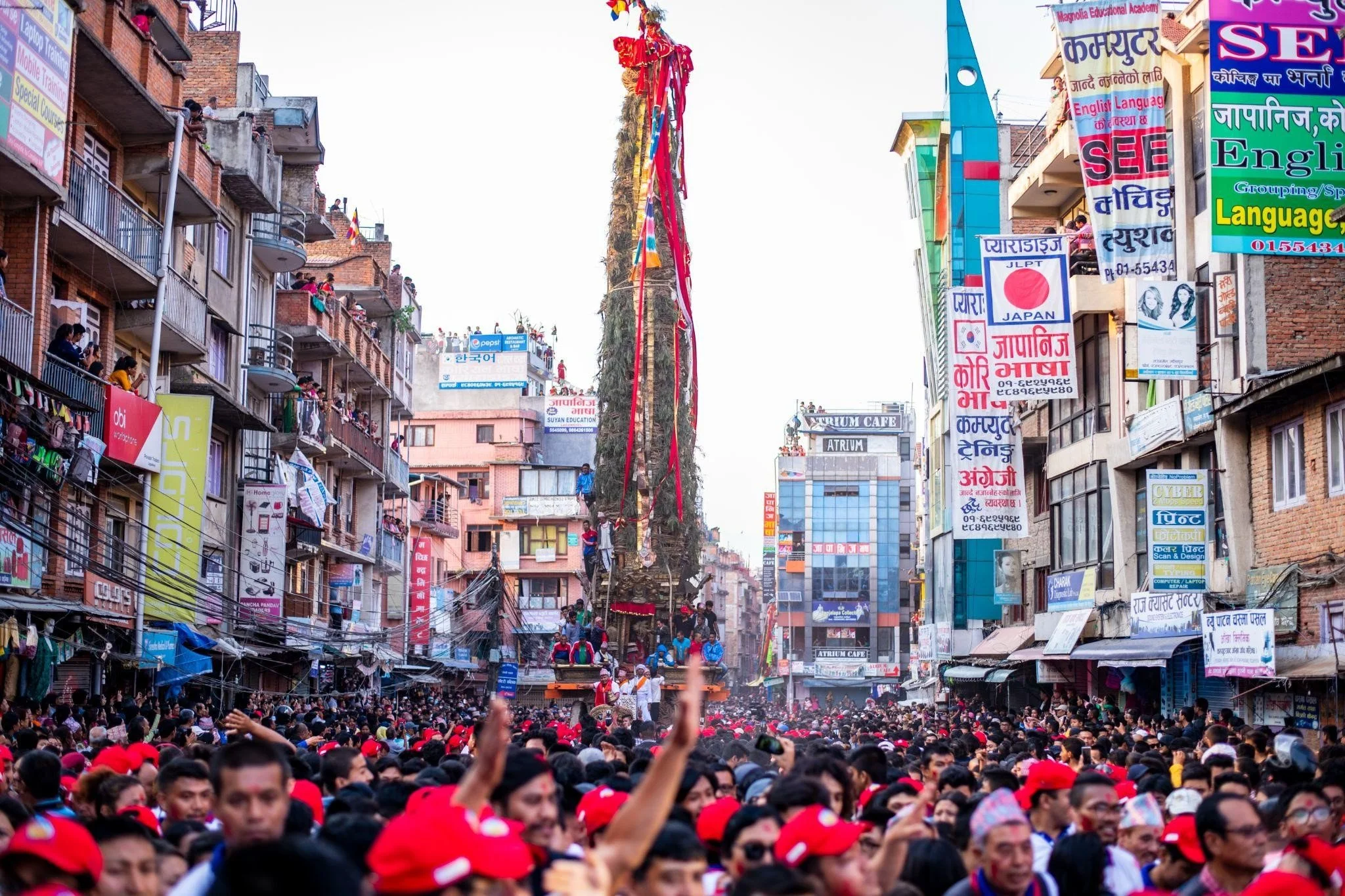
As with many other festivals in the Kathmandu valley, the chariot is the focal point of the event. It’s a mammoth structure, standing about 48 feet tall; including a spire that’s around 10 feet high. Much effort, and a great deal of expertise and ritual, goes into its making. The wood for making the wheels comes from carefully selected trees of the forests of Chitwan. The massive wheels may weigh up to two tons each. The construction of the chariot begins from the wheels and the axel, with the axel being the only structure where metal is used. Otherwise, it’s an all-wood affair. Next, the platform base (ashi) is built, followed by the four pillars. Then, the much bigger platform and the tower are constructed.
Down the ages, it is only three clans that are given the responsibility of constructing this huge chariot, the Barahis, the Yawals, and the Chitrakars. While the Barahis do all the work concerning the edifice, the Yawals do all the work involving ropes, and it’s a vital undertaking, because all the different parts of the wooden chariot are bound tightly with ropes made from bamboo. Any carelessness can result in disaster, considering its size. The Chitrakars, on their part, are responsible for all the paint jobs.
It is on this chariot that Lord Matsyendranath, also known as Bunga Dyo in Newari, is paraded around the various streets and alleys of Patan city for a month. His idol is brought from his birthplace of Bungamati, a small town some eight kilometers from Kathmandu, where he resides in a temple for six months of the year. A few weeks before the festival is to begin, the simply carved sandalwood idol is taken from its temple and taken to Lagankhel, where it is bathed in holy water, Lagankhel being where he is believed to have rested on his journey from Assam to Patan. This is followed by 10 elaborate rituals, which also includes fresh repainting of the idol’s face, which is done by artists of the Chitrakar clan, who also paint the eyes on the wheels of the chariot.
The story of Lord Matsyendranath is quite interesting. It goes like this: the revered sage, Goraknath, once had come to Kathmandu Valley on a visit, where he became so furious at the disrespect he was shown by the valley dwellers, that he decided that he would subject the valley to severe drought. Thus, with this in mind, he sat down on the heads of the nine snake gods responsible for bringing down rain, and then went into a state of deep meditation. Soon, the desperate valley dwellers were begging him to come out of his trance and to stand up, so as to free the snake gods. However, the angry sage remained unmoved, and continued to sit on their heads, all the while meditating deeply. Drought continued to plague the valley for a long time.
Then, some clever Newar fellows devised a plan to end his meditation and make him stand up. They traveled all the way to Assam in India, where Gorakhnath’s guru Matsyendranath lived, and pleaded with him to accompany them back to Kathmandu. He agreed and came to the valley with them, and was taken to the site where his disciple sat in a trance. On knowing about the presence of his guru before him, Gorakhnath promptly stood up respectfully, and in doing so, freed the captive snake gods, who did what they were supposed to do, that is, bring down pouring rain on the parched valley. So grateful were the people that they decided to hold a festival in Matsyendranath’s honor every year.
Now, coming to the above-mentioned ‘disastrous events’ linked to the festival, the first one recorded was way back in 1680, when people observed that Lord Matsyendranath’s face had lost some of its paint, and this was considered to be an extremely bad omen. That night, King Nripendra Malla, then the ruler of Patan, died in his bed, and he was seen to be quite fit and healthy just the day before. Similarly, in 1817, it was again observed that the idol had again lost some paint off its face. That very same day, a massive earthquake struck the valley, causing death and destruction everywhere.
At another time, King Viswajit Malla, another king of the valley, had a bad dream, one in which he saw Rato Matsyendranath turning his back on him. It was a dream that troubled him greatly, since it, too, foretold that something terrible would be occurring soon. Sure enough, the king became a victim of murder on the night following the dream. Similarly, in another period of history, one king himself took part in pulling the chariot through the streets of Patan. It was not a favorable undertaking; the axel broke a total of 31 times during the procession. This, too, was a sign of bad things to come. The said king died soon enough.
In 2000, as the massive chariot was making its way down a narrow street of Patan, its tall spire fell down amongst the crowd below. Everyone was horrified, and wondered what unfortunate event was to befall the country. Well, they didn’t have to wait long. Soon after, there occurred one of the most horrifying events in the country’s history—the massacre of the entire royal family inside Narayanhiti Palace. Is it any wonder, then, that people pray fervently that nothing unforeseen happens during the month long festival of Rato Matsyendranath?
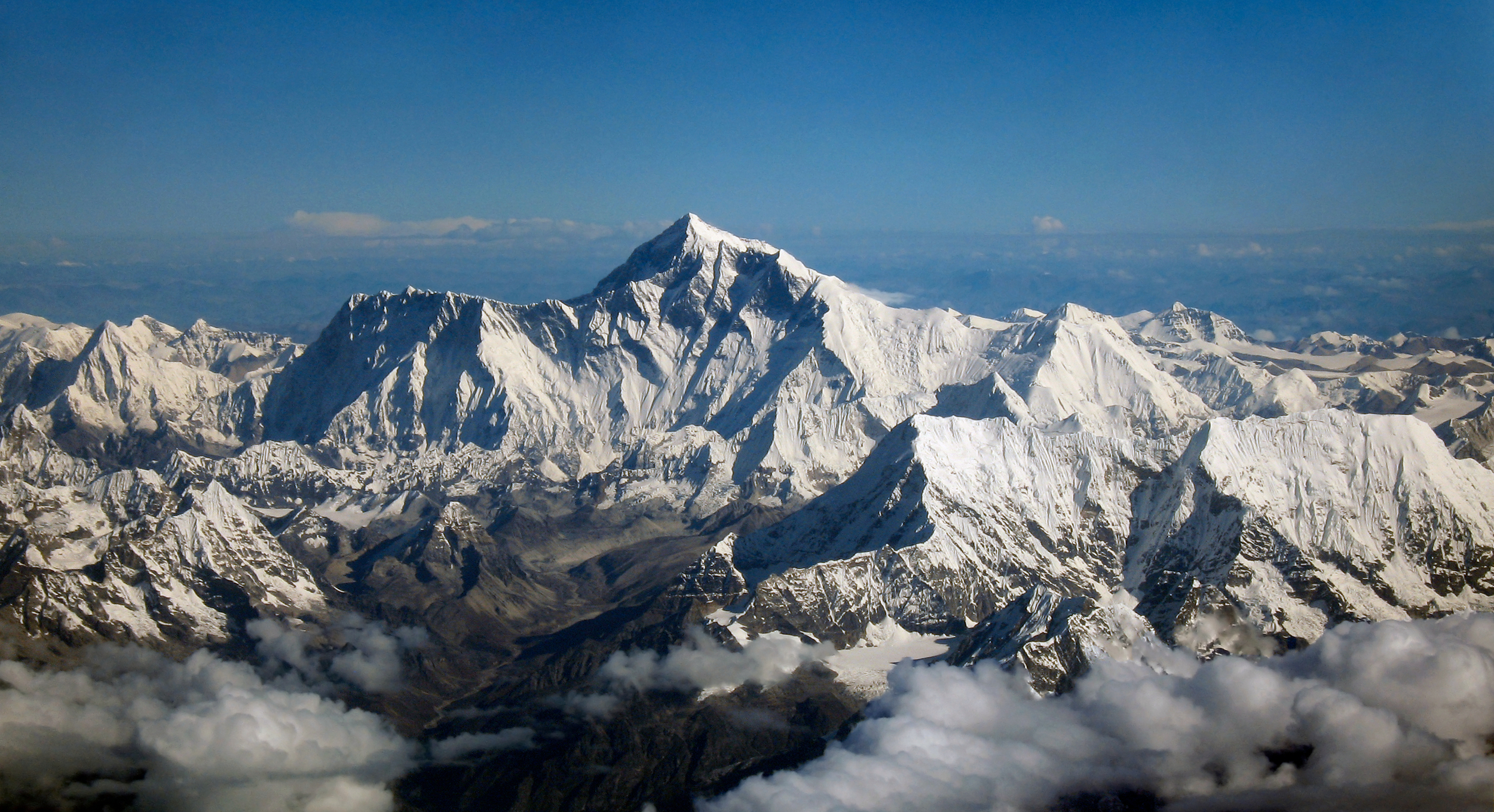
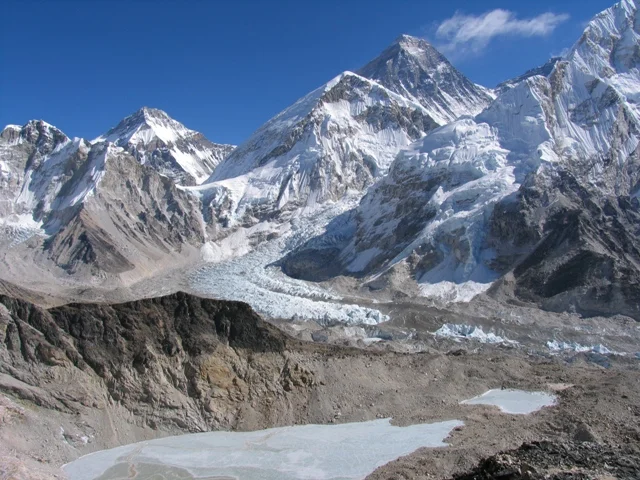
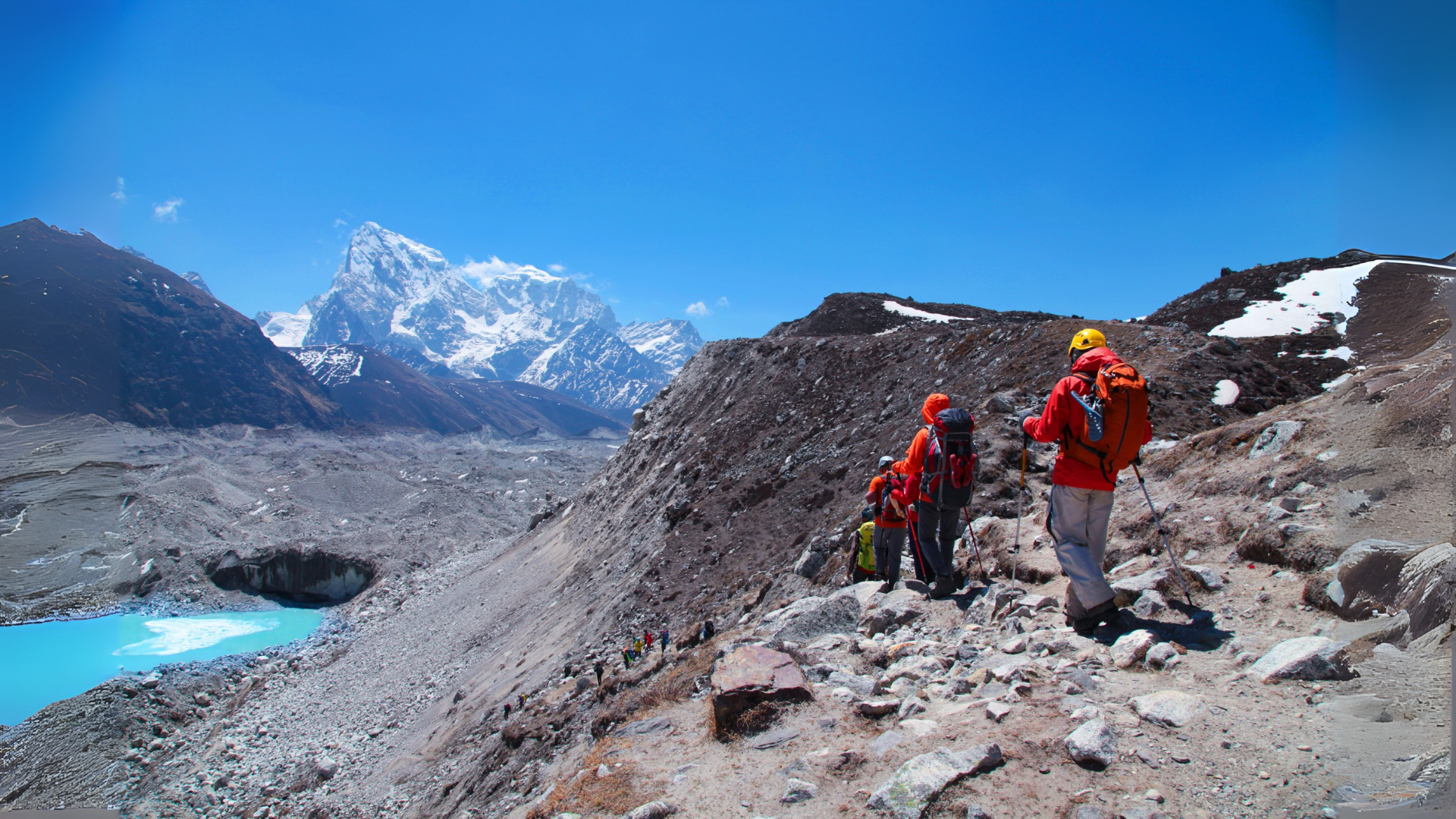
This trek is specially designed to reach the Everest Base Camp including Kala Pattar which is the best view point to view the sunrise over the high Himalayas including the Mt. Everest. This trek requires 13 days.
USD 1515 PER PERSON -- TWIN ROOM SHARING BASIS