
Heavenly Bodies
Right from the time a child is born, parents make haste to have an astrological chart (janam patra: birth chart; horoscope) made of the child by a priest accomplished in astrology.
Right from the time a child is born, parents make haste to have an astrological chart (janam patra: birth chart; horoscope) made of the child by a priest accomplished in astrology. This is a Hindu tradition followed in Nepal by those of the Hindu faith, of which there is a majority. The janam patra shows the position of different astrological bodies in the heavens at the time of the child’s birth, the reading of which is believed to foretell the coming circumstances in a person’s life.
On a more general note, the janam patra is clear proof of the date of birth of an individual (in the absence of official records, as is the case in many rural areas of poorly developed countries). On a lighter note, perhaps Barack Obama should have had one made; would have saved him all the troublehe had to go through in getting a birth certificate acceptable to Donald Trump and the ‘birther’ brigade in America!
The janam patra comes in handy on many occasions of an in individual’s life, including for determining the suitability of an individual with his/her prospective marriage partner. The couple’s charts are matched to see if they complement each other, and if they do, then the marriage can go ahead without any hindrances. However, if they do not, then the priest usually suggests conducting some special pujas to align the unmatched grahas (planets).
Of course, with modernity, this, the matching of the astrological charts, is not as essential as before, what with people marrying for love, or if not for love, then for convenience. In which case, there’s no reason take additional risks like matching horoscopes, which can lead to unnecessary complications to be faced even before the complexities that are sure to come once the honeymoon is over! On a more graven note, the janam patra is burned on the person’s cremation fire after his/her death.
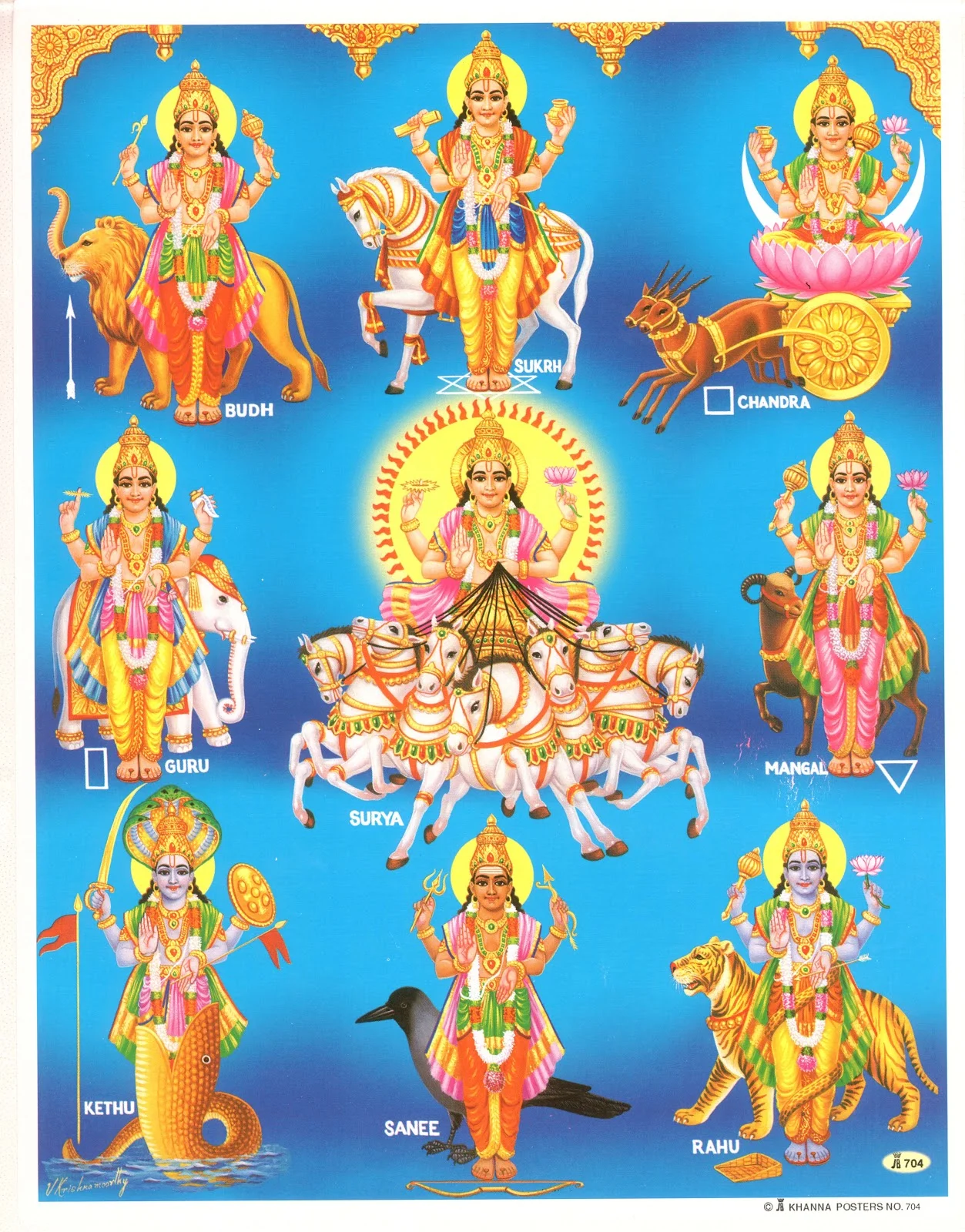
Having said all that, let’s talk a bit about the heavenly bodies. They are called the Navagrahas, and they consist of the Sun (Surya/Ravi) and the Moon (Chandra/Soma), and the planets Mars (Mangal), Mercury (Budha), Jupiter (Brihaspati), Venus (Sukra), and Saturn (Sani), along with the ascending and descending lunar nodes, namely, Rahu and Ketu. It is to be noted that the days of the week in the Nepali calendar are named after the first seven heavenly bodies mentioned above (Sunday: Ravibar, Monday: Sombar, Tuesday: Mangalbar, Wednesday: Budhabar, Thursday: Brihaspatibar, Friday: Sukrabar, and Saturday: Sanibar.)
These celestial bodies have fired the imagination of astrologers and scientists since ancient times, and have been the very stuff of countless numbers of fantastic mythical stories. Tall tales? Oh yeah, and so intriguing that you’ll probably have to sit down with a soothsayer to discover the inherent and extremely complicated divinity behind them. The astral bodies occupy their own particular spaces in the vast and unlimited ocean of the universe, exerting their own specific influences on the Earth and its primary inhabitants, mankind. But the Navagrahas cannot, by any means, be the only heavenly entities to be present in a universe that has no beginning and no end.
And so, besides the Navagrahas, there also the Nakhshatras, consisting of twenty-seven or twenty-eight constellations, twelve Adityas (Sun gods), and the twelve Rashis (Zodiac signs). Obviously, all are part and parcel of astrological charts, and each plays a role in the correct reading of these charts. Additionally, some of the astral bodies have a more negative influence than others, but there are ways and means (through special pujas as decreed by the priests) to appease their effects.
More than any other heavenly bodies, it is the Sun and the Moon that are most highly regarded. The most popular author on astrology in the West, the late Linda Goodman, is famous for her two books: Sun Signs and Moon Signs. Both have become almost a part of life’s curriculum, since not only are they very interestingly written, they give an amazingly accurate account of the personalities of various signs of the Zodiac.
The Sun and the Moon rule over all other celestial bodies. In fact, the kings of yore prided themselves on being either a Suryabanshi (having lineage of the Sun) or a Chandrabanshi (having lineage of the Moon). Surya is the king of the planets, dispelling darkness and shedding light (metaphorical depiction of knowledge). The image of the Sun god is interesting—he rides a chariot with seven flying horses, the driver is a god named Aruna, while the two attendants, Dandi and Pingala, are also called Usa (dawn) and Pratiusa (pre-dawn). Chandra is the lord of the night, and he brightens up the entire Earth. He holds two lotus stalks, and his chariot is pulled by seven geese, while his two attendants are called Sandhya (dusk) and Godhuli (twilight).
The Fascinating Garden of Godawari
Get out of the city’s pollution-laden environment and mind-jangling traffic to spend some blissful hours in the peaceful garden of Godawari.
In the Terai (lowlands), the indigenous Tharus call it ‘Pagalbuti” (pagal: madness, buti: medicinal herb) because it is supposed to cure disorders of the mind. In common parlance, it is known as ‘Sarpagandha’. Its English name is ‘Black Snakeroot’, and its biological nomenclature is Rauvolfia serpentina. The root of this intriguingly named plant is supposed to cure many diseases, including snake bite, and so has suffered due to over collection. The result of this is that it is now listed as ‘endangered’, and is thus a protected species. It should be noted that this plant contains powerful alkaloids like reserpine and serpentine, which can induce serious side effects.
More benign a species is the Elaeocarpus sphaericus, but it has vast significance in another way. It is commonly known as the Rudraksha, whose place of origin is the Himalaya, and which is sacred to Hindus and Buddhists alike. For the former, the dried herbal fruits of this tree are the ‘tears of Lord Shiva’. On a more earthly level, herbalists claim Rudraksha to be the king of herbal medicine, with both preventive and curative powers over many ailments.
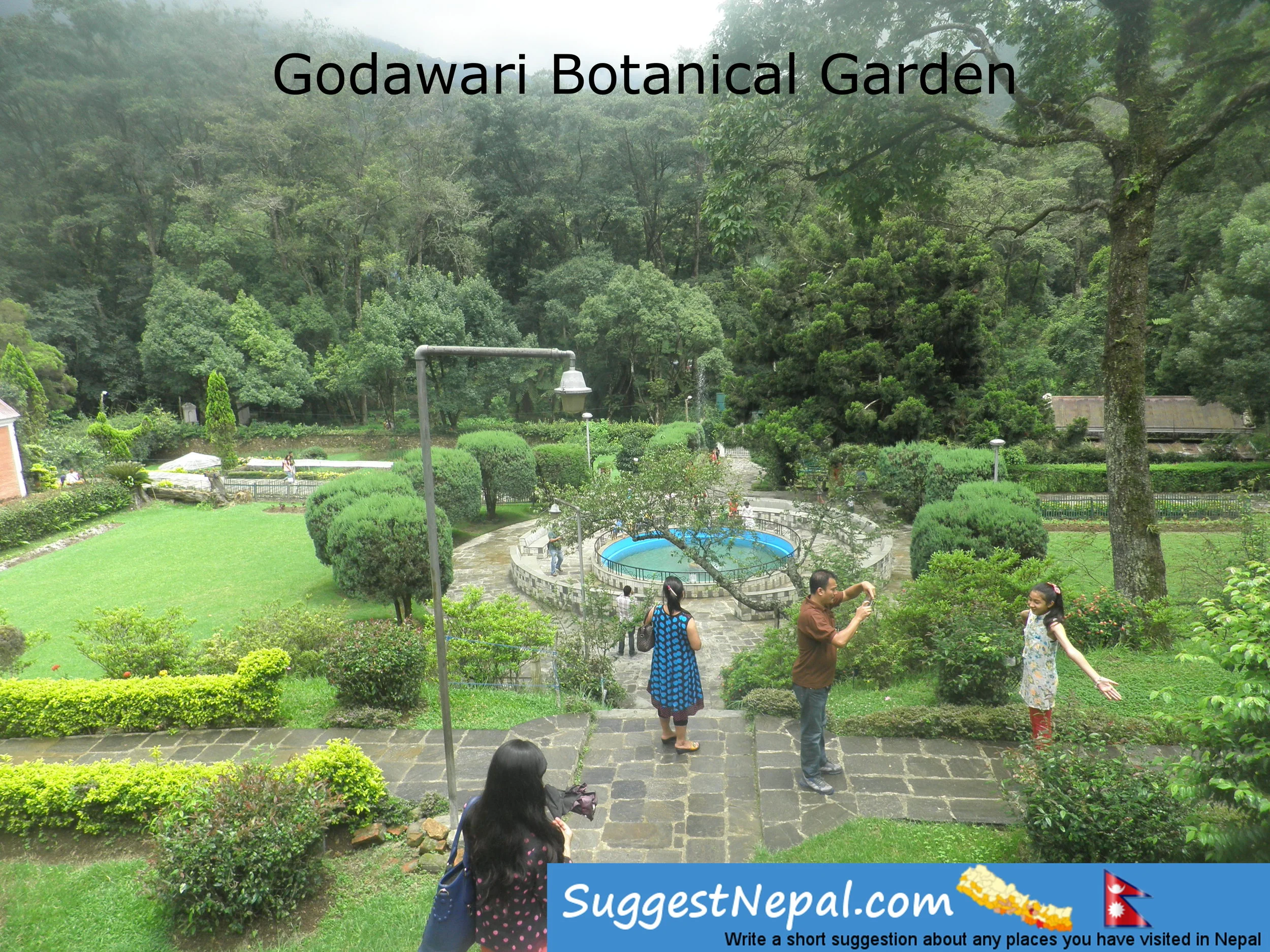
Interesting stuff, huh? What’s more, you can easily see these fascinating plants in the National Botanical Garden in Godawari, just ten kilometers away from Satdobato near Lagankhel of Patan. Just to whet your botanical appetite a little more, you can also see the Cinnamomum tamala. Yes, the very same tree whose dried leaves (tejpatta) and powdered bark are used so frequently in our everyday cooking here, especially in meat curries, for the marvelous flavor they impart to the dish. Now, if you go visit this premier garden of Nepal, you’ll also get to know that the tejpatta tree was first described in 1802 by Dr. Francis Buchanan-Hamilton, a Scottish surgeon who also excelled as a naturalist, and is considered to be the father of Nepal botany.
The lovely garden of Godawari sprawls over 84 hectares, and has various sections devoted to the different regions of the country, demonstrating its great ecological diversity, ranging from alpine to sub-tropic, as well as different groups of plants. As you enter the gates, you immediately come across the educational section, which is sure to engross you if you have even a tiny bit of the nature-lover in you. Strolling on, you reach the Japanese garden, full of rocks and boulders of varying sizes, a burbling brook and a small waterfall (everyone, but everyone, who comes to the garden has their photo taken in front of it !), a few wooden bridges, including felled tree trunks in places, and of course many different kinds of plants. Adjoining this part of Japanese paradise is the section for endangered plants.
There are many dirt paths that meander all over the park; one goes up to the greenhouse that’s located on a hill. Similarly, on the opposite hill, separated by an asphalted road, is a neatly landscaped and flower-laden garden featuring a wonderful fountain and some greenhouses containing various kinds of plants, including many varieties of orchids. With so much to see, it is no wonder that the National Botanical Garden is a favorite haunt for photographers, both the would-be-photographers and the professional ones. The garden is also a haven for a large variety of birds; you can hear chirping all over the area throughout the day. All in all, it is a very nice place to visit on a weekend, keeping in mind its proximity to the capital and the serenity of its surroundings that is sure to calm your traffic-jams-agitated mind, soothe your city-hustle bustle-jangled nerves, and provide succor for your urban-living-polluted lungs.
POPULAR ITINERARIES
SIMILAR POSTS

Ropai, Nepal’s Season of Rice
Among the many different milestones through the year, this is one that is really down-to-earth, besides being downright basic to Nepali life.
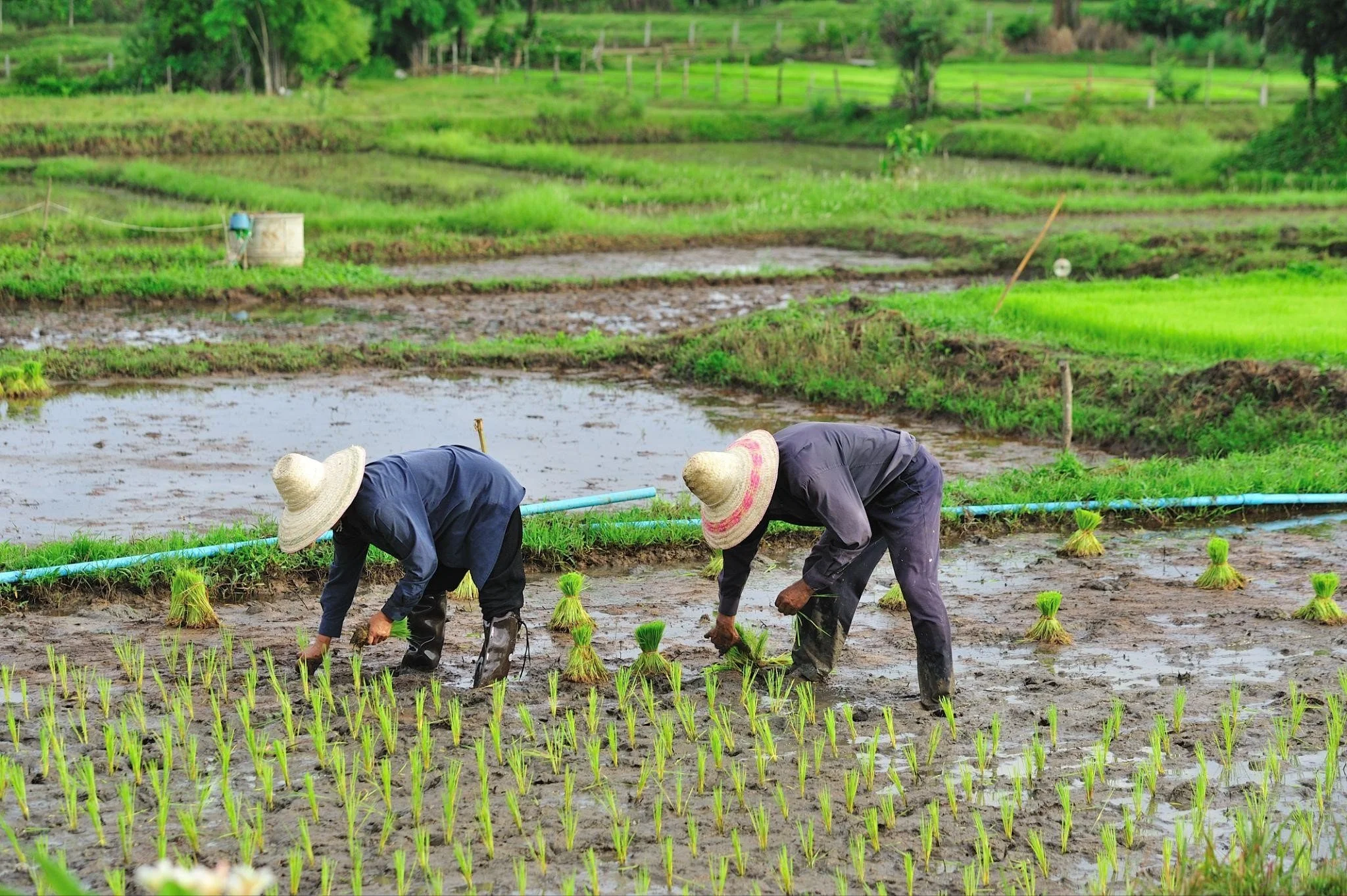
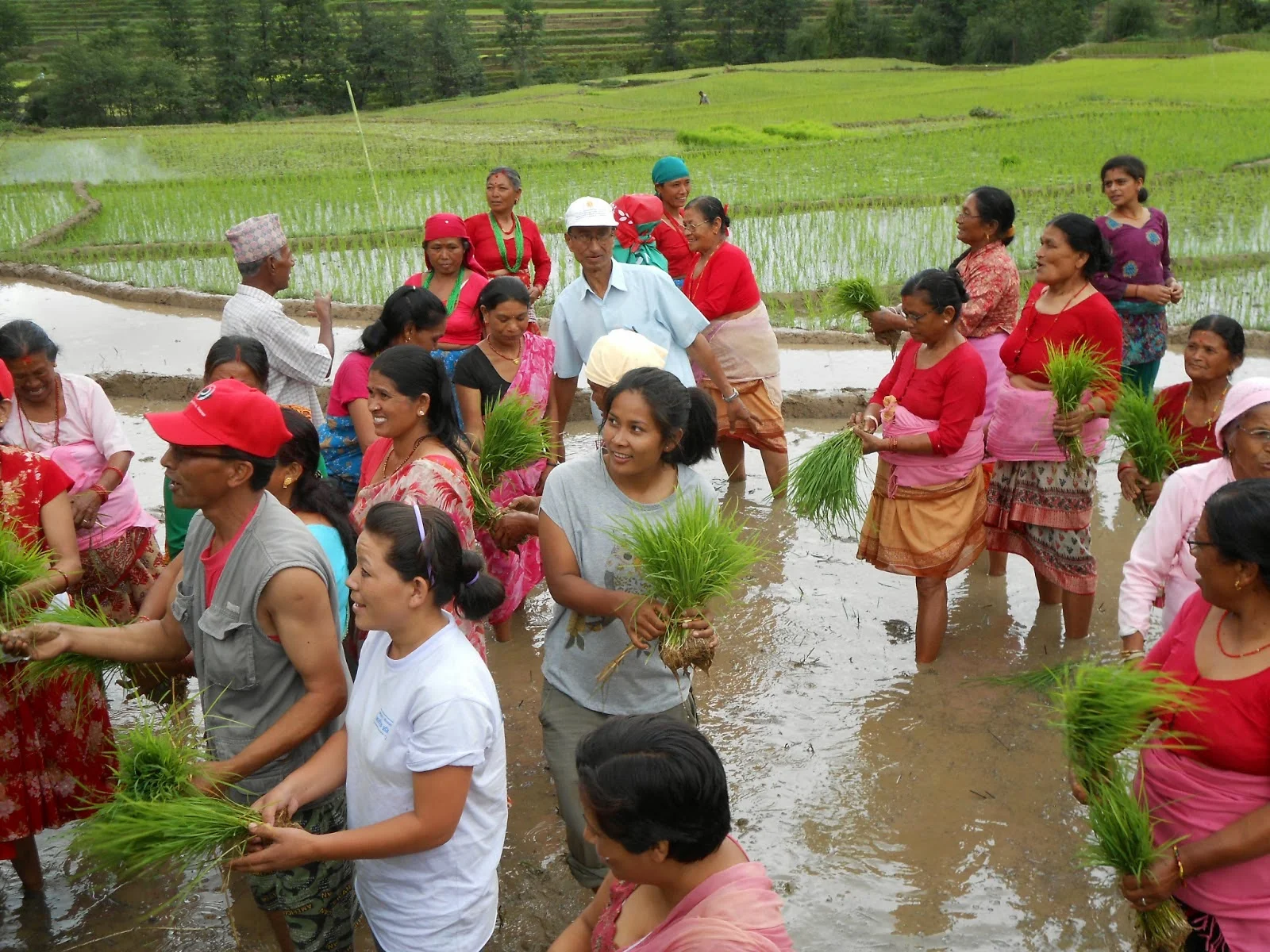
Well, the paddy fields are green once again. The rains are pouring down dutifully most nights, and often in the evenings. A few women can be seen in the fields, completing unfinished business after the week before, when they, along with many other women, stood in ankle-deep muddy water planting fresh new saplings in the wet earth. Sometime before they took over the vast spaces, their menfolk were busy tilling the dry fields, leaving behind them long, neat rows of newly dug up earth.
Then came Ashad 15 (I think, July 30), the ‘National Paddy Day’ as declared by the government, also known as “Dahi-Chiura Khane Din” (day to eat curd and beaten rice). It’s an important date in the Nepali calendar, since the country’s populace is mostly involved in agriculture (more than seventy percent, I believe), and of course, everyone, but everyone, eats rice as their staple food in Nepal. There’s a phrase that has made its way onto most guide books on Nepal—“Daal, Bhaat, Tarkari”—that’s the national staple meal wherever you go in the country, something that our Nepali diaspora, those in the Western hemisphere, miss most oh so terribly!
For those still not familiar with the land of the Himalaya (there could be plenty; in my view, in countries with people who are not at all interested in knowing more about the world, even in this world of the internet, and of globalization, because they are so securely cocooned in the womb of their own countries), well, so just you know, daal is lentil soup, bhaat is steamed rice, and tarkari is a curry. The first and the last are accompaniments (but essential) while bhaat is what fills the stomach and sustains you through the day, packed as it is with rich energy giving carbohydrate.
Now, some of you know that Nepal may be a small country (though with a bigger population than many EU nation-states, and many times larger than its insignificantly tiny neighbor, Bhutan) but it has more than one hundred ethnicities and languages among its three regions: mountainous, hilly, and lowlands (terai). The elevation ranges from 70 meters above sea level in the terai, bordering India, to 8,848 meters above sea level (that’s the highest point on earth, by the way; for those mystified still, that’s Mount Everest!), and there’s a distance of just about 300 kilometers separating them. Meaning, you can be in the swelteringly hot terai one moment, and in minus many degrees arctic weather within a few hours. That’s Nepal for you!
Anyway, wherever you go in this really-not-so-small country, you are likely to find everyone eating “daal, bhaat, tarkari” for lunch and dinner, the two main meals of the day, and for many, the only two meals of the day. Well, yes, people generally are on the poorer side here, what with the Nepali rupee hardly worth anything against other currencies. Just think about it—a dollar is equal to more than a hundred rupees—is it any wonder, then, that we are poor? I mean, in this age of globalization, and so on.
Leaving such disconcerting subjects aside, let’s talk a bit more about rice, the food that sustains about 30 million Nepalis of all hues and colors and languages and cultures. I remember an eminent agronomist saying, “People eat what they grow, or people grow what they like to eat.” Well, in our case, both are one and the same, in my view. By the way, the man who said the above, a certain Wayne Freeman, a seed specialist in the Rockefeller Foundation’s Agricultural Program in India (1976-1982, or thereabouts), is also credited with introducing “Mansuli” rice to the country, which is undoubtedly the most commonly eaten type here. He describes “Mansuli” as having a nice taste and pleasant aroma.
The classes, however, go for the more exotic, and of course, many time more expensive, “Basmati” and such, but for the masses, it’s “Mansuli” all the way. Day and night, night and day, week after week, month after month, year after year, ad infinitum. Remembering that it’s some 30 million people we’re talking about (less one percent), and man, that’s a helluva lot rice, don’t you agree? So, do you now think it kind of unusual to have so much fanfare regarding the season of planting rice? There’s a name in Nepali for it, “Ropai”, which translates simply to “planting”. Now, there’s a lot more stuff that’s planted through the year, but this particular word is reserved only for the planting of rice. That’s how much importance rice holds in all Nepali hearts!
The Allure of Ayurveda
It’s an art that’s more ancient than the Ramayana and Mahabharata, and a part of the culture and lifestyle of the Indian subcontinent since the ages.
The definite roots of the ancient art of Ayurveda are hidden in obscurity, but it certainly originated in the Indian subcontinent, perhaps even in the Himalayan region, where rishis (sages) were known to have lived for many years meditating. At the same time, they also spent time seeking cures to the ills of humanity. The unique aspect of their quest lay in the fact that they searched for a holistic way of treatment, since they believed that for an individual to be fully healed, all three aspects of the individual had to be taken into account, that is, physical, physical, mental, and spiritual.
Ayurveda has deep roots in Nepal, and is a part of the country’s culture. One can notice quite a few Ayurveda healing centers all over Kathmandu, and with the advent of more widespread media outlets and budding new entrepreneurs, Ayurveda is surely making a strong comeback today. Add to this the fact that the worldwide trend now is geared towards disseminating the Eastern way of life, including things like Yoga. Tao, Zen, and martial arts, to a global audience that seems to be searching for alternatives to long established aspects of the Western way of doing things in matters regarding, especially, holistic health and wellbeing.
Ayurveda, too, is making great inroads into more Western nations; however, it being a method of healing, its journey could take longer, keeping in mind their stringent laws regarding all things to do with medicine. Thus, the added attraction of Ayurveda for tourists coming to the Indian subcontinent, including Nepal. Thus, the popularity of the capital’s many spas that use the methods of Ayurveda in their treatments, including massages, to provide a sense of glowing good health and wellbeing to their clients. Moreover, numerous healing centers run by well-qualified Ayurveda doctors abound throughout the valley, offering various types of Ayurveda treatments for many kinds of ailments.
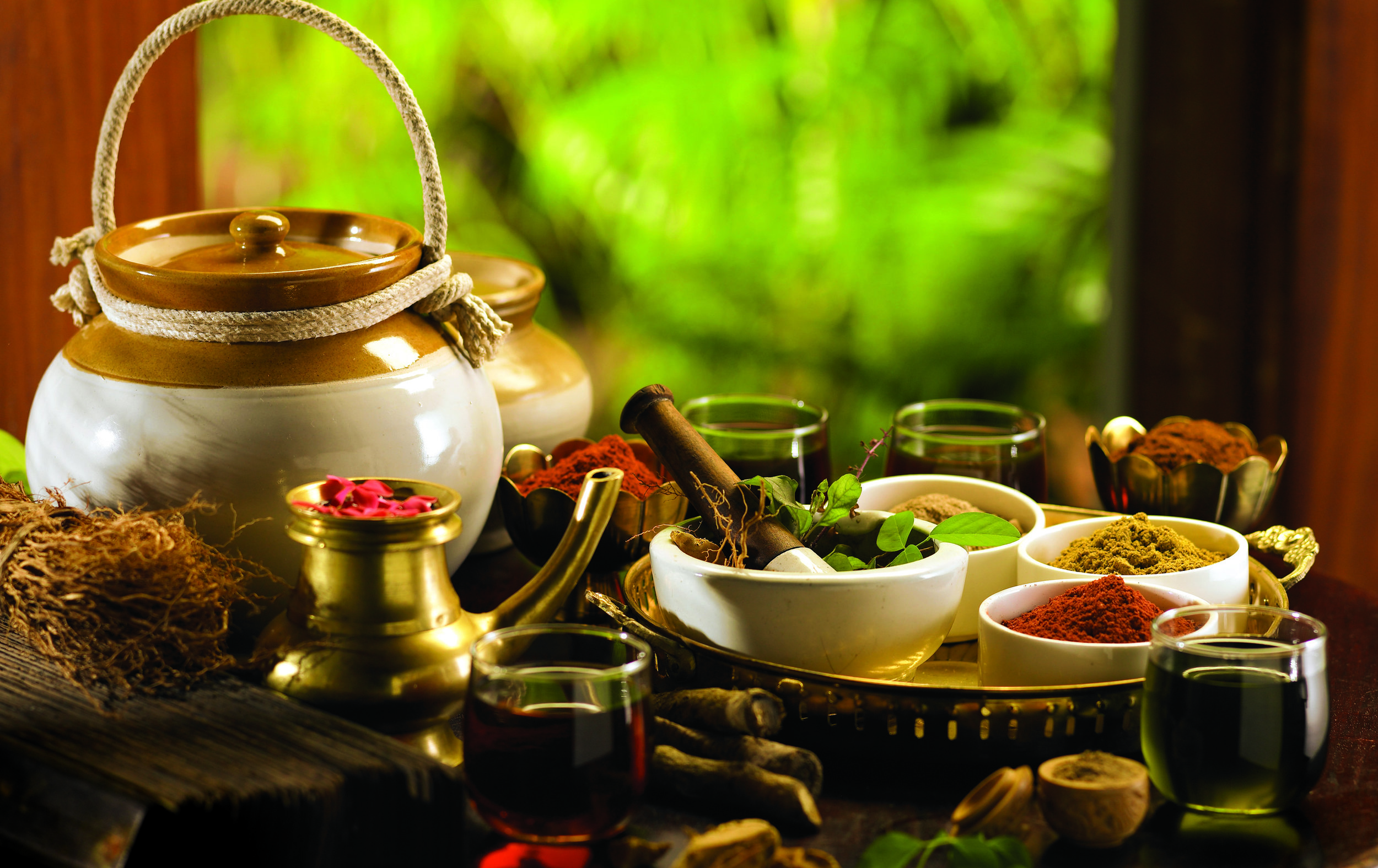
Besides its attraction, for many, as an esoteric art, the Ayurveda mode of treatment is also valued due to its use of natural products in its therapies, thus doing away with the danger of side effects that may be a risk when using modern allopathic medicine. Nepal has a large number of medicinal plants, many of them endemic to the country, and this fact further adds to the allure of Ayurveda here. The ‘natural way of healing’ is a popular byline of many spas and Ayurveda centers, and it is indeed an attractive one, considering the vast increase in awareness among the general populace about health and wellbeing.
Some experts describe Ayurveda as a ‘cultural life science’, in that the means and methods are passed down through generations of families practicing the art since ancient times. Of course, now Ayurveda is also taught in colleges, and there are many practitioners involved whose families may not have been in the business before. Ayurveda is also said to be a part of the lifestyle, in that many of its methods and products are a part of daily life.
And, while Ayurveda products have always been popular, with some producers marketing their brand quite aggressively, one sees a new impetus in today’s times, with more new brands becoming household names. However, as said before, since Western laws may prevent many Ayurveda medicines from gaining a bigger market abroad, it would be a good idea to plan ahead and take out time to avail of the opportunity when traveling to Nepal to have a treatment done at one of the centers of natural health and wellbeing in and around Kathmandu Valley. Who knows, it may be the best part of your vacation!

Kathmandu Valley's Era of Great Achievements
The era of the Malla kings was a long one, about 550 years, and a period of prosperity in all spheres, including art, architecture, and culture.
The period between A.D. 1200 and A.D. 1769, when Kathmandu Valley was under the long and prosperous reign of the Malla kings, was a golden period in the history of the valley, especially with regard to art, architecture, and culture. In A.D. 1482, the valley was divided by King Yaksha Malla’s sons into the three kingdoms of Kantipur (Kathmandu), Bhadgaon (Bhaktapur), and Lalitpur (Patan). It wasn’t a bad thing to happen, considering that successive kings of the three kingdoms would vie with one another to build the most beautiful temples and monuments in their respective domains.
Thus, the Malla era succeeded in bestowing the valley with a unique and distinct identity, due to the artistic and architectural marvels created during the period. So prolific was their patronage, that UNESCO, in 1990, listed the entire Kathmandu Valley as a World Heritage Site, based primarily on seven groups of heritage monument zones, namely, Swoyambhunath Stupa, Boudhanath Stupa, Pashupatinath Temple, Changunarayan Temple, and the durbar squares of the three kingdoms. The Malla period also saw the initiation of many of the valley’s festivals, among which the chariot festivals of Indra Jatra and Machhendranath Jatra are especially spectacular.
Among the Malla kings of the era, a few were particularly successful in leaving an indelible mark in the valley’s art, architectural, and cultural history. Among these luminaries was the ninth king of Kantipur, Pratap Malla (r. 1641-1674), whose statue sits on top of a square stone pillar called Pratap Dhyaja in front of the famous Taleju Temple in Kathmandu Durbar Square that he built, along with the Hanuman Dhoka palace.
Another of his celebrated creations is Ranipokhari (Queen’s Pond), the original Newari name of which is 'Nhu Pukhu' (New Pond). New, because at that time of its construction, the valley already had plenty of ornamental ponds. Nevertheless, Ranipokhari became by far the most beautiful of all the ponds. The king had it built in an effort to console his queen, Anantapriya, who was deeply bereaved by the death of Chakrawatendra, her youngest son.
Located in the center of Kathmandu city, this remarkable pond is rectangular in shape. It and its premises occupy some three and a half hectares, and in the middle of the pond is the Balgopaleshwar Mahadev Temple. This temple’s uniqueness lies in the fact that it is open to the public once a year only, on the day of Bhai Tika (when sisters worship their brothers), the final day of the festival of lights, that is, Tihar. People with no siblings visit the temple on this day. Smaller temples of Ganesh, Bhairab, Narayan, and Saraswati are situated at the four corners of Ranipokhari. Also on the premises is a white marble statue portraying King Pratap Malla and his two sons on elephant back.
King Pratap Malla is also credited with the famous Mahakali dance that is the highlight of Indra Jatra festival held in Kathmandu Durbar Square in September/October every year. Legend goes that one night he had a dream in which he saw the three goddesses, Mahakali, Mahalaxmi, and Kumari, battle demonic figures. So vivid was the dream that he wanted to have it recorded for posterity through a dance to be performed every year. This vigorous masked dance enacts the battle between the goddesses and the demons that the king saw in his dream.
Indeed, King Pratap Malla’s contribution to the valley’s arts, architecture, and culture, has to be applauded. His reign, a peaceful and prosperous one, is widely regarded as the high point of the Malla dynasty. This king, who also fancied himself a poet, and carried the title of Kavindra (king of poets), is rightly renowned for building numerous temples and monuments throughout Kathmandu, and thus contributing significantly in giving the city its unique identity.
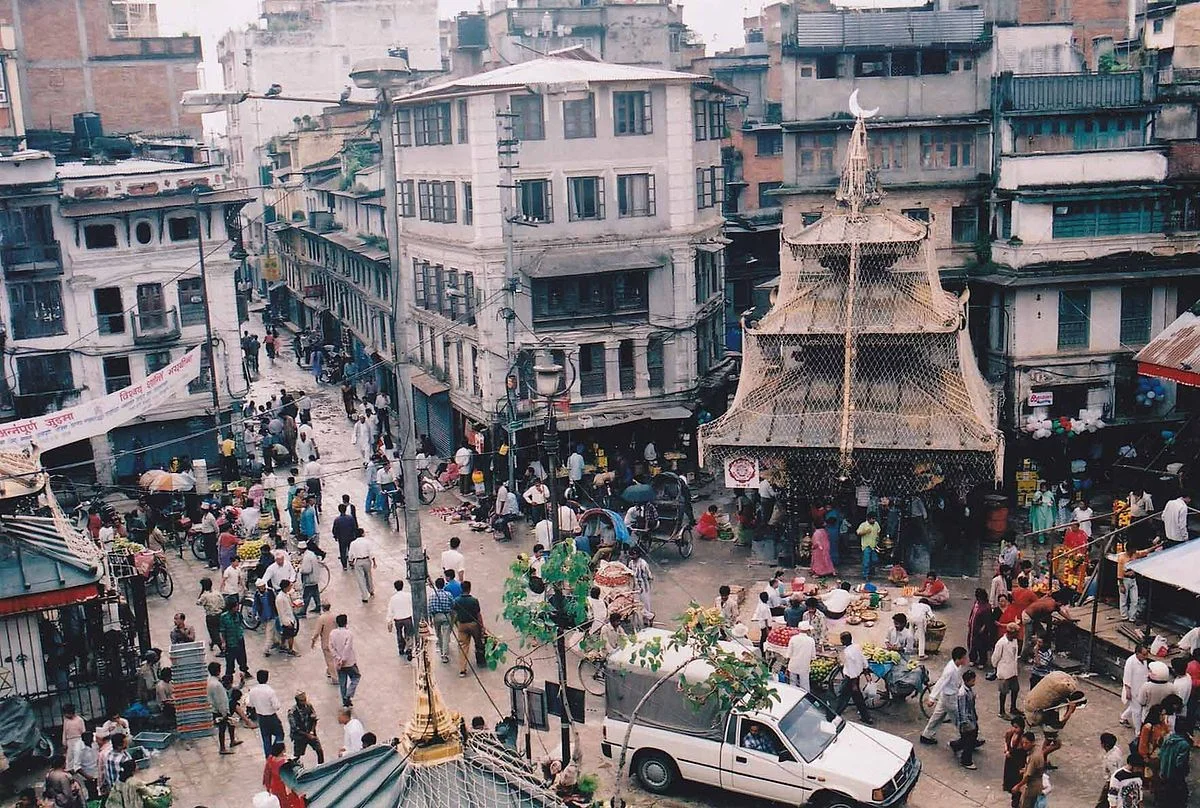
Discover the Real Kathmandu in Ason Bazaar
Ason Bazaar portrays a large slice of what Kathmandu is all about, and the tourist would be well rewarded by a leisurely stroll down its many streets and alleyways.
How many times have you crossed Ranipokhari (Queen’s Pond) in central Kathmandu without giving much of a thought to the historical landmarks abounding all over the area? If you are a tourist, chances are that you have set residence in or around Thamel, the tourist hub of the capital, and so you must have passed by Ranipokhari many times on your way to Thamel.
In fact, if you are a savvy tourist, you should enquire about the short cut through Ason Bazaar, a stone’s throw away from Ranipokhari. The ancient bazaar has a myriad of alleyways leading to the tourist center, and I promise you, strolling through these alleys is bound to give you a keener insight to the local lifestyle, besides making you aware of the boundless number of products, a good part of them being foodstuff, that are sold in the numerous shops of the bazaar. It is also a fact that, although the capital has become such an expansive city, there are still quite a few things that are to be found only in the shops here, especially ritual items used in many religious and celebratory occasions.
Ason is where six different streets (Bhotahiti, Kamalachi, Nhai: katwa, Teuda, Balkumari, and Makhan: Galli) converge on a spacious square full of little shops selling everything imaginable. Take it from me, Ason Bazaar is heady stuff, what with the swarms of pedestrians, the pleasant smell of all kinds of vegetables, fruits, meat, and other food, as well as the constant chatter of bargaining throughout the day, and the pealing sound of bells ringing in temples, big and small, all over the place. Fittingly, the major shrine of the bazaar is the Annapurna Temple (Asonmaru Ajima), dedicated to the goddess of plenty.
‘Ason’ is a derivative of the word ansaa, which literally means ‘just there’ in Newari. There’s a funny story about how the name was given to the bazaar. Myth has it that a fish fell out of the sky during a heavy rainfall, and soon, all over the city, people were talking about “fish falling out of the sky”. People began asking each other, “Where did it fall, where did it fall?” The usual reply was a succinct, “Ansaa”. In other words, “Just there.” There’s said to be a stone shrine in the bazaar built to mark the place where the fish landed.
At most times of the day and evening, Ason Bazaar and its many streets are full of people, some who have come here to buy necessities, some using the convenience of its inter-connecting streets and alleys, and avoiding the traffic-heavy main streets, to get somewhere sooner, and some just walking to their homes in and around this great bazaar. If you go in the early morning, the scenario is quite different, however. You’ll find vegetable sellers who’ve already set up their shops around the square, their produce fresh from the fields, The cauliflowers large, white, and wholesome; the beans, red and green, looking lusciously nutritious; the potatoes, newly dug out from the ground; and the large bunches of dark green spinach of many varieties beckoning one and all with promises of well-being and good health. The meat shops also open early, and are well attended by many eager beavers looking for freshly butchered meat. By morning, Ason is a vegetable and meat market, but as the day goes on, the little shops all around begin to open their doors, and shopkeepers start displaying their wares outside, near their doors. Soon, the entire area is a vibrant and crowded Nepali bazaar.
A bazaar where you’ll find everything from spices, condiments, Khokana-ko-tel (renowned mustard oil of Khokana village), and ghyao- chaku (clarified butter and molasses), to vegetables, fruits, and flowers; buff, mutton, pork, and chicken, to fish and eggs; milkshake and ice cream, to thwon (local beer) and ai:la (homemade liquor); traditional sweetmeats, egg pancakes, and samosas to piping hot tea, chilled cold lassi, and delicious juju dhau (famous Bhaktapur curd); freshly baked puffs and pastries, to chocolate, cup, and fruit cakes; kurta salwars, sarees, and readymade garments, to rolled swathes of many kinds of fabric; gaudy rubber slippers and shiny leather shoes, to imitations of branded sportswear; sparkling glass bangles, colorful pote ( glass beads) necklaces, and dangling earrings, to glittering gold and silver jewelry; solid-looking aluminum, copper, and brass ware, to colorful plastic utensils; etc. etc.
In other words, you’ll get whatever it is you’re looking for, that’s for sure. This might make you assume that Ason Bazaar is simply a bazaar teeming with goods, but actually, it’s more than that. It is the historical, cultural, and commercial center of Kathmandu Valley. This is where you get to experience the real Kathmandu. So, make a beeline for the bazaar that’s ‘just there’!
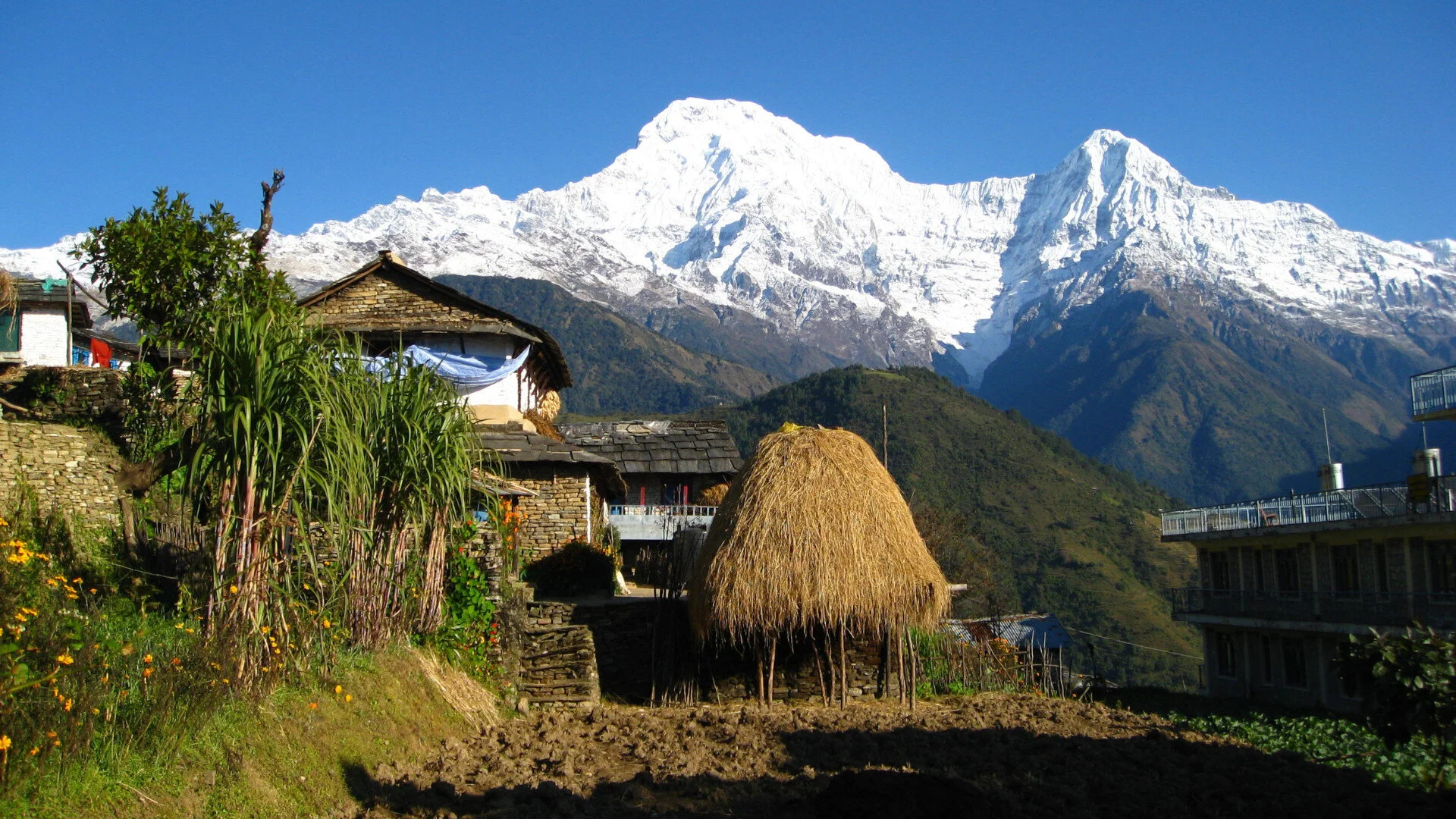
The Pokhara Dhampus Trek
Plan your Pokhara trip to include a few days of trekking to picturesque little villages, hiking through fabulous scenery on great hilly trails.
Now that you are in Nepal, of course you’ll be visiting the lovely city of the lakes, Pokhara, to spend some idyllic days there. Having got a feel of the place, it’s a safe bet that you’ll end up wishing you could actually stay for a longer time, so serene are the surroundings, and so healthful is the environment. Know also that there are quite a few scenic treks from here that are, for the most part, of quite short duration.
One such trek is the one to the beautiful Gurung village of Dhampus that’s around 26 km from Pokhara. A most charming place, it is a gateway to the Annapurna Conservation Area, and on the route of the famous Annapurna Base Camp (ABC) trek, the most popular trek in Nepal, second only to the renowned ‘must-do-in-a-lifetime’ Everest Base Camp trek.
The trek’s starting point is the village of Phedi, which is a 15-minute drive from Pokhara. The trek as a whole is a moderate one, and suitable for most folks. However, initially, as you start off from Phedi, the trail goes uphill quite steeply for about ten minutes, then it meanders out of the woods, and you find yourself hiking on a narrow path. Gradually, you come to a small village called Chandrakot that’s surrounded by millet fields and rhododendron groves. Since the trek is of short duration, no need to hurry. Walk on at a leisurely place, and take a breather whenever you feel like it beneath the welcoming shade of one tree or the other.
You’ll come across teashops on the way, where you can get light refreshments. The cool and soothing buttermilk is a good recommendation, as are the succulent guavas. If you are trekking in November-December, you will certainly meet many groups out on a picnic in the area. Adds to the cheerful ambience of your experience trekking on such a naturally beautiful locale.
By and by, in about three hours or so, you’ll arrive at Dhampus. It’s considered to be a vantage point from where to view the interesting range of Himalayan peaks on the horizon. These include Tukuche (6,920 m) and Dhaulagiri (8,167 m), the two closest peaks from here. The sight of the magnificent Annapurna range and the massive Macchapucchre (6,900 m) is sure to dazzle your eyes, as well. It’s not just these regal peaks that captivate your eyes, the spectacular view of the Pokhara valley below is just as wonderful.
Dhampus is inhabited mostly by people of the Gurung community. One of the village’s highlights is a lake that offers an excellent reflection of a picture perfect setting of Macchapucchre Himal, popularly known as Fishtail Mountain. Some distance from the village center is a lovely lodge called Tsukinoie, designed in such a way as to provide guests with panoramic views of peaks like Annapurna, Macchapucchre, and Hiunculi from every window, as well as from the terrace.
The lodge is small, with only five rooms, but very well facilitated, offering great food and service, besides comfortable accommodation. It’s a Japanese-style lodge, and you get to soak in an interesting Japanese soaking tub that’s quite heavy, called a ‘goemonburo’. Nothing better to relax in, that’s for sure!
About ten minutes away from the lodge is a view tower that’s worth the steep climb to the top, for the view all around is pretty mesmerizing, with Annapurna South, Annapurna II and IV, Macchapucchre, and Hiunchuli all towering majestically in the distance. The sunrise is bewitching, as you can imagine, so get up before dawn breaks, and make it to the view tower while the stars are still twinkling in the sky. Sunrise is generally around 6-6:30 a.m., with the sun first casting its rays over Macchapucchre, followed by Hiunchuli and the rest. The horizon becomes fiery red for some moments. A most inspiring sight!
There’s another interesting place you could hike to that’s about one hour’s walk from the lodge. It’s called the Australian Camp, a name derived from the fact that sometime in the past (about forty years ago) a group of Aussies had camped there. Simple. Its original name is Thulo Kharka. This hike takes you on a flat trail for some time, before going uphill, going through a forest. From the Camp, the Annapurna range appears to be a bit closer, and you also get to see Manaslu and Peak 29.
All in all, the Pokhara Dhampus trek is ideal for those on a short visit, as also for the less-than-perfectly-fit folks, unlike the more strenuous ones that require loads of stamina and tons of endurance.
SIMILAR POSTS
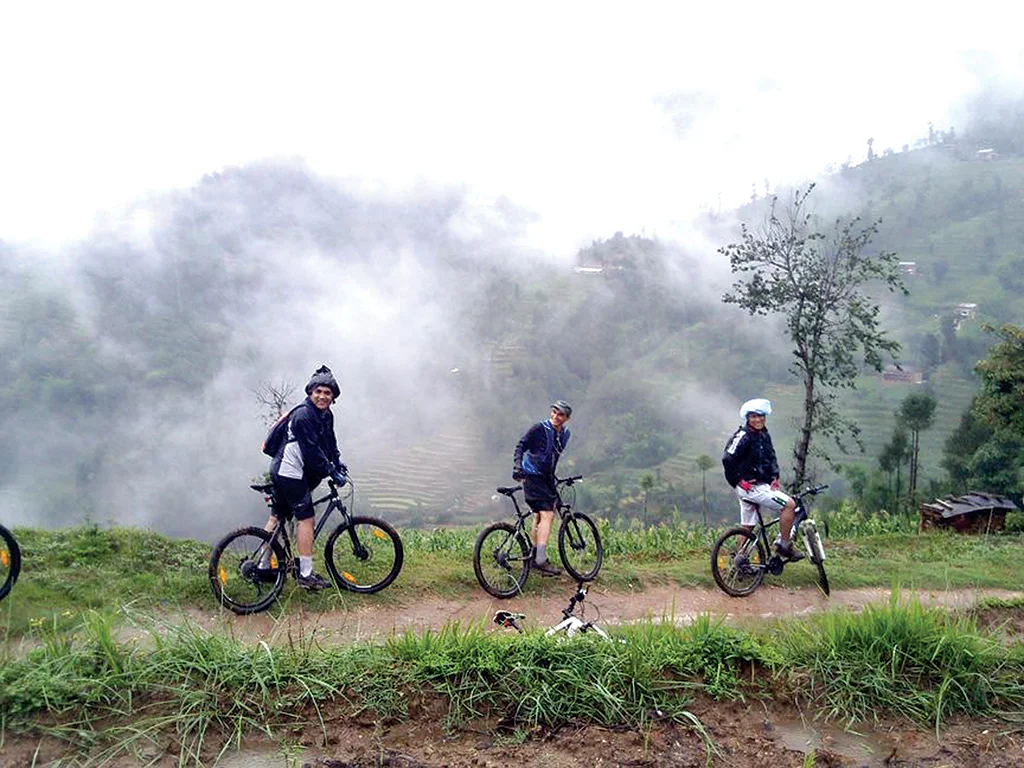
Pedaling around Kathmandu Valley 2017
In today’s world, going green is the in thing to do, and using the humble cycle to tour around the valley makes you a ‘green’ person.
Kathmandu Valley has the kind of terrain that makes cycling around the outskirts a healthy pastime. Not many insurmountable climbs, not too many steep downhills either, but there’s a lot of ups and downs, which means heart-healthy exercise that builds a hearty appetite, and brings the color back to those cheeks made pallid by long sedentary hours in cubicles with a laptop in front. Yeah, that’s the general lifestyle of today’s city folks. But, now that you are in Kathmandu, make the most of your time building stamina and strength while seeing and experiencing a lot more than the usual tourist does.
Pedal your way around the valley on a sturdy cycle that you can easily hire for a couple of days from quite a few rentals around the city. Won’t cost you much, and by all accounts, those two-wheelers are pretty well maintained. Now, if you are convinced about what I am saying, then let’s see where you can pedal to around the valley. Here are some suggestions.
If you are the sort who wants to go full blast, and are fit enough, then the Kathmandu Valley round trip shout fit the bill perfectly. The route begins from Kakani, goes through Chisapani, then enters Nagarkot, and carries on to Dhulikhel, from where you cycle on to Namo Buddha, and finally reach Lakhure Bhanjyang. Wow! That’s quite a ride, but like said before, it’s perfect for those adventurous folks with confidence oozing out of their ears, and a body that’s in pretty good shape.
It’s a challenging ride, too, with some good climbs, and covering quite some distance. But, just imagine, you’ll be visiting places good enough to be on picture postcards. This trip should take around three to four days, with stops in, maybe, the lovely resorts of Nagarkot and Dhulikhel, if you time it right. Both have gorgeous sunrises and sunsets, and panoramic views of the majestic Himalayan peaks. Of course, you could also opt to camp wherever your heart desires, in which case you will have to have a tent and sleeping bag with you. But, it’s bound to be a great experience.
For those with less time on their hands, but still in good physical shape, overnight trips would be ideal. One route starts from Patan Durbar Square, goes through Dhobighat, then Chobar, Taudaha, Chalnakhel village, and Shree Narayan Pharping, before coming to an end in Dakshinkali Temple. This route is not that difficult, and it will take your through some lovely countryside around the valley.
Another route starts from Koteshwor in Kathmandu, carries on along the Arniko Highway to the road going towards Changunarayan Temple, then to Chailing and Telkot, and ending in Nagarkot. This ride is harder because of longer distance, with a good deal of uphill rides, especially to Nagarkot.
Similarly, another ‘hard’ route is the one ending in Kakani, a very scenic place, with beautiful views all around. You begin your ride from Kathmandu Durbar Square, pedal your way to Sorahakhutte, Balaju Chjowk, then Dharmasthali, and along the Trishuli Highway to first Kaulethan, then Kakani.
The ride to Shivpuri is also considered to be quite challenging. It starts from Kathmandu Durbar Square, goes through Thamel, then Samakhusi, on to Baniyatar, Tokha, the Nepal Army camp of Shivpuri, and finally to Shivpuri hill, from where you get a gorgeous eyeful of the valley below and mountains above. This route goes through a forest, so that makes it all the more exciting.
Another route that’s as exciting is the one ending in Lakhure Bhanjyang. It begins in Patan Durbar Square, goes through Gwarko, Lubhu, and Lamatar Phedi, before reaching Thakuri Gaon Road, and on to Lakhure Bhanjyang, where there’s a view tower from where you get spectacular scenery all around, including the Himalayas.
Now, we come to those with less time, and perhaps in less than tip-top physical shape. Let me hasten to say that there are quite a few options for them too, and good ones at that. Rides will be around two hours on average, but they will be hours well spent, that’s for sure! Just remember to start early so as to avoid traffic pollution.
You can take the route starting from Kathmandu Durbar Square, on to Nayabazar, then Balaju and Mudkhu, and end at Tokha. Or, starting again from Kathmadu Durbar Square, ride to Lazimpat, Golfutar, Chapali, then Budanilkantha and Nangki Gumba, and finally, a place known as Helipad. You’ll be riding through the Shivpuri National Park, so plenty of greenery around. This ride is very popular with local cyclist enthusiasts.
Another two-hour ride is the one starting from Kathmandu Durbar Square, going through Sitapaila and Ramkot, before reaching Bhim Dhunga. The scenery is awesome on this ride. Similar is the case with the route starting from Patan Durbar Square and ending at Chobar, passing through Ekantakuna, Nakhu, and Jal Binayak on the way.
One route takes you to a place called Khokana that’s famous for its mustard oil which is made using ancient traditional ways. It starts from Patan Durbar Square, goes to Ekanatakuna, Nakhu, and Bhainespati, before ending at Khokana. Similarly, the ride to the ancient Newar town of Kirtipur starts at Patan Durbar Square, goes over the Dhobighat suspension bridge, before reaching first, Chobar gate, and then, Kirtipur.
It goes without saying that all the above-mentioned rides allow you to explore the valley in a very leisurely fashion, interacting with locals on the way, and stopping wherever you fancy. All of which goes towards a better understanding of the local communities and their culture and lifestyle.
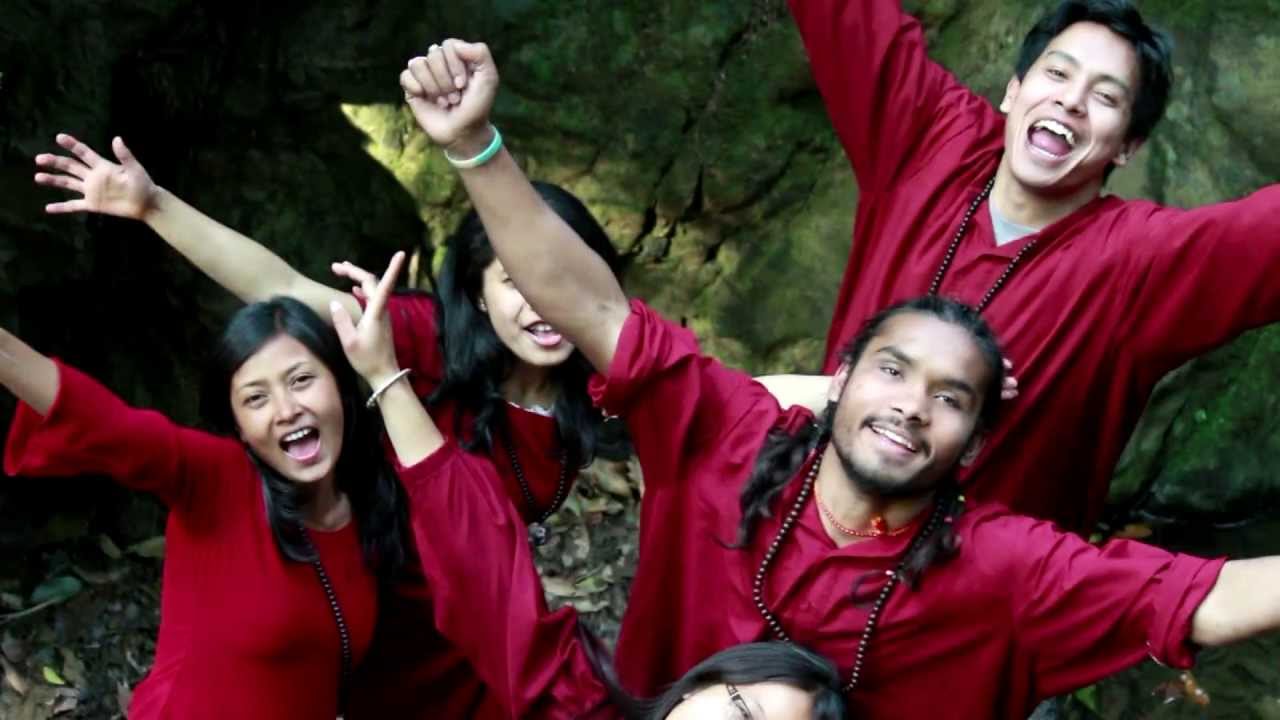
Spiritual Journey to Nepal
In the hectic world we live in today, people all around the world are seeking solace in spirituality, and Nepal is the ideal destination for pursuit of the same.
A short distance from Balaju Bypass in Kathmandu is Nagarjun Forest, where there’s an international commune and forest retreat center called Osho Tapoban. It is run under the saintly auspices of Acharya Bodhisatva Swami Anand Arun, a leading disciple of the late Osho Rajneesh, spiritual leader of millions around the world. Acharya Arun is only one of twenty-one Acharyas appointed by Osho himself. A dedicated disciple who is determined to carry on the legacy of the ‘Bhagwan’, whose discourses and books never fail to inspire and awe due to the vast depth of wisdom and insight contained therein.
‘Swami’ implies that one has mastery over the self, ‘Bodhistava’ means that one is now free from the rigors of rebirth, and an ‘Acharya’ is one who is authorized to initiate new disciples, besides being able to give discourses and conduct meditation camps. In addition to other retreats, Acharya Bodhisatva Swami Anand Arun has initiated thousands of neo-sanyasins at Osho Tapoban, where he gives regular discourses and periodic meditation sessions. Osho Tapoban, spread on about one hundred ropanies of forest land, is a fitting place to seek spirituality and wisdom, replete as it is with dense foliage, age-old trees, and a waterfall and a spring. Spartan but comfortable accommodations for one hundred guests at a time, clean and hygienic vegetarian food, et al. ensure comfort and convenience for guests and visitors. The Acharya himself lives in a cottage named ‘Siddhartha’ on the premises, one of many similar cottages.
A variety of meditations, samadhi darshan, Osho audio/visual discourses, and evening satsangs are regular activities in the retreat. Saturdays are when hundreds of sanyasins gather to conduct what the Acharya calls ‘Celebrations’. On an average, one will find about 500 to 700 sanyasins on this day at Tapoban, among whom will probably be many accomplished individuals from different professions. Other special celebrations are held on some auspicious days of the year, such as December 11 (Osho’s birthday), January 19 (Mahaparinirvan Diwas), March 21 (Enlightenment and Tapoban Foundation Day), and full moon of July (Guru Purnima).
Tapoban is a non-alcoholic, smoke-free, vegetarian zone, and actually there’s no need for artificial stimulants in this place, where more than enough of a high is possible through meditation. Osho Tapoban is but one of quite a few such centers where spiritual pursuit is the norm. The numerous monasteries in Kathmandu Valley, and around the country, are without doubt, centers where a spiritual awakening is very much possible. Then, there are the many centers that provide knowledge and practice of different types of yoga, where the effort is to unite the body, mind, and spirit into one pulsating entity.
Indeed, Nepal can rightfully claim to be an excellent destination for seekers of spirituality and wisdom. And, seeing as to how a significant percentage of tourists can be considered to be ‘spiritual tourists’, and how the promise of spiritual awakening can make them stay for a longer period than the usual tourist’s itinerary, it’s just as rewarding for the country’s struggling tourism sector.
.
The Guerilla Trek
One of the least developed regions in Nepal, you will discover unexpected sights and lifestyles here; a veritable adventure of exploration awaits you.
The only constant, it is said, is change. In the last few years, Nepal, too, has undergone great change. A 250-year-old monarchy is no more. An army of Maoist insurgents who were at war for ten long years has made peace and won elections, and their leader has become the prime minister twice, including in the present time. One cannot predict the future, more drastic changes may occur, but it is unlikely that the Maoists will ever again go back to the jungle.
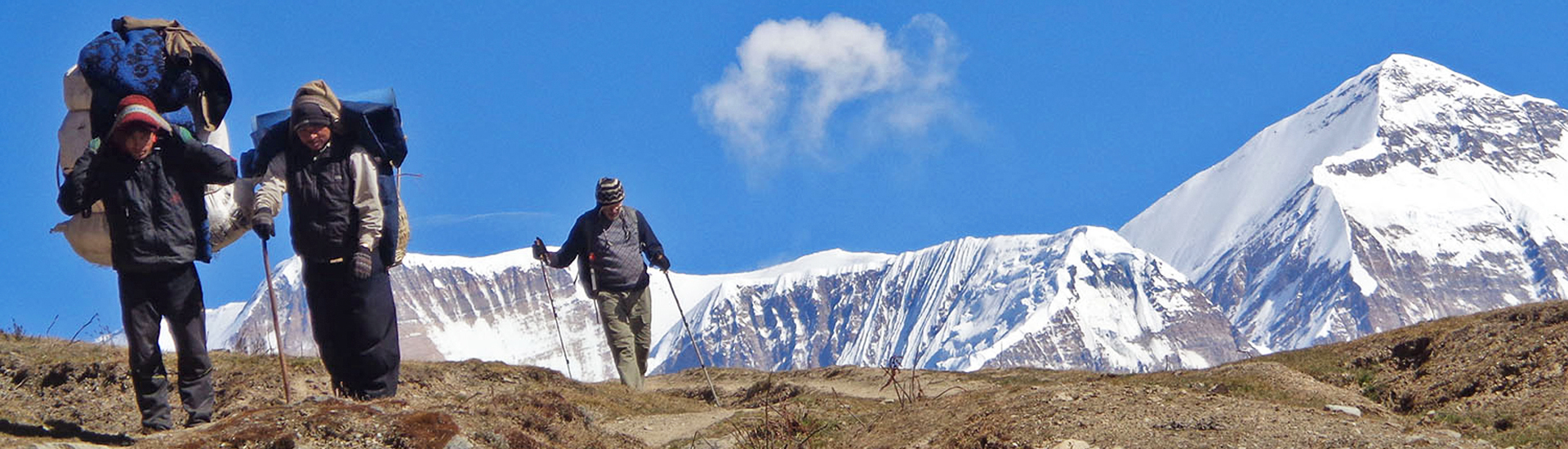
This fact makes the ‘Guerilla Trek’ all the more an adventure. You’ll be walking on trails used by the Maoist guerillas not long back when they were conducting an insurgent struggle against the government. This trek will also give an idea of why the communist ideology still works here, even if it the dawn of democracy had occurred a long time back. When on the ‘Guerilla Trek’, you’ll be walking through many villages and towns of far-western Nepal, an area that has been neglected for far too long in the development aspects. An area where infrastructure is woefully inadequate, and people are very poor for the most part. An area where the lure of communism still holds strong.
You will come across many indigenous tribes that have been downtrodden and poor for ages. The trail goes through the remote districts of Myagdi, Rukum, and Rolpa, centers of the Maoist ten-year insurgency (1996-2006), where their sway was firm during that decade. This history of not so long ago makes this region interesting, and a source of knowledge for the curious. It is not that the far-west is devoid of natural resources. It has plenty of lakes, rivers, waterfalls, forests, caves, etc. But, as said before, due to negligence, the region is steeped in poverty and backwardness.
The starting point of the ‘Guerilla Trek’ begins in a small town called Beni, and travels along the boundary of another mountain town, Baglung. It then passes the Dhorpatan Hunting Reserve, one of the country’s three hunting reserves, which was in the news recently for having a dismal hunting season this past year, with barely half a dozen game being killed, thus incurring significant loss of royalty for the reserve.
The trek then takes you to Rukum and Rolpa, the strongholds of the Maoists during the insurgency, with the latter being their headquarters. While trekking on these trails, spend some time at teashops, and try to engage the locals in conversation. You might hear some pretty interesting stories; now that the Maoists have come into the national fold, people will not be afraid to relate what they have seen and experienced in the recent past. Be aware that if you were here during those days, you would have been viewed with strong suspicion, and people would certainly have avoided all loose talk. Tight-lipped was the name of the game then, let me assure you!
Here’s what a two-week-long ‘Guerilla Trek’ entails, as planned for by trekking agencies:
On day one, you’ll travel by bus from the capital to Beni, a ride of about nine hours. Day two will see you trekking some six hours to the village of Takam (1,665 m). Day three takes you to Lamsung (2,250 m), about six hours again. The next day, you walk through scenic landscape for seven hours or so to reach Gurjaghat (3,020 m). Remember that, in some places, you’ll be staying at homestays, while in some places, you may have to pitch up your tent. The homestays are an excellent opportunity to get up close with the local lifestyle.
On the fifth day, you walk for about five hours, before arriving at the famous Dhorpatan Hunting Reserve (2,860 m). Keep an eye out for the mountain goats and the bharials (blue sheep), as well as a variety of deer. If you are a birdwatcher, you’ll not be disappointed, either. Plenty of exotic birds around. The following morning, rise and shine, before starting the five-hour trek to Nisi Dhor, and then the next day, the seven-hour trek to Tallo Sera. All the while, you’ll be encountering the fascinating ecology all around you, and meeting different indigenous communities. The Himalayas, too, will not be far from you, with peaks like Gurjal Himal and the Dahualagiri range always in the backdrop.
The trails you are walking on were used extensively by the Maoist guerillas during their ten-year war, and this knowledge is sure to add some more excitement to your adventure. The eighth day sees you walking for about six hours from Tall Sera to Rujhikhola, and the ninth day you’ll again walk for a similar amount of time to reach Thabang. Now, you are really into deep Maoist territory. Just imagine, if you had been here during the insurgency, you would be coming across numerous heavily armed military personnel at checkpoints, and they would probably have stopped you from going any further. Too dangerous. Anyway, this is just imagination, in the first place, no one would have been foolhardy enough to go on such a trek.
Day ten, and now you will be walking for another five hours to one of the best known names of the insurgency, that is, Jaljale. In fact, rumor had it that ‘Jaljale’ was a secret password used by the Maoists during those years. Just mentioning that name in public anywhere in the country would have got you into trouble with the authorities. The next day’s trek is to the village of Jelbang, while day twelve takes you to Suliochaur, from where you take a thirteen-hour bus ride back to Kathmandu. Well, congratulate yourself on having been the few lucky ones to have experienced the famous ‘Guerilla Trek’!
Nepal in the Limelight
Nepal was on the world map in 2015, but for all the wrong reasons. Today, again, it is very much in the limelight, and this time it’s for very good reasons.
Nepal is definitely in the limelight today. Just this morning (Dec 2, 2016), BBC aired a trailer on an upcoming three-part series on the Living Goddesses of Kathmandu to be shown on its Our World program. It promises to be an intriguing series, particularly to foreigners, embellished as it is with eye-pleasing details displaying the vibrant culture of Nepal, a culture going back centuries.
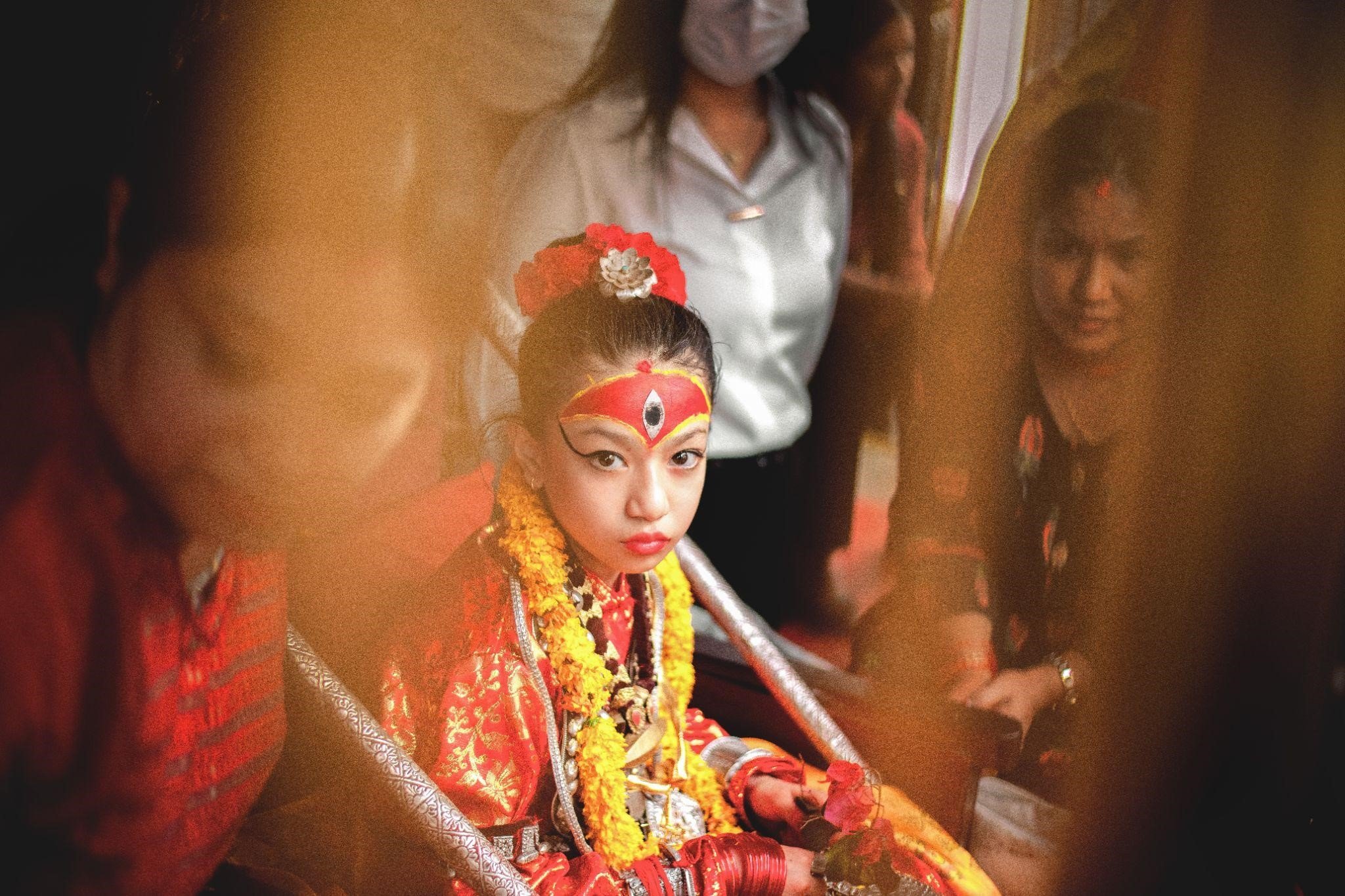
The tradition of the Living Goddess Kumari is unique to this Himalayan nation, and one that is sure to enchant a worldwide audience. Additionally, the series will be following the Kumaris as they grow out of puberty, thereby relinquishing their divine position, and getting back to ordinary everyday lives. All in all, it should be interesting to Nepalis, too, in addition to those from other lands.
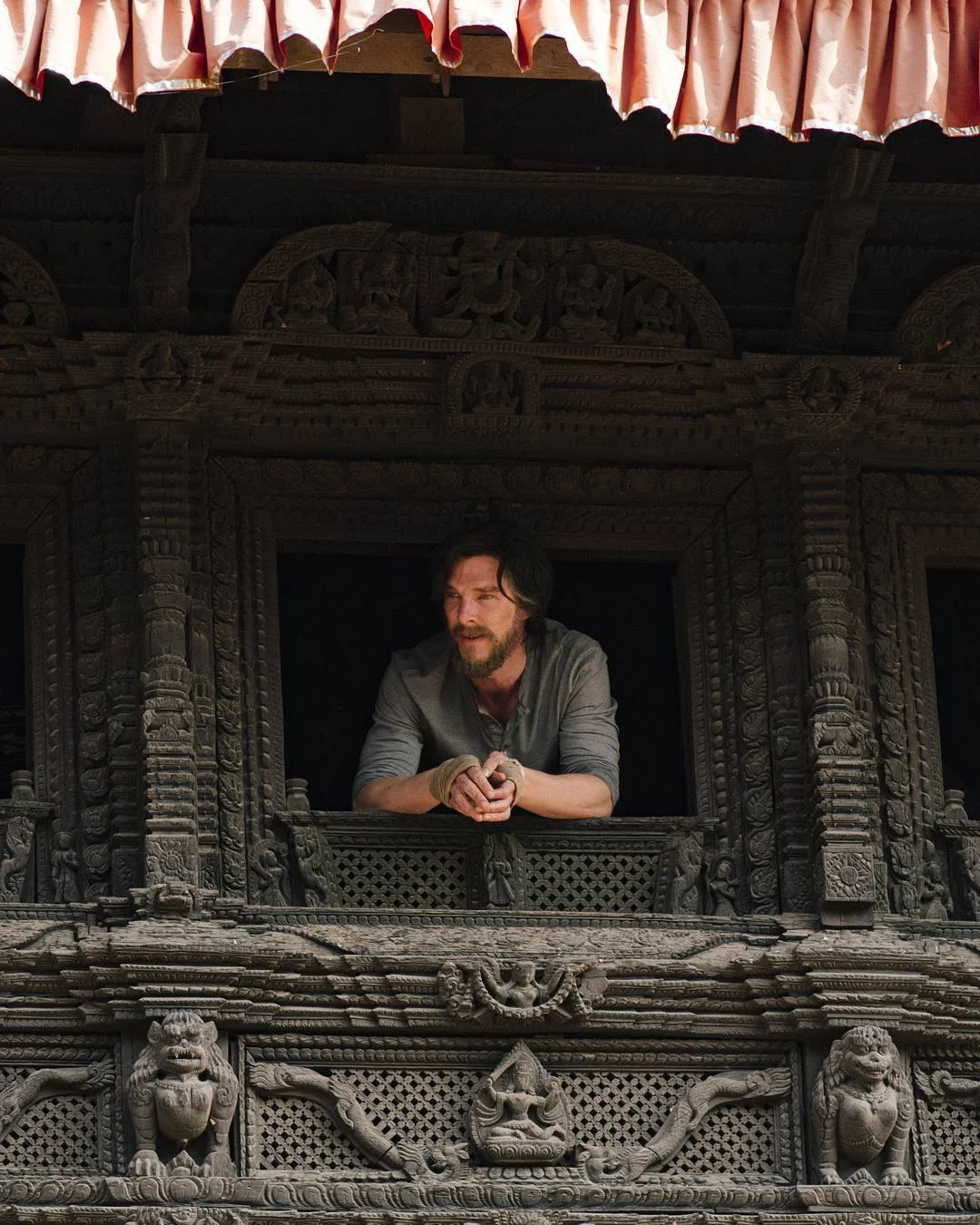
Surprisingly, this morning itself, CNN’s popular late-night show, Jimmy Kimmel Live, had Benedict Cumberbatch as its guest. This program was recorded before the release of his latest movie, Dr. Strange, some parts of which were shot in Nepal. To Jimmy’s query about Nepal, the actor replied that he found it to be a beautiful country, and revealed that his visit during the shooting was the second time he had gone to Nepal.
Talking about his first visit, he said that he and three friends had gone trekking in the Himalayas without a guide. Came a point when two of his friends had to scamper back downhill because of altitude sickness, and soon after that, it was his turn to be similarly afflicted. However, on the way back, he and his one remaining friend lost their way, and spent a day-and-a-half wandering around the mountains, cold, weary, and hungry. Fortunately, they came across a Nepali shepherd in a pasture, who fed them a meal of greens and hard boiled eggs and showed them the right way back.
Now that the film has been released, becoming a big hit as well, all those who have seen it have rave reviews about how beautifully it has portrayed Nepal, especially the world heritage site monuments, Pashupatinath Temple and Patan Durbar Square. Apparently, the shooting had been completed before the devastating earthquake in April 2016, and so the portrayal of these sites was all the more splendid.
In addition to the above, Nepal is also in the limelight today due to it being featured among the top five tourist destinations for 2017 by Lonely Planet, the definitive authority on all matters to do with tourism around the world. Here’s how they introduce Nepal as one of the top 5 destination for 2017: “Even natural disasters can’t keep Nepal down for long. The 2015 earthquakes caused devastation, but what is most striking from a traveller’s perspective is not how much was lost but how much remains. Landmark temples crumbled, but others came through with just the odd tile out of place, and whole swathes of the country escaped serious damage, including most of the popular trekking trails. Nepal has all the skills required to repair monuments and infrastructure, but what it does need is income. By visiting Nepal now and supporting local culture and people, you could help a nation rebuild and bounce back even stronger.” So nice of Lonely Planet. Nepal indeed has a lot of well-wishers globally.
Exploring the Manaslu Conservation Area
Manaslu (Mountain of the Spirit), the eighth highest mountain in the world, rules over the fascinating region known as Manaslu Conservation Area. It’s a place for discovery.
Manaslu, a mountainous region to the north of Gorkha district, was declared as the Manaslu Conservation Area (MCA) in 1998. It encompasses an area of about 1,663 sq km, and has seven villages. The ecology of the region is diverse and interesting, while its culture is rich.
The area has around 2,000 plant species, including some pretty exotic ones, and 11 types of forest.
As far as wildlife is concerned, there are some 33 kinds of mammals, 3 types of reptiles, 110 bird species (including some high altitude ones), and 11 butterfly species. Since hunting is prohibited, the conservation area is a safe haven for some rare animals like Himalayan tahr, snow leopard, grey wolf, and musk deer.
With high altitude glacier lakes and majestic Himalayan peaks, the scenery, ranging from terraced green fields to lush forests to rugged high altitude landscapes, is spectacular and quite breathtaking. The region has a rich Buddhist heritage, as indicated by the presence many stupas, chaityas, and mani walls, and some important gompas (monasteries) like Mu and Rachen Gompas in Chhekampar and Shringi Gompa in Bihi.
Trekking is a pleasure here, with the three-week-long Manaslu Circuit, from Arughat to Besisahar, being very popular. The trail goes along an ancient salt-trading route besides the Budhi Gandaki River, and on the way you’ll have the opportunity of viewing ten 6,500-meter peaks, as well as quite a few over 7,000 meters.
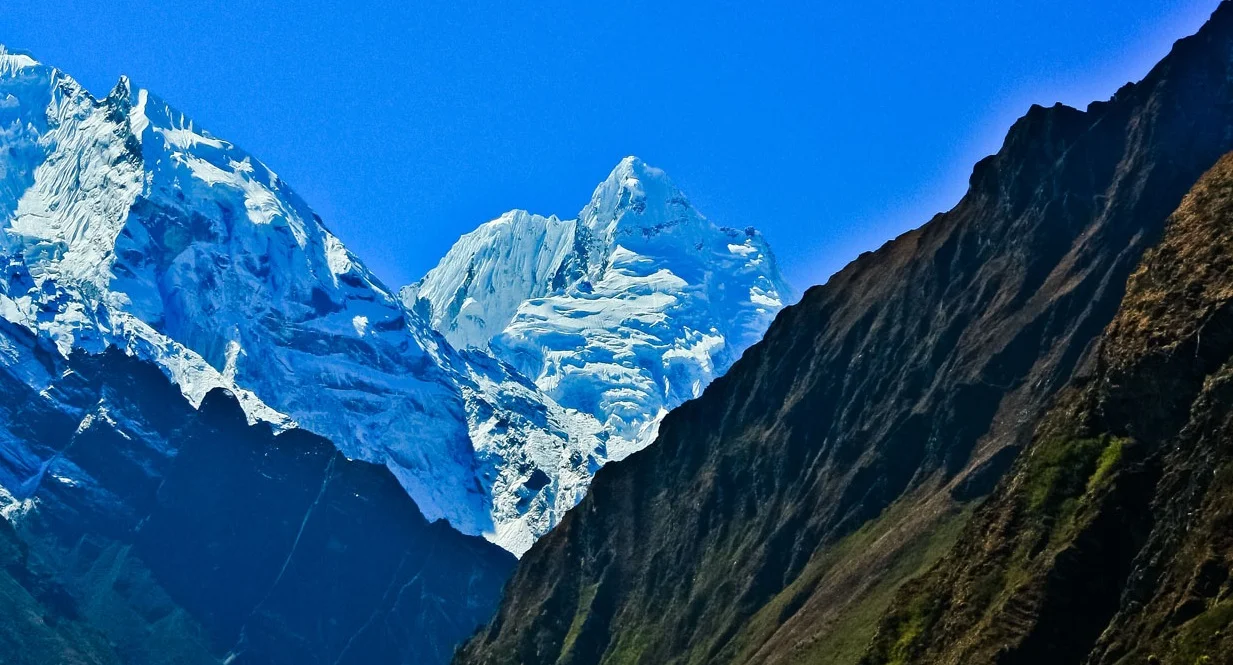
The view from the Tiru Danda ridge is really fantastic, with Manaslu (eighth highest peak at 8,156 m), Annapurna (tenth highest at 8,091 m), Himalchuli (7,893 m), and Ganesh Himal (7,406 m) standing tall on the horizon. The highest point of the Manaslu Circuit is Larkya La (5,106 m). Manaslu (‘Mountain of the Spirit’) was first climbed by a Japanese (Toshio Imanishi and Gyalzen Norbu) on May 9, 1956.
Provided you don’t veer off from the main trail, you will be mostly staying in comfortable hotels, homestays, and lodges on the way. Besides convenience, one of the main attractions of the Manaslu Circuit is the relatively fewer number of trekkers you’ll come across. On around the eight day, you’ll reach Samagaon, where you might have a rest day for acclimatization, and you can use the time to visit Manslu base camp.
Around the ninth day of your trek, you’ll be able to have a look at the Tibetan plateau from the border point near Samdo. On the way, a side trip takes you to Tsum Valley, a peaceful region where killing of animals is prohibited. It is a place of discovery and exploration, a hidden valley full of pristine forests. Many of the villages on the route are inhabited by people of the Tamang community, who are known for their hospitality. Tatopani (‘Hot Water’) village is renowned for its hot spring water gushing from stone spouts, a bath under which will surely rejuvenate tired spirits and body.
This trek is specially designed to reach the Everest Base Camp including Kala Pattar which is the best view point to view the sunrise over the high Himalayas including the Mt. Everest. This trek requires 13 days.
USD 1515 PER PERSON -- TWIN ROOM SHARING BASIS