
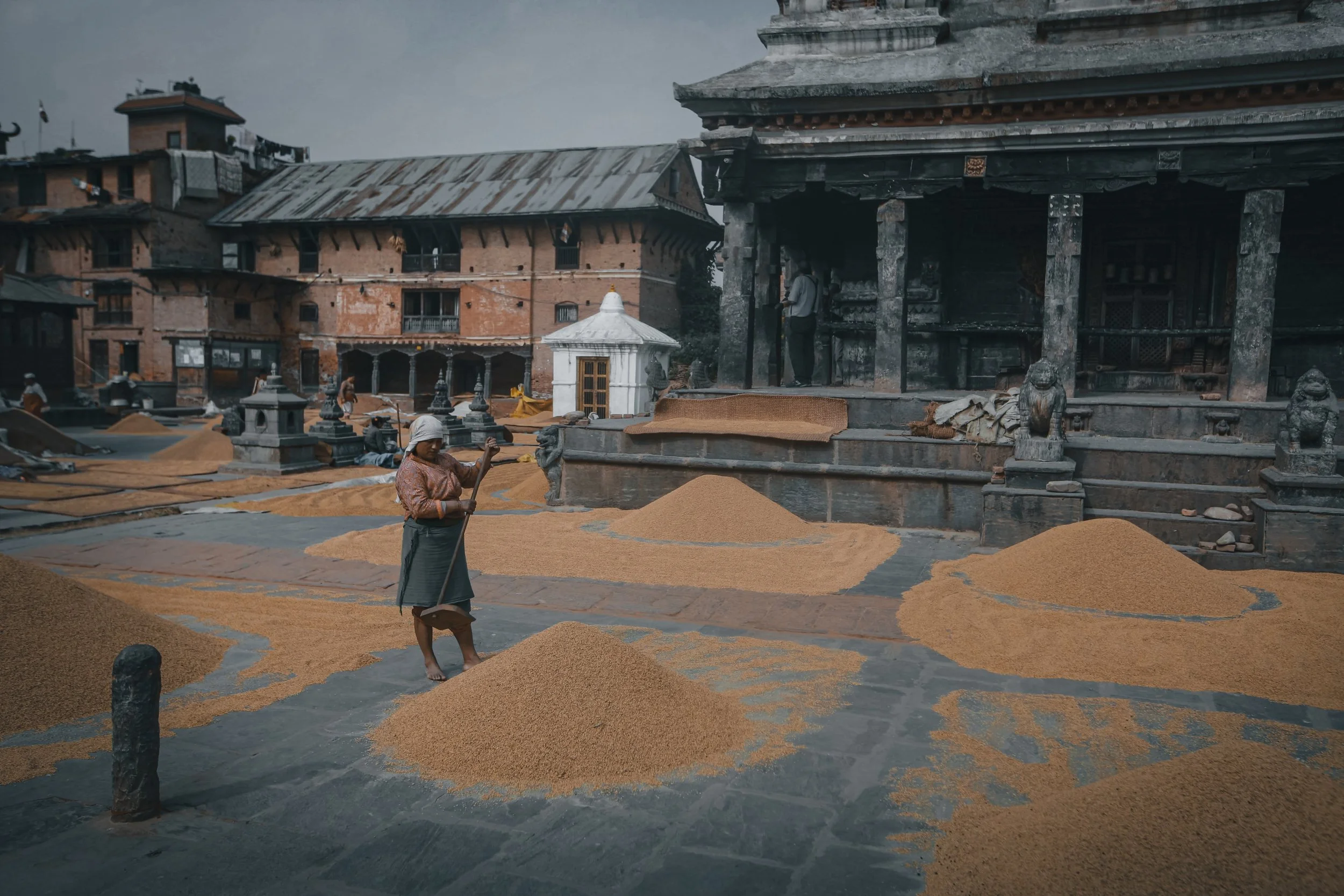
Bungamati: A Hidden Gem
Bungamati offers a plethora of engaging activities for tourists to immerse themselves in. From exploring ancient temples and traditional Newari architecture to trying out local delicacies and shopping for unique handicrafts, there is something for everyone in this charming town.
Bungamati is a hidden gem nestled in the Lalitpur District of Nepal, just 10 kilometers south of the bustling city of Kathmandu. This charming village boasts a traditional Newari setting and style, with stunning architecture, art, and crafts that reflect its rich cultural heritage. Although it may be a short distance from the airport, Bungamati feels like a world away from the hustle and bustle of modern life, offering visitors a peaceful and authentic experience. If you're looking for a tranquil escape that immerses you in the local culture, Bungamati is the perfect destination.
The town’s history dates back to the Kirat Era. Through various historical accounts and evidences from neighbouring cities, it is evident that most villages in this valley were founded by the Kirat’s. The town during the Lichhavi era was called Bugayumigrama. Scholar’s state that ‘Bugayumi’ is a Kiratian dialect.
It is widely accepted that during the Malla period, the town was called Bungapattan, and it was an important center of commerce, culture, and religion. The Malla rulers developed Bungamati into a prosperous town with well-planned streets, temples, and public buildings. They also built the Rato Matsyendranath Temple, which is considered the most sacred site in the town.
The Rato Matsyendranath temple remained an important focus of religious life in Bungamati, and the deity became an object of veneration for both Hindus and Buddhists in the region. The deity was believed to be an incarnation of the god Vishnu, and was associated with the power to bring rain and ensure good harvests.
Here are some exciting activities you can engage in while in Bungamati, which are sure to make your visit to this charming town an unforgettable experience:
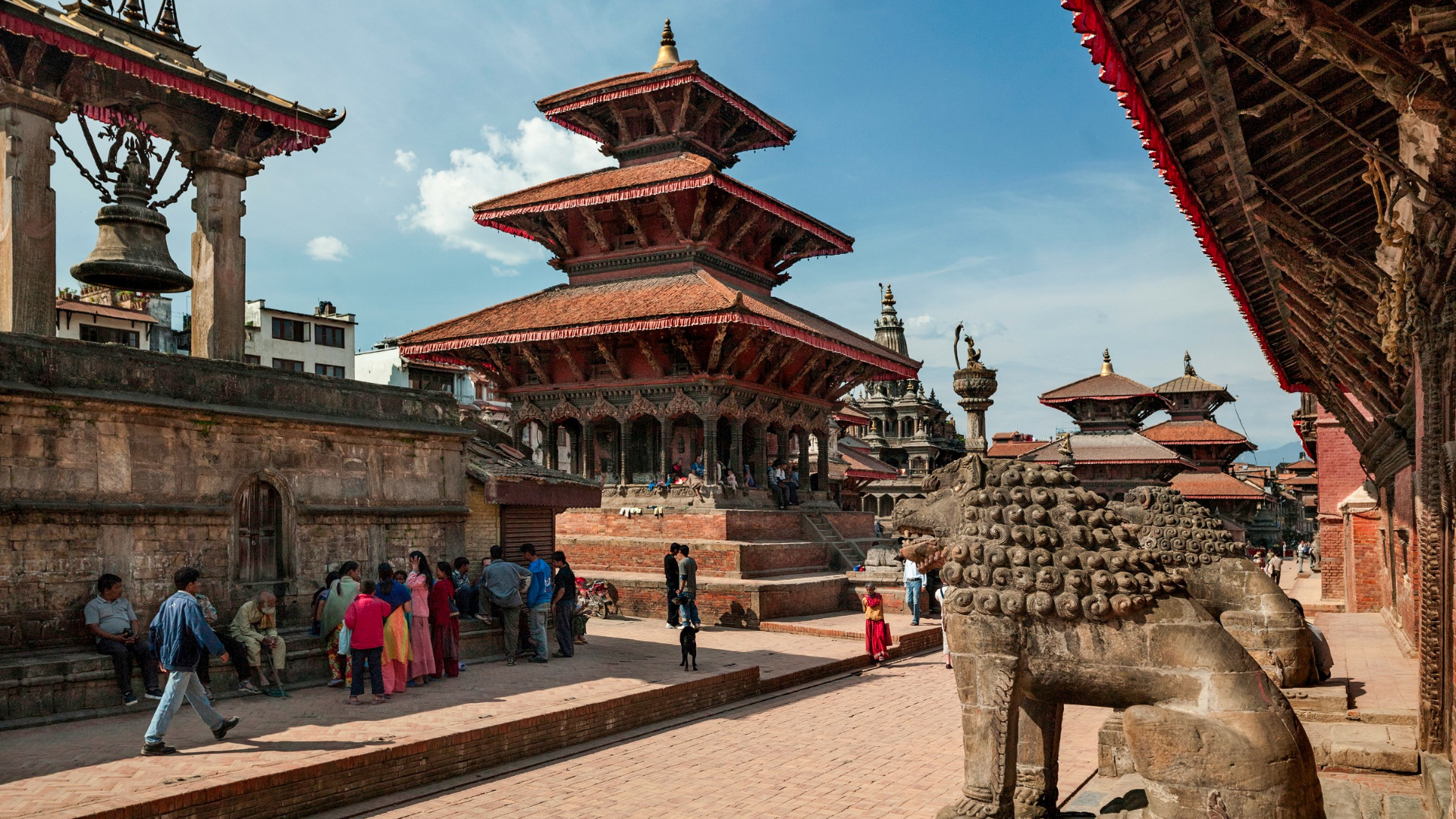
1. Explore the traditional Newari architecture: Bungamati is renowned for its traditional Newari architecture, which is best explored by wandering through the narrow alleyways and admiring the intricately carved wooden windows and doors. Visitors can also visit the traditional Newari houses, which provide a glimpse into the daily lives of the locals.
2. Visit the Rato Matsyendranath Temple: The Rato Matsyendranath Temple is a must-visit attraction in Bungamati. This ancient temple is dedicated to the Hindu deity Matsyendranath, who is worshipped as the patron saint of Kathmandu. The temple is especially famous for its annual festival, the Bunga Dyah Jatra, which takes place in April or May.
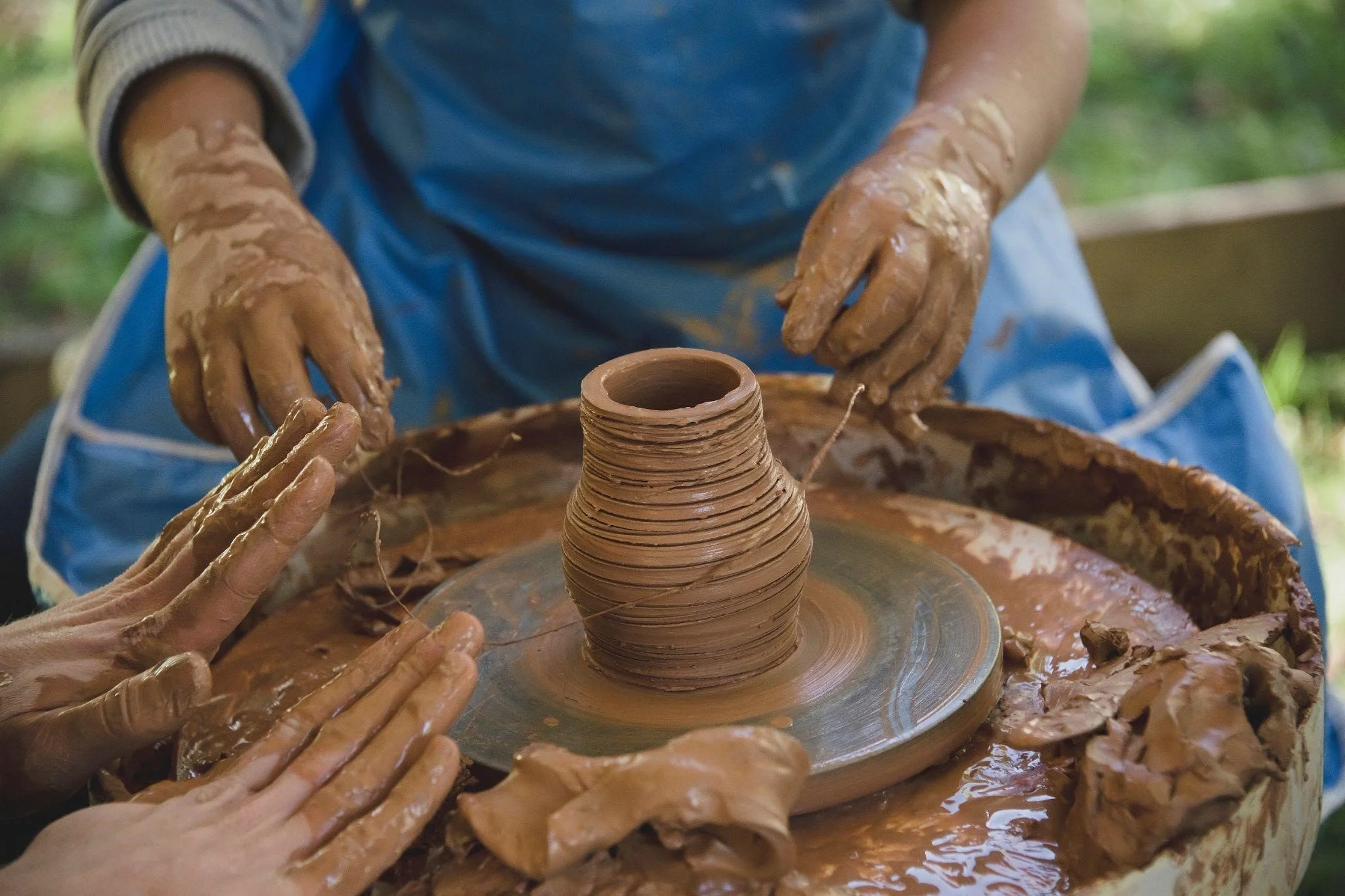
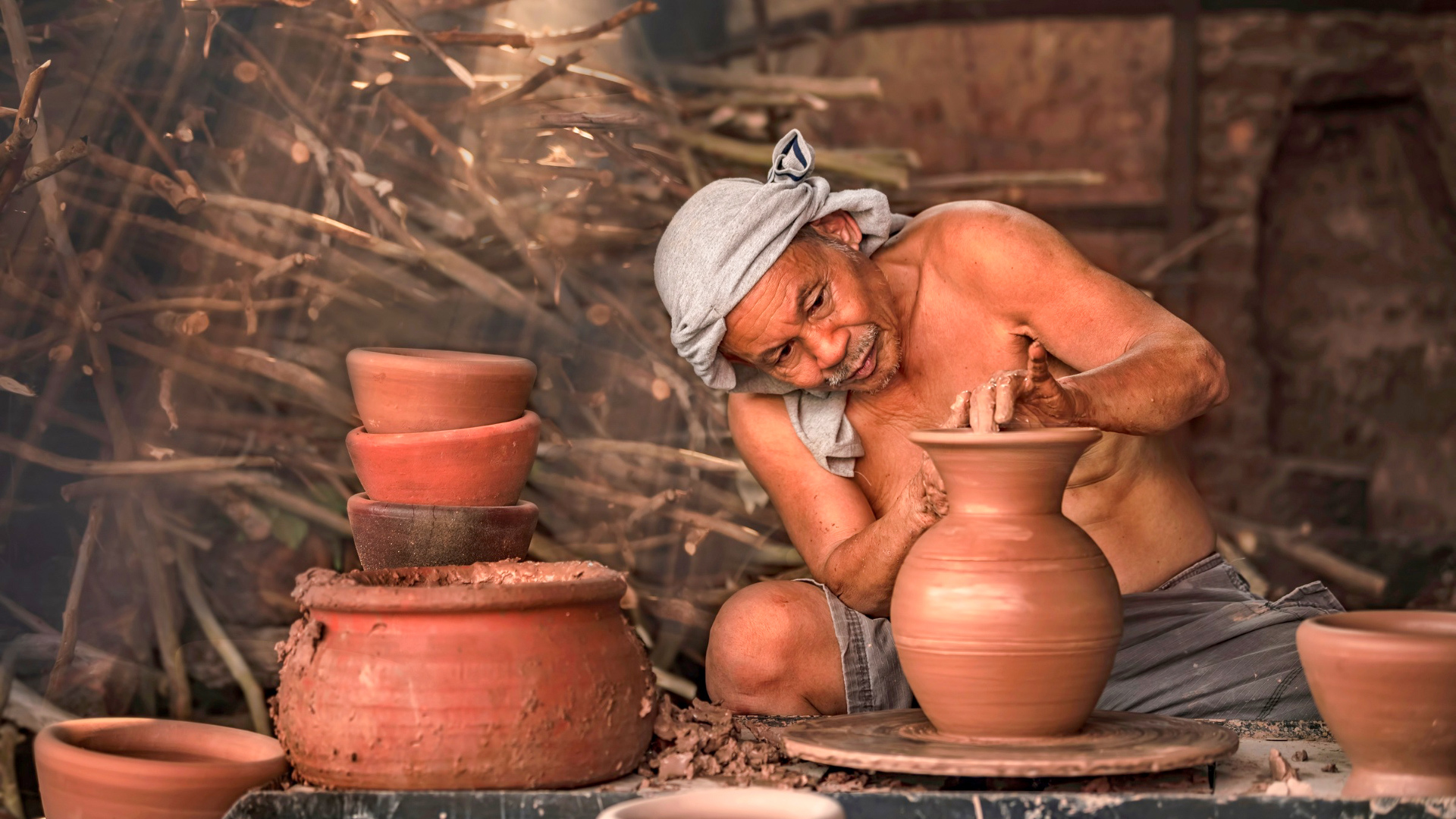
3. Take a pottery class: Bungamati is known for its traditional pottery, and visitors can learn to make their own pottery by taking a class with a local artisan. The classes are held in traditional Newari houses, and visitors can learn about the different techniques and styles of pottery-making that have been passed down through generations.
4. Hike to Khokana: Khokana is a nearby village that is known for its mustard oil production. Visitors can take a scenic hike through the fields and hills to reach the village, where they can learn about the traditional methods of mustard oil extraction and visit the local market.
5. Taste Newari cuisine: Bungamati is a great place to try traditional Newari cuisine, which is famous for its rich flavors and unique ingredients. Visitors can sample local dishes like bara, chatamari, and yomari, which are made with rice flour, lentils, and other local ingredients.
6. Attend a local festival: Bungamati is known for its vibrant local festivals, which are celebrated throughout the year. Visitors can attend festivals like the Bunga Dyah Jatra, the Rato Machhindranath Jatra, and the Khokana Festival, which are great opportunities to experience the local culture and traditions.
POPULAR ITINERARIES
SIMILAR POSTS

Ghanta Ghar: A Symbol of Time and Modernity
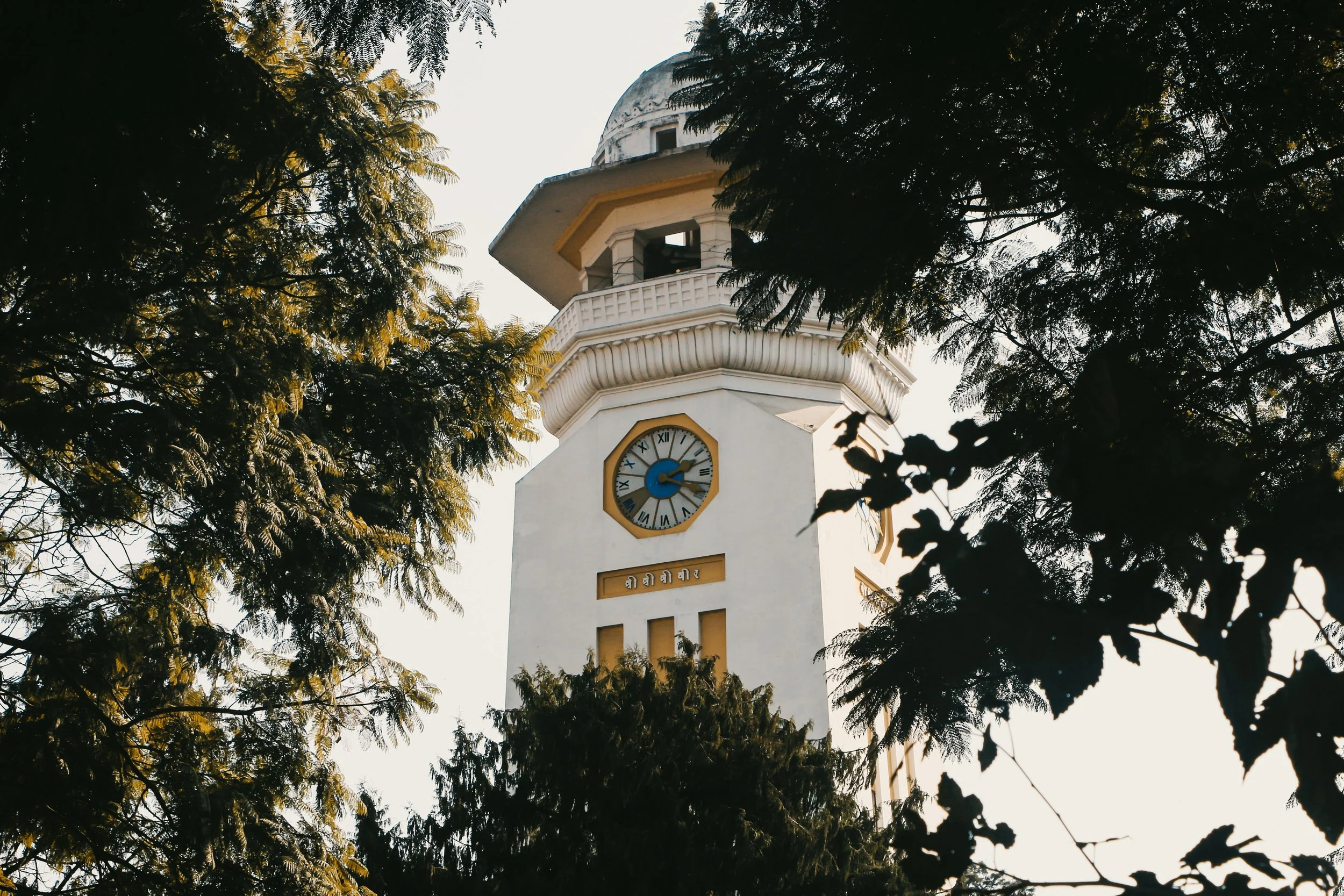
The 16 brass bells of Ghanta Ghar produce a melodious sound that can be heard from afar, signaling the time of day in a distinctively Nepali manner. The clock's golden numerals are painted with precision and shine brilliantly in the sun. Together, these features make the Ghanta Ghar a unique and recognizable landmark in the heart of Kathmandu.
There are countless treasures hidden in the Kathmandu valley that contribute to its charm, but some of them often go unnoticed. It's only when the bells strike that people stop to look up and marvel at a magnificent clock tower that does much more than simply show the time. Standing tall in the heart of the city, the Ghanta Ghar of Kathmandu is a remarkable relic that speaks volumes about the city's rich history and cultural heritage. Its towering presence and intricate design have made it a popular landmark and a symbol of modernization, while also serving as a meeting point for locals and tourists alike. In this article, we will delve deeper into the history and significance of the Ghanta Ghar and explore why it continues to be a fascinating attraction that must be seen by anyone visiting Kathmandu.
The history of Ghanta Ghar in Kathmandu dates back to the early 20th century when Nepal was under the rule of the Rana dynasty. The Rana rulers were known for their love of grand architecture and monuments, and they were also keen on modernization.
In 1909, the then-Prime Minister of Nepal, Chandra Shumsher Rana, visited Europe and was impressed by the clock towers he saw in various cities. Upon his return, he decided to construct a similar tower in Kathmandu. The idea was to have a tower that would serve as a timekeeper for the city and also symbolize Nepal's modernization.Construction of the Ghanta Ghar began in 1930 under the direction of the chief engineer, Kishore Narsingh Rana. It took four years to complete, and the tower was inaugurated by Prime Minister Juddha Shamsher Rana on April 1, 1934.The Ghanta Ghar was designed by the architect, Kishore Narasingh Rana, who was also responsible for designing many other important buildings in Nepal, including the Singha Durbar Palace, which is now the administrative center of the Nepalese government.
The tower is made of bricks and cement and has a distinct architectural style that blends traditional Nepalese and European elements. The four clock faces on the tower were manufactured in England by Gillett & Johnston, a company known for producing clocks for prominent buildings around the world. Over the years, the Ghanta Ghar has become a significant landmark and a symbol of Kathmandu. The tower has withstood several earthquakes and other natural disasters and has undergone several renovations and repairs to maintain its structural integrity.
The Ghanta Ghar clock tower in Kathmandu has undergone several renovations over the years, but the original style of construction is still evident in many aspects of the tower. The original tower was built using bricks, wood, and mud mortar. However, during the recent renovation, concrete was used to strengthen the foundation and framework of the tower. The size and shape of the original Ghanta Ghar clock tower was slightly different compared to the current tower. The tower's size was increased during the renovation to accommodate larger bells and improve its visibility. The clock faces of the original Ghanta Ghar tower had Nepali numerals, just like the current tower. However, during the recent renovation, the clock faces were restored to their original condition and the numerals were painted in gold. The original Ghanta Ghar clock tower had 12 bells, while the current tower has 16 bells, which are made of brass and were brought from London.
Even though it was conceived as a desire to mirror the Big Ben of London in Kathmandu, it created its own identity, importance and value. The Ghanta Ghar is an important treasure of Kathmandu that doesn't just tell time but is a symbol of Nepal's transition from the feudal era to a modern democratic state. It has witnessed significant events in Nepal's history, including the 2015 earthquake, and has stood the test of time as a resilient and enduring symbol of Nepali culture and heritage. The Ghanta Ghar clock tower continues to attract tourists and locals alike, who marvel at its beauty and learn about its historical significance. As one of the few remaining heritage sites in Kathmandu, the Ghanta Ghar clock tower is a testament to the city's rich and diverse cultural heritage, and a reminder of the importance of preserving it for future generations to appreciate and admire.
POPULAR ITINERARIES
SIMILAR POSTS

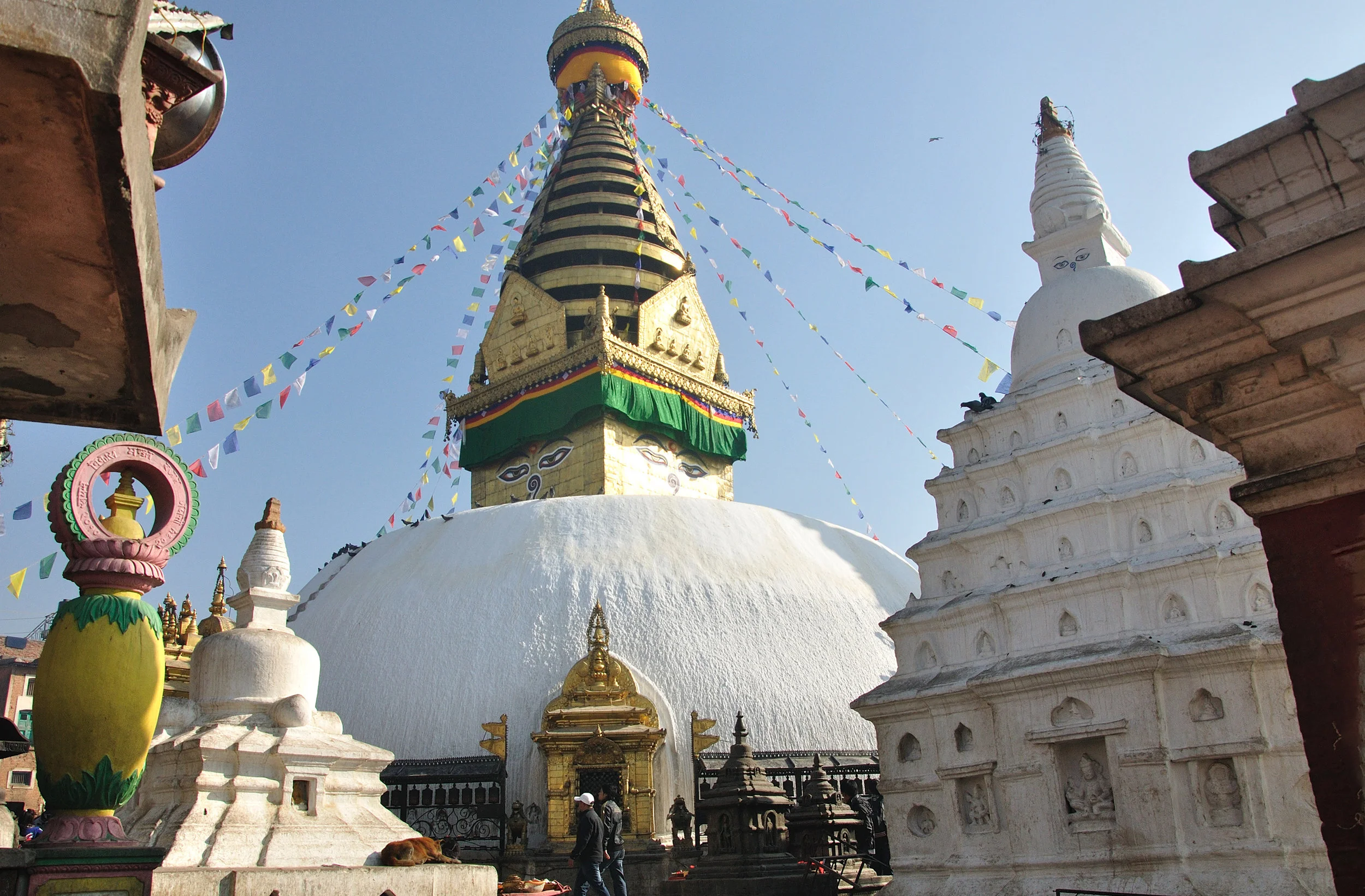
UNESCO World Heritage: Swayambhu Nath
"In Satya Yuga, Bipaswi Buddha came from a city known by the name of Bandhumati; and having taken up his abode on the mountain to the west of Nag Hrad(Kathmandu Valley) sowed a lotus-seed in the tank, on the day of the full moon in the month of Chait. The lotus seed that had been sown brought forth a lotus flower, in the middle of which Swayambhu (who had come from Aknisht Bhuban) appeared in the form of light, on the day of the full moon in Aswin." Wright 1877: 77-78
"In Satya Yuga, Bipaswi Buddha came from a city known by the name of Bandhumati; and having taken up his abode on the mountain to the west of Nag Hrad(Kathmandu Valley) sowed a lotus-seed in the tank, on the day of the full moon in the month of Chait. The lotus seed that had been sown brought forth a lotus flower, in the middle of which Swayambhu (who had come from Aknisht Bhuban) appeared in the form of light, on the day of the full moon in Aswin." Wright 1877: 77-78
Most of the historic chronicles have the lotus seed that brought light be marked as the beginning of the history of the Kathmandu Valley. The light of Swayambhu was inaccessible till the age of Treta Yuga, when Bodhistva Manjushri came from Mahachin(China) and drained the lake from the pass at Kotwal(The place where Bagmati passes out of the Valley) with other passes drawn at Chobar. With the valley drained, Bodhistva Manjuri made the valley inhabitable and the light of Swayambhu accessible to its worshippers.
The shrine of Swayambhu, the dome stupa with eyes of the enlightenment and the pinnacle was built only in the Kali Yuga. Before which it is believed that at the summit of Padma (Padma- Giri Hill; the mountain upon which Swayambhu stands) the place where the shrine is today was a great beam of light that penetrated heaven and even the depths of hell.
"The Kali Yuga, in which mankind would be utterly sinful, was approaching. He (Sant-sri) therefore covered the Swayambhu light with a stone, and built a chaitya and temple over it. He then built five rooms named Basupur, Agnipur, Bayupur, Nagpur and Santipur in the last which he lived, absorbed in devout meditation." Wright 1877:84
It is believed in local legends that even till this date Sant-sri, is in devout meditation in Santipur and shall emerge to protect the valley in times of grave danger. I remember the first time I climbed the steps to the top of Padma-Giri, as I took the last step with deep breaths. The shrine of Swayambhu was a sight to behold, view it form any perspective you wish.
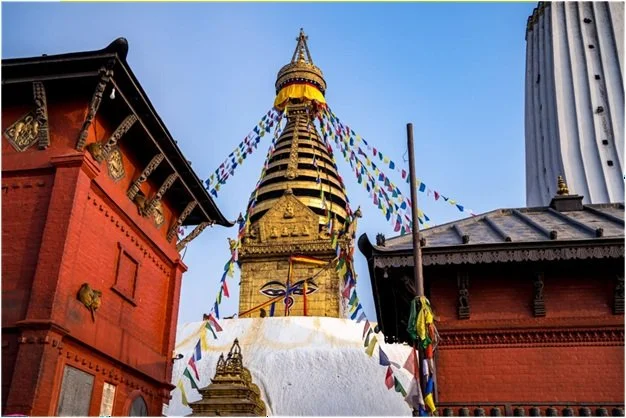
Architecturally it is a phenomena, the dome base atop which a cubical structure painted with the eyes of Shakya-Muni (Lord Buddha) in all four direction shielded by the pentagonal Torana with symbolic engravings. Above the Toranas are thirteen tiers crowned by a Gajur, now imagine a time lapse of its creation? Symbolically the base dome represents the world; the eyes of Shakya-Muni represent the status of enlightenment free from all bonds of the world. The thirteen tiers of the pinnacle symbolize thirteen stages of spiritual realizations to the enlightenment.
Spiritually as a native Newar it is the center of all our devotion and from the perspective of a sociologist, a beautiful lineage of history which has become the epicenter of Newar culture.
Today, the shrine of Swayambhu is known as Swayambhu-Nath or The Monkey Temple and is a major tourist attraction of Kathmandu Valley. Riddled with numerous shrines of Bodhistva's, Lichavi chaitya and stupas, mists of incents and chants of prayer. The Padma-Giri is a hill of spiritual awakening, the light of Swayambhu ever since history began has been a beacon of enlightenment attracting its seekers to the valley, even till this date many take great journeys to find sanctum in its light.
During the 2015 earthquake, the principal stupa didn’t suffer major damage but the surrounded chaityas, shikharas and temples along with living residents of the priests suffered major damage. The most notable difference was not seeing the two Shikharas built by Late King Pratap Malla in 1668 AD. Flanking the principal stupa, Late King Pratap Malla had built the two Shikharas with Agam Devtas within them along with which he placed a Bajra( Thunderbolt) in the Dharmadhatu mandala in front of Akshobhya Buddha. Having them being fully restored with other shrines and chaityas repaired, the area of Swayambhu was one of the very first UNESCO sites to reach a full restoration state.
For it may withstand many quakes to come, shall the eyes of enlightenment forever bring peace to its beholders. For may it always be a sanctum for its seekers and the light of Swayambhu always shine.
Hashtags: #Swayambhu #KathmanduValley #NewarCulture #BuddhistHeritage #EnlightenmentJourney #UNESCOSites #NepalEarthquake2015
POPULAR ITINERARIES
SIMILAR POSTS

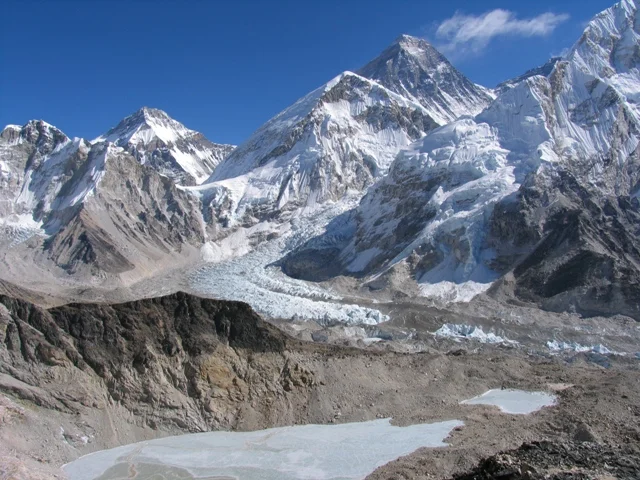
This trek is specially designed to reach the Everest Base Camp including Kala Pattar which is the best view point to view the sunrise over the high Himalayas including the Mt. Everest. This trek requires 13 days.
USD 1515 PER PERSON -- TWIN ROOM SHARING BASIS