
Tamang Heritage Trail Trek
Why Nepal is a Trekker’s Paradise
The Everest Base Camp and Annapurna Base Camp treks are so well-known around the world that they are often referred to as simply, EBS and ABC. However, Nepal is called a trekkers’ paradise not only for these two famous treks; there are numerous other trails that are as exciting. Here’s a series of lesser-known trails that are becoming more popular by the season.
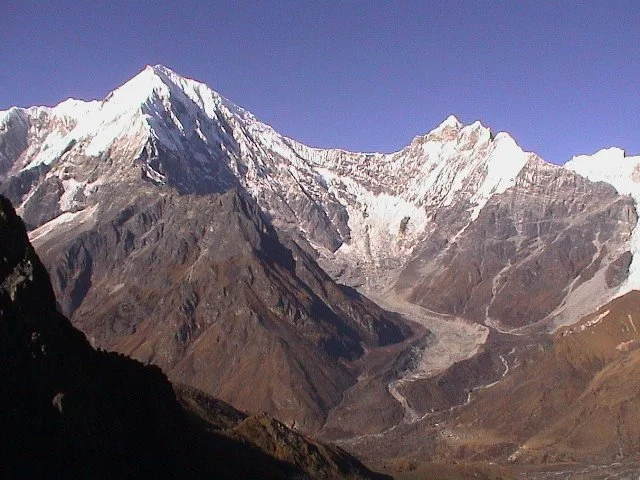
There is an interesting village called Gatlang in Rasuwa district,to the north of Kathmandu, which is inhabited by people of the Tamang community, and which suffered great devastation during the 2015 quake. To reach there, you have to first travel by bus for an entire day, a distance of about 130 km, from the capital to Syabrubesi. This is the starting point of your trek to Gatlang. The narrow trail goes quite steeply uphill, reaching 2,300 meters in height, and this is when you get good views of Langtang Himal, Ganesh Himal, and the Gosaikunda range, as also the Kerung range in far off Tibet. The landscape is enchanting. From Gatlang, you get to have panoramic views of Langtang Lirung (7,256 m) and Langtang II (6,561 m). The sunsets over distant mountain peaks are truly spellbinding. If simplicity is what you are looking for, then Gatlang is just the place for you. A warm welcome awaits every visitor, the Tamang people are as hospitable as they are simple, and you can also enjoy intermingling with them all the more by staying at a homestay. Other options include a community lodge also assured of comfortable lodgings at one facility or the other, be it a homestay, a community lodge and a private boarding house. The people here, despite the substantial number of tourists going their way, have managed to hold on to their traditional way of life, which includes a unique culture and distinctive identity. All the houses in this village are built of stacked stones and the roofs are of wood. The dresses worn by the local are of Tibetan style, and one of the most distinctive features of the women’s accoutrement are the large round gold plated earrings that adorn their ears. Similarly, a unique part of their culture is the custom of making mits and mitnis (best friends for life) by boys and girls, respectively, at a communal ceremony. Religion plays a big part of life here, the Tamangs being predominantly followers of Tibetan Buddhism. The Tamangs also have their own dances, some of which are popular all over the country. Shamans are also a part of life for them, and watching them exorcise evil spirits is pretty spellbinding, what with the jingling of many bells worn on a belt over the shoulders, the hypnotic beat of one-sided hand held drums, rhythmic chants, and so on. All this points towards a rich and ancient heritage, which is what you experience on a trek on the Tamang Heritage Trail. The trail goes through numerous villages like Langtang village, Thang Shyap, Ghore Tabela (about 3,000 m), and Kyangjin (3,900 m), besides Gatlang. As you hike uphill from Ghore Tabela to Langtang, the Langtang Himals to the north offer themselves as a splendid sight, and when on the way to Kyangjin, you’ll be crossing the outer margins of the Ledrup Lirung glacier. Some interesting and lesser known Himalayan peaks to be viewed from Kyangjin are Kyangjin Ri (4,770 m), Brana Chumso (4,350 m), and Menchmasu (4,650 m). In case you have enough stamina, and the interest, you can also hike up to Tsergo Ri (4,984 m), a four-five hour trek. Langtang, naturally the biggest village in the valley, has a significant role as a regional trading center. You’ll not fail to notice a rather large complex of mani-stones and mani-walls near the village, and the elaborately carved doors and numerous prayer flags on the houses. The sight of herds of grazing yaks will certainly grab your attention, as well. The other big village, Kyangjin, has a large number of lodges, twenty in number and counting. But, you’ll not find another lodge on the trail after Kyangjin
Barahabise to Charikot Trek
Why Nepal is a Trekker’s Paradise
The Everest Base Camp and Annapurna Base Camp treks are so well-known around the world that they are often referred to as simply, EBS and ABC. However, Nepal is called a trekkers’ paradise not only for these two famous treks; there are numerous other trails that are as exciting. Here’s a series of lesser-known trails that are becoming more popular by the season.
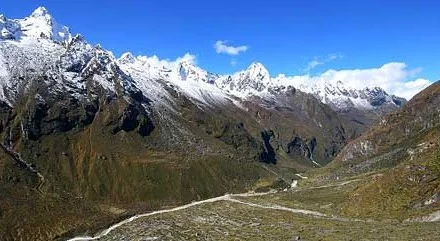
A relatively new trekking route, this trek begins west of the Rolwaling and Khumbu trekking regions, to the east of the capital, Barahabise being the take-off point. This five-six days’ trek ends at Charikot of Dolakha district, which is nestled on Gauri Shanker Himal’s southern slope. Gauri Shanker (7, 134 m) is a revered peak, as is obvious from its name itself. If you have a week of free time at hand, you should go on this trek, one that is easy to reach. You drive on the Arniko Highway, heading northeast from Kathmandu, to reach Barahabise in just about two-and-a-half hours.
Then, you start trekking on the trail along the Sunkosi River watershed, going east up to the Tamakosi river valley. The first day is easy, and you’ll reach a village called Karthali soon enough, then, it becomes more of a regular hiking trail, one that’s dusty and rough. And, you won’t find any shade for quite a few miles, so, hat on, folks! Karthali village, lodged between two ridges, can provide comfortable dormitory-type accommodations in a lodge operated by an organization called Eco-Himal. From here, you can see the Sunhkosi River far below, its flow tranquil and serene. All around are huge mountain ranges. The following day, you hike to Dolangsa, a Sherpa village, at a height of some 2,500 meters, where houses are built all over the hillsides. Here, there’s a lodge propped up near the monastery located at quite a height. The trail carries on to Bigu, and getting there is pretty challenging. The trail is pretty narrow, and it’s cut into the rock face, and what’s more, it’s steeply uphill to the Tingsing La pass (3,300 m). However, your strenuous efforts will be rewarded with a spectacular view of Gauri Shanker peak. You’ll also see Chhoba Bhamare to the west and Pigpherago and Numbur Himal to the west if there are no clouds. The descent is easy enough on a winding trail down the hillside. On the way, you’ll see some chalets decorated with carved windows. Soon, however, you got to undertake a sharp climb up the hillside on a dusty path before arriving at Bigu.
Sleep well here, you’ve deserved it, and there’s comfy arrangements at the Bigu Lodge, which is near the Bigu Gompa, a 75-year-old Kargyapa-sect nunnery that has many marvelous images of Avalokiteshwara, a multi-armed, multi-headed deity, along with rows of elaborately embossed chortens. The next day, you hike to Loting, passing through Laduk, on a trail leading to the river. A night-halt is called for at Loting, and the following morning you trek on to Sinagti on a trail that descends steadily. You get to walk across a swaying suspension bridge before you come to Solung Khola. Then on, the trail goes along the left bank of the river, and finally reaches Singati, from where you can get a bus ride to Charikot, a rough one, it must be said! The final part of your adventure sees you on a bus back to the capital.
Many More Reasons to Visit Nepal
No more can the tourist make do with a few paltry days when visiting Nepal, for we have much more to offer than ever before.
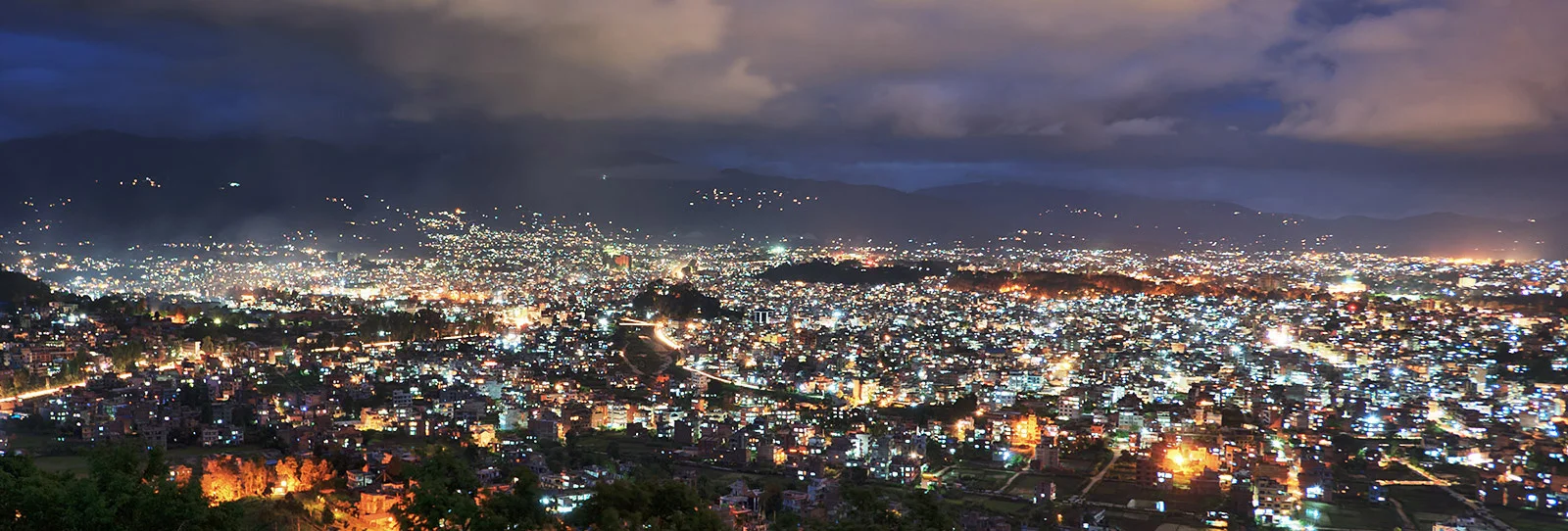
With the march of the years, Kathmandu Valley is offering more to tourists. Where, once upon a time, places like Nagarkot and Dhulikhel were the shining new hopes on the hills, which were meant hopefully to add a couple of days, if not a week, to the usual tourist itinerary to Nepal, now there are many more additions that are being highlighted with some vigor. It is not that the above-mentioned hill stations have lost their charms; on the contrary, there are some pretty interesting developments taking place there to make the visitor more comfortable by offering extra convenience and even a bit of luxury. You see, we understand that visitors from other realms (the West, especially) have become habituated, no, addicted, to the modern ways of living and doing things. So, no matter how high you go in Nepal (what to say about Kathmandu Valley?), you’re assured of things like TV, the Internet, and free WiFi. Besides, hair dryers, running hot water, whisky on the rocks, flaming Flamingoes, and what not! And, of course, the spectacular natural scenery that you can avail of from such fantastic settings as Nagarkot and Dhulikhel will never change. Hopefully. So, they are still the shining hopes they were yesterday. But, we have become more ambitious, we want you to stay still longer. I met a Chinese girl recently who has been here for the last three weeks, and I asked her, “Have you visited Boudhanath Stupa?” She hadn’t, and looked it up on her smartphone. “It’s far,” she said. Now, two or three conclusions can be made from this exchange. One, she has no clue about the historical Chinese aspect of this world heritage site monument. She doesn’t know that it is still the only stupa in Nepal (could really be in the world), where the head lama is called Chini (Chinese) Lama. This girl is a graduate student, so it was doubly surprising that she didn’t know. I mean, everybody Googles the place they are visiting before going there, don’t they now? My second conclusion is that our tourism folks haven’t a clue about how to market Nepal to the Chinese. Despite their oft-repeated litany about how we must take advantage of the stupendous increase in Chinese tourists all over the world, they still haven’t been able to promote such an important monument to them, which if done properly, could easily be at the top of every Chinese tourist’s must-visit list when coming to Nepal. Besides, of course, attracting more to come to Nepal. Seriously, organizations like NTB, HAN, NATA, etc. must take note. Those on the upper rungs of these organizations better put on their thinking caps, and not only that, put on their trekking boots, and make sincere attempts to promote Nepal to what has become today, the most important country from which to attract tourists in vast numbers. Oh yes, one more conclusion from the exchange is that our roads are horrible, the transportation system is terrible, that’s why she considered even a three-kilometer distance to be far. She must be daily commuting at least twenty and more back home! So, better roads and public transport needed urgently. Anyway, coming to relatively newer additions to the Valley’s delights, places like Kirtipur (ancient history, with great sites like Chobar, Taudaha Lake, Dakshinkali, etc.), Panauti (the fourth most important heritage city after the big three of Kathmandu, Bhaktapur, and Lalitpur), Tokha (where the air is always fragrant with the smell of fresh molass, i.e. chaku), Chandragiri Hill (with a brand new cable car soaring over hills and dales; and a history that could be hyped quite a bit), and of course, places like Bungamati and Khokana, which have become practically a neighborhood of the big city of Patan, what with roads and all. Talking of neighborhoods, quite a few are developing in the capital as attractive destinations for tourists, what with posh malls, supermarkets, and restaurants serving all kinds of cuisines, live music, and what not. Thamel overtook Freak Street a long time ago, now it is spawning a Jhamel, as well, for example! The number of five-star properties that were increasing every two decades or so in the past, are doing so now every year, and they, too, have become very active in promotional activities like regular international hi fi events and food festivals. Oh yes, you, dear tourist, in addition to your trekking plans, please do add a few more days, if not weeks, to your itinerary when visiting Nepal. We have much to offer!
Kathmandu Valley, where Old is still Gold
Okay so this is the twenty-first century. So what? It’s still all those things our ancestors made that are the calling cards of Nepal.
In the beginning, there were only Kathmandu, Lalitpur, and Bhaktapur—three names most talked about when discussing Nepal. Freak Street and the three Durbar Squares were the places most familiar to tourists. Mount Everest and the Himalaya, too, were famous, although more intimacy with them was sought after by only a rare few of the more daring. The rest, meaning the vast majority of mostly backpackers, were content to while away the hours, and if high on hashish (as they usually were), the months, lounging in the bright winter sunshine on temple steps in the durbar squares, or sipping hot lemon and eating apple pie and Juju dhau (King curd) in some dimly-lit, smoke-filled café of Freak Street.
Life for the tourist (and for the lucky locals) was far simpler in those days, which I daresay, will one day be called the golden age of Nepal tourism (not in the economic sense, but in most other ways). The streets were mostly silent, with a solitary car passing by maybe every ten minutes or so, and a taxi to be sighted was a fortunate event for someone traveling quite a distance. The weather was cool most of the year, and as for pollution, the word was not in the Nepali dictionary.
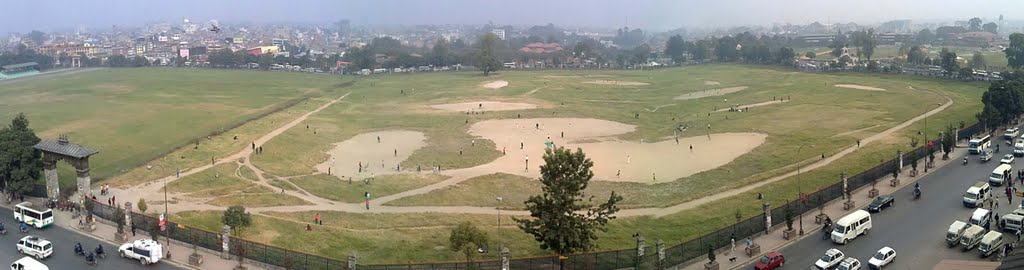
Tundikhel, in the center of Kathmandu, and very close to the center of the capital’s universe, New Road and Basantur Durbar Square and Jhocchen, a.k.a. Freak Street, seemed so big that one could even believe someone’s claim that it was the biggest parade ground in Asia. Other cities around the world may have their ‘central parks’, in and around central areas, but I bet none are as open-hearted as Tundikhel. You’ll have to worry about getting mugged most of the time in those so-called ‘central parks’.
But Tundikhel? Its large space uncluttered by any trees, not even shrubs, and so there was/is no chance of any muggers hiding in the bushes. Of course, it’s not a lovers’ park, but hold on, it was where boys rendezvoused with girls and vice versa in the good old days. The chaste days, one should add, when love was as pure as the Himalaya. Cinema halls were few and far between, and no English films either, so no corrupting of young minds by lecherous Hollywood flicks. Old Hindi movies would be shown, mostly, and in those days, the camera switched from a scene of the beginning of an embrace by the lead pair to two flowers swaying towards each other. Nothing chaster than that!
The world was cooler, purer, calmer, and truly leisurely for the blessed people of the valley of the gods. Yes, all they had to worry about was how to keep the more wrathful gods pacified and happy. And, so, festivals every other day was what served this purpose. Most festivals were/are known as jatras, and they all involve the carrying of a god or goddess on a palanquin, or a chariot, from his/her temple of residence to another, and later, from there to here again. Meaning, another jatra! And, of course, everybody looks forward to a nourishing feast after all that carrying and pulling, right? Or even after all that plodding around the block in a procession. So, feasting follows; gods are happy, people are happier!
It’s a far cry, an extremely far cry, today, from what was yesterday. True. Yet, the festivals remain, the feastings do, too. Most times, the gods have been reasonably placid, but sometimes, as we experienced two years ago, the earth shook mightily for quite some time. The gods were angry. It happens now and then, I guess that’s to be expected; after all, the gods too need to vent steam once in a blue moon. Besides efforts to keep the gods placated, the people of this ancient valley have also tried, to some extent, to honor their gifted ancestors by ensuring that their magnificent works of art, craft, and architecture remain intact.
It’s not easy, all this, in the light of modern developments, which are undoubtedly needed around the world, but certainly not helpful to keeping the valley of the gods as blessed as before. Global warming, perhaps, came sooner to this once cool valley than elsewhere; the uncontrollable proliferation of mass media has corrupted souls, minds, and spirits of the once chaste and pure denizens; and the roads, the peaceful sight of which was so soothing in days gone by, are now torrents of chaos and bedlam;.
Funny thing is, even after all this destruction of age old values and aesthetics, and the creation of new and modern concepts of development, there isn’t anything new that is worth putting on the tourist brochures. It’s still the very same things that are so difficult to save from the dangerous claws of ‘development’ that we continue so desperately to trumpet as the primary reasons for visiting Nepal!
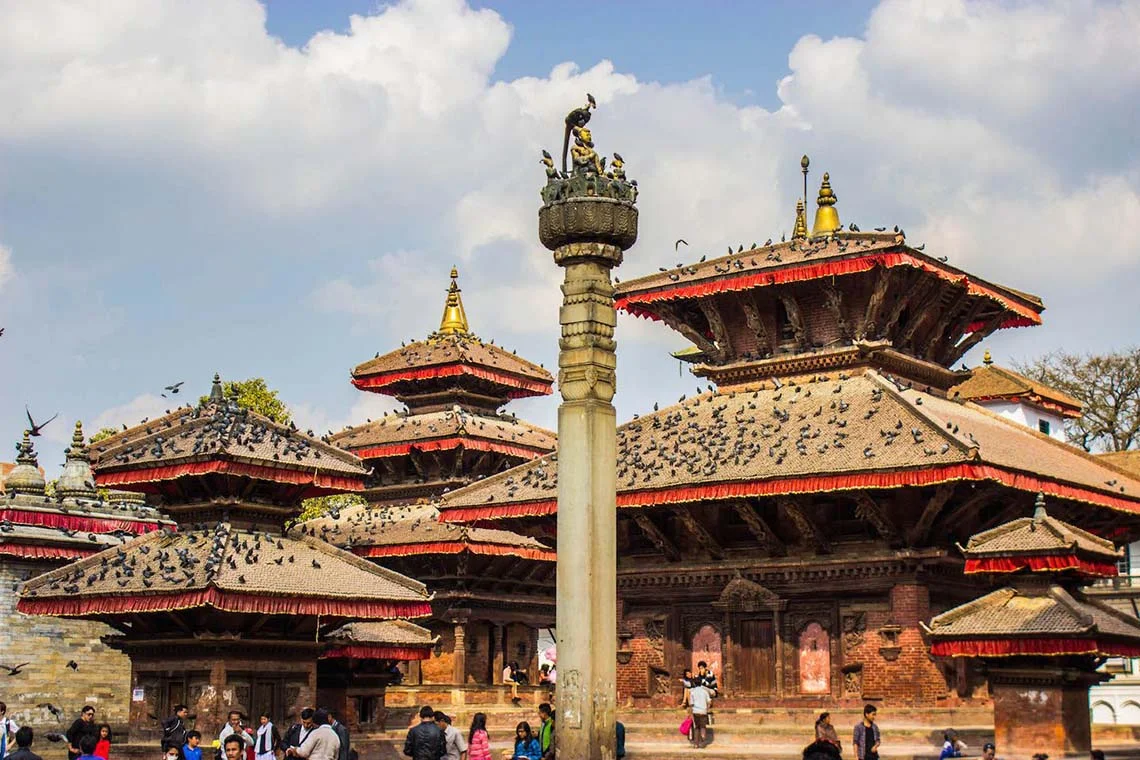
More about Nepal’s Beautiful Temples
Nepal is known as a land of temples, and some historians in the past went so far as to state that Kathmandu had more temples than houses!
The construction of any edifice starts with first making the blueprint. In the case of temples, it starts with the Yantra, which is described as “a geometrical diagram with abstract symbols”, and comprises of the bindu (dot) at the center, the triangle, the square, and the circle. It is considered to be a sacred enclosure of Ishta-devata (the tutelary deity). Yantras can be Tantric (most diverse and common), Vedic (ancient most), and Buddhist mandala (meaning ‘circle’), and they have different uses. Some yantras like Vastu Purush Mandala are used to design ground plans of temples. It has many squares within squares; with the simplest having 64 (8x8) or 81 (9x9) squares, and the most complex having 1,024 squares. The central group of 4 or 9 divisions is where the principal deity resides. It is surrounded by 12 squares, which are the seats of divinities related to spatial directions, and around this are 32 celestial body divinities. In simpler terms, the 3-dimensional structure of the temple originates from the 2-dimensional plan, with the mandala as the blueprint. In somewhat more complex terms, architectural yantras schematize the principles on which the sacred precincts of the temple are constructed. The actual construction starts with leveling, purifying, and consecrating the ground, and on this is drawn Vastu Purush Mandala, accompanied by some intricate rituals. The tiered roof (pagoda) is most common in Nepali temples, and as a matter of interest, the oldest pagoda temple in Kathmandu Valley is the Sulima Ratnesvara Temple in Sulima, Patan. Changu Narayan Temple is also one of the most ancient. The pagoda type temples may be Buddhist, or they may be Hindu. The former are called either bahal, vihar, or bahi, while the latter are called mandirs. Ratnakar Mahavihar, a three-tiered temple in Haklhvihar, Patan, and Hiranayavarna Mahavihar near Patan Durbar Square are excellent examples of Buddhist pagoda type shrines, while Pashupatinath is the most outstanding example of a Hindu pagoda style temple. Other temple types are the stupa and shikara styles, as well as some of the dome style. The stupa is a hemispherical mound of earth, bricks, or stones, with a square structure on top, each side painted with a pair of eyes. Swoyambhunath and Boudhanath are the best examples of stupa type shrines. The shikara style is of Indian origin. It is a tall pyramidal structure having either five or nine sections, with the final section having a bell-shaped top. One famous example is Krishna Mandir of Patan Durbar Square. A most unusual stupas in Patan is Maha Buddha Stupa, because it is built of brick and is also the only major stupa based on shikhara style. The temple of the Living Goddess Kumari in Kathmandu’s Durbar Square is built in the harmaya style, where the courtyard is surrounded on all four sides by residential buildings, with the temple deity placed directly behind the front gate. The tier-roofed, or pagoda type temples, are iconic to Kathmandu Valley. They are mostly square or rectangular in shape, with the latter usually dedicated to tantric deities like Bhimsen, Bhairab, and Bal Kumari, amongst others. Akash Bhairav Temple in Indra Chowk For one week, during Indra Jatra, the image of Bhairab is displayed outside. Bagh Bhairav Temple in Kirtipur and the three-storied Bhimsen Temple in Patan Durbar Square are other outstanding examples.
.
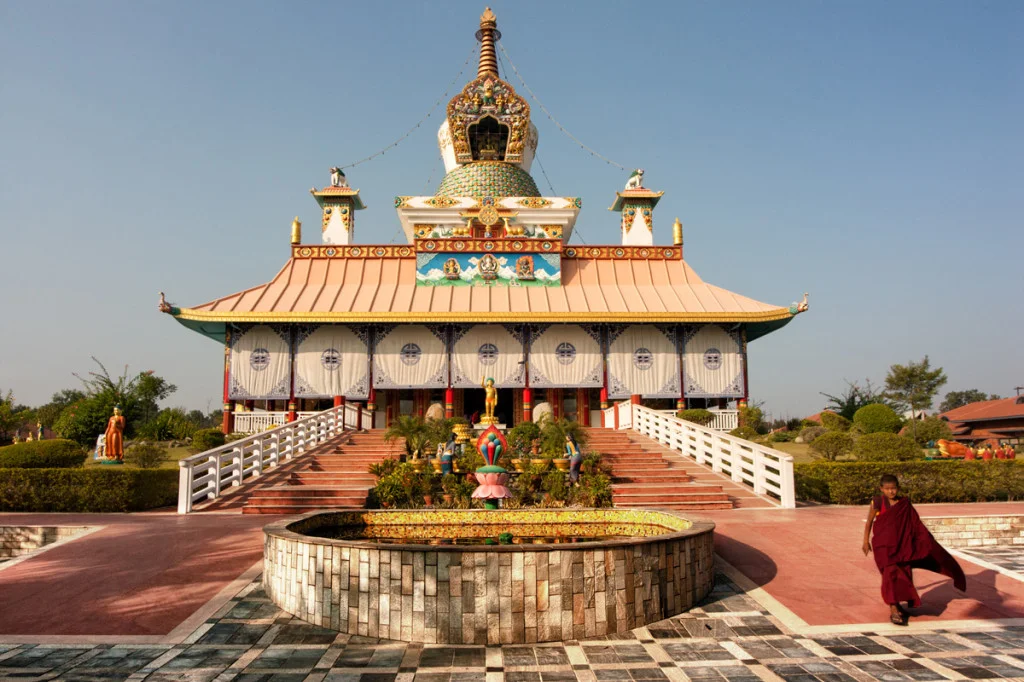
Lure of Nepal for Chinese of the Buddhist Faith II
About 250 million Chinese follow Mahayana Buddhism, and for them, Nepal is a prime destination to know more about their faith.
Now, Nepal has to make an urgent inventory of what it has to offer to attract the waiting hundreds of millions of Chinese Mahayana Buddhists. Lumbini, the birthplace of Buddha and Buddhism, is no doubt the number one draw, and the sooner that long-delayed international (or, regional, whatever the case may be, it doesn’t matter) airport is completed, the better. Listen up people, it would be a good idea to acquire property around that area, if you are interested in some solid investment. Imagine a lakh or two Chinese Buddhists coming in every other month to Lumbini, and it all makes excellent sense. Now, let’s delve a bit into Mahayana Buddhism and what we have here. One section of the Lumbini Gardens is the Mahayana Monastic Zone, where you will find many striking structures made by different countries. These include Dharmodaya Sabha, with a bahal (courtyard), gumba (monastery), and stupa, like those of a typical Nepali monastery complex; the Manang Stup, constructed by Buddhists of Manang district, which reflects Tibetan Buddhism style; the Korean monastery, the Vietnamese monastery, and further on, monasteries built by French and Austrian Buddhists. Also present is the Japanese monastery, the Ladakh monastery, and two German monasteries. And, yes, you will also find the China Temple (Chinese monastery) here, with similar architecture as seen in Tinanmen Square in Beijing. So, these are great attractions that need to be fully highlighted through strong, interesting, and consistent promotion. Here’s an interesting paragraph I came across on some online site: “Mahayana Buddhism in South Asia died out in the thirteenth and fourteenth centuries CE…Theravada Buddhism flourished in Sri Lanka and Southeast Asia. But the Newars’ Buddhism is the only surviving remnant of the Sanskrit-based, Mahayana and Vajrayana Buddhism of South Asia. They are the only Buddhists in the world whose scriptures are still in Sanskrit…The Newars’ Buddhism is therefore of world-historical importance, and the old royal cities of Nepal – Kathmandu, Lalitpur (Patan), and Bhaktapur – which form its centres are quite rightly UNESCO-designated World Heritage sites.” So, this means there’s plenty more for all those millions of Chinese Mahayana Buddhists to see in Nepal, particularly in Kathmandu Valley, particularly if they are interested in all things to do with Mahayana Buddhism. For them, Hiranya Varna Mahavihar, the Golden Temple is a prime destination, where they will be able to pay homage at the Ratna Chaitya Swayambhu Stupa, and to Guru Vajrasattva and Pragya Paramita (holy scripture), as well as to the gods Amoghapasha Lokeshwara, Arya Tara, Vajrabir Mahakala, Namasangiti, and the four Lokeshwaras. Buddhism in its entirety is too complex a subject to be understood at a single go, but the fundamentals are easy enough to understand. It is also easy enough to understand that Nepal’s Lumbini and Kathmandu Valley hold the answers to many of the questions a Buddhist may be harboring. This includes those of different traditions, including Mahayana, and what is most important to understand, from a tourist point of view, is that the hundreds of millions of followers of Mhayan Buddhism in China could well be the answer to Nepal’s tourism woes.
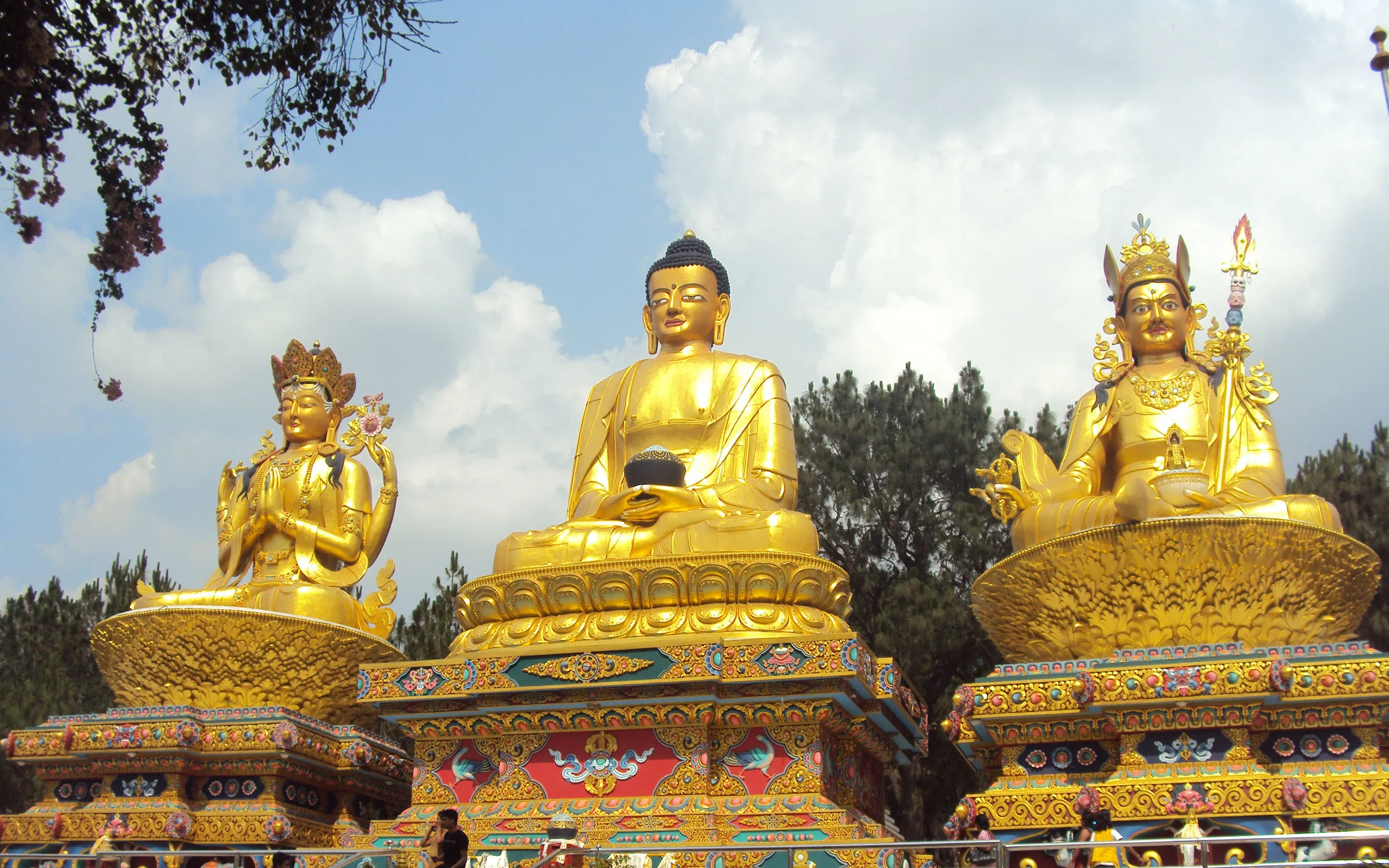
Lure of Nepal for Chinese of the Buddhist Faith Part 1
About 250 million Chinese follow Mahayana Buddhism, and for them, Nepal is a prime destination to know more about their faith.
Like every other nation, Nepal too has quite a few claims to fame. The major ones being—Lumbini, the birthplace of Buddha, Mt. Everest, the highest peak in the world, and four world heritage sites (two that are cultural: Kathmandu Valley and Lumbini, and two that are natural: Chitwan National Park and Sagarmatha National Park). Other unique attractions of Nepal include its traditional Newari architecture (of dwellings, public places, and temples and stupas), outstanding arts and crafts (pau:bha painting, and wood, stone, and metal craft, including gold and silver jewelry), amazing ecological and cultural diversity, and eight of the fourteen highest peaks in the world. A more recent attraction is the Great Himalaya Trail, the world’s longest and highest trekking route. Of course, there are many, many other unique features of this beautiful Himalayan country, besides its important strategic placement between two of the world’s most highly populated countries, China and India, which are now also two of the biggest economies. China, I hear, is for all purposes the number one economy globally, if we are to take various parameters like population size, infrastructure, and manufacturing, as well as size of domestic market, exports, imports, and so on and so forth. Oh yes, the Chinese are now also very big in international tourism, which of course has to be something akin to manna from heaven for us, if just a small percentage were to set their eyes on visiting Nepal every once in a while. Now, Nepali culture is tremendously influenced by Hindu culture, religion being the mainstay, in addition to language, food, lifestyle, etc. Politics, too! But, Nepal is not prepared for making hay while the sun shines as far as Chinese tourism is concerned. I hear that they are really pleased that we are now part and parcel of their great leap of the new millennium—the One Belt One Road initiative—which will most probably make them an unbeatable force well into the next millennium. Now, it’s good that they are happy with us for our collaboration. This should help us in getting more empathy from this powerful neighbor. But, that’s just the PR, what about the sales strategy? I don’t know how many of you know this, but China has the largest number of Buddhists in the world. That’s right, the largest. Here’s what Wikkipedia says, “China is the country with the largest population of Buddhists, approximately 244 million, or 18.2% of its total population. They are mostly followers of Chinese schools of Mahayana, making this the largest body of Buddhist traditions. Mahayana, also practiced in broader East Asia, is followed by over half of world Buddhists.” Doesn’t this have fantastic implications for Nepal tourism? There can be no more devoted a tourist than the one who is on a spiritual path. Ask the hordes of pious Christians swarming year after year to Vatican City, or the millions of devout hajis making their way to Mecca, or the lakhs of Hindus braving rain, storm, and thunder, and yes, even terrorists, to reach Amarnath. And, how about Jerusalem, which is the place to visit at least once in a lifetime for Jews, Christians, and Muslims alike? Even Donald Trump, the man of the moment!
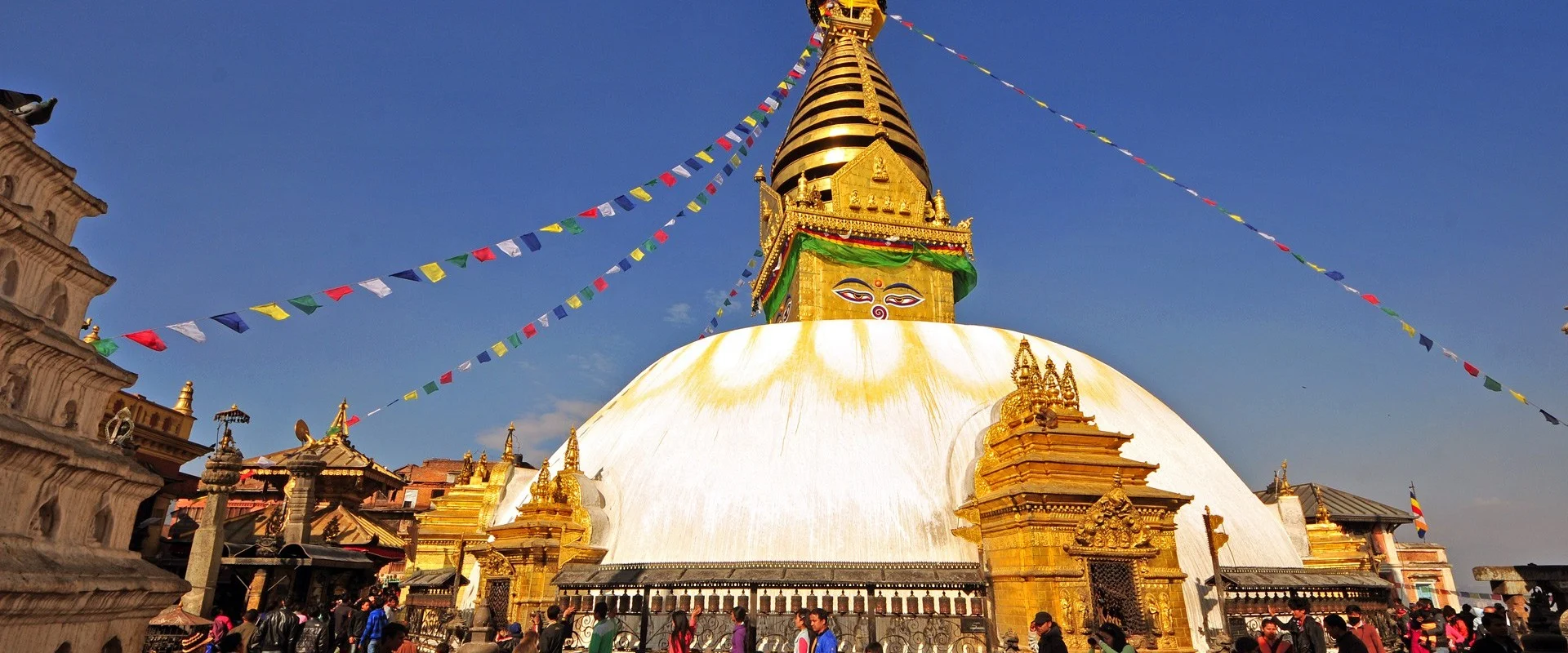
Nepal’s Magnificent Monasteries Part II
Nepal is the birthplace of Lord Gautam Buddha, the founder of one of the world’s greatest religions; is it any wonder then that it also has the world’s greatest monasteries?
Of course, the two World Heritage Site monuments, that is, Swoyambhunath Stupa and Boudhanath Stupa, are the most celebrated Buddhist shrines in Nepal, but there are many other shrines that are also sacred to all Buddhists, both in Nepal and internationally. These are essential parts of the great Buddhist pilgrimage circuit in Nepal, as well as of joyous celebration during the most important days in the Buddhist calendar. Hiranyavarna Mahavihar, or the Golden Temple, as it is world-renowned, is situated very close to the famous Patan Durbar Square, another of Kathmandu Valley’s World Heritage Site monuments, in Lalitpur. This three-roofed shrine, built in the typical pagoda style, houses a large and shining silver statue of Sakyamuni Buddha inside silver embossed doors. It is a revered site for countless numbers of devotees, many of whom come here in the early hours of the morning every day, not only to pay homage and seek blessings, but also to imbibe and be uplifted by the serene spiritual ambience. The early hours is when you’ll see numerous butter lamps burning sparklingly bright, the sweet fragrance of many bundles of incense sticks, the rhythmic chanting of prayers, and the presence of a large number of fervent Buddhists bowing down low to the Buddha. There’s a smaller temple in front of the main one, which is also as intricately decorated with the traditional gilt roof and copper patakas (metal banners descending from the pinnacle). Inside is a silver replica of the great Swoyambhunath Stupa. As you enter the Golden Temple, you’ll come across a double lotus podium on which sits a Dharma Dhatu Mandala with a heavy vajra on top, and as you look around the courtyard, you’ll see figures of Namo Sangeeti, Vajra Satva, Mahankal, Guheswori, Tara, and Manjushree, all of them revered deities in Buddhism. Climbing up to the first floor, there’s a long gumba (prayer/meditation hall) where is located a tall statue of Amoghapasa Lokeswor (eight-handed Buddha), very ancient-looking pau:bhas (religious painting in scroll form), as well as a really big prayer wheel, which just invites you to give it a whirl. The Amitabha Sukhawati Bhawan is also on the first floor, and in it stands a large statue of Amitabha Buddha. In fact, so many are the important deities in the Golden Temple, that it is said you don’t have to visit the other shrines if you are visiting here. Another great monastery in Kathmandu is Dharmakirti Vihar, which is located at Shreega in Naghal, on the way to Thamel. It was founded in 1965 by the illustrious Newari businessman and philanthropist Bhajuratna Kansakar and his wife Jyan Jyoti Kansakar. Its primary goal is to propagate the tenets of Theravada Buddhism, also known as the "Doctrine of the Elders". This branch of Buddhism is based on the scriptural inspiration of the Tipitaka, or Pali canon, which is believed to contain the earliest surviving record of Gautam Buddha's teachings. Theravada is the predominant religion of countries like Sri Lanka, Myanmar, Cambodia, Thailand, and Laos. The monastery has twenty lifetime ordained nuns, who are known as anagarikas, along with the chief abbot, who is known as Aanagarika Dhammwati. While it conducts puja and Dharma Desana (preaching of Dharma) five days a month, during the month of Gunla (the month of prayer and fasting in July/August), puja are held daily. This important festival is to commemorate the so-called “rains retreat”, when Gautam Buddha led his disciples into solitary meditation some twenty-five-hundred years ago. The vihar runs regular meditation camps, spiritual classes, and ordination programs, aside from providing moral education to preschoolers though its educational foundation.
Magnificent Monasteries of Nepal Part 1
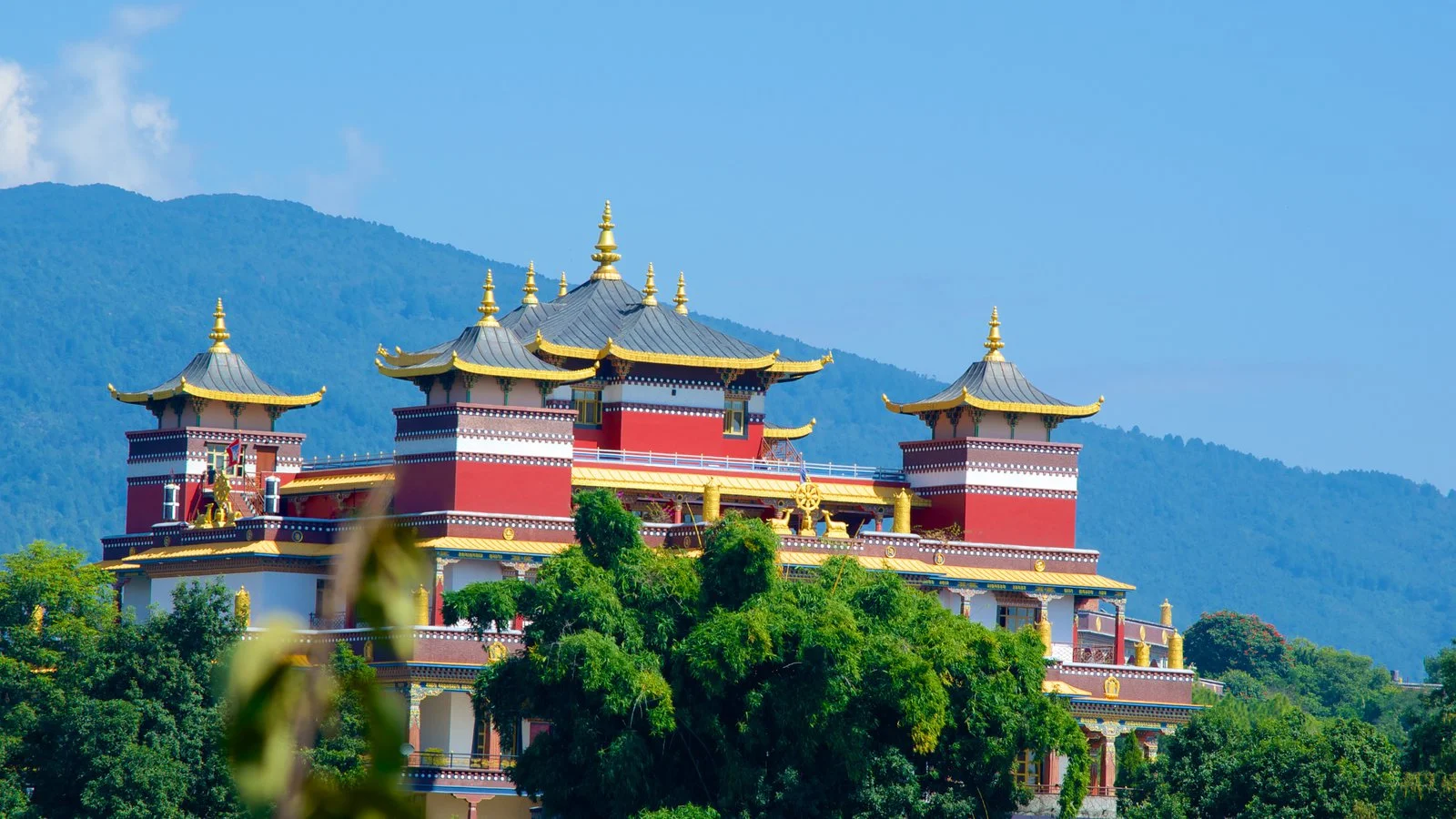
Nepal is not only rich in bountiful nature, spectacular scenery, rich culture, and great diversity, it also has some of the world’s most magnificent monasteries.
Lumbini is of course where it all began, the birth of a great new religion, Buddhism, with the birth of Siddhartha Gautam, who later on in life went on to gain nirvana and become the Buddha, or the Enlightened One. Thus, Lumbini is the primary pilgrimage site for the millions of Buddhists all around the world. At the same time, there are many monasteries (viihars and mahavihars), and stupas throughout Nepal that are also important places of pilgrimage for Buddhist devotees. One such is Seto Gumba, also known as Druk Amitabh Mountain Monastery, which is located about three kilometers from Halchok, near Swayambhunath Stupa, in Kathmandu. Hiking to this splendid monastery is a favorite pastime for many, and should take the average person about two-and-a-half hours to get there. The scenery on the way, and of course form the top, is spectacular. If you don’t feel up to walking all that way uphill, you can drive there from Sitapaila on the Ring Road. The Druk Gawa Khilwa Nunnery is also located here at the monastery, and it is a major nunnery, with about three hundred living there at any given time. This magnificent monastery is renowned for its Tibetan-style architecture, as also for its fantastic statues (some of which are very large-sized) and paintings so colorful, they are a treat to the visual sense. Seto Gumba was founded in 1989 by His Holiness the Gyalwang Drukpa, and it is open to visitors on Saturdays. That is when you’ll find lots of people, both locals and tourists, lounging about in the monastery’s lovely garden, and admiring both the visual art on display, as well as the panoramic view of the valley below. Another famous Buddhist destination is Kopan Monastery, which is located on Kopan hill, north of Boudhanath Stupa in Kathmandu. There’s a great big Bodhi Tree there, so called because the Buddha meditated under one, and the monastery has some three-hundred-and-sixty inhabitants that include lamas, monks, gurus, and daily workers. It is an important center for the study of Mahayana Buddhism, which is based on the Gelug school of Tibetan Buddhism that was founded by Lama Tsongkhapa (1357–1419), a famous monk who was born in Amdo of Tibet. Affiliated to the Foundation for the Preservation of the Mahayana Tradition (FPMT), Kopan Monastery was established by Lama Thubten Yeshe and Lama Zopa Rinpoche in 1969, and the first community to live there was a group of twenty-five monks from Solukhumbu district in 1972, who underwent a dedicated program of study, meditation, and communal living under the care and tutelage of Lama Yeshe. In the present time, monks, starting as young as seven years old, flock here from throughout the country, as well as from around the Himalayan region, to receive a classic monastic education. One of Nepal’s biggest nunneries, Khachoe Ghakyil Ling (Pure Land of Bliss), was established at the base of Kopan hill in 1994, and it houses close to four hundred nuns. It had an interesting beginning; in 1979, two young women who had escaped from Tibet, were invited to join the monastery, and thereon, the number of women continued to grow, and eventually, a new nunnery had to be built nearby.
Trek of a Lifetime in Nepal
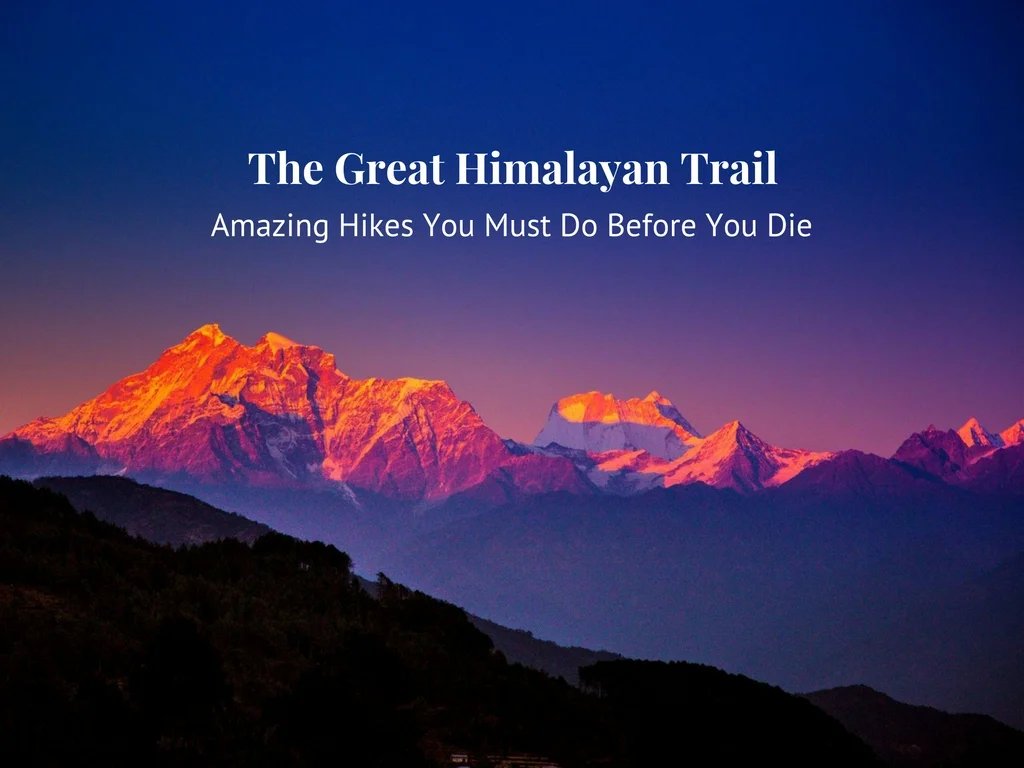
The Great Himalayan Trail is the longest and highest trekking route in the world—and most of it is in Nepal!
The Great Himalaya Trail (GHT) was launched in 2011, most fittingly, on the occasion of the 32nd World Tourism Day. This most challenging 2,800-km trail of many different interconnecting trails goes across Nepal, India, China (Tibet), Bhutan, and Myanmar—quite the international route! Completing the trail means you get to see all of the world’s ‘eight-thousanders’, that is, all fourteen of the highest peaks in the world. These are: Mount Everest (8,848 m), K2 (8,611 m), Kanchenjunga (8,586 m), Lhotse (8,516 m), Makalu (8,462 m), Cho Oyu (8,201 m), Dhaulagiri (8,167 m), Manaslu (8,163 m), Nanga Parbat (8,126 m), Annapurna (8,091 m), Gasherbrum I (8,080 m), Broad Peak (8,051 m), Gasherbrum II (8, 035 m), and Shishapangma (8,027 m). Eight of these peaks are in Nepal, including of course, Everest, five are in Pakistan, and one is in China. The Nepal section of the GHT is some 1,700 km long, begins near Kanchenjunga in eastern Nepal, and carries on west along the shadows of the country’s eight eight-thousanders (ranging from Makalu to Everest). It is indeed a long stretch by any means, and all the more grueling because of the high altitude, but you get to witness fantastic diversity, both ecologically and culturally, along the route. It takes you to places like Taplejung in far-east Nepal to Humla and Darchula in the far-west. Needless to say, you’ll be amazed at the many different kinds of culture and lifestyle you see on the way, since Nepal has a hundred and more ethnicities and a similar number of languages! No doubt, rare is the individual who can complete this trail at one go; thus, the Nepal GHT is divided into ten connecting treks, meaning, you can trek one or more at a time. Your fitness level, the time at your disposal, and of course, your desire, are the deciding factors. On average, one can complete a section in about two to three weeks, and you also have a choice between the high route (traversing 3,000 to 5,000 m) and the lower route. The latter brings you up-close with villages and their inhabitants, which means experiencing first-hand local lifestyles of various ethnic groups. An outstanding highlight of your trek will certainly be the great views on the way as you trek through areas like the Kanchenjunga Conservation Area, with its alpine meadows, pristine forests, and high-altitude wetlands, and towering over all, the majestic Kanchenjunga, the third highest peak in the world. Rich in flora that includes over 2,000 plant species, if you are there around April, you’ll see the hills turn red with the blossoming of the rhododendron, Nepal’s national flower. Starting from Tumlingtar, you’ll be passing through villages of the Rai and Limbu clans, who are renowned for their martial prowess, followed by Sherpa, Tamang, and Bhutia villages. Another outstanding area is the Makalu Barun National Park, where the climate ranges from tropical to alpine zones, thus promising great diversity in its ecology, including its forests. There are 25 rhododendron and 47 orchid species to be found here, along with 75 animal species and 440 kinds of birds. This is the habitat of the rare red panda, the clouded leopard, and the Asian golden cat, so keep a sharp eye out! The Sagarmatha National Park is, of course, one of the most exciting areas you will be trekking through; it is after all the highest national park in the world! And, a World Heritage Site, too! You’ll be meeting a lot of Sherpas, so famous for their fantastic climbing skills that no Himalayan expedition is complete without their guidance. This is where you will also see the tallest peak on Earth—Mount Everest, of course! In addition to all these riches, the park has tranquil turquoise lakes and exotic monasteries. And, now, on to the region of sacred valleys and holy lakes, meaning Helambu, one among the 108 beyuls (sacred valleys) of the Himalayas. You get to visit Langtang National Park, and you get awesome views of the vast Tibetan plateau from the Tilman Pass (5,308 m). On the way, you’ll get a chance to take holy dips in a number of sacred lakes, Gosainkunda being the most sacred. It is a really popular pilgrimage destination for Nepalis and foreigners alike, and you’ll find them in their thousands there during the full moon of August, a day when Brahmins change their janai (sacred thread). A holy bath beforehand is, of course, called for, and what could be holier than a dip in Gosainkunda? Paanch Pokhari (Five Lakes) is a group of lakes that are also in this area, and sacred, too. The GHT also entails a visit to the Tsum Valley, where a strict code of non-violence is followed by its inhabitants; no animals can be killed. Among the villages in this area is one that provides great succor to tired muscles, that is, Tatopani (‘Hot Water’), which is famous for its hot spring water gushing out from stone spouts. This is predominantly Tamang country. Another great region is where you will be walking on one of the world’s most popular treks, the Annapurna Circuit. The views are stupendous, and include large glaciers and deep valleys and the mysterious kingdom of Lo Manthang in Mustang. You’ll also see the Kali Gandaki Valley, which is said to be the deepest gorge in the world.
Nepal’s Living Museum, Lalitpur
No visitor coming to Nepal goes back without some time spent in Lalitpur, and it is indeed time well spent, because Lalitpur has much to offer.
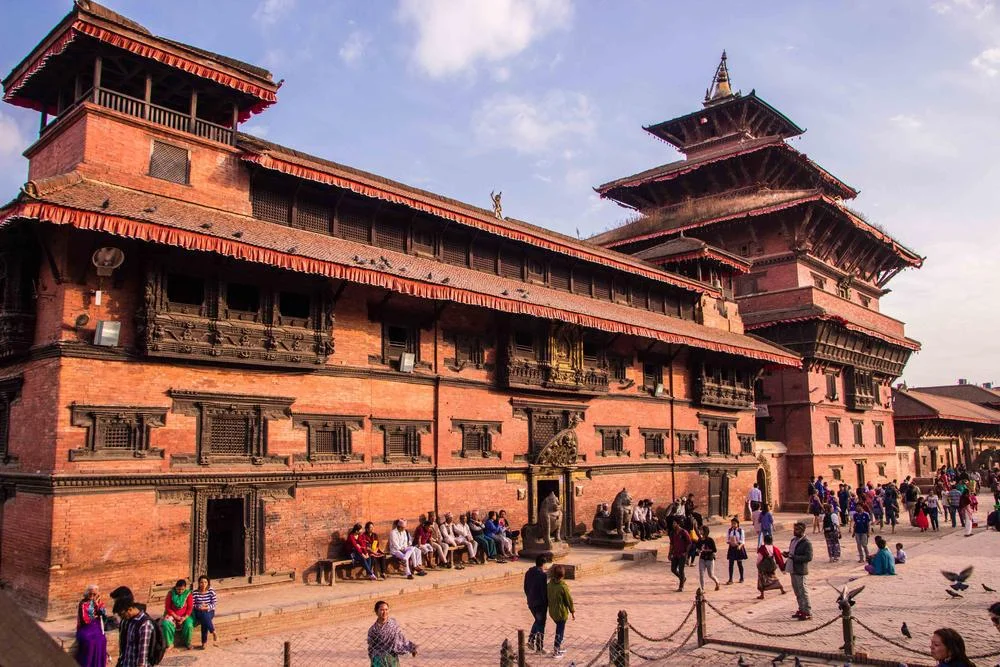
There’s much that you’ll find in Lalitpur (a.k.a. Patan), besides what it is world famous for—its renowned art, craft, and architecture. Here is where you’ll find the Patan Durbar Square, a world heritage monument, the Golden Temple and many other equally impressive shrines, and narrow alleyways and side streets full of workshops making statues in metal, stone, and wood
You could say that the durbar square is the soul of Lalitpur. It perfectly gives meaning to the phrase, ‘living museum’. From early morning to late night, it is a busy center full of thriving activities. If you visit its many temples at the crack of dawn, what you’ll find are throngs of devotees joining the morning prayers, the surroundings shimmering with a thousand butter lamps, and the air heavy with the scent of burning incense. The alleyways and the streets outside may be serenely quiet, with nary a soul in sight, the shutters down in the numerous shops lining the streets, with even the mongrels deep in slumber, but the temples are where the action is, a different world altogether! The Golden Temple (Hiranaya Varna Mahavihar) is where you should go if you want to be a part of this deeply spiritual experience.
As the day progresses, the square becomes busier, it is after all a thoroughfare, too, linking half a dozen or so streets. Early morning joggers and walkers stop for a while to have a glass of hot tea at one of the teashops in the area and exchange pleasantries with friends and acquaintances. There’s one particular teashop near the Narsing building, where the Kathmandu Valley Preservation Trust is located, that is extremely popular with tea aficionados. It’s full of customers throughout the day, and well into the evening, a hangout for the locals, as well.
Early mornings are also when you’ll find the hiti (watering place) next to the palace, and opposite the Bhimsen Temple, full of chattering women, who’ve come there to fill their brass vessels with water from the dhunge dharas (stone spouts). Some will be washing clothes, and it’s all a very homely sight. This hiti is famous, since it is also part of the Patan Durbar Square. For your information, there is a royal bath in one of the palace’s three courtyards that underwent quite a bit of restoration some years back, and that is also very famous. It is surrounded by numerous deity figures, a fact that made the chief restoration architect question its status as a royal bath. “I don’t believe a king would be naked in front of the gods,” was his observation.
Anyway, with the morning light becoming stronger, the square is now a proper city center, with lots of school kids crossing it to go to their schools, or bus stops, old folks taking up their usual vantage points to warm their rickety old bones, and while away the hours sightseeing. The most interesting of which, for them, will be the groups of tourists moving through the square, giving a keen eye to the temples, before entering the palace to explore and discover. The museum inside on the first and second floors of one wing could be a must-visit for some, while others may just like to amble around, clicking away a few up-close shots of the carvings on the windows and doors and struts, as well as the metalwork evident everywhere. It’s all a treat for those with an artistic bent, one can assume.
That’s how the day goes by in the square, but now that evening is falling, let’s see what happens in and around the famous square. If you walk through the side streets at around this time, you could well espy pretty young girls coming out of doors and doorways leading to smaller squares inside around which are situated many houses. They are dressed in all their finery, and looking fresh and vibrant. It’s their time for a stroll around the square, to meet friends and check out the boys, and have a taste of the delicious tongue tingling pani puris (small puffed up fried dough balls filled with a spicy mixture of boiled potatoes, peas, and what not, and a spicier liquid concoction) at the stands around the square that also serve other equally delicious stuff like chaats (mix of many edibles, including samosas, curd, tamarind water, spices, etc.) and so on.
The place is actually a foodies’ delight. There’s an eatery near the above-mentioned popular teashop known as Honacha’s that is famed for its wholesome baras (lentil patties topped with either minced meat, egg, or both) and its thwon (rice beer) that you can order by the jug or by the glass. You get other Newari delicacies, too, and this place, which has deliberately been kept as it has been down the years (that is, humble-looking, with well-worn wooden tables, chairs, and small stools, in case the tables are full). The highlight, besides the baras, are the women making them in the open kitchen. There they sit, cross-legged, these amply endowed ladies, their hands continuously pouring the lentil mixture on the extra-large wok on a big stove, shaping them with ladles into neat round shapes, then breaking an egg over them, or placing minced meat on them, flipping them over and cooking both sides till just done. A couple of men and boys take the orders and serve the food. I took a Chinese friend there once, and she exclaimed that it was the best restaurant she had visited in Kathmandu. She had taken a few glasses of thwon!
One could go on talking about the many attractions of this renowned square, but for this piece, suffice it to say that it lives up to the phrase, ‘living museum’.
Nepal Flag will Fly High Again
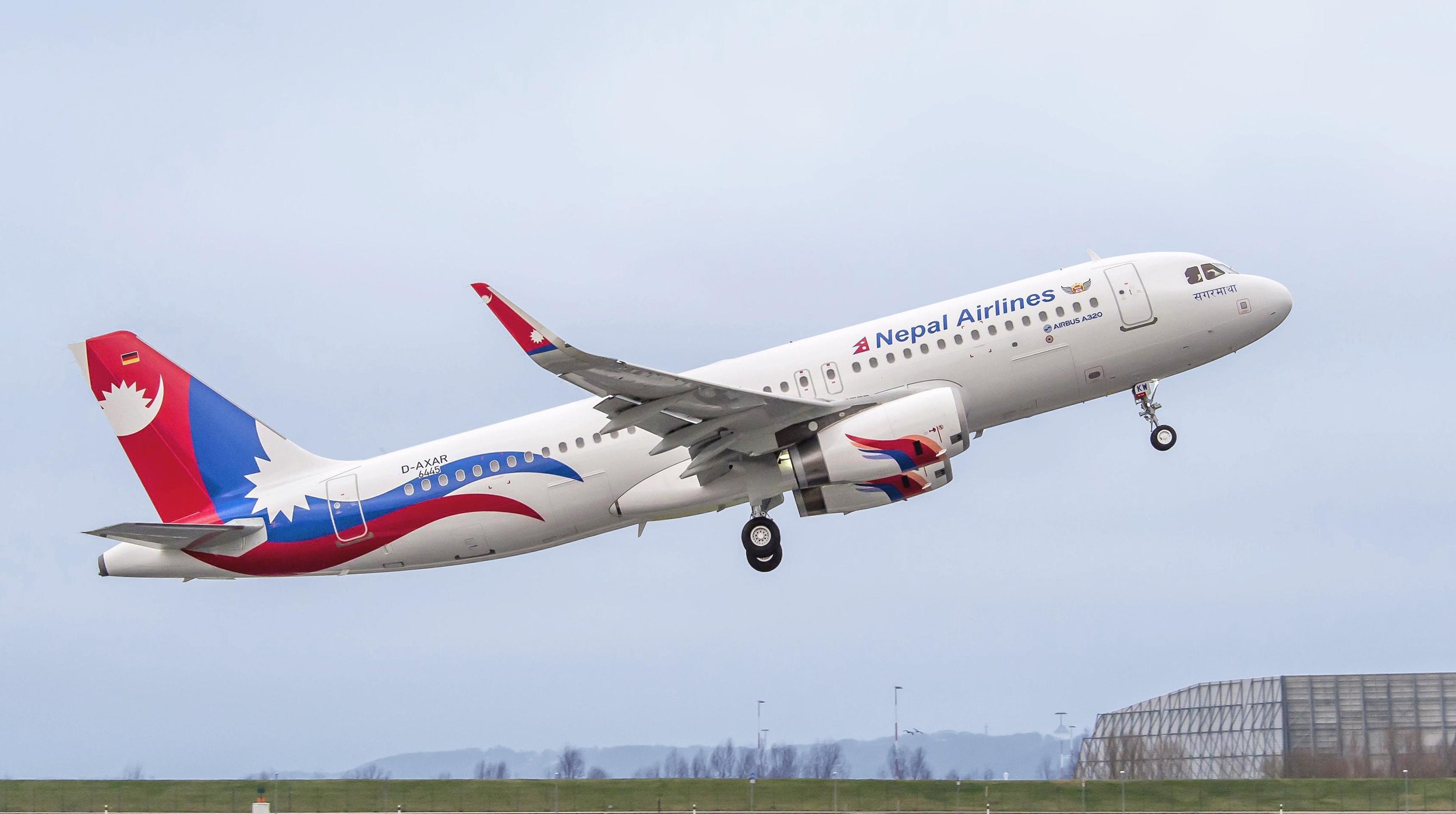
For far too long, Nepal’s flag carrier has been down in the dumps, causing great distress to the tourism sector. Now, there’s hope again.
“Nepal Airlines seals deal to buy two Airbus A330 jets for $209.6m.” This headline in a national daily on April 7, 2017, brought much cheer to those in Nepal’s tourism sector, which has been crying hoarse about Nepal’s tourism suffering terribly due to lack of direct flights from potential countries, a result of the national carrier’s constant depletion in its fleet down the years.
The two new jets are expected to arrive here sometime in the second quarter of 2018, and Nepal Airlines plans to resume its London service, a most profitable destination, aside from launching four new long-haul routes with the two wide body planes with seating capacity of 280 each. The new destinations will be Seoul (South Korea), Tokyo (Japan), Daman (Saudi Arabia), and Sydney Australia). The new additions to its fleet will also enable the airlines to increase flights to other prime destinations like Kuala Lumpur, Hong Kong, and Doha.
No surprises there, since these have a heavy traffic of Nepali migrant workers, which practically guarantees very high occupancy on every flight, what with about 1,500 Nepali youth flying out daily to make whatever fortune they can in these countries. Australia, of course, is where the majority of Nepali students are flocking to for college studies, the attraction obviously all the more because of better chances of getting the coveted PR (permanent residency) after their studies are over.
However, there’s a catch, as well. Nepal is one of the countries on the air safety list of the European Commission, and the London flight can only happen if Nepal airlines get the all clear from them. Europe is a very potential market, no doubt about that. According to a report of 2014, there were 163,058 Europeans one-way travelers between Nepal and Europe. Getting a share of that sure is a hefty prize! At the present time, Turkey, India, and Middle East airports are the major hubs for this traffic.
Direct flights to Japan is a priority that has been missed for years now. Lumbini, the birthplace of Lord Buddha, is a favorite pilgrimage destination for the rich Japanese tourists. Currently, the Kathmandu-Japan route is extremely expensive, as Japanese tourists have to take a longer route to reach here. With the lowering of travel costs, due to direct flights by Nepal Airlines, one can be fairly sure of getting a lot more Japanese tourists than what we are getting right now.
And then there is China, perhaps the country with the highest potential for Nepal’s tourism sector, as well as for most other countries, I guess! Being fully aware of this potential, Nepal has put in the necessary applications for landing permission at Guangzhou Baiyun International Airport, the third busiest airport in China.
Well, if one were to recall Nepal Airlines of the decades gone by (then Royal Nepal Airlines Corporation), the national flag carrier was sure flying high, what with direct flights to Colombo, Dhaka, Karachi, Osaka, Shanghai, Singapore, London, Frankfurt, and Amsterdam, along with Delhi, Mumbai, Kolkata, Bangalore, and Patna in India. Compare that with its present situation, with flights to Hong Kong, Bangkok, Dubai, Doha, and Kuala Lumpur, along with Delhi, Mumbai, and Bangalore in India. Lack of planes.
It’s been quite a bumpy ride for Nepal Airlines, and the going has been a tough one, doubtless. Well, the blame for such a come-down surely cannot be placed on anybody else’s shoulders other than its own. One can only hope that the future will see the airline flying as high and as further as before, and bring in visitors from all over the world to experience the great natural beauty, age-old culture, and great hospitality of this country. And, bring smiles on the lips of the countless number of Nepalis involved in Nepal tourism.