
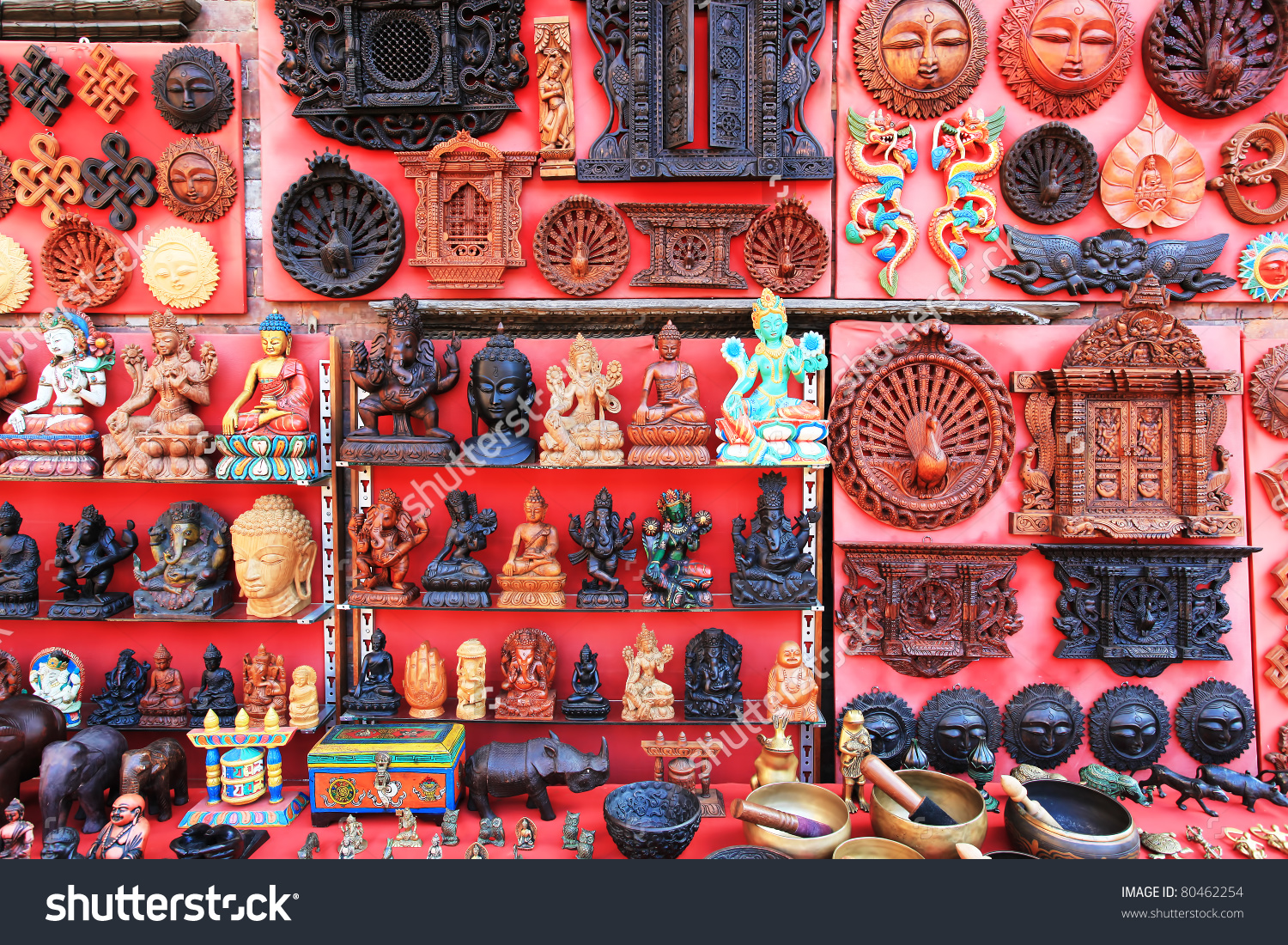
Souvenirs from Nepal
After the jetlag is over, it’s time to meet near and dear ones, and you can’t wait to see their delight when you gift them the fabulous souvenirs that you have brought all the way from Nepal.
The Federation of Handicraft Associations of Nepal (FHAN) held the 14th Handicraft Trade Fair from November 25-29, 2016, along with the 12th Craft Competition. It is an annual event to promote Nepali art and craft. As expected, there was enthusiastic participation from many artists, craftspeople, and institutions and organizations involved in the sector. The variety and diversity of Nepali handicraft on display was a sight for sore eyes, with craftwork ranging from metal, wood, and stone craft to textile, pashmina, and wool products, and many others like felt, lokta, , nettle, and leather items in-between.
No one can deny that Nepal is rich in its wealth of handicrafts. While the majority of fine artwork and craftsmanship come from the Newar craftspeople of the capital, Kathmandu, a significant number of craftwork also come from other ethnic communities around the country. For example, ceramics from Bhaktapur, Mithila paintings from Janakpur, metal items from the eastern hills, especially Bhojpur, which is famous for its khukuris, the famed weapon of the legendary Gurkhas, Dhaka textile from Palpa, woven baskets ofkaas and moonj (two types of grass) from Chitwan, lokta paper from the hilly regions, and so on.
Some big organizations based in the capital, such as Association of Craft Producers of Nepal (ACP), with its famous outlets called Dhukuti; Mahaguthi, Craft with Conscience; and Sana Hastakala, are at the forefront in supporting handicraft producers throughout the country, by providing training and developing both domestic and international markets for their creations. By doing so, these establishments claim rightly to be active in uplifting deprived and marginalized communities, and much of their focus is on encouraging women’s economic development. Additionally, they contribute a part of their earnings to social welfare work. All three have their primary showrooms in Kupondole of Lalitpur, and as expected, Christmas, the season for giving gifts, is their most busy time, when you can expect to find a great variety of new creations.
Of course, there are numerous other handicraft outlets all over Kathmandu, this being no surprise, as fitting souvenirs for the folks back home, and for that spot on the mantelpiece, or in the glass fronted cabinet, is what is on top of every tourist’s mind when the time to leave Nepal nears. And, because Nepali handicrafts are not only about variety, but also about the extremely high quality of craftsmanship combined with exoticism, souvenirs from Nepal are prized by all. The tourist hub, Thamel, probably has the most density of handicraft shops, some of which call themselves curio shops because of the intriguing nature of many of their products. For instance, paraphernalia worn and used by shamans, traditional milk pails used in the hills, numerous ethnic musical instruments, etc.
However, other areas like Durbar Marg, Lazimpat, Ason Bazaar, and so on also have quite a few fine souvenir shops. But, it must be said that the center of handicrafts is still the ‘City of the Arts’ that is, Patan, or Lalitpur, where Pulchowk, with its many leading handicraft outlets, is situated. The alleys of Patan are must-visit places for anyone looking for some genuinely artistic souvenirs. In fact, a bit of research beforehand will save you considerable time, and increase your chances to find something that will really satisfy your desire. This is because the city has specific sites specializing in certain types of handicraft work, and this is a natural result of most handicraft work being family affairs, with skills handed down through the generations. Some localities are such that all its inhabitants are likely to be involved in some craftwork or the other! The Patan Industrial Estate in Lagankhel is also where you’ll find plenty of good souvenirs, since most of the establishments there are handicraft producers.
So, knowing all this, have a rewarding souvenir hunt, and don’t be miserly, either in your efforts or in your large heartedness, because you can rest assured that Nepal’s exquisite handicrafts are such as to bring great joy to anyone.
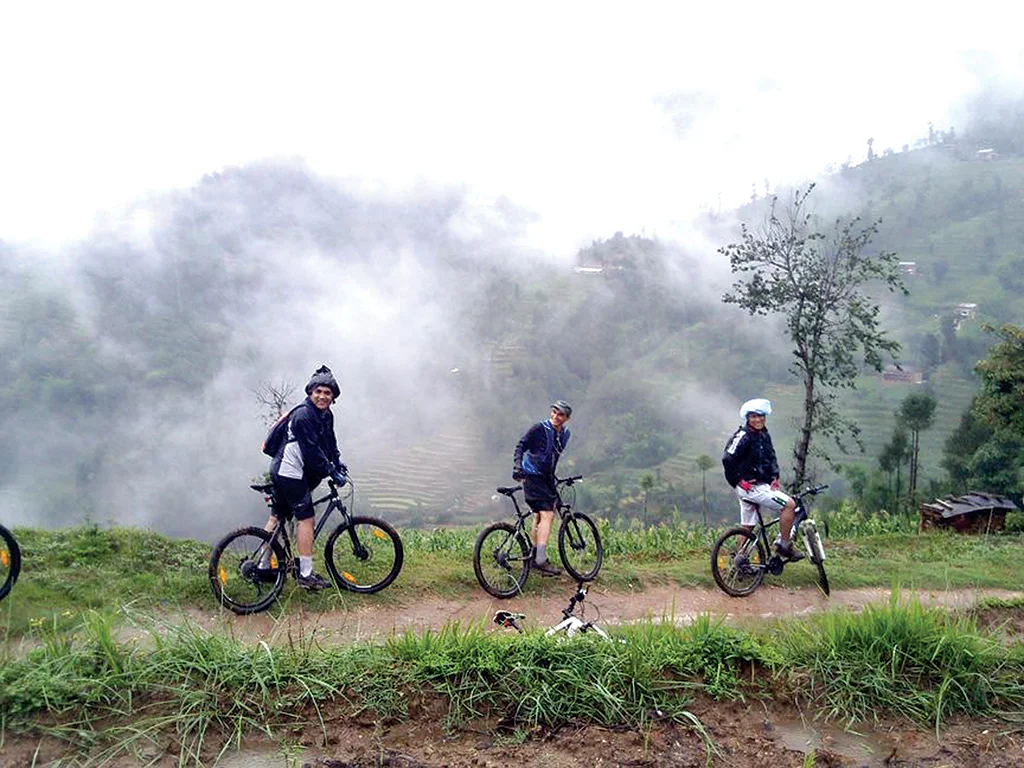
Pedaling around Kathmandu Valley 2017
In today’s world, going green is the in thing to do, and using the humble cycle to tour around the valley makes you a ‘green’ person.
Kathmandu Valley has the kind of terrain that makes cycling around the outskirts a healthy pastime. Not many insurmountable climbs, not too many steep downhills either, but there’s a lot of ups and downs, which means heart-healthy exercise that builds a hearty appetite, and brings the color back to those cheeks made pallid by long sedentary hours in cubicles with a laptop in front. Yeah, that’s the general lifestyle of today’s city folks. But, now that you are in Kathmandu, make the most of your time building stamina and strength while seeing and experiencing a lot more than the usual tourist does.
Pedal your way around the valley on a sturdy cycle that you can easily hire for a couple of days from quite a few rentals around the city. Won’t cost you much, and by all accounts, those two-wheelers are pretty well maintained. Now, if you are convinced about what I am saying, then let’s see where you can pedal to around the valley. Here are some suggestions.
If you are the sort who wants to go full blast, and are fit enough, then the Kathmandu Valley round trip shout fit the bill perfectly. The route begins from Kakani, goes through Chisapani, then enters Nagarkot, and carries on to Dhulikhel, from where you cycle on to Namo Buddha, and finally reach Lakhure Bhanjyang. Wow! That’s quite a ride, but like said before, it’s perfect for those adventurous folks with confidence oozing out of their ears, and a body that’s in pretty good shape.
It’s a challenging ride, too, with some good climbs, and covering quite some distance. But, just imagine, you’ll be visiting places good enough to be on picture postcards. This trip should take around three to four days, with stops in, maybe, the lovely resorts of Nagarkot and Dhulikhel, if you time it right. Both have gorgeous sunrises and sunsets, and panoramic views of the majestic Himalayan peaks. Of course, you could also opt to camp wherever your heart desires, in which case you will have to have a tent and sleeping bag with you. But, it’s bound to be a great experience.
For those with less time on their hands, but still in good physical shape, overnight trips would be ideal. One route starts from Patan Durbar Square, goes through Dhobighat, then Chobar, Taudaha, Chalnakhel village, and Shree Narayan Pharping, before coming to an end in Dakshinkali Temple. This route is not that difficult, and it will take your through some lovely countryside around the valley.
Another route starts from Koteshwor in Kathmandu, carries on along the Arniko Highway to the road going towards Changunarayan Temple, then to Chailing and Telkot, and ending in Nagarkot. This ride is harder because of longer distance, with a good deal of uphill rides, especially to Nagarkot.
Similarly, another ‘hard’ route is the one ending in Kakani, a very scenic place, with beautiful views all around. You begin your ride from Kathmandu Durbar Square, pedal your way to Sorahakhutte, Balaju Chjowk, then Dharmasthali, and along the Trishuli Highway to first Kaulethan, then Kakani.
The ride to Shivpuri is also considered to be quite challenging. It starts from Kathmandu Durbar Square, goes through Thamel, then Samakhusi, on to Baniyatar, Tokha, the Nepal Army camp of Shivpuri, and finally to Shivpuri hill, from where you get a gorgeous eyeful of the valley below and mountains above. This route goes through a forest, so that makes it all the more exciting.
Another route that’s as exciting is the one ending in Lakhure Bhanjyang. It begins in Patan Durbar Square, goes through Gwarko, Lubhu, and Lamatar Phedi, before reaching Thakuri Gaon Road, and on to Lakhure Bhanjyang, where there’s a view tower from where you get spectacular scenery all around, including the Himalayas.
Now, we come to those with less time, and perhaps in less than tip-top physical shape. Let me hasten to say that there are quite a few options for them too, and good ones at that. Rides will be around two hours on average, but they will be hours well spent, that’s for sure! Just remember to start early so as to avoid traffic pollution.
You can take the route starting from Kathmandu Durbar Square, on to Nayabazar, then Balaju and Mudkhu, and end at Tokha. Or, starting again from Kathmadu Durbar Square, ride to Lazimpat, Golfutar, Chapali, then Budanilkantha and Nangki Gumba, and finally, a place known as Helipad. You’ll be riding through the Shivpuri National Park, so plenty of greenery around. This ride is very popular with local cyclist enthusiasts.
Another two-hour ride is the one starting from Kathmandu Durbar Square, going through Sitapaila and Ramkot, before reaching Bhim Dhunga. The scenery is awesome on this ride. Similar is the case with the route starting from Patan Durbar Square and ending at Chobar, passing through Ekantakuna, Nakhu, and Jal Binayak on the way.
One route takes you to a place called Khokana that’s famous for its mustard oil which is made using ancient traditional ways. It starts from Patan Durbar Square, goes to Ekanatakuna, Nakhu, and Bhainespati, before ending at Khokana. Similarly, the ride to the ancient Newar town of Kirtipur starts at Patan Durbar Square, goes over the Dhobighat suspension bridge, before reaching first, Chobar gate, and then, Kirtipur.
It goes without saying that all the above-mentioned rides allow you to explore the valley in a very leisurely fashion, interacting with locals on the way, and stopping wherever you fancy. All of which goes towards a better understanding of the local communities and their culture and lifestyle.
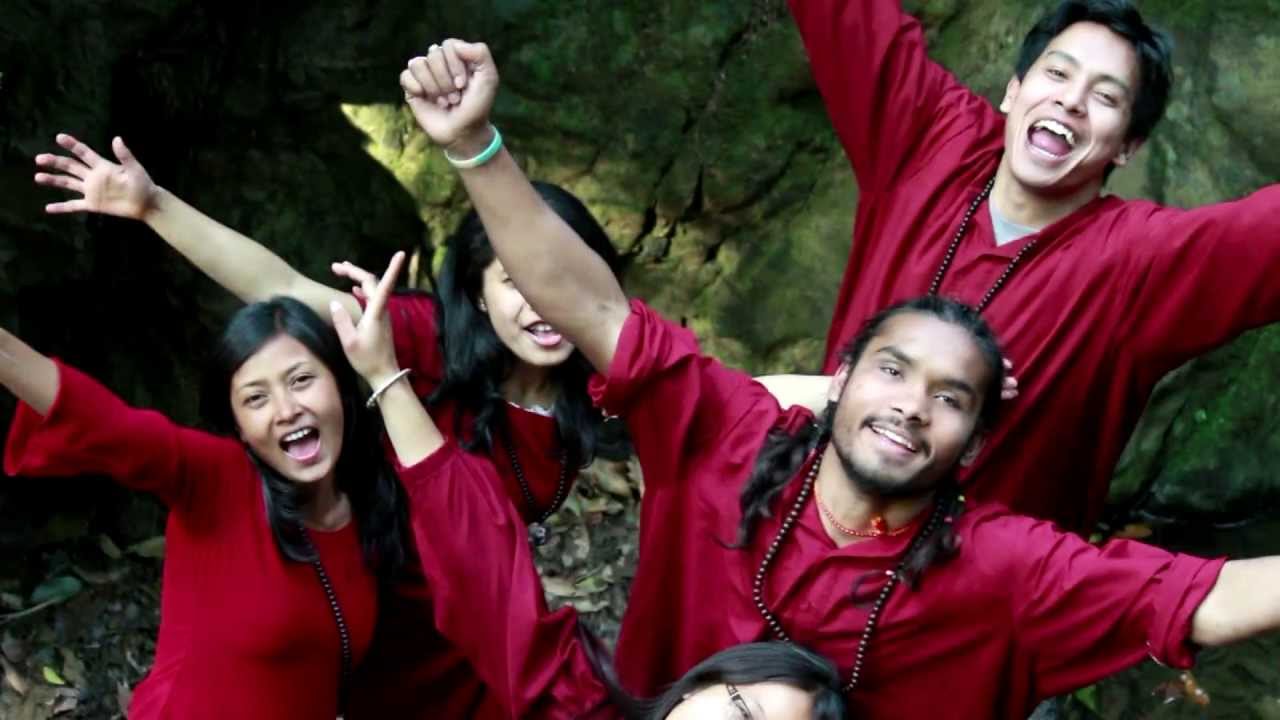
Spiritual Journey to Nepal
In the hectic world we live in today, people all around the world are seeking solace in spirituality, and Nepal is the ideal destination for pursuit of the same.
A short distance from Balaju Bypass in Kathmandu is Nagarjun Forest, where there’s an international commune and forest retreat center called Osho Tapoban. It is run under the saintly auspices of Acharya Bodhisatva Swami Anand Arun, a leading disciple of the late Osho Rajneesh, spiritual leader of millions around the world. Acharya Arun is only one of twenty-one Acharyas appointed by Osho himself. A dedicated disciple who is determined to carry on the legacy of the ‘Bhagwan’, whose discourses and books never fail to inspire and awe due to the vast depth of wisdom and insight contained therein.
‘Swami’ implies that one has mastery over the self, ‘Bodhistava’ means that one is now free from the rigors of rebirth, and an ‘Acharya’ is one who is authorized to initiate new disciples, besides being able to give discourses and conduct meditation camps. In addition to other retreats, Acharya Bodhisatva Swami Anand Arun has initiated thousands of neo-sanyasins at Osho Tapoban, where he gives regular discourses and periodic meditation sessions. Osho Tapoban, spread on about one hundred ropanies of forest land, is a fitting place to seek spirituality and wisdom, replete as it is with dense foliage, age-old trees, and a waterfall and a spring. Spartan but comfortable accommodations for one hundred guests at a time, clean and hygienic vegetarian food, et al. ensure comfort and convenience for guests and visitors. The Acharya himself lives in a cottage named ‘Siddhartha’ on the premises, one of many similar cottages.
A variety of meditations, samadhi darshan, Osho audio/visual discourses, and evening satsangs are regular activities in the retreat. Saturdays are when hundreds of sanyasins gather to conduct what the Acharya calls ‘Celebrations’. On an average, one will find about 500 to 700 sanyasins on this day at Tapoban, among whom will probably be many accomplished individuals from different professions. Other special celebrations are held on some auspicious days of the year, such as December 11 (Osho’s birthday), January 19 (Mahaparinirvan Diwas), March 21 (Enlightenment and Tapoban Foundation Day), and full moon of July (Guru Purnima).
Tapoban is a non-alcoholic, smoke-free, vegetarian zone, and actually there’s no need for artificial stimulants in this place, where more than enough of a high is possible through meditation. Osho Tapoban is but one of quite a few such centers where spiritual pursuit is the norm. The numerous monasteries in Kathmandu Valley, and around the country, are without doubt, centers where a spiritual awakening is very much possible. Then, there are the many centers that provide knowledge and practice of different types of yoga, where the effort is to unite the body, mind, and spirit into one pulsating entity.
Indeed, Nepal can rightfully claim to be an excellent destination for seekers of spirituality and wisdom. And, seeing as to how a significant percentage of tourists can be considered to be ‘spiritual tourists’, and how the promise of spiritual awakening can make them stay for a longer period than the usual tourist’s itinerary, it’s just as rewarding for the country’s struggling tourism sector.
.
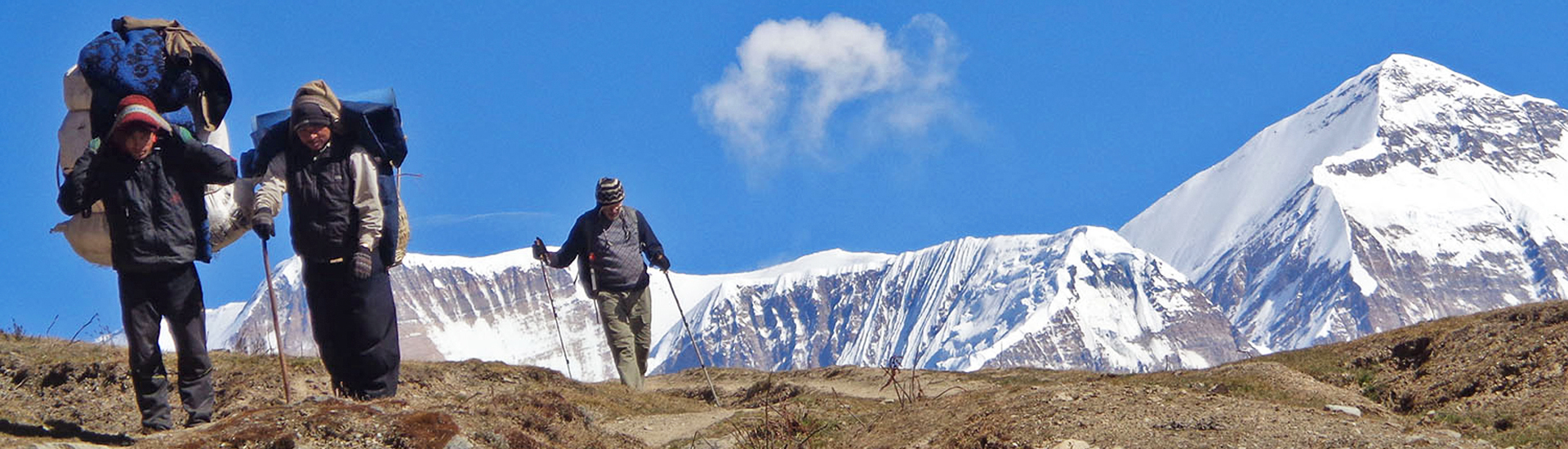
The Guerilla Trek
One of the least developed regions in Nepal, you will discover unexpected sights and lifestyles here; a veritable adventure of exploration awaits you.
The only constant, it is said, is change. In the last few years, Nepal, too, has undergone great change. A 250-year-old monarchy is no more. An army of Maoist insurgents who were at war for ten long years has made peace and won elections, and their leader has become the prime minister twice, including in the present time. One cannot predict the future, more drastic changes may occur, but it is unlikely that the Maoists will ever again go back to the jungle.
This fact makes the ‘Guerilla Trek’ all the more an adventure. You’ll be walking on trails used by the Maoist guerillas not long back when they were conducting an insurgent struggle against the government. This trek will also give an idea of why the communist ideology still works here, even if it the dawn of democracy had occurred a long time back. When on the ‘Guerilla Trek’, you’ll be walking through many villages and towns of far-western Nepal, an area that has been neglected for far too long in the development aspects. An area where infrastructure is woefully inadequate, and people are very poor for the most part. An area where the lure of communism still holds strong.
You will come across many indigenous tribes that have been downtrodden and poor for ages. The trail goes through the remote districts of Myagdi, Rukum, and Rolpa, centers of the Maoist ten-year insurgency (1996-2006), where their sway was firm during that decade. This history of not so long ago makes this region interesting, and a source of knowledge for the curious. It is not that the far-west is devoid of natural resources. It has plenty of lakes, rivers, waterfalls, forests, caves, etc. But, as said before, due to negligence, the region is steeped in poverty and backwardness.
The starting point of the ‘Guerilla Trek’ begins in a small town called Beni, and travels along the boundary of another mountain town, Baglung. It then passes the Dhorpatan Hunting Reserve, one of the country’s three hunting reserves, which was in the news recently for having a dismal hunting season this past year, with barely half a dozen game being killed, thus incurring significant loss of royalty for the reserve.
The trek then takes you to Rukum and Rolpa, the strongholds of the Maoists during the insurgency, with the latter being their headquarters. While trekking on these trails, spend some time at teashops, and try to engage the locals in conversation. You might hear some pretty interesting stories; now that the Maoists have come into the national fold, people will not be afraid to relate what they have seen and experienced in the recent past. Be aware that if you were here during those days, you would have been viewed with strong suspicion, and people would certainly have avoided all loose talk. Tight-lipped was the name of the game then, let me assure you!
Here’s what a two-week-long ‘Guerilla Trek’ entails, as planned for by trekking agencies:
On day one, you’ll travel by bus from the capital to Beni, a ride of about nine hours. Day two will see you trekking some six hours to the village of Takam (1,665 m). Day three takes you to Lamsung (2,250 m), about six hours again. The next day, you walk through scenic landscape for seven hours or so to reach Gurjaghat (3,020 m). Remember that, in some places, you’ll be staying at homestays, while in some places, you may have to pitch up your tent. The homestays are an excellent opportunity to get up close with the local lifestyle.
On the fifth day, you walk for about five hours, before arriving at the famous Dhorpatan Hunting Reserve (2,860 m). Keep an eye out for the mountain goats and the bharials (blue sheep), as well as a variety of deer. If you are a birdwatcher, you’ll not be disappointed, either. Plenty of exotic birds around. The following morning, rise and shine, before starting the five-hour trek to Nisi Dhor, and then the next day, the seven-hour trek to Tallo Sera. All the while, you’ll be encountering the fascinating ecology all around you, and meeting different indigenous communities. The Himalayas, too, will not be far from you, with peaks like Gurjal Himal and the Dahualagiri range always in the backdrop.
The trails you are walking on were used extensively by the Maoist guerillas during their ten-year war, and this knowledge is sure to add some more excitement to your adventure. The eighth day sees you walking for about six hours from Tall Sera to Rujhikhola, and the ninth day you’ll again walk for a similar amount of time to reach Thabang. Now, you are really into deep Maoist territory. Just imagine, if you had been here during the insurgency, you would be coming across numerous heavily armed military personnel at checkpoints, and they would probably have stopped you from going any further. Too dangerous. Anyway, this is just imagination, in the first place, no one would have been foolhardy enough to go on such a trek.
Day ten, and now you will be walking for another five hours to one of the best known names of the insurgency, that is, Jaljale. In fact, rumor had it that ‘Jaljale’ was a secret password used by the Maoists during those years. Just mentioning that name in public anywhere in the country would have got you into trouble with the authorities. The next day’s trek is to the village of Jelbang, while day twelve takes you to Suliochaur, from where you take a thirteen-hour bus ride back to Kathmandu. Well, congratulate yourself on having been the few lucky ones to have experienced the famous ‘Guerilla Trek’!
Nepal in the Limelight
Nepal was on the world map in 2015, but for all the wrong reasons. Today, again, it is very much in the limelight, and this time it’s for very good reasons.
Nepal is definitely in the limelight today. Just this morning (Dec 2, 2016), BBC aired a trailer on an upcoming three-part series on the Living Goddesses of Kathmandu to be shown on its Our World program. It promises to be an intriguing series, particularly to foreigners, embellished as it is with eye-pleasing details displaying the vibrant culture of Nepal, a culture going back centuries.
The tradition of the Living Goddess Kumari is unique to this Himalayan nation, and one that is sure to enchant a worldwide audience. Additionally, the series will be following the Kumaris as they grow out of puberty, thereby relinquishing their divine position, and getting back to ordinary everyday lives. All in all, it should be interesting to Nepalis, too, in addition to those from other lands.
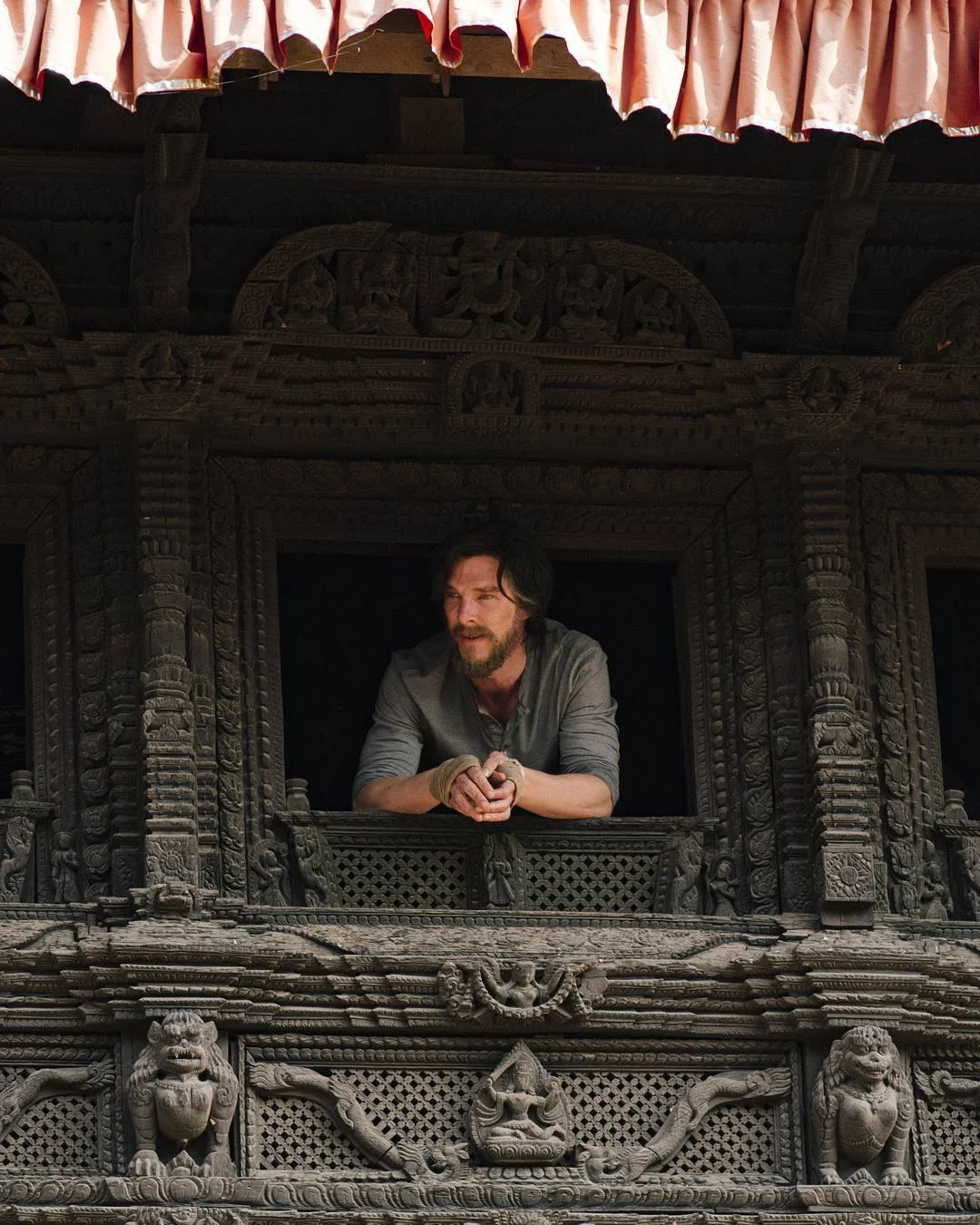
Surprisingly, this morning itself, CNN’s popular late-night show, Jimmy Kimmel Live, had Benedict Cumberbatch as its guest. This program was recorded before the release of his latest movie, Dr. Strange, some parts of which were shot in Nepal. To Jimmy’s query about Nepal, the actor replied that he found it to be a beautiful country, and revealed that his visit during the shooting was the second time he had gone to Nepal.
Talking about his first visit, he said that he and three friends had gone trekking in the Himalayas without a guide. Came a point when two of his friends had to scamper back downhill because of altitude sickness, and soon after that, it was his turn to be similarly afflicted. However, on the way back, he and his one remaining friend lost their way, and spent a day-and-a-half wandering around the mountains, cold, weary, and hungry. Fortunately, they came across a Nepali shepherd in a pasture, who fed them a meal of greens and hard boiled eggs and showed them the right way back.
Now that the film has been released, becoming a big hit as well, all those who have seen it have rave reviews about how beautifully it has portrayed Nepal, especially the world heritage site monuments, Pashupatinath Temple and Patan Durbar Square. Apparently, the shooting had been completed before the devastating earthquake in April 2016, and so the portrayal of these sites was all the more splendid.
In addition to the above, Nepal is also in the limelight today due to it being featured among the top five tourist destinations for 2017 by Lonely Planet, the definitive authority on all matters to do with tourism around the world. Here’s how they introduce Nepal as one of the top 5 destination for 2017: “Even natural disasters can’t keep Nepal down for long. The 2015 earthquakes caused devastation, but what is most striking from a traveller’s perspective is not how much was lost but how much remains. Landmark temples crumbled, but others came through with just the odd tile out of place, and whole swathes of the country escaped serious damage, including most of the popular trekking trails. Nepal has all the skills required to repair monuments and infrastructure, but what it does need is income. By visiting Nepal now and supporting local culture and people, you could help a nation rebuild and bounce back even stronger.” So nice of Lonely Planet. Nepal indeed has a lot of well-wishers globally.
The Rich Culture of Panauti
Panauti has an ancient history, and a culture that is rich and thriving. It’s close to Kathmandu, and a visit is sure to enrich you.
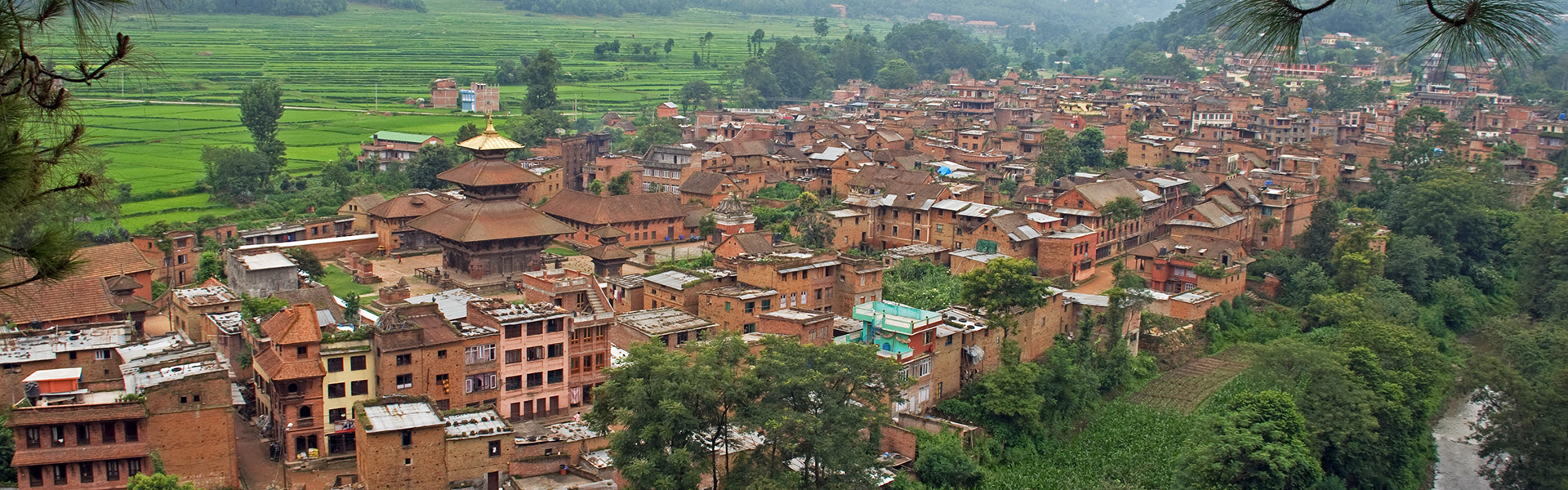
Panauti is one of three municipalities of Kavrepalanchok district in the central region of Nepal, the other two being Banepa and Dhulikhel. Situated about 32 km south-east of Kathmandu, at the junction of the confluence of the Roshi and Punyamati Rivers, and believed to be located on a single rock, this historical Newar town is one of the oldest settlements in Kathmandu Valley. You will find plenty of pagoda-type and other religious shrines all over the town, with most of the monuments, temples, and sattals (community shelters) being made of terracotta.
The temples, with their gilded roofs, carved wooden pillars, elaborate carvings, and wide courtyards impart an Eastern mysticism. The remains of the old durbar square can still be seen in the center of the town. Once described as a town having more temples than houses, and more deities than inhabitants, this medieval town can proudly claim to be the fourth most important site in Nepal, after the three ancient cities of Kathmandu, Patan, and Bhaktapur.
The merging of six neighboring villages—Panauti, Malpi, Taukhal, Subbagaun, Sunthan, and Khopasi—in 1997 resulted in the Panauti municipality of today, which occupies an area of 33,78 sq km, and has a population of around 30,000 speaking three different dialects. The Newars, of course, dominate, and the town is thus rich in Newar culture, including numerous festivals, many of which are similar to those celebrated in Kathmandu, while a few are unique to the town itself.
Panauti also offers a spectacular panorama of the Himalayas when viewed from Gorakhnath Hill, a 15-minute walk uphill to the northeast of the town. From here, one also gets an wonderful overall view of the small fish-shaped town, which from east to west is less than one kilometer in length, and about half that from nortrh to south at the widest part. The town is surrounded by the two rivers, Roshi and Punyamati, running from west to east, and converging at the eastern end of the town, where the famous Triveni Ghat is situated.
According to legend, Panauti was founded in A.D. 1082. A scripture with golden script dated A.D. 1385, located within the Indreshwor Temple, states that King Hari Singh Dev (of the erstwhile Mithila kingdom) founded the town after fleeing from Simrangadh in the terai. During the Malla period, Panauti was a protectorate of King Ananta Malla (A.D. 1274-1307). Later, King Bhupitendra Malla, the king of Bhaktapur, is said to have given Panauti as adowry to his sister. In A.D. 1763, Panauti was annexed to greater Nepal by King Prithvi Narayan Shah..
Panauti has several unique features to its credit, such as the traditional Newari confection called ‘yo:mari’ made for a mixture of treacle and sesame seeds wrapped in stupa-shaped rice dough, which is said to have originated here. As mentioned before, the town is believed to be situated on a single massive rock, because of which the town has never been affected severely by earthquakes. Panauti is also the birthplace of King Ansuverma, an illustrious king of the Licchhavi period, and one of the greatest patrons of art and culture in the country’s history. Its ancient history and the presence of numerous Buddhist and Hindu shrines, testifying to the richness of its culture, makes Panauti one of the valley’s most important medieval sites.
While most festivals celebrated here are the same as in Kathmandu, there are some that are celebrated with special gusto in Panauti. Jya Punhi, which is celebrated in May-June, and known also as Panauti Jatra, is a chariot festival held at the end of the monsoon season every year, when statues of different deities from the temples are taken around the city in wooden chariots, beginning and ending in the old durbar square.
The month-long Makar Mela is held once every 12 years at the sacred confluence of three rivers, two actual (Roshi and Punyamati), and one imaginary (Lilawati, which is said to be visible only to a lucky few). This festival attracts tens of thousands of pilgrims, who come to take a holy bath that will cleanse them of past sins.
Yomari Punhi is celebrated in November-December on the full moon day after the rice harvest, with the worshipping of Annapurna, the goddess of grains. According to legend, once upon a time a married couple, Suchandra and Krita, first experimented with a fresh yield of rice from their field to make a new delicacy. They called it yo:mari (tasty bread). On this day, kids go house to house to ask for yo:mari from housewives.
Navdurga Festival, celebrated in mid-April every year, involves mask dances performed by dancers from Bhaktapur over a period of three days. The Namobuddha Festival in September is held in Namobuddha, the sacred site where a prince once offered the flesh of his own body to a starving tigress and her cubs, the ultimate example of compassion and sacrifice.
The two-day festival of Achhyaya Tritiya is held in May at the Triveni Ghat, when Newar girls between the ages of 7 to 13 undergo a coming-of-age ritual called Bel Bibah, during which they are symbolically married to the wood apple (bel). This signifies that they will never have to face the social rigors of being a widow in their lifetime even if their real husband dies before them, because they are still married to the ‘bel’, which actually represents some god.
Sitinakha, held in June-July, is a festival in which members of Newar families gather once a year in the home of their birth to worship the family deity. Ghantakarna, or Gathe Mangal, held in July-August, heralds many important Newar festivals in the days ahead. People put iron rings on their fingers, and hammer iron nails into door lintels to drive away evil spirits, such as Gathe Mangal, one of the most evil.
Gai Jatra, in August, is an eight-day-long festival in remembrance of dead relatives. Those who have had a death in the family within the past year bring a cow (real or an impersonation in a costume), and go around the city in a colorful parade. In October-November, on the day of Indra Jatra, Panauti inhabitants rejoice in the Devi Nach, a masked dance that is said to have originated in Panauti. Masked dancers representing different gods, goddesses, demons, and animals perform vigorous dances throughout the day. Other festivals like Dashain, Tihar, Holi, Shivaratri, etc. are also observed with great enthusiasm.
Palpa Bhagwati Sindur Jatra, a Victory Fest
A festival that celebrates the victory of Nepali forces over the Indian British Army during the Anglo-Nepal War of 1814-1816.
While Nepalis are known for their peaceful and friendly nature, they have also demonstrated fierce valor at times when the nation’s sovereignty has been threatened. That is why, after the conclusion of the Anglo-Nepal War of 1814-1816, the British were so deeply impressed by the uncommon valor of their adversaries that they made an agreement whereby Nepali soldiers could henceforth be recruited into their own army.
Their bravery was conspicuous in many battles on many fronts. One such front was the Palpa-Butwal region where the Nepali forces under Colonel Ujir Singh Thapa soundly defeated the British forces under Colonel Joe Sullivan Wood. It was a battle in which the awed British could see for themselves the immense courage and skillful strategic ability of the Nepali force.
The Palpa-Butwal front was one of the four fronts in which the Indian British Army engaged the Nepal Army, the other fronts being: Bijaypur in the eastern region, Makwanpur in the central region, and the region beyond Mahakali in the far-west. While the foreign aggressors managed to gain the upper hand in most of the fronts, due primarily to their superior weapons and greater manpower, Palpa-Butwal became a battleground in which the Nepali forces prevailed.
The commander of this region, Colonel Ujir Singh Thapa, was well prepared; having arranged for adequate weapons, and the construction of fortified garrisons, and bridges and culverts. He was also as devout a man as are most Nepalis, and before going to battle, he made it a point to visit the many temples in the region to seek blessings of various gods and goddesses. One of the most sacred temples was the temple of the 16-handed Mahsasur Mardini Bhagwati, located in the center of Tansen, the district headquarter of Palpa.
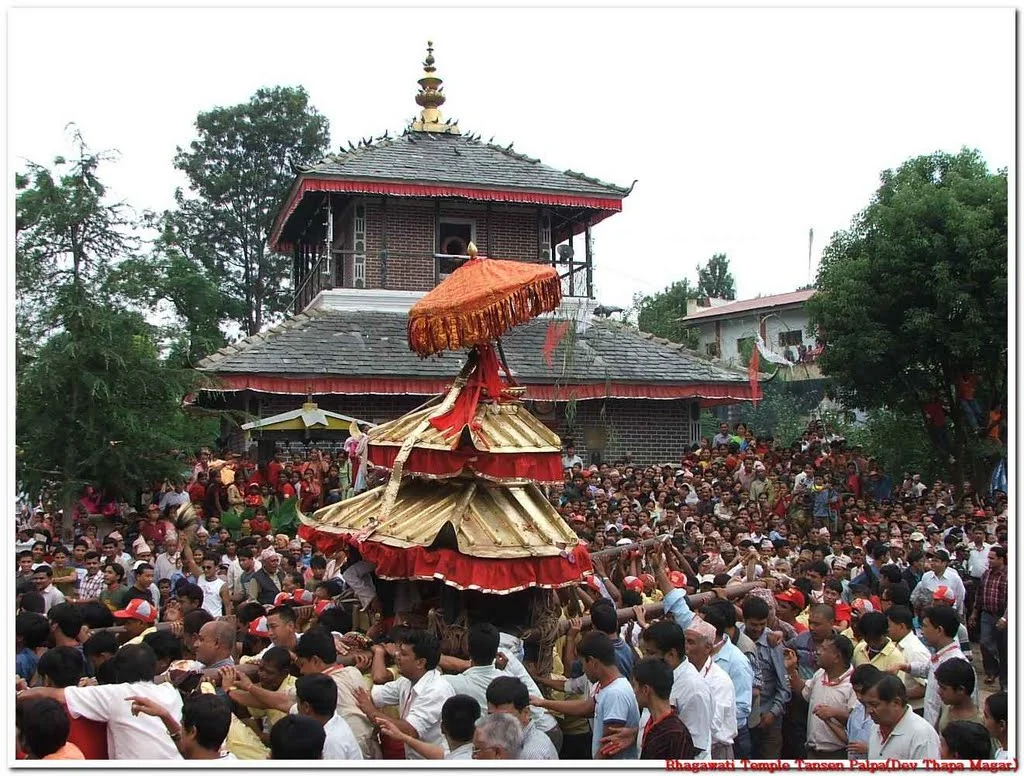
Touching the goddess’s feet, the colonel made a vow that if they became victorious, he would build a grand temple, and conduct a Sindur Jatra (a victory parade) around the district in the deity’s honor. Then, he led his forces into battle, and in Jitgadhi of Butwal, forced the aggressors to retreat numerous times. Victory was theirs, and keeping his sacred vow, he ordered the building of a magnificent three-storied temple that took four years to be completed (1815-1819). The temple’s gajur (pinnacle) was made of gold, the colonel having donated gold equaling his height, and the canopy over the goddess was of silver. The 16 hands of the goddess were made of asta-dhatu (an amalgamation of eight metals).
Having done all this, he then began the Sindur Jatra in 1820, on the holy day of Bhadra Krishna Nawami, in honor of the goddess Mahisasur Mardini Bhagwati, who is also known as Palpa Bhagwati. While there are numerous jatras (parades, or more correctly, festivals) all over the country at various times of the year, the Palpa Bhagwati Sindur Jatra holds special significance, because it is a festival to commemorate a crucial time in the country’s history, a festival to celebrate a famous victory. The Sindur Jatra is held every year in Tansen with great enthusiasm, and is a reminder to all of the heroism of the soldiers of Nepal. It is now 200 hundred years since the end of the Anglo-Nepal War, and a good time to recall sacrifices of the past to safeguard the nation’s sovereignty.
Exploring the Manaslu Conservation Area
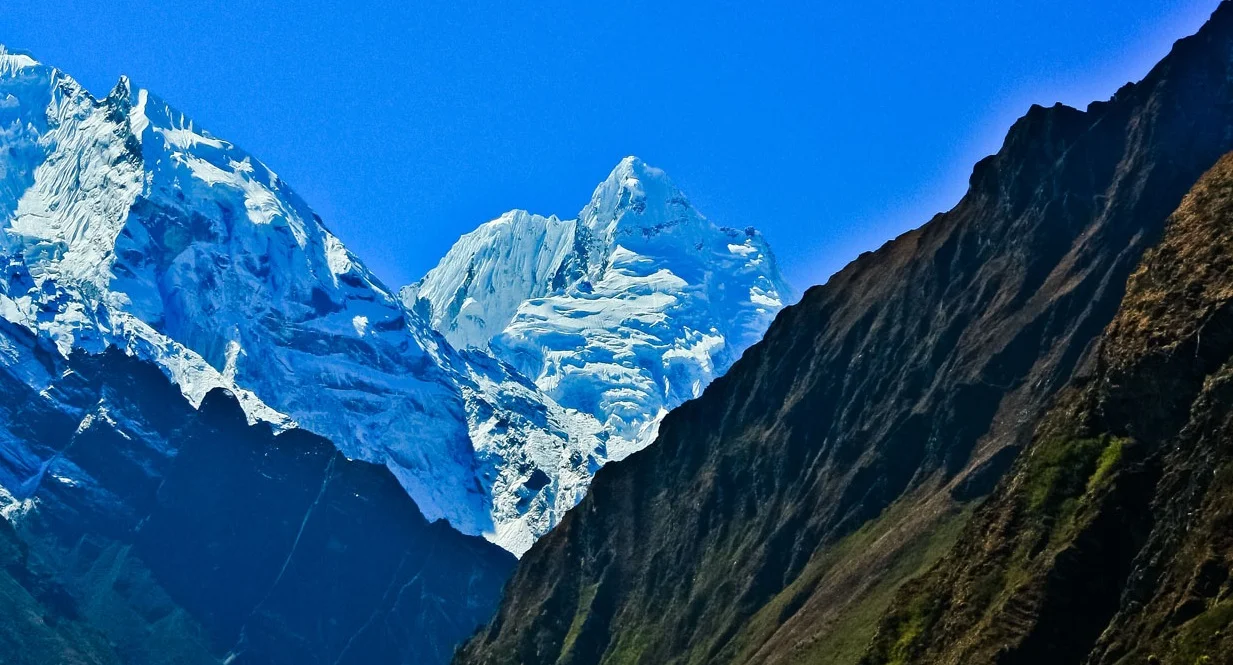
Manaslu (Mountain of the Spirit), the eighth highest mountain in the world, rules over the fascinating region known as Manaslu Conservation Area. It’s a place for discovery.
Manaslu, a mountainous region to the north of Gorkha district, was declared as the Manaslu Conservation Area (MCA) in 1998. It encompasses an area of about 1,663 sq km, and has seven villages. The ecology of the region is diverse and interesting, while its culture is rich.
The area has around 2,000 plant species, including some pretty exotic ones, and 11 types of forest.
As far as wildlife is concerned, there are some 33 kinds of mammals, 3 types of reptiles, 110 bird species (including some high altitude ones), and 11 butterfly species. Since hunting is prohibited, the conservation area is a safe haven for some rare animals like Himalayan tahr, snow leopard, grey wolf, and musk deer.
With high altitude glacier lakes and majestic Himalayan peaks, the scenery, ranging from terraced green fields to lush forests to rugged high altitude landscapes, is spectacular and quite breathtaking. The region has a rich Buddhist heritage, as indicated by the presence many stupas, chaityas, and mani walls, and some important gompas (monasteries) like Mu and Rachen Gompas in Chhekampar and Shringi Gompa in Bihi.
Trekking is a pleasure here, with the three-week-long Manaslu Circuit, from Arughat to Besisahar, being very popular. The trail goes along an ancient salt-trading route besides the Budhi Gandaki River, and on the way you’ll have the opportunity of viewing ten 6,500-meter peaks, as well as quite a few over 7,000 meters.
The view from the Tiru Danda ridge is really fantastic, with Manaslu (eighth highest peak at 8,156 m), Annapurna (tenth highest at 8,091 m), Himalchuli (7,893 m), and Ganesh Himal (7,406 m) standing tall on the horizon. The highest point of the Manaslu Circuit is Larkya La (5,106 m). Manaslu (‘Mountain of the Spirit’) was first climbed by a Japanese (Toshio Imanishi and Gyalzen Norbu) on May 9, 1956.
Provided you don’t veer off from the main trail, you will be mostly staying in comfortable hotels, homestays, and lodges on the way. Besides convenience, one of the main attractions of the Manaslu Circuit is the relatively fewer number of trekkers you’ll come across. On around the eight day, you’ll reach Samagaon, where you might have a rest day for acclimatization, and you can use the time to visit Manslu base camp.
Around the ninth day of your trek, you’ll be able to have a look at the Tibetan plateau from the border point near Samdo. On the way, a side trip takes you to Tsum Valley, a peaceful region where killing of animals is prohibited. It is a place of discovery and exploration, a hidden valley full of pristine forests. Many of the villages on the route are inhabited by people of the Tamang community, who are known for their hospitality. Tatopani (‘Hot Water’) village is renowned for its hot spring water gushing from stone spouts, a bath under which will surely rejuvenate tired spirits and body.
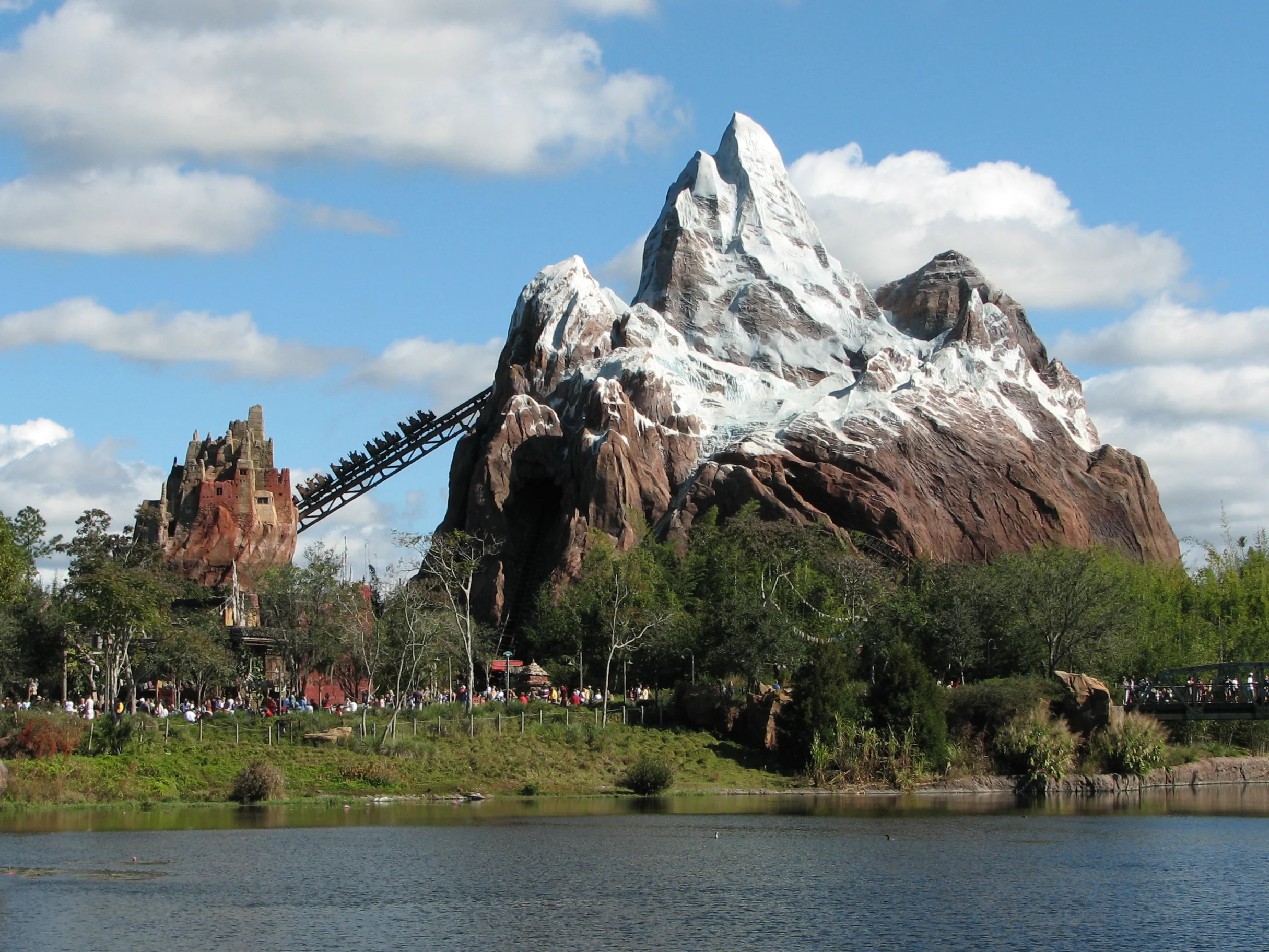
Everest Expedition in Florida
Nepal is well represented in Disney World’s Animal Kingdom in Orlando, Florida, and it was awesome to go on an Everest Ride.
As you enter the Asia section in Disney World’s Animal Kingdom in Orlando, Florida, U.S.A., you expect to be assailed by a plethora of different symbols and signs of the vast diversity of Asia. But, it is not so. Only Nepal, with a few symbols of India, seems to be representative of Asia at this theme park. The first place near the gate is the Yak & Yeti Restaurant, with the address below it saying Anandpur District, obviously an imaginary place. It would have been better if it had been said to be Kathmandu, Nepal, because that would have been true, and would give some much needed publicity to the country. The people who conceptualized this section missed mightily on that one. Still, the tall peak in the near background meant to represent Everest left no doubt that Nepal is the star in this world famous park.
Additionally, there are quite a few establishments, such as a trekking supply shop and other restaurants that try to give the Nepali ambience. Failure to do so authentically is due to the confusion in differentiating between India and Nepal, and so you have some funny names in Devanagri script that are neither this nor that. One restaurant had a Hindi film poster hanging inside on its wall, the ceiling was high, and the designers had tried to incorporate some Newari-type windows, too. But, they were a far cry from the beautiful authentic ones; much too inferior.
Being pretty hungry after the safari ride and the ‘rafting’ on the Kali River (maybe I’ll describe this in another blog), I searched desperately for a place where I could get daal, bhaat, and tarkari, or at least momos. Sadly, they weren’t available; the restaurants mostly served a hodge podge of so-called Thai, Korean, Japanese, and such cuisine. I was really very surprised to see no signs of China or its fantastic fare in the Asia section. Anyway, Korean pork ribs and a bottle of Spanish beer satisfied my hunger, and I carried on to line up for the Everest Expedition (or, Everest Ride, as it’s popularly known).
As expected, it was a long line, the sign above the entrance read—waiting time: 55 minutes. Here, allow me to detail some fascinating facts about Walt Disney World Resort. It features four theme parks (Magic Kingdom, Epcot, Animal Kingdom, and Hollywood Studios) and two water parks (Typhoon Lagoon Water Park and Blizzard Beach Water Park). Tickets are steeply priced. A single ticket for one day to any of the theme parks costs over 100 dollars each. Nevertheless, that is money well spent, which is proven by the fact that, in 2015, 20,492,000 people visited Magic Kingdom (around 56,000 per day), making it the most visited theme park in the world, and 10,922,000 visited Animal Kingdom (29,923 visitors per day). It’s actually a fantastic place to promote Nepal tourism, and somebody should do something about this.
Anyway, the line I was in started moving very slowly. As we went around a typical pagoda style temple, in the near distance, I could hear yells and screams of people taking the ride. It sure promised to be a thrilling affair, and I couldn’t wait. But waiting I had to do, since the line was so long. However, this was alleviated on entering the Yeti Museum on the way. It was a pretty interesting museum. One display had a torn tent, smashed up vessels and stoves, and other paraphernalia of a climbing expedition in the Himalayas. The signboard informed that it was an expedition in which all members had vanished into thin air, and it was suspected that a yeti had carried them off.
There were many photographs of the Himalayan region, as well as footprints and skull fabrications said to be of the yeti. The whole point of the museum was to intensify the mystery of the yeti, and at the end of the room, before we entered another room, a notice declared that, indeed, the many proofs proved the existence of the yeti to be true. The other room was dimly lit, with low watt bulbs that gave a yellow light, probably to represent a typical trekking supply store in Nepal. There were many aluminum kettles and momo-making utensils in the glass fronted shelves, as well as Druk pineapple cans, pickaxes, down feather jackets, ropes, climbing boots, and so on. Coming out of this room, we reached the ride platform, somewhat like a train station.
I boarded a narrow gauge open type of train, sat down, and pulled down the protective barrier. A young American lady sat down beside me. Very soon, we were off, a leisurely glide downhill, then a very steep climb up to the peak of Everest. However, near the peak, the train stopped momentarily, the path ahead seemed to be blocked, and then we started rolling backwards. Did I say rolling? No, that’s not right, we backtracked at full speed; the sound of the rattling train on iron rails was terrifying; and soon we were inside a pitch black tunnel, hurtling backwards at full throttle. A sudden flash of lightning revealed the figure of a giant yeti way above us on a cliff.
Then, the train again started moving forward, and coming out of the tunnel, immediately plunged down vertically, again at full speed. Twisting and turning this way and that, it tore around a hairpin bend. By this time, my mind had stopped working, lost as I was in the thrill of the moment. My stomach was churning, and my nerves were raw with excitement. Throughout it all, panicked screams rent the air, as the petrified riders yelled their lungs out, not knowing what to expect next. Another vertical drop, another hairpin bend, and we finally glided into the station. The lady beside me jumped out of the train with some alacrity, and I could well empathize with her, because I and all the riders did likewise. We had been through a terrific ride that scared the hell out of us.
Anyway, to conclude, the Everest Ride is something that all who can should experience.
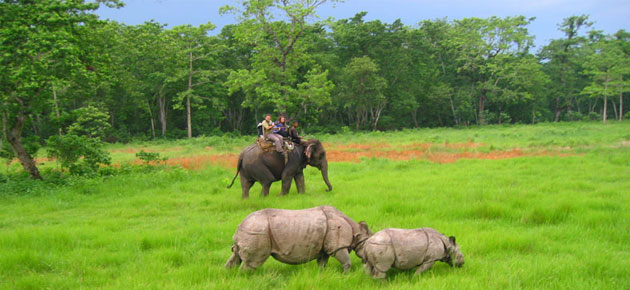
Chitwan National Park, the Real thing
A jungle safari around Chitwan National Park in Chitwan, Nepal, is an experience that one will not easily forget.
I had the opportunity to visit Disney World’s Animal Kingdom recently in Orlando, Florida, United States of America. The park has a lot of attractions spread out in various sections, viz Africa, Asia, Discovery Island, and Dinoland U.S.A. I began by going on the Kilimanjaro Safari Ride in the Africa section. I had to wait a pretty long time (about an hour or so) to board the ride, a train of wooden seats pulled by an ancient looking but sturdy truck. Almost immediately after we started off, we began to see wild animals, such as different types of deer, hippopotamuses, rhinoceroses, giraffes, zebras, elephants, crocodiles, etc., as well as a couple of lions resting majestically on a rocky outcrop. But, more than the animals, it was the track we were riding on that was really interesting.
The track has presumably been made to look and feel like a genuine jungle track in Africa, with parts of it being water logged, and more than a few bumps along the way. The lady driver also served as the guide, giving a running commentary that was pretty informative and fascinating. The site is designed as a lush African savannah, with plenty of long grass and scattered trees. One tree, in particular, stood out from the rest: the Baobab, which is also called the upside-down tree because the branches, when bare of leaves, look like roots sticking up into the air. The ride took around half-an-hour, and was a good way to start the Animal Kingdom adventure.
Now, here, I would like to compare this with our own jungle safari in Chitwan National Park in Chitwan, Narayani, Nepal. I have also taken that trip, and let me tell you, it was one of the best experiences of my life. Doubtless, unlike in in Animal Kingdom, where you get to see more animals, you get to see less wildlife in Chitwan. That’s because Chitwan’s wildlife is really in the wild, while Animal Kingdom is a well-designed and conceptualized park with wildlife in enclosures, cleverly concealed, to give the impression that they are in the wild. One cannot but be appreciative of the designers’ ingenuity. However, nothing can make up for going around real jungle tracks on top of a big elephant, as I did in Chitwan. Let me say this: the Chitwan safari is the real thing, while the Animal Kingdom thing is an enjoyable sojourn around a creatively designed wildlife park.
Definitely, the real thing has to be more thrilling. Riding a truck pales in comparison to riding an elephant that trudges onwards heavily on the narrow paths, and up and down muddy river banks, demonstrating fantastic balance; another thing is, you never know when you’ll be seeing some of the 700 species of exotic wildlife (68 of which are mammals), especially the magnificent royal Bengal tiger, the endangered one-horned rhino, and the rare snout-nosed gharials, a smaller, and much rarer, cousin of the crocodile. (By the way, some of the crocs in Animal Kingdom were pretty huge, fearsome creatures.) You’ll have to be indeed very lucky in Chitwan National Park to spot animals like leopard, sloth bear, wild boar, flying squirrel, smooth coated otter, honey badger, Bengal fox, striped hyena, golden jackal, jungle cat, civet, porcupine, and other such animals that are quite shy of public attention.
As you travel deeper into the lush jungle, keeping a sharp lookout from your perch on top of the massive elephant, you begin to spot quite a few deer, and many varieties of birds (there are supposed to be almost 600 species inside the park). The flora also is pretty impressive; the jungle is thick with densely-leaved trees, and many a time your elephant will be making its way forcefully through thick shrubs and tall grass on paths unseen to you. It’s all a very exciting affair, the tall grass, known as elephant grass, may be hiding a fierce tiger or two; this is never far from your mind. At some points, your mahout (the elephant driver) will probably ask you to keep dead quiet, since he’s spotted some tiger tracks on the path, or fresh elephant dung that shows that there are wild elephants nearby. Your heart will start thumping, and you’ll keep quiet, I promise you!
A trip around the jungle also includes a ride on a dugout canoe on the Narayani River that meanders through the large 360 sq km park that was established in 1973 and subsequently designated a UNESCO world heritage site in 1984. The canoes are small things, riding along very close to the river surface, and as you ride onwards, you may be lucky to see some snout-nosed gharials sunning on the banks. The average adult gharial is only 11 to 15 ft in size and has extremely long, thin jaws. The male has a distinctive boss at the end of the snout. You’ll also get to see the gharial breeding center inside the park, where you’ll learn about efforts to save this critically endangered animal from extinction.
Oh yes, the Chitwan National Park in Chitwan, Nepal, is the real thing as far as a thrilling adventure in the wild is concerned. An experience that is sure to bring excitement into your life. And, yes, it must be noted that there is really nothing to rival a tall glass of ice cold beer after an exciting ride around the hot and humid jungle. Heavenly pleasure, indeed!
P.S. I’ll be describing the Everest Expedition in Disney World in the coming blog. It’s famous as the Everest Ride, and it’s thrilling to the extreme.
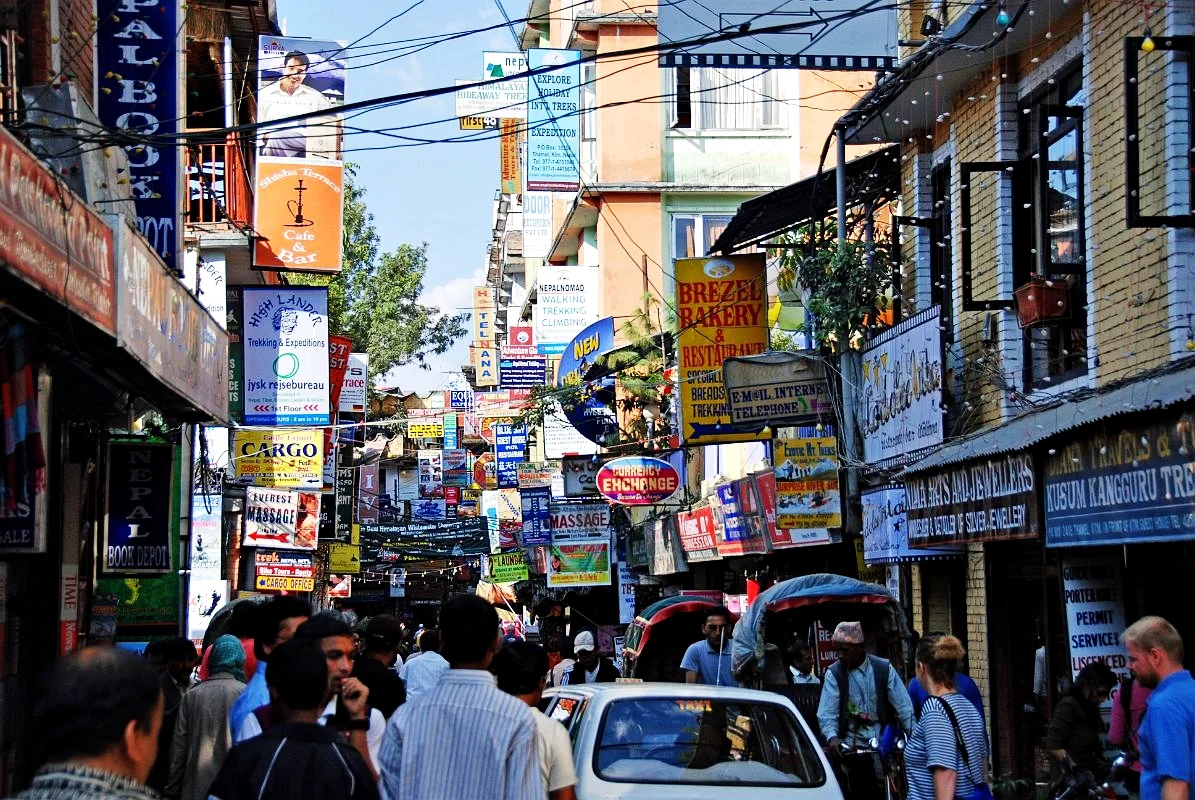
Nepal, the Intrepid Traveler’s Delight Part II
Having had your first experience of what’s it like being in Nepal, your taxi ride having given you an up-close contact with a knowledgeable Nepali taxi driver, you reach Thamel after driving down half of Kathmandu.
Having had your first experience of what’s it like being in Nepal, your taxi ride having given you an up-close contact with a knowledgeable Nepali taxi driver, you reach Thamel after driving down half of Kathmandu. You would probably have noticed that the traffic seems to be not that good, and that there seems to be a lot of people walking on the sidewalks. This is a constant of less developed countries, cities may seem to be sprawling and quite large, but most of the commercial places are located within certain specific areas. So, you’ll see many more people around than in cities back home, where buying groceries means visiting a superstore, probably a 15-minute-drive from your home. And of course, roads are not that wide, so traffic, which is growing in leaps and bounds, tends to be somewhat bogged down most of the time. In short, speed limits are not necessary here!
In due time, you reach Thamel, the tourist heart of Kathmandu, which is full of hotels lodges, restaurants and bars and cafes, shops selling all kinds of stuff, yoga, reiki, massage, and other health centers, and so on and so forth. And yes, plenty of tourists strolling around the narrow lanes and alleys. The interesting thing about Thamel is that it is located smack bang in the middle of the city, which means getting anywhere from here is a breeze. The restaurants serve all kinds of cuisine, local and international; the hotels are of all sorts, classy and economy. In other words, it’s a pretty convenient place.
Of course, you can expect the locality to be a bit of a strain, what with all that hustle and bustle all day, all night long, So, if you are looking for more peace and serenity, there are excellent hotels nearby that are safe, comfortable, and convenient, such as Hotel Shanker in Lazimpat, a stone’s throw away from Thamel. It’s actually a 120-year-old royal durbar that has been converted into a fantastic hotel with a sprawling landscaped garden with a great swimming pool and health club. Once, it used to be the favorite haunt of mountaineers bent on conquering Everest; their base in Kathmandu. Reinhold Messner lived here, as did Tenzing Sherpa. For the really intrepid traveler, this is the kind of hotel to look for, because it’s quite an experience living in an ancient palace, let me tell you! Once-in-a-lifetime, all right.
Actually, the whole locality of Thamel, Lazimpat, Durbar Marg, and so on are all situated around the central iconic structure that was once the royal palace, now known as the Narayanhiti Museum. While Thamel is the preferred watering hole of most tourists, Lazimpat is more upscale, with quite a few important embassies, and Durbar Marg (Kingsway) is an upper-end commercial center full of branded stores. Thamel, being most familiar with tourists, deserves a bigger description here.
On May 16, 2013, a fire raged through the famous Pilgrims Book House in the heart of Thamel. It claimed to have the largest collection of publications on the Himalayas in Asia, and was one of the capital’s important landmarks. A visitor’s words on a Lonely Planet site is pretty compelling: “Pilgrims was an incredible source of knowledge about Nepal as well as all things about the Himalaya…their own publishing outlet made available out-of-copyright books on the history of Nepal, Tibet, India, the British Raj, exploration, etc. What they had was irreplaceable.” Thankfully, although the main store is gone, there’s a Pilgrims nearby, also in Thamel. The locality is a magnet for tourists not only for such landmarks; there are many other places that are also quite well known. In addition to hotels, restaurants, travel and trekking agencies, and shops, Thamel also has quite a few stores selling and renting trekking and mountaineering supplies, as well as some places where you can rent high quality bikes. You’ll also be able to avail of some much needed healing done the traditional way at one of the natural healing centers here, and rejuvenate your flagging spirits with a couple of yoga lessons at a yoga school.
No doubt, Thamel offers much that the tourist seeks, and the fact that you are likely to make some good friends from around the world makes it indeed a tourist haven.
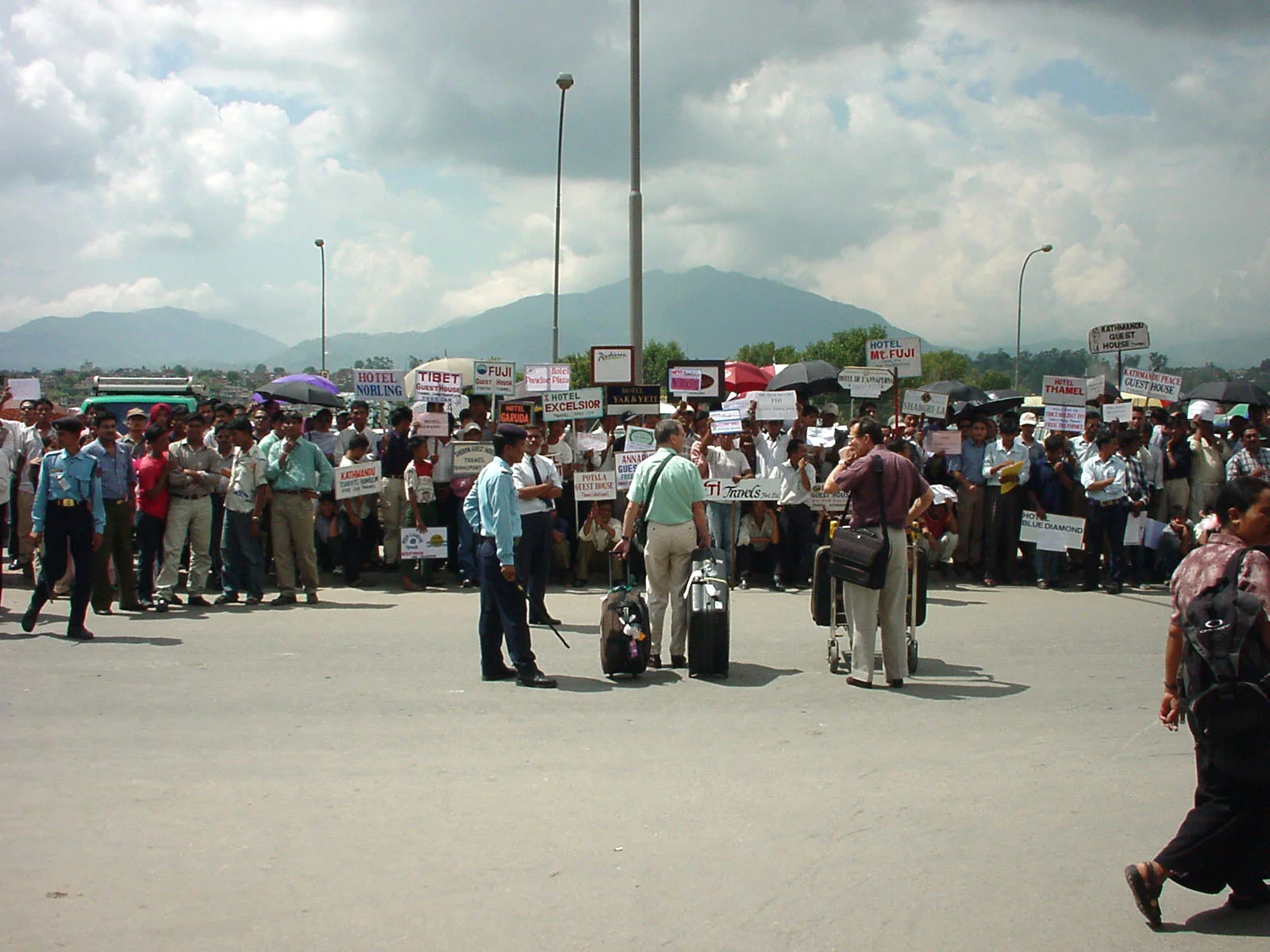
Nepal, the Intrepid Traveler’s Delight Part I
When coming to Nepal, travel light, travel with adventure in your heart, and travel with optimism. There’s mush to see, experience, and discover.
Remember your first experience in Nepal? If you were one of the lucky ones, without a prearranged itinerary, probably a backpacker, then your first experience of this quixotic country must have started at the international airport itself. Of course, you are lucky you’re traveling light; for those with lots of baggage, there will be probably quite a bit of longer waiting period than international travelers are generally used to. As for you, the what-will-I-do-with-so much-baggage tourist, you are just raring to get out of the airport to inhale the fresh Himalayan air you’ve heard so much about, and get your first look of this one-time Shangri-La that has sometimes been touted as one of the most beautiful tourist destinations in the whole wide world.
Well, hold your horses, dude. You’re falling into a common tourist-disappointment trap. Don’t have too high expectations in the beginning, but certainly, you can expect more as you go. The airport must have looked pretty quaint to you; you who have strolled through fantastic steel and chrome structures like Abu Dhabu or Dubai International, or even the gigantic, if less grandiose, JFK in New York. Sure, Kathmandu’s Tribhuvan International Airport isn’t big in any sense of the word, and sure, it isn’t as shiny, but it surely looks quite homely, don’t you think? Hope you didn’t have to wait too long in the immigration desk line, and even you did, surely you must have received a lot of welcoming smiles. So, that’s the first thing you may have noticed; people smile easily here.
Now, hope you have been warned of what to expect next. As you exit the main entrance gates, you’ll be assailed by the small multitude waiting outside. You don’t have to look for your moniker among all the name cards bobbing among the crowd; you are the intrepid traveler, right? No advance bookings. So, you keep on walking to the taxi stand that’s a little way ahead. But you won’t have to walk long; you’ll soon have a couple of drivers by your side, asking if you want a ride. Here, you should know that you can always avail of a pre-paid taxi service, but that’s going to cut into your unique experience. So, you go with the flow, and soon find that one of the drivers is trying to grab your bag, with the other doing likewise. A minor scuffle ensues, not serious. You’ll eventually be ensconced inside a small taxi, and with a big grin, the driver gets going. That’s when you have an uneasy feeling. Hey, did we agree on a price? You ask yourself. No, you didn’t.
So, as the taxi rolls onwards, you glance at the meter. It’s not running; hasn’t been flagged. So, how much to Thamel, you want to know. Thamel’s where you want to go to; you already know that from friends back home, and from online blogs. That’s where the action is supposed to be. Cheap hotels, great restaurants, lots of tourists. How much, you repeat. You may well have a driver who may not come to that straight away, instead charming you with a bit of chit chat. He’ll regale you with stories of how he had to wait the whole day at the airport, not a single passenger; and that too after waiting in line the whole night to fill up at the gas station. You’ve heard about the political strikes, the gas shortages due to the India’s economic blockade, etc., haven’t you? And, of course, last year’s great earthquake that killed more than 8000 people.
He sounds rueful, and soon you’ll be expressing genuine sympathy for not only him, but the plight of all Nepalis. So, when he names a figure, finally, you agree wholeheartedly, deciding to give a tip, as well. You do a quick calculation on your smartphone; the fare looks ridiculously low in dollars. So, you’ll certainly give him a generous tip. Poor chap. But, surprising that even with so many problems, he seems to be pretty cheery!