
Life in Kathmandu’s Golden Period
This is what Father Gillespie, one of the first foreigners to visit the secluded kingdom of Nepal in the 18th century, wrote in his ‘Account of the Kingdom of Nepal’: “Cat’hmandu contains about 18000 houses, Lelit Pattan contains about 25000 houses, B’hatgan contains about 12000 houses…the houses are constructed of brick and are three or four stories high…streets of all their towns are paved with brick or stone…there are also good wells made of stone…In every town there are large square verandas…called ‘pati’…on the outside of the great towns, small square reservoirs of water….” (Asiatic Researcher, 1801, Vol. II, London)
This is what Father Gillespie, one of the first foreigners to visit the secluded kingdom of Nepal in the 18th century, wrote in his ‘Account of the Kingdom of Nepal’: “Cat’hmandu contains about 18000 houses, Lelit Pattan contains about 25000 houses, B’hatgan contains about 12000 houses…the houses are constructed of brick and are three or four stories high…streets of all their towns are paved with brick or stone…there are also good wells made of stone…In every town there are large square verandas…called ‘pati’…on the outside of the great towns, small square reservoirs of water….” (Asiatic Researcher, 1801, Vol. II, London)
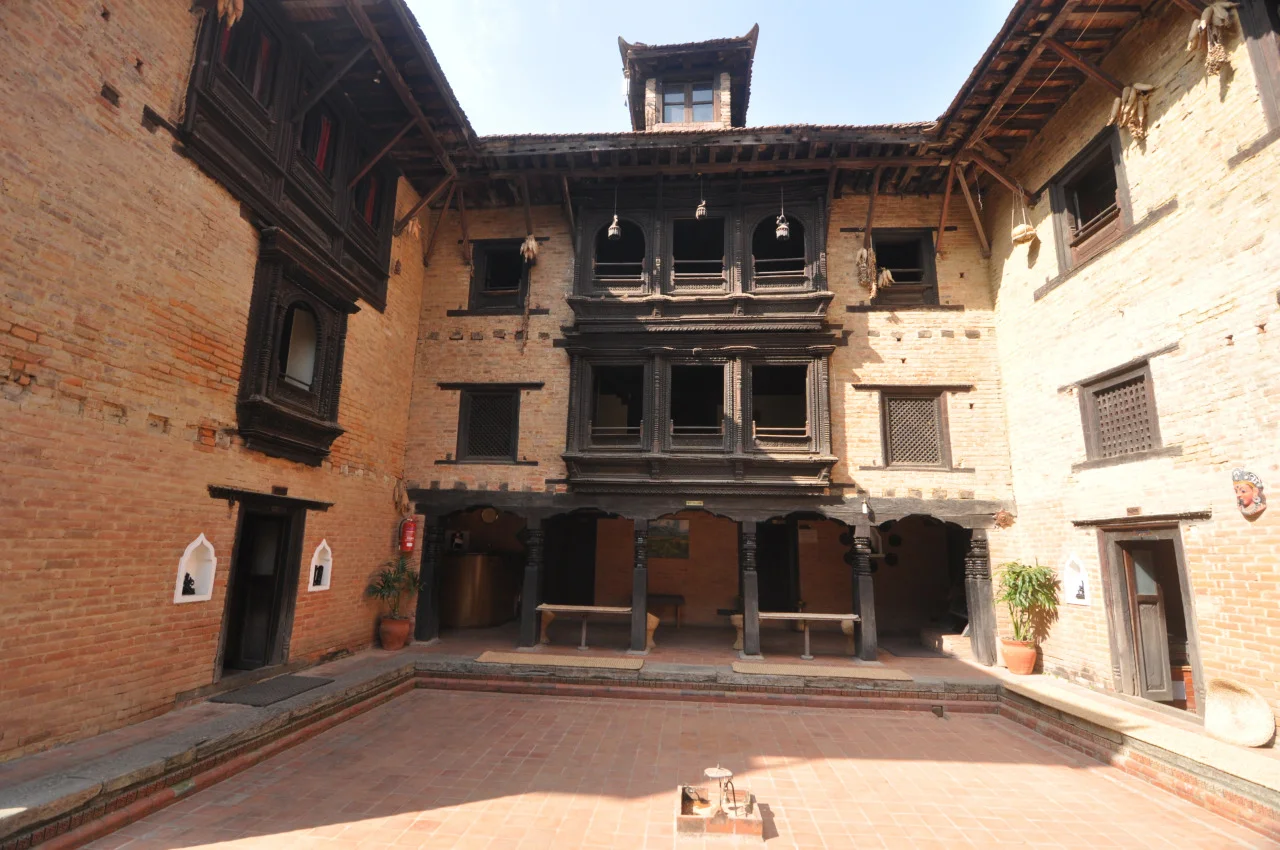
Father Gillespie’s description of Kathmandu Valley as it was then is a flattering portrayal of the Malla period (1200-1769). Similarly, in ‘The Traditional Architecture of the Kathmandu Valley’, Wolfgang Korn writes, “The terracing of similar building elements around a temple or monastery grouping formed street spaces, courtyards, groups of houses and finally, town districts or tols…” Much of all this holds true even today, and one will many examples in the valley. Of course, there are many changes, as well. While in days past, a particular tol would have inhabitants of a particular caste and family descent, with the passing of time, this no longer holds true, although there might be dominance of a specific group. Each such tol had a sequence of streets and squares, at the centre of which was a chowk with a temple or monastery
Both security and privacy were thus givens, and while the four sides of the chowk had separate units, access to the street was usually through only the gateway of one house, this always being of low height, some say, to discourage thieves. The chowk had an important role in communal life, as a washing and bathing area, as a playground, for sitting in the sun on colder days, and as an area for grinding grain. It was also most important for organizing feasts. Such an arrangement encouraged regular interaction among the community members. Similarly, public squares had shrines, sattals (open meeting halls / free lodging houses), patis (public loggias), dyochens (communal buildings with deity shrines), dablis (platform for public performances), hitis and dhunge dharas (fountain complexes), wells, etc. These amenities fulfilled the social, economic, and ritualistic activities of the locals. The ground floors of houses facing the street had shops providing basic daily necessities.
For the typical Newar, the tol was actually his living area. Not only because it was well facilitated, but also because houses of the period were not fully adequate to satisfy all needs. The Malla period homes did have constraints; for example, they were low-roofed, and lacked enough sunlight. Air circulation was also unsatisfactory, and the mud floors resulted in dampness that was quite prevalent. However, the innovativeness of the Malla period builders in has to be admired, especially regarding their concern for public welfare. The hitis, for instance, served as marvelous watering places for all the locals. Designed like enormous sunken baths, water flowed copiously from beautifully carved dhunge dharas (stone spouts). They were centers of social gathering. Pokharis (ponds) throughout the towns were the reservoirs. and large numbers tuns (small draw-wells) were usually found in backyards. Drainage consisted of partly open brickwork ducts.
In those times, houses were not allowed to be built to a greater height than the temples around them, thus resulting in a harmonious skyline. It could also be observed that the height of the houses usually delineated status of its inhabitants, with the richest having homes nearer the center that were four-storied, after that, three-storied, and then, two-storied. But, all the houses were equally rich in some aspects, such as the splendid woodwork, a major feature of traditional Newari architecture. According to Dr. Ranjitkar, Nepal Director of Kathmandu Preservation Trust, and author ofauthor of the ‘Heritage Homeowner’s Preservation Manual’, “The Malla Period is the most valuable period of traditional architecture of Kathmandu Valley, for which Nepal is known all over the world.”
Numero Uno Nepal
It may be a long time coming before the country features in the Top 10, or even Top 100, of an Olympic Games, but right now Nepal does feature in a Top 10 list, and what’s more, it’s Number One!
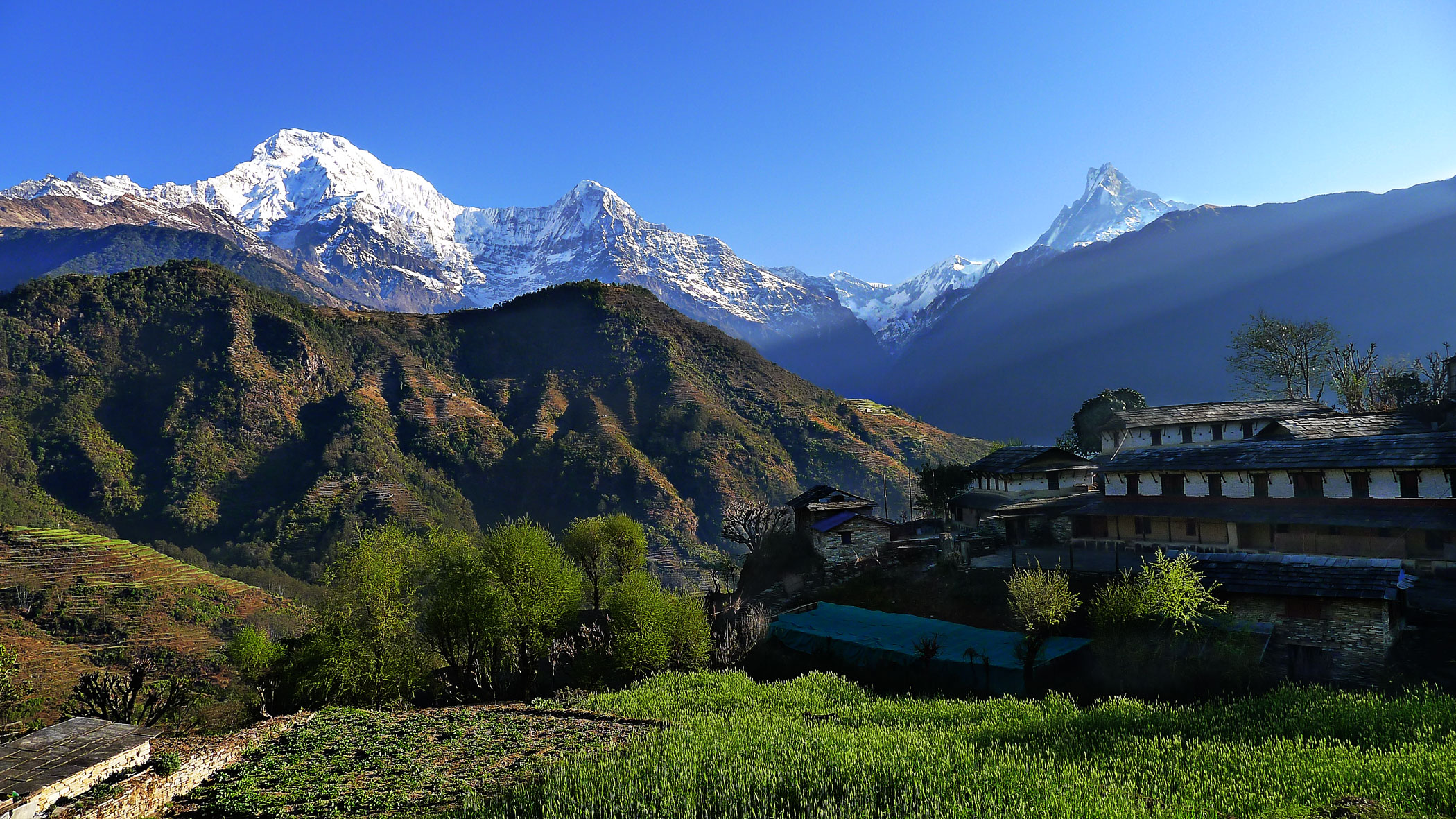
This is one list where Nepal comes out on top—the undisputed Number One. China (Hong Kong) is number 10, U.S.A. is number 8, India is number 4, and Japan is number 2. No, it’s not a ranking of the world’s richest, poorest, least healthy, most polluted, truly democratic, thoroughly corrupt, and so on. It’s a list of the world’s most photogenic countries. And, yes, you heard it right; Nepal is the hands-down Numero Uno. (http://goo.gl/wLP5u6)
This list was prepared in 2014 by Rough Guides photographer Tim Draper of England, who has shot images for 24 Rough Guides throughout his career as a professional travel photographer. Rough Guides Ltd. is a travel guidebook, owned by Penguin Random House, which covers more than 200 destinations around the world.
Here’s how he describes his Nepal experience: “My top pick is Nepal, because there’s no other place like Nepal. Kathmandu has just a unique vibrancy, an amazing feel to it. Really historical, you feel like you are lost in time. Soon as you get out of Kathmandu, you are in an ancient terraced landscape. You can go and explore smaller towns. Photography is fantastic everywhere you go, fantastic portraits of people, and a real feeling of time slowed down. Fantastic photo opportunities, of course, as you get further up in the Himalayas.
“You get wilder, more amazing, natural wonders, great terrain, great terraced fields of rice, small cobbled villages, fantastic ancient architecture, a really, really, great, people, and for me, still the most amazing thing I have ever seen, the greatest natural wonder, is Everest. I go up in the evening and I wait, and slowly watch all the tourists come off the viewpoint, and I wrap myself in my sleeping back up on the viewpoint, and wait for the sun to set. Because what you see is this golden yellow light on Everest and the orange to red to purple, blue, and finally, indigo, and it is really an awesome experience. It’s a really bright thing to see.” (https://goo.gl/YRmitv)
Indeed, this is great feather in our cap, considering that there are so many beautiful destinations around this fascinating world. It’s a high honor to be so chosen, and here’s hoping our local photographers take this as a pointer towards even more adventurous shoots around the country, in the high Himalayas, the teeming Terai, and the serene hills. They say a picture is worth a thousand or more words, but it goes without saying that the picture should be from the hands of one capable of doing justice to it, and Nepal’s beauty is certainly deserving of the best. Its munificent natural bounty is something that mesmerizes even the most jaded traveler, and its people are so simple and naturally friendly, that no one who comes across them can but reciprocate in kind.
Yes, it is Nepal’s natural beauty and its friendly people that make the country a favorite of many, and a destination that they would like to visit time and again. It is no exaggeration to say that the country garners a fair amount of repeat visitors, and it is not wrong to say that they are our greatest ambassadors. As a travel agency professional says, “It is only difficult to attract a tourist the first time. But once they come here, they end up as being our avid admirers, and our most effective ambassadors.”
Dedicated Endeavor
Kathmandu is a cosmopolitan city, a big city with an ever growing multitude of people from all over the nation making it their home. Life is hectic, traffic is unruly. Amidst all this are pockets of serenity and calm, particularly in the splendid premises of grand hotels, with their landscaped gardens endowing a refreshing ambience. There are also, amidst the hustle and bustle of the busy city, pockets of hope and optimism and hard struggle, particularly in the many shelters run by non-governmental organizations for the disadvantaged sector of society. It is natural for glamour and glitz to be always in the limelight, and for others to remain in the shadows. That is why much of what is so good and noteworthy about Kathmandu is out of most people’s view. Here are some examples of the same that could be eye-openers for those seeking to understand Nepalis better, and provide a fuller picture of Nepal.
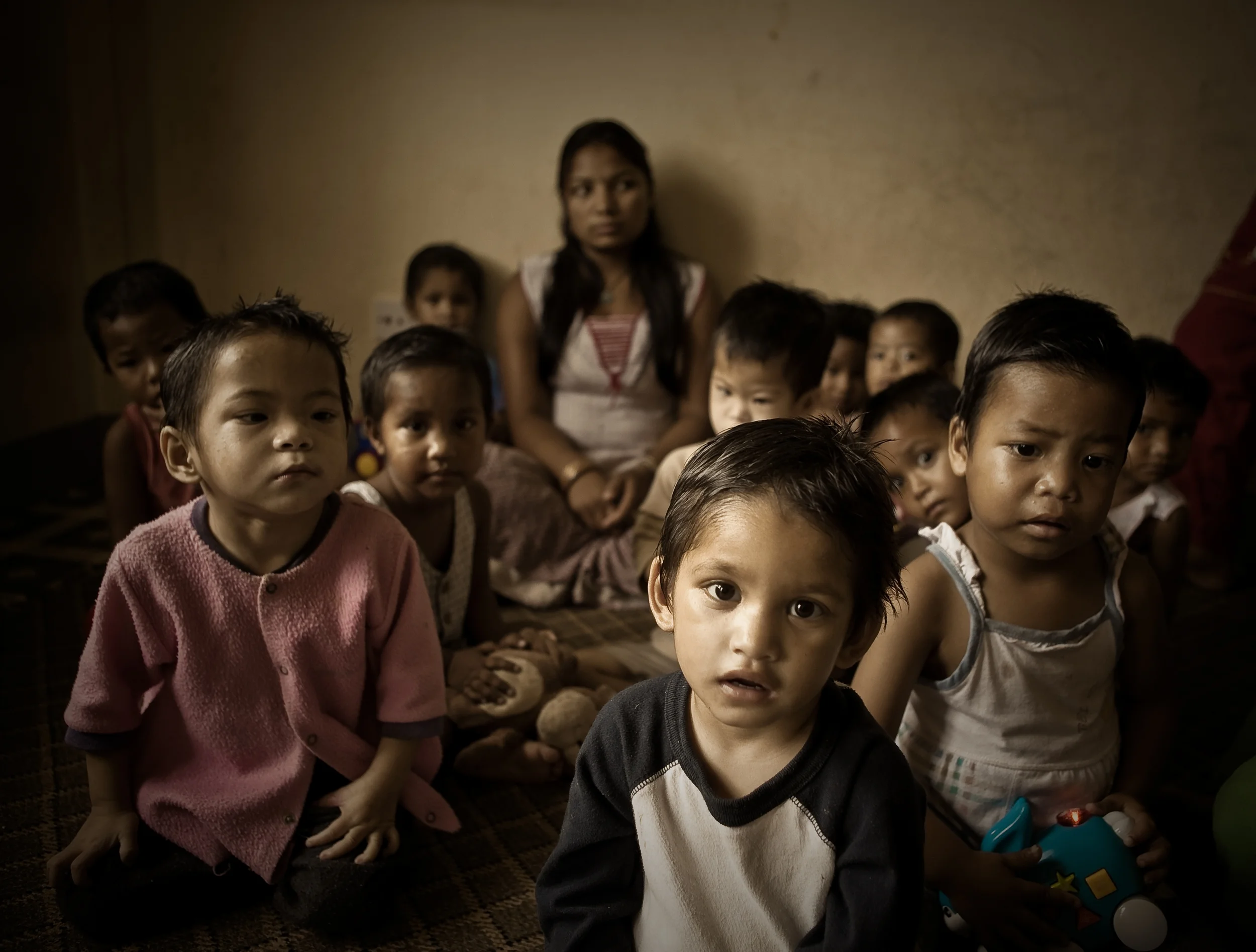
In a tranquil location in a lane off the main road in Baluwatar is a house that’s full of children aged between three and fourteen. Twenty seven of them are boys while 26 are girls. Coming from all over the country, these orphaned and abandoned children are all fortunate to have found a home in Aishworya Children’s Home under the kind and capable guardianship of Ms. Nirmala Ghimire and her family.
In addition to some staff members who work on a voluntary basis, she has able aides in her son Pramod and daughter Pramila, as well as in her daughter-in-law Ms. Binita Ghimire, who herself had been running a home for the physically challenged before she got married to Mr. Pramodsome years ago. Managing a single household with four or five members including a couple of children is hard enough in today’s world, and here we are talking about the care and upbringing of 53 children! It is indeed a herculean task, but one that the Ghimire family seems perfectly capable of.
How Ms. Nirmala came to run such a home makes for an interesting story. It was in 2005 that she found two dirty, hungry, and homeless boys, Jeetu (10) and Arun (8), on the streets of Balaju. She discovered that they were also very sick, so she took them to a hospital. Later, the boys were placed in an orphanage, where she visited them often. Then, a month later, she found Jack (9) and Andy (3), two abandoned brothers, in Chamati, whom she took along to the same orphanage.
However, the orphanage owner suffered a heart attack a year later, and the children were placed in another orphanage, where their treatment was far from good, if not outright abusive. Seeing this, Ms. Nirmala left her job as a driving instructor and sold her landed property to establish her own home for such children, where not only are they looked after well, but their educational needs are also taken care of. It is a great source of satisfaction to her to see many of her children grow up into responsible citizens and stand on their own feet.
Overcoming Hurdles Determinedly
Kathmandu is a cosmopolitan city, a big city with an ever growing multitude of people from all over the nation making it their home. Life is hectic, traffic is unruly. Amidst all this are pockets of serenity and calm, particularly in the splendid premises of grand hotels, with their landscaped gardens endowing a refreshing ambience. There are also, amidst the hustle and bustle of the busy city, pockets of hope and optimism and hard struggle, particularly in the many shelters run by non-governmental organizations for the disadvantaged sector of society. It is natural for glamour and glitz to be always in the limelight, and for others to remain in the shadows. That is why much of what is so good and noteworthy about Kathmandu is out of most people’s view. Here are some examples of the same that could be eye-openers for those seeking to understand Nepalis better, and provide a fuller picture of Nepal.
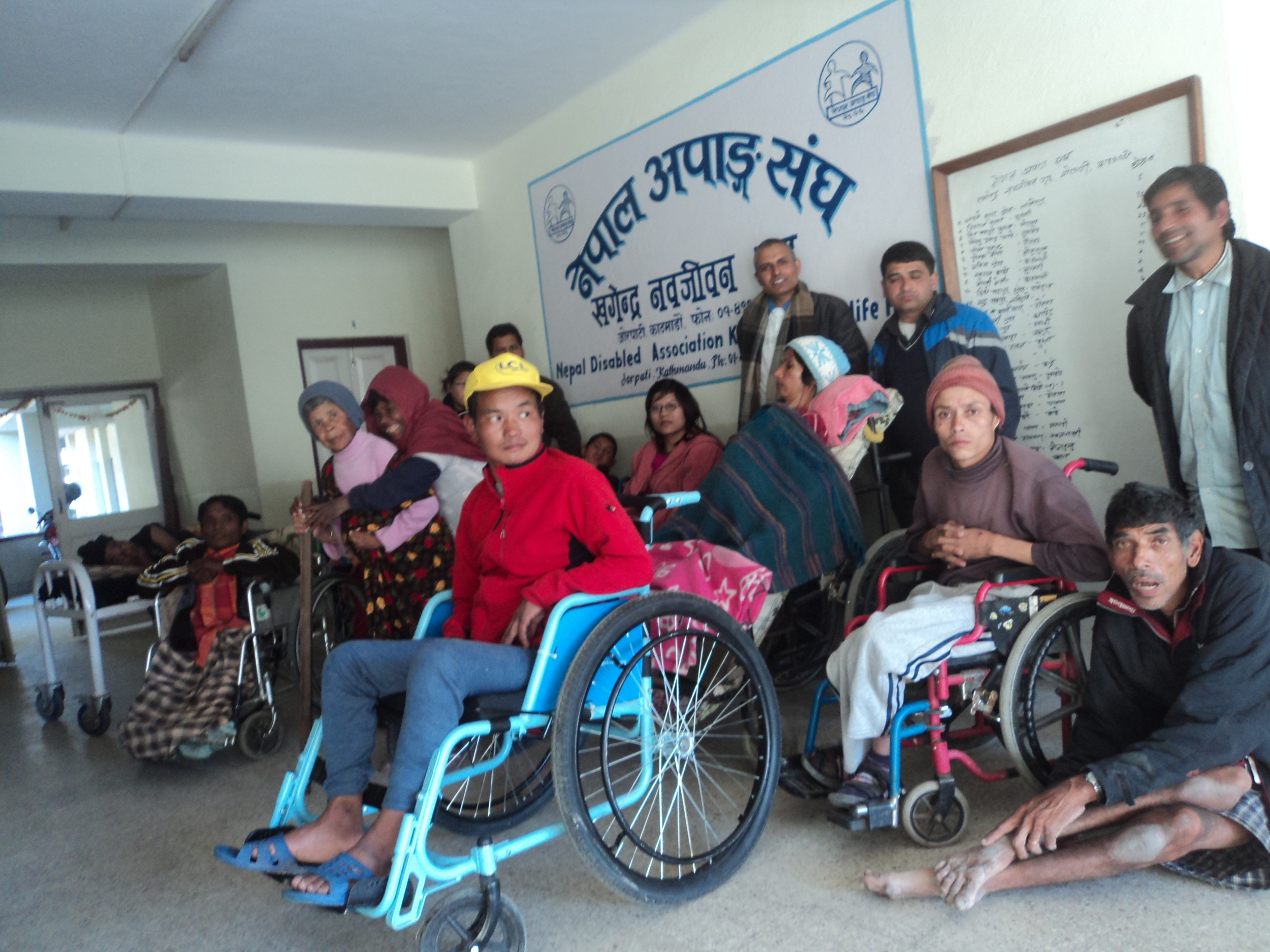
Srijanshil Apang Awaj Nepal (Voice of Creative Disabled Nepal) is an organization located in Maijubahal, Chahabil, Kathmandu, which was established in 2065 to provide shelter for physically challenged girls. What’s more, its primary aim is to provide all of them with an education. The organization’s motto is, “Don’t give us pity, give us opportunity; don’t be biased towards us, give us dignity”.
Its founder chairperson is Ms. Tulasa KC, who was born in Pyuthan. “I came to Kathmandu in 2057,” she says. “I have around 14 years experience working in this sector, having worked for about 10 years in the National Disabled Organization as Community Worker. I have also received training in physiotherapy.” Talking about her past, she says, “As a child, I had an accident once and injured both my legs. I couldn’t walk for a long time, but I persisted in my efforts and tried walking with the wall as a support. In time, I could walk well enough, and now I am fine.”
Of the 15 women in her center, 5 have to move round in wheelchairs. “The wheelchairs are very expensive,” she says, “and they have to be customized as per need of the user.” According to her, even if someone wants to donate a wheelchair, they have to first have it customized to the user’s needs. “That is what the UN has specified,” says she. Indeed, having worked so long with physically challenged people, she has excellent knowledge about rules and guidelines regarding their rights and privileges. Coming back to the cost of wheelchairs, they can cost anywhere between Rs.15, 000 to Rs.28, 000 each.
While the organization was relatively well housed in a nice building with a garden in front, the earthquake of April 25, 2015, changed all that. The house was severely damaged, and they had to take shelter in a large tent in the garden. Also, uncertainty about the future remains, if and when they are asked to move out by the landlord. “There is still great bias against physically challenged people,” she declares. “It’s extremely difficult for people like us to find a house on rent.” There are of course other difficulties, too. As she says, “Physically challenged people who have problems of the lower limbs need special shoes, and they are also very expensive, as are crutches, which can cost above Rs.2, 000 each.”
Despite all the problems, it is an organization that is doing such worthwhile work for the most unfortunate of our society. So, hats off to its founder, Ms. Tulasa KC and her coworkers.
Caring for the Forgotten Aged
The Other Side of Kathmandu-III
Kathmandu is a cosmopolitan city, a big city with an ever growing multitude of people from all over the nation making it their home. Life is hectic, traffic is unruly. Amidst all this are pockets of serenity and calm, particularly in the splendid premises of grand hotels, with their landscaped gardens endowing a refreshing ambience. There are also, amidst the hustle and bustle of the busy city, pockets of hope and optimism and hard struggle, particularly in the many shelters run by non-governmental organizations for the disadvantaged sector of society. It is natural for glamour and glitz to be always in the limelight, and for others to remain in the shadows. That is why much of what is so good and noteworthy about Kathmandu is out of most people’s view. Here are some examples of the same that could be eye-openers for those seeking to understand Nepalis better, and provide a fuller picture of Nepal.
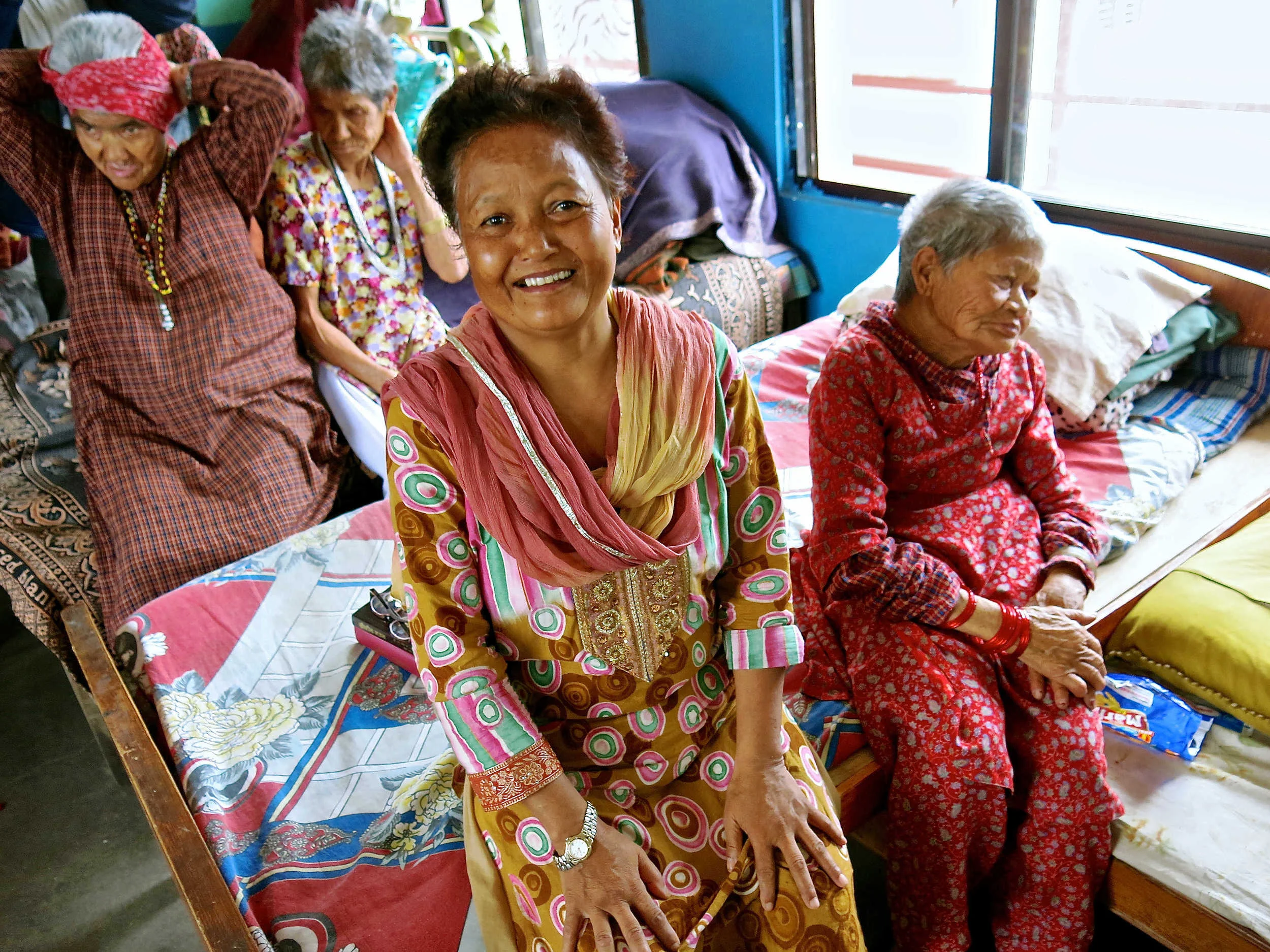
Ms. Sarala Panthi is the chairperson of Himalayan Briddha Ashram Center, which is located at Jalbinayak Chowk in Gongabu, Kathmandu. The Center, established in 2061/62, is home to 25 elderly people aged between 70 to 75 years. Each of these unfortunate souls has a tragic story behind them. The eldest person here is a 93-year-old woman of the Tamang community. Ms. Panthi recounts her story: “She says she is from Sindhupalchok. Her son lives in Kathmandu in a rented room. Apparently, one day last year, the son gave her Rs.50 and told her to go back to their village in Sindhupalchok. Someone found her wandering around in Mahrajgunj Chowk and brought her here. Imagine her son’s callousness! One needs to take two buses to reach Sindhupalchok.”
“And then, there is another old woman here, Ms. Bed Kumari Bhattarai, who comes from Trishuli, and is asthmatic,” she continues. “Her son is a drunkard; he drinks all day long. His mother was forced to seek refuge here in the Center. Her alcoholic son sometimes comes to visit, but he makes sure to come when I am not present! In spite of all his faults his mother loves him dearly, and is always waiting to give him biscuits and other snacks when he comes.”
Ms. Panthi sounds distressed when recounting such stories, and laments, “You know, after having seen all this happen day after day, I get really depressed. You begin to lose faith in humanity.” She herself is from Lamjung, and is now living in Kathmandu with a husband, two daughters, and a son. “Both my daughters are doing their Masters, while my son is in the U.S., having won a DV lottery visa. I am happy that he, too, is inclined towards social work.” Explaining the reason for her running an old-age home, she says, “Right from childhood, I have been very socially oriented. Even as a child, I couldn’t tolerate injustice. My grandparents were the feudal type, and I just couldn’t stand how people of lower ranks were treated, and I used to have quarrels with them about this.” According to her, the old-age home does not have a regular source of income, but manages to get by—with much difficulty, doubtless.
Dark Pasts, Uncertain Present
The Other Side of Kathmandu-V
Kathmandu is a cosmopolitan city, a big city with an ever growing multitude of people from all over the nation making it their home. Life is hectic, traffic is unruly. Amidst all this are pockets of serenity and calm, particularly in the splendid premises of grand hotels, with their landscaped gardens endowing a refreshing ambience. There are also, amidst the hustle and bustle of the busy city, pockets of hope and optimism and hard struggle, particularly in the many shelters run by non-governmental organizations for the disadvantaged sector of society. It is natural for glamour and glitz to be always in the limelight, and for others to remain in the shadows. That is why much of what is so good and noteworthy about Kathmandu is out of most people’s view. Here are some examples of the same that could be eye-openers for those seeking to understand Nepalis better, and provide a fuller picture of Nepal.
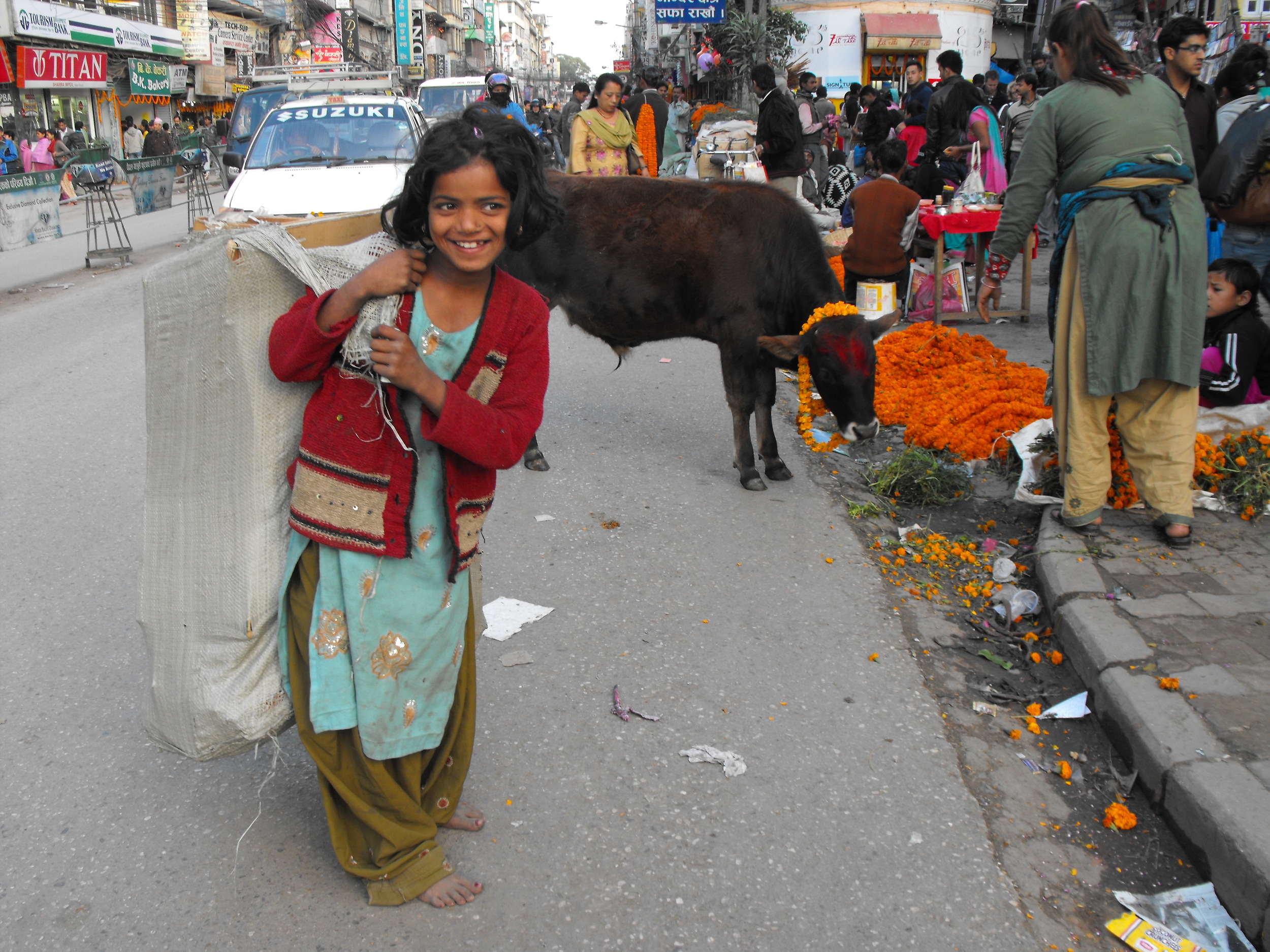
Twenty-five women of varying ages sit under a tin roof making colorful products from felt in Mitranagar, near New Bus Park, in Kathmandu. At first sight, it’s a common enough sight around the Kathmandu valley, but on closer look, one notices that all the women are physically challenged in one way or the other: some are of slight stature, some are hearing- and speech-impaired, and some have problems with their limbs.
The place they are working in is called EPSA (Entire Power in Social Action), an NGO whose mission is to provide shelter and skill training to women with special needs who are unwanted by their own kinfolk and have nowhere else to go. Its founder is Ms. Sangita Pant. Originally from Gorkha, she came to the capital some 15-16 years ago. “When I was seven years old, I had a nasty fall and injured my left arm,” she says. The injury led to severe damage to the arm.
Having experienced the trauma of being physically challenged herself, she became committed to the cause of helping women in a similar situation to become more independent and lead dignified lives. In a largely unsympathetic society, her cause has to be lauded. “Till date, we have trained almost 500 physically challenged women,” she says, adding, “We do not take in those who have passed SLC.” She runs the EPSA Handicraft Center under the auspices of her organization, which makes felt handicraft, knitwear, and cotton items.
“Right now, there are 25 women involved in this work,” she says. “Ten of them stay in our hostel while 15 come from outside.” She pays Rs.8,000 a month as rent, and is worried that the 10-year-lease will run out in three more years. “I don’t know where we will go; nobody wants to rent out to people with disabilities.” She also discloses that she could probably give employment to 50 women provided she could find the funds to support them.
Krishna Magar is a person of short stature who also works at EPSA. She is from Dolakha and has been here for the last two years. A shy woman, she says that she has a mother and father as well as a brother and a sister-in-law at home in her village. She is also a bit hard of hearing, but tries her best to answer my questions. She says that she has learnt to knit and make felt handicraft. So far from her birthplace, she has found a new home in EPSA.
Renuka Puri, 20, is another member of the EPSA family. She is from Sankhuwasabha. She has to take help of a crutch to move around. “I was all right till I was 10 years old,” she says. “But, after that, I just lost use of my legs as I was walking one day. It happened very suddenly. My sister also suffered the same fate, and she too has problem with both her legs.” In addition to her injured limbs, Renuka also has a medical problem involving her blood, and has to take medicine regularly, the cost of which comes to about Rs.2,000 a month. She has been living in EPSA for the last four years.
Similarly, Sundari Rai comes from Rautahat and now lives in Jorpati, Kathmandu. She is a mother to two sons who are studying in class 3 and 6, respectively. She has been working at EPSA for the last two years and is now adept at making felt handicraft. She is currently also taking training at EPSA on sewing and cutting.
These are just three examples of the kind of women EPSA and Ms. Sangita Pant are looking after and giving hope for a better life ahead. And, it must be said, all the women at EPSA deserve this, if nothing else, because they are the ones who have had bitter experiences in their past, and are struggling to hold themselves up in the present. The future must be better for them, and it is organizations like EPSA that provide a ray of hope in this direction.
Giving Succor to the Blind
The Other Side of Kathmandu-IV
Kathmandu is a cosmopolitan city, a big city with an ever growing multitude of people from all over the nation making it their home. Life is hectic, traffic is unruly. Amidst all this are pockets of serenity and calm, particularly in the splendid premises of grand hotels, with their landscaped gardens endowing a refreshing ambience. There are also, amidst the hustle and bustle of the busy city, pockets of hope and optimism and hard struggle, particularly in the many shelters run by non-governmental organizations for the disadvantaged sector of society. It is natural for glamour and glitz to be always in the limelight, and for others to remain in the shadows. That is why much of what is so good and noteworthy about Kathmandu is out of most people’s view. Here are some examples of the same that could be eye-openers for those seeking to understand Nepalis better, and provide a fuller picture of Nepal.
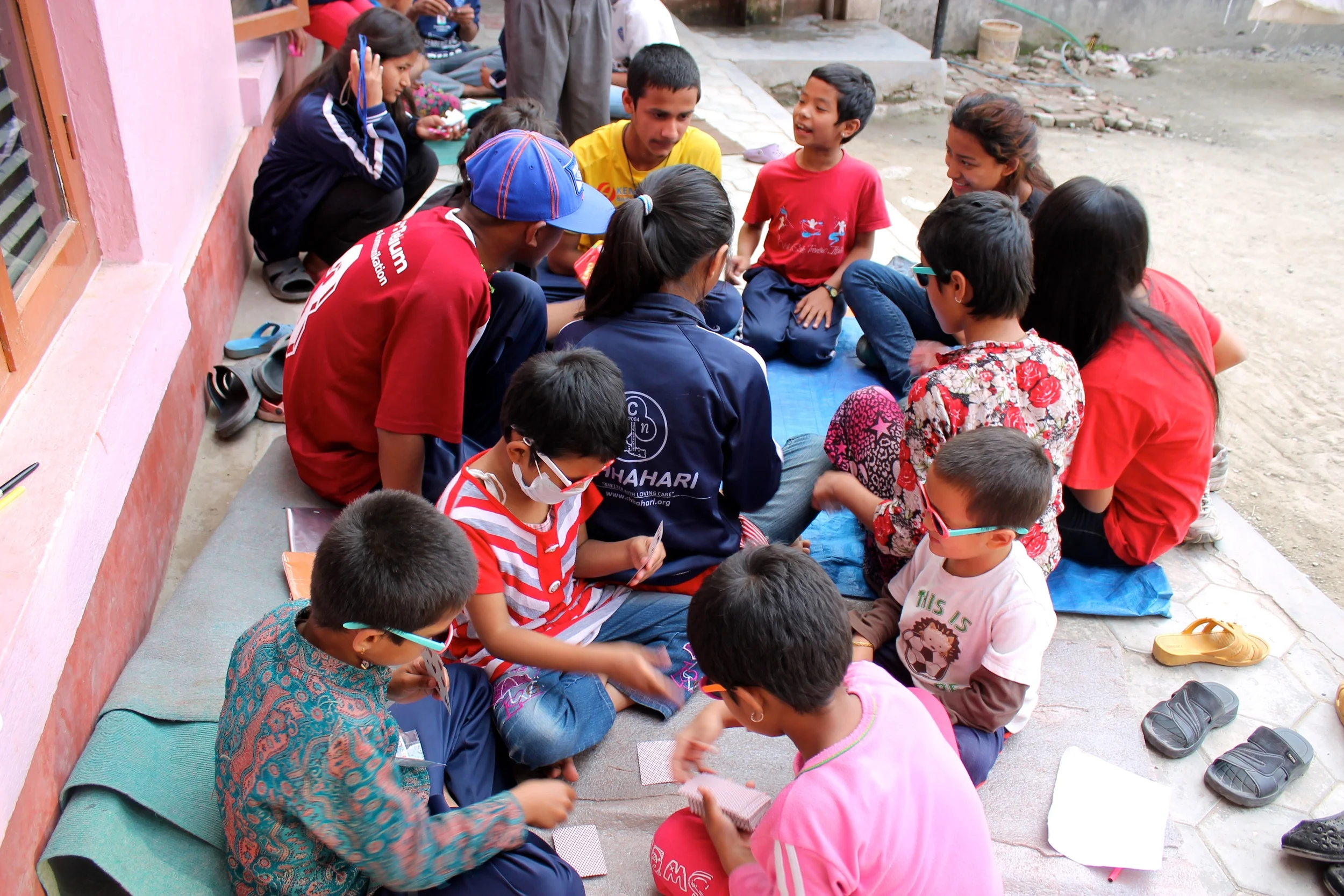
Mr. Binod Prasad Kafle, 50, is the head of Nepal Ekikrit Netrahin Bikash Sangh (Nepal Integrated Blind Development Association, or NIBDA) which is located in Goldhunga of Tarkeswar Nagar Palika, Kathmandu. He says, “I was all right till the age of 20-22, but after that, I gradually began to lose my sight in both eyes. Doctors couldn’t diagnose my disease.” He agrees that it is much more difficult to adjust when one becomes blind after having had sight for so many years. “My son, who is 20 years old now, has been blind since birth, but my daughter, who is married, is all right.”
Mr. Kafle is originally from a village near Rampur, Chitwan, and he migrated to Kathmandu some 30 years ago. He established NIBDA in 2053 B.S. He reveals that, initially, the center worked for adults who were given skill development trainings. “We used to go to various districts to impart trainings,” he says. “Since the last two years, we started to focus on blind children. Right now, the Center (hostel) houses 10 children ranging from six to fifteen years in age. They are from different remote parts of the country. According to Mr. Kafle, three are from Mugu, one is from Humla, one from Rasuwa, two from Ramechaap, one from Kavre, one from Makwanpur, and one from Okharpurwa.
Mr. Kafle says that they don’t have a big sponsor, but he is happy to disclose that: “We have received a large plot of land jointly from Prithvi Narayan Higher Secondary School (which is close to the NIBDA hostel) and the local village development committee. My dream is to have a training center, a hostel, and an old age home built there, but as I said before, we don’t have big sponsors.”
A Loving “Ama” to Many
The Other Side of Kathmandu-II
Kathmandu is a cosmopolitan city, a big city with an ever growing multitude of people from all over the nation making it their home. Life is hectic, traffic is unruly. Amidst all this are pockets of serenity and calm, particularly in the splendid premises of grand hotels, with their landscaped gardens endowing a refreshing ambience. There are also, amidst the hustle and bustle of the busy city, pockets of hope and optimism and hard struggle, particularly in the many shelters run by non-governmental organizations for the disadvantaged sector of society. It is natural for glamour and glitz to be always in the limelight, and for others to remain in the shadows. That is why much of what is so good and noteworthy about Kathmandu is out of most people’s view. Here are some examples of the same that could be eye-openers for those seeking to understand Nepalis better, and provide a fuller picture of Nepal.
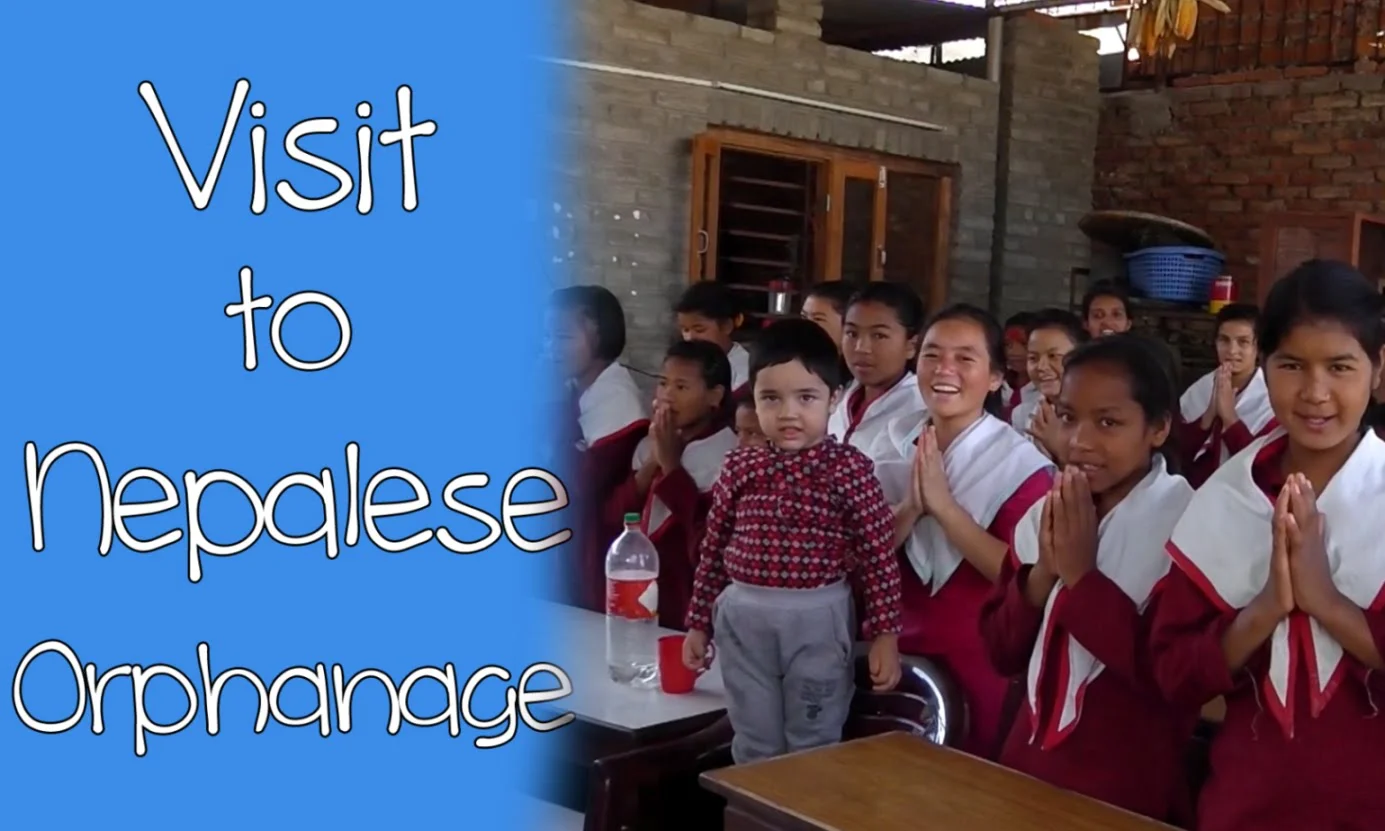
Ujayalo Nepal in Naya Basti, Gaurighat, of Kathmandu, was established three years ago by Ms. Rama Koirala to provide a shelter to orphans and semi-orphans in need of a home. Right now, there are 21 children between the ages of 3 to 17 living in the home. Five of them are girls, while the rest are boys. Nirjala Rawal from Humla is the youngest, a cute little girl of three. “Both her parents were drowned when they fell into a river while crossing a bridge,” says Ms. Koirala. “Nirjala, too, had fallen into the river with them, but somehow she was saved.”
Ms. Koirala, who also writes poetry under the pen name ‘Rohini’, says that her primary focus is on making sure that all the children get an education. All of them study in various classes in a school nearby. Originally from Janakpur, Ms. Koirala has four sons of her own, but likes to say, “Four plus all these 21 are my children.” Indeed, she is an affectionate “Ama” to all of them. She has a lot of experience in the work she is doing, having worked for 20 years now at New Direction Nepal. And, she is putting this to very good use in running her center in an efficient manner. To my question about the source of her funding, she says, “Previously, it was running with donations from my late father, who was a doctor, and now, also, it’s due to my family’s support that I manage to keep it running.”
Ujayalo Nepal has branches in her hometown Janakpur, as well as in Mahotari. “There are 16 and 6 children, respectively, in these homes, and they are also being educated. Three of them are in college,” she says, and with some pride, states, “Some of my older children are working in different vocations today.” Ms. Koirala appears to have a deep passion in what she is doing, and declares, “I hope a time will come when there is not one orphan on the road. That is what I want to see.”
Big Problems of Little People
The Other Side of Kathmandu-I
Kathmandu is a cosmopolitan city, a big city with an ever growing multitude of people from all over the nation making it their home. Life is hectic, traffic is unruly. Amidst all this are pockets of serenity and calm, particularly in the splendid premises of grand hotels, with their landscaped gardens endowing a refreshing ambience. There are also, amidst the hustle and bustle of the busy city, pockets of hope and optimism and hard struggle, particularly in the many shelters run by non-governmental organizations for the disadvantaged sector of society. It is natural for glamour and glitz to be always in the limelight, and for others to remain in the shadows. That is why much of what is so good and noteworthy about Kathmandu is out of most people’s view. Here are some examples of the same that could be eye-openers for those seeking to understand Nepalis better, and provide a fuller picture of Nepal.
Kathmandu is a cosmopolitan city, a big city with an ever growing multitude of people from all over the nation making it their home. Life is hectic, traffic is unruly. Amidst all this are pockets of serenity and calm, particularly in the splendid premises of grand hotels, with their landscaped gardens endowing a refreshing ambience. There are also, amidst the hustle and bustle of the busy city, pockets of hope and optimism and hard struggle, particularly in the many shelters run by non-governmental organizations for the disadvantaged sector of society. It is natural for glamour and glitz to be always in the limelight, and for others to remain in the shadows. That is why much of what is so good and noteworthy about Kathmandu is out of most people’s view. Here are some examples of the same that could be eye-openers for those seeking to understand Nepalis better, and provide a fuller picture of Nepal.
Big Problems of Little People
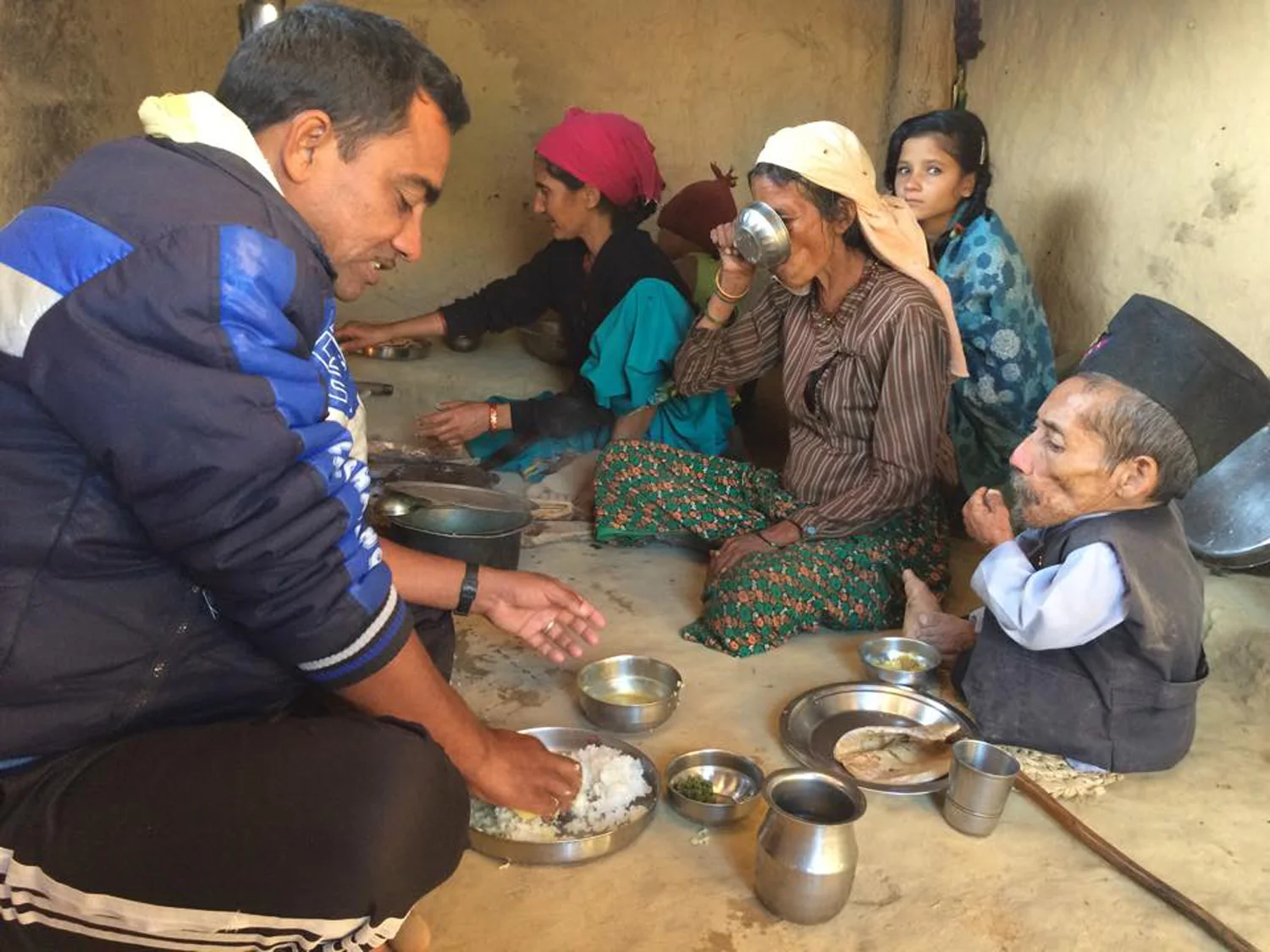
Mr. Lok Nath Dhakal, 57, is the chairman of the Nepal Hocha Pudka Sangh (Dwarf Association of Nepal) that was established in 2060. Mr. Dal Bahadur Karki is its general secretary, Mr. Asal Lam, 26, is the secretary, and Ms. Sundari Misra is the treasurer. Although the association has its office in Baghbazar, many of its members are to be found at most times of the day at the Little Star Foodland eatery in Bhrikuti Manadap. It was opened a year ago, and is quite a rundown place serving basic vegetarian food. According to Mr. Dhakal, it is not doing well.
That is a problem that they are trying to come to grips with, but it’s a tough battle because these individuals, who all suffer from dwarfism, cannot do many of the regular work we normal folks take for granted. “Our problems are too many to recount,” say Mr. Dhakal. He points to where I am sitting on a chair, and says, “For instance, look at yourself; you are sitting comfortably with both feet firmly on the ground. But look at Mr. Dal Bahadur, his legs are dangling halfway way up the ground. This is only a small example of our problems, which start from the moment we wake up and begin doing everyday activities. There are practically no facilities that are convenient for us.”
As he says all this, his face takes on a bitter air. I ask him about health problems with people like him, and he says, “After 35, people like us begin to have many health problems.” Apparently, there is no support, as such, from the government. “We get some support from the shops in Hong Kong bazaar here,” says Mr. Dhakal. He believes that there may be around 2,000 to 2,500 people suffering from dwarfism in the country. The Hocha Pudka Sangh has around 100 members. He shows some photos of a cultural program organized by the Sangh, and says, “There are many talented individual among us. If we could get more sponsors, we could do such programs on a more regular basis.”
Dhulikhel, a Most Refreshing Break
It’s just a 45-minute-drive for the capital, but worlds away in terms of calm, peace, and tranquility.
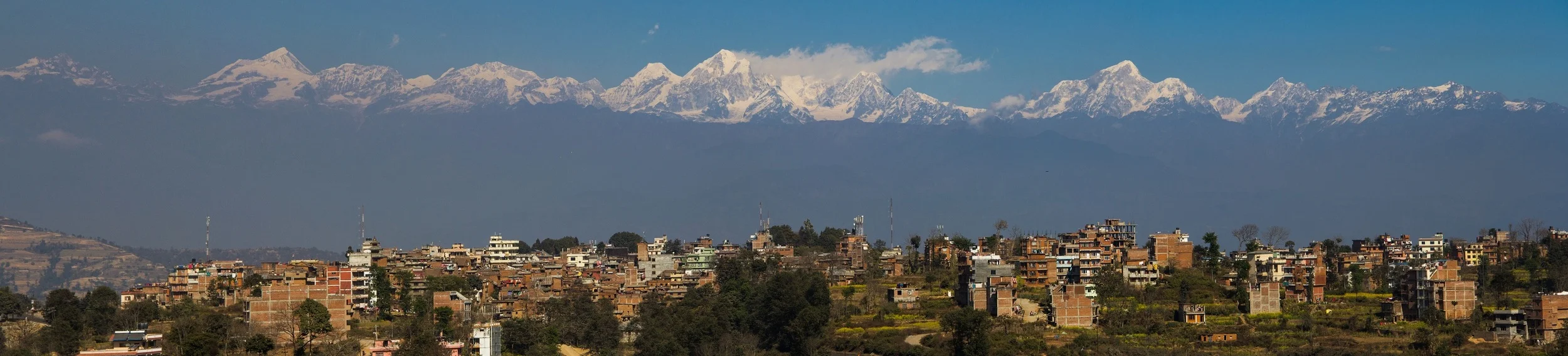
In addition to superb mountain scenery, a varied ecology, and diverse cultures, Nepal also has some really fine resorts in some charming locations. You don’t have to go far from the capital to spend a few days at such a resort; just take the 45-minute drive to Dhulikhel along the Arniko Highway. This pretty town is an ancient settlement that was once an important trading center on the commercial route between Nepal and Tibet.
Dhulikhel has lush mountains, picturesque terraced fields, agreeable weather, and spectacular views of the Himalayan peaks. Not to mention, some wonderful resorts. From its location on a lofty hill, you’ll see serene rivers flowing down to the valley below, and because of the verdant forest to the east, the area is appealing throughout the year. The wide expanse of green fields all around adds allure to Dhulikhel, and the panoramic views of the Himalayas attracts hundreds of thousands of tourists every year.
Dhulikhel is an ideal gateway from the hustle and bustle of city life. From its many vantage points, you can feast your eyes on the wonderful sight of over 20 regal Himalayan peaks, including Lhotse (8,516 m), Annapurna (8,091 m), Ganesh Himal (7,429 m), Langtang (7,234 m), Gaurishanker (7,134 m), and Phuribichyachu (6,637 m). Also, while in Dhulikhel, have the unforgettable experience of one of the loveliest sunrises in the world. Kali Temple, located at the top of the southeast hill, is the best place to see it from.
And, you don’t need to miss out on any of the amenities of modern life that you are used to, because the town has some 24 world class resorts catering to all types of tourists. Many have Newari architectural elements; this is because Dhulikhel is inhabited mainly by Newars, a community known for its artistic, architectural, and craftsmanship skills. The intricately carved woodene doors and windows at some of the resorts should catch your attention.
Dhulikhel is also strong on culture. There are quite a few temples that are testimony to the aforementioned skills of the inhabitants. Two of the landmarks here are the Harisiddhi Temple and Narayan Temple in the main square. Another popular temple, Bhagwati Mandir, is located at the northwest part of the town, from where the view of the surrounding mountain scenery is spectacular. The Gaukhureshwor Mahadev Temple is located about a 20-minute walk to the east of the town, while the Bhagwati (Kali) Temple is a half-hour uphill trek.
Religion plays an important role at every stage in people’s lives, and functions like nwaran, annaprasasan, e:hi, ba:ra, bratabandh, bibah, janku, etc. are popular celebrations marking such stages like birth, coming of age, marriage, old age, etc. They are socially significant and very enjoyable occasions. Dashain, Tihar, Gai Jatra, Bisket Jatra, and Nav Durga Jatra are the major festivals here.
Nagarkot, Nature at its Best
Nagarkot is surely one of the most favored destinations of all tourists visiting Nepal, and why shouldn’t it be? After all, it is blessed with nature’s bounties, and is just 32 km from Kathmandu.
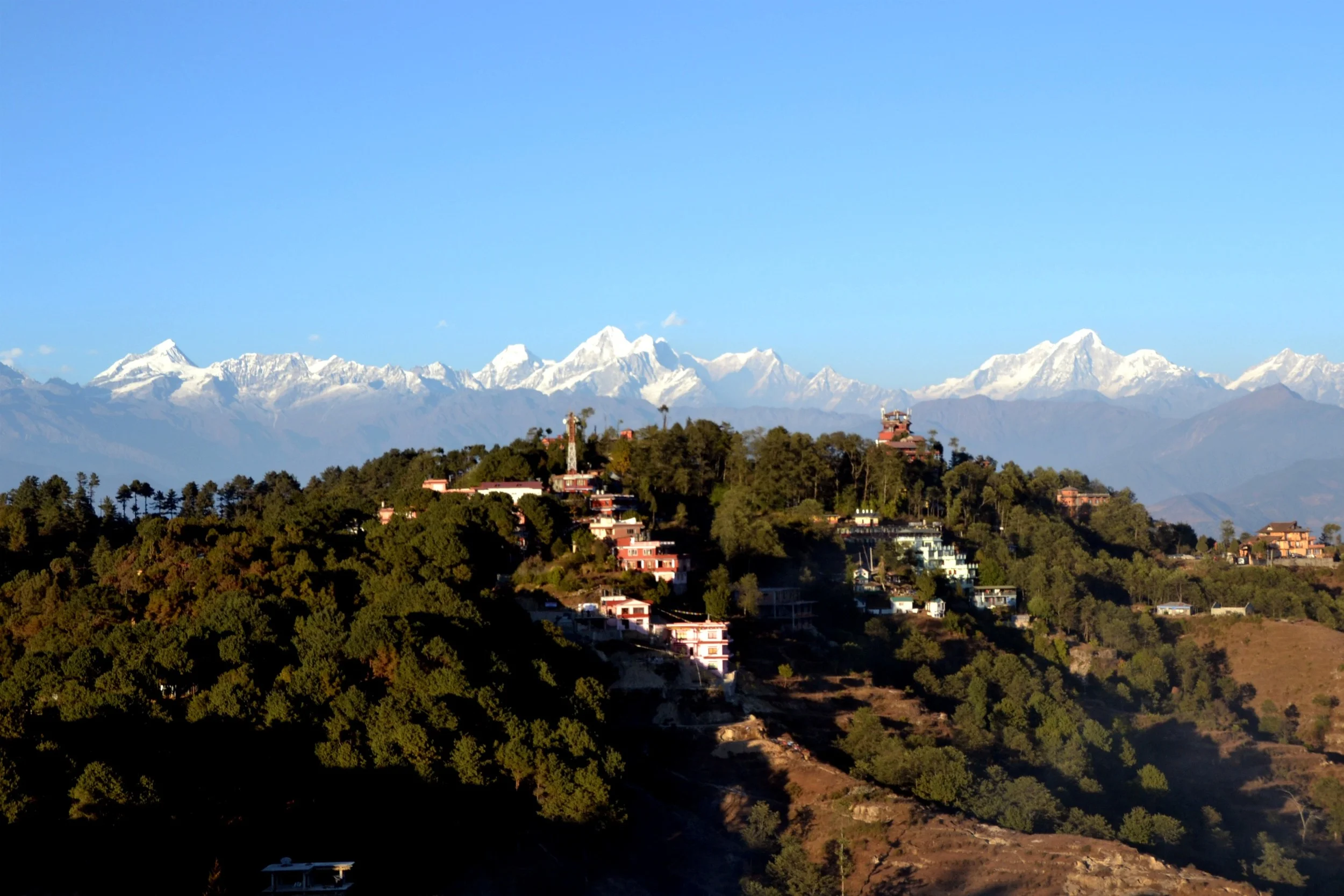
Most visitors go gaga over the lovely scenery around Kathmandu Valley, and their appreciation becomes all the more pronounced when traveling to Nagarkot (2,100 m), and spending a night or two there. Nagarkot is a mere 32-km east of the capital. As the road starts climbing from Bhaktapur, you’ll surely be in for a thrilling ride. It’s a lovely drive through verdant hillside forests, but it can also be a bit scary at times, especially when a bus is coming your way, hogging most of the narrow road. Still, all said and done, you’ll likely be exclaiming, “This is it. This is what I came to Nepal for!” You might well come back with the fond wish that you could have a personal retreat there, so wonderful are the surroundings.
On reaching Nagarkot, you are assured of spectacular panoramic views of majestic ice-capped Himalayan peaks. There are many attractive resorts, some of them located on hilltops, their backdrops being rolling hills that change color with the distance. Nagarkot gets a lot of visitors every day because of its proximity to Bhaktapur and Kathmandu, and also because of the many amenities available there. In case you are the sort looking for a more secluded retreat, you could go hiking on fine isolated trails that will take you across quiet villages where you’ll meet simple village folk going about the same everyday tasks as they have done for ages. In other words, you’ll find the lifestyle pretty laidback, and perhaps that should be to your liking.
You have the option of choosing from quite a few back tracks around Nagarkot, all of which give you the opportunity to experience rural life up close. For example, one trail takes you to a place called Telkot, a matter of a few kilometers only, but you’ll be surprised at how different it is from the touristy Nagarkot. From tranquil Telkot, you can walk to the nearby dam, or to Changunarayan village, which is some distance further. There’s a lookout point in Telkot from where the views are, of course, just splendid. The sunset from here, the gradual fading of colors in the sky from orange to blue, is a special treat. Far below, dark green pines and brown terracotta homes mesh together in an artistic tapestry. Another pleasant trek, the one going to the Muhan waterfalls, should take one hour or so. The trail goes up and down steep slopes and through lovely forests. On the way you’ll come across some nice picnic spots, meaning, you can hike at your own pace, taking as many breaks as you want to enjoy the beautiful country scenery.
Hiking is no doubt the most popular way to explore the countryside, but you can also go mountain biking, since the trails make for excellent biking tracks. When driving up to Nagarkot, you’ll probably come across some mountain-biking enthusiasts making their way uphill to Nagarkot from Kathmandu (4-5 hours). Such bikers often ride along the back trails around Nagarkot to secluded villages and return via stone-back roads to Kathmandu. Oh yes, Nagarkot has plenty to keep you refreshingly occupied for a few days, and there’s always those lovely resorts to relax in between all the hiking and the biking. Stay a night or two, because you don’t want to miss the sunrise, the early morning sky changing its hues from black to purple to different shades of red and orange behind the magnificent Himalayan peaks. It’s something else altogether!
Pokhara, a Paradise on Earth
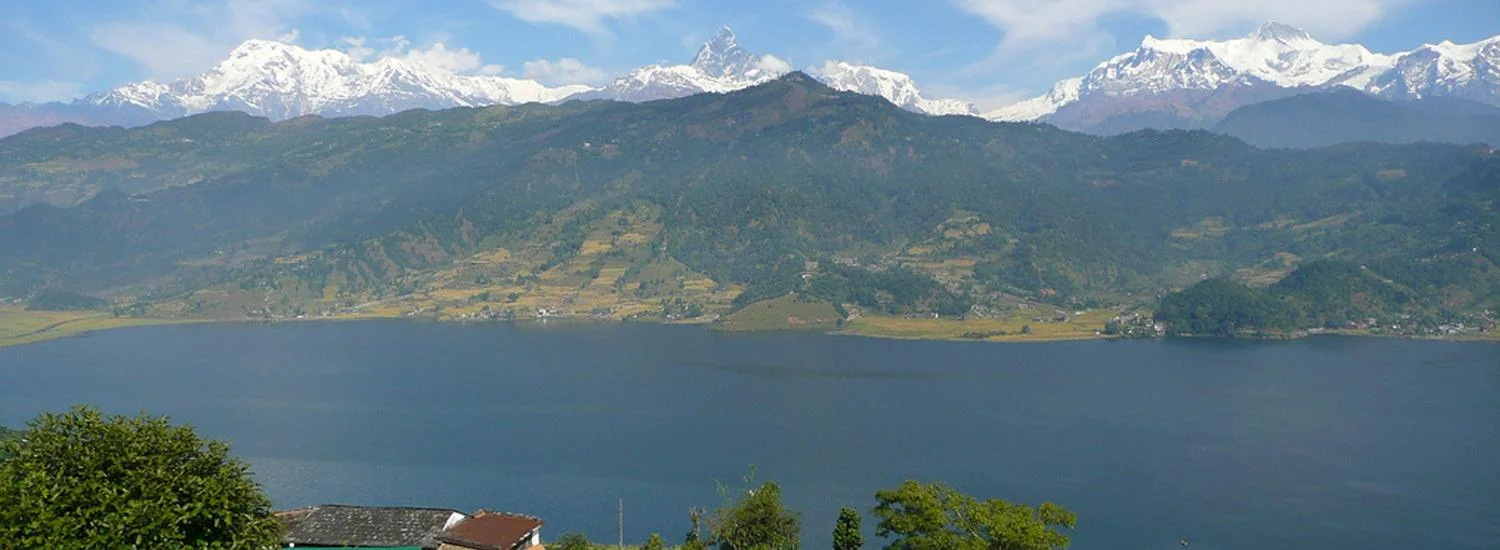
Its other name is “City of the Lakes”, and its guardian angel is Machhapuchchhre Himal, a.k.a. Fishtail Mountain, one of the loveliest of all Himalayan peaks. Welcome to Pokhara, where you’ll find a veritable paradise.
In May 2002, Junko Tabei, the first woman to summit Mount Everest (May 16, 1975) inaugurated the soft opening of the International Mountaineering Museum (IMM) in Pokhara along with Appa Sherpa (who had by then climbed Everest a dozen times). The museum complex, which covers an area of around five hectares, is themed as ‘Man, Mountain, and Mountain Activities’. It consists of the Mountain People Gallery (exhibiting culture and lifestyle of mountain people); Mountain Gallery (exhibiting geological facts about the origin of world mountain systems); Mountain Activities Gallery (chronicling historical ascents, explorations, and trekking exploits); Associates' Gallery (highlighting INGO and NGO activities in mountain areas); Library; and Audio Visual Hall. The museum is no doubt a grand addition to the other charms of the “City of the Lakes”.
Charms that include the serene Fewa Tal, the dark and dank Mahendra Gufa, and Devi’s Falls. Fewa Tal is a large-sized lake that’s really beautiful to look at. Boat riding on the lake is a great pleasure; it’s a lot of exercise as well, what with all the paddling. However, paddle to the other side, and you’ll find a row of nice eateries awaiting you with chilled beer and fried fish. The famous Bindabasini Temple on the lake is also worth a visit. Entering the dark depths of Mahendra Gufa, a cave in the mountainside, can be quite a thrilling experience, especially as the dim lights along the walls inside may shut down suddenly sometimes. Thrilling, what? As for Devi Falls with its cascading waterfalls, the closer you get to it (and you can get quite close), the more terrifying it becomes.
Actually, all said and done, it has to be admitted that Pokhara doesn’t have too many of such landmarks. Yet, this lovely city is by far the most favored destination for many tourists from around the country, and around the globe. The reason it is so is because of its fabulous scenic beauty. This is the one unique selling point of Pokhara that few other cities can rival. The early morning sight of sunlight glinting off the face of Machhapuchchhre Himal (Fishtail Mountain), which towers over the city, is something that is sure to give a fantastic start to your day, every day. Another thing about Pokhara that sets it apart from the pack is the traditional stone architecture of the place which gives a distinct identity to the city. All this makes Pokhara a city that inspires even the laziest to be out and about, whether hiking, biking, or boating. It’s a city for the adventurous at heart. And, really, who wouldn’t be in such a setting?
Talking about adventure, you can look forward to some great adventure activities like paragliding, parasailing, and ultra flight, besides both short and long treks around the area, and boating to your heart’s content on the lovely Fewa Tal. In fact, one of the country’s most popular paragliding sites is here in a hill called Sarangkot (1,592 m). Need it be said that soaring high above the city is an experience you are not likely to forget in your lifetime? It’s all pretty much of an adrenaline rush. And, to help you relax and rejuvenate, Pokhara has plenty of hotels and restaurants suitable for both high-end and budget travelers, many of which are situated on the famous Lakeside area. There’s no better way to wind down after a hectic day of adventure than by taking a leisurely stroll down Lakeside, and then sitting down at one of the many restaurants with a refreshing bottle of beer in hand.
Pokhara has much to offer, that’s for sure, and new experiences for you to try your hand out on. So, welcome to Pokhara, welcome to adventure.